
Our High-Flying Flagg
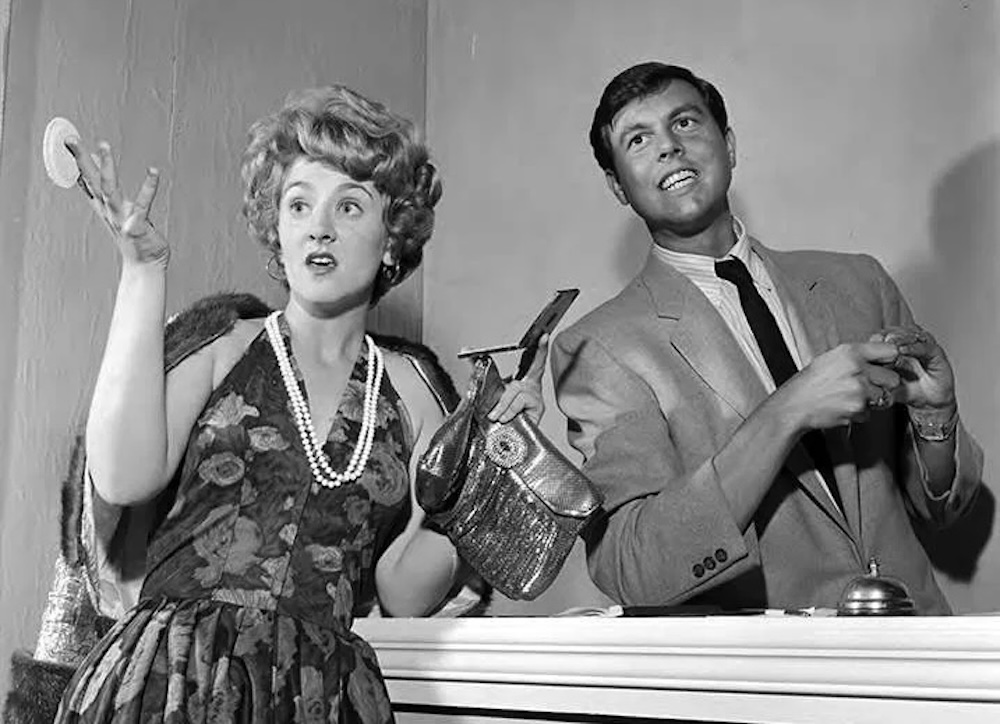
I arrive at the Santa Barbara Club with the jitters. The delightful and enviably energized Maria McCall has invited me to this MClub Lunch & Learn with a Valentine theme. The implausible Fannie Flagg – multifarious village litterateur / Manhattan night club bon vivant / bowling companion to Jack Nicholson – will be holding deadpan court and I can’t wait.
Yes, the Fannie Flagg persona is that of an immediately familiar and comfort-bequeathing quilt of many pastel colors – shot through with primary flashes of floral lightning and daubed here and there with tastefully spilled julep. But let’s pan out a little. Yes, Fannie hails from Irondale, Alabama, a suburb of Birmingham, and she truly is a genuine, heart-seizing oracle of small-town life. But it’s worth noting here that Neil Armstrong was born on a farm southwest of Wapakoneta, Ohio, and look what happened to him. Fannie Flagg’s “homespun” CV conveys something of Neil’s parabolic arc into orbit on a column of fire, and to my knowledge she did not wear a helmet. She’ll be talking about some of that madness today. Fannie’s tale is one of the craziest and most spirit-lifting biographies you’ll ever gawp at from an uncomfortably exposed front row seat.
An Imagined Comfy Chair

The soirée convenes at the august Santa Barbara Club. In the days preceding I have giddily imagined myself ensconced there in a comfy chair and concealed by an enormous drooping fern in a far corner of the place. Safely tucked away I will toss my balding head back and clasp my hands in delighted amusement as Fannie Flagg lobs her delicious depth charges from a daïs across the room. I might be wearing a purple velveteen smoking jacket, whatever that is. “Oh, my dear Fannie! Ha ha ha ha ha! Oh ha ha ha ha ha ha ha ha!”
In fact, the mischievous Maria McCall seats me next to globally beloved Fannie Flagg at a round Arthurian table right up front. My strenuously practiced Mineards Panache® will not be in evidence today. I arrive before the featured speaker, stammering hellos to my lovely lunch companions and bowing spasmodically like an arthritic samurai. I take the seat indicated by my demure title card and await Fannie Flagg’s arrival in terrified freefall.
When you have a two-syllable name like “Jeff Wing” – the phonic equivalent of someone stepping off a rain-soaked curb in slippers – it’s inevitable you will be seated across the table from a Houghton Hyatt, say. Some spoken names are lyrical phrases one breathes like a melody. “Hello, I’m Houghton Hyatt.” “Oh, hullo there. I’m JEFF! WING!” All the beautiful people at the table have names like Reynolds Price characters: Cathy Cash (hostess of the table), Houghton Hyatt (Executive Director of the Montecito Association!), Tony Morris (Executive Director of the Rona Barrett Foundation), Brenda Blalock, Suzi Schomer (SVP Wealth Analyst MB&T), Leslie Haight, the fab Janet Garufis (MB&T Chairman & CEO).
Fannie Flagg enters quietly in a blaze of Valentine Red and the room delicately sighs front to back, a rippling breeze moving across a pond’s surface. My heart begins desperately searching my ribcage for the exit. “Jeff!” Fannie Flagg suddenly yells, and flings her arms wide, somehow fluting and bending my single lousy syllable with that welcoming accent! My fear dissolves like an aspirin in Pepsi. “Fannie!” I reflexively holler, and we embrace. I am embracing Fannie Flagg. How on Earth did it come to this?! All southerners and all pals of Fannie, everyone at our table rises and beams frank, unfiltered love at this warming Belle of Birmingham. Once upon a distant time a bewildered kid looking for her light, Fannie Flagg at this moment is throwing light like nobody’s business. She looks over my shoulder and her expression blossoms. “My ex-boyfriend!” she roars. I look to see Tony Morris, the Rona Barrett Foundation’s all powerful executive director, grinning like a schoolboy on the brink of recess.
“Hah, Fannie!”
Neighbor at a Block Party
When Fannie takes the daïs she walks up there without fanfare – your favorite neighbor about to propose a toast at the block party. It’s really something. Lacking any hint of Celebrity Force Field, Fannie is as separable from the room as a droplet of dye in a glass of water. She’s here with all of us, among us. I mean… it’s Fannie Flagg. And that’s just for starters.
Look; Roy Scherer. Frances Gumm. William Beedle. Doris Kappelhoff. Archie Leach! There is a long tradition of entertainment legends on the rise replacing their given names with invented ones that are more marquee friendly. Does anyone doubt it was in Roy Harold Scherer, Jr’s. professional interest to take the name Rock Hudson? Would Que Será, Será have been as ecstatically received had it been sung by Doris Mary Ann Kappelhoff? Discuss.
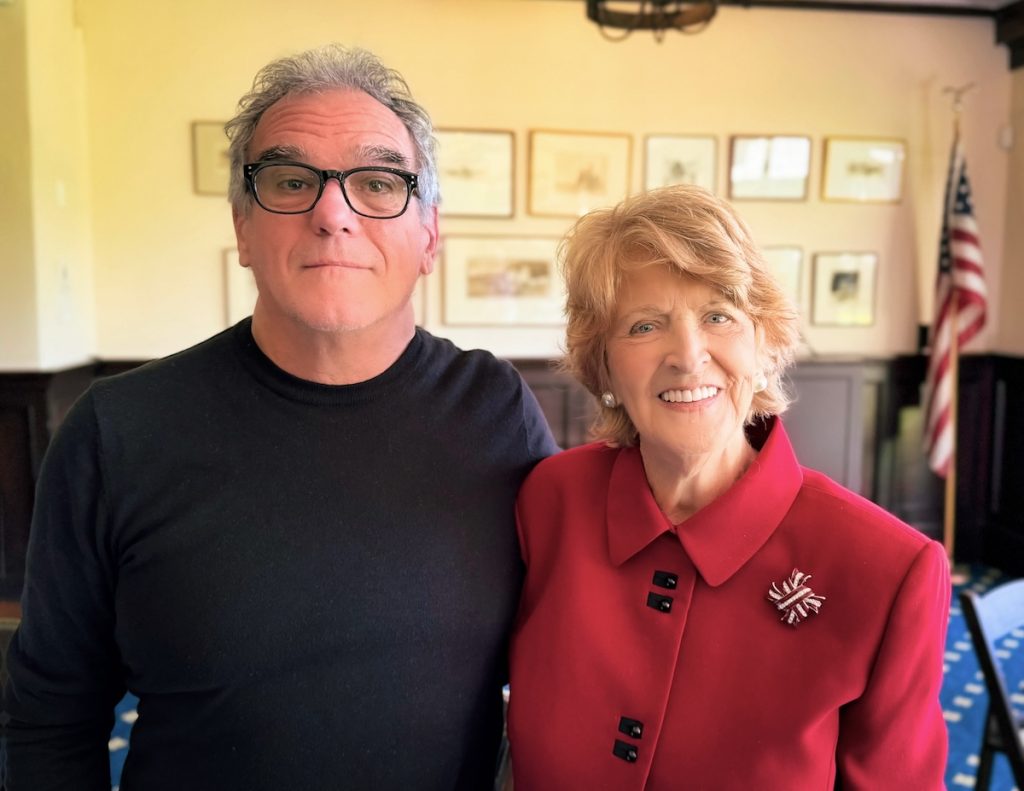
And then we have Fannie Flagg, the plucky refusenik who would not change her name as she rose. Right? Um…wrong. In an arguable vortex of irony, Fannie Flagg was born Patricia Neal – a name already taken by the winner of the first Tony Award its inaugural year of 1947, the actress who added heft to such classics as A Face in the Crowd, HUD (with Paul Newman), Breakfast at Tiffany’s. As our Patricia Neal’s star rose, she was obliged to choose a new name. “We already have a Patricia Neal,” etc. (It is a strange business.) Her grandfather, an old vaudevillian – look it up, kids, you’re not gonna believe it – suggested “Fannie,” noting the number of vaudeville comediennes who’d had that name (the great Fanny Brice comes quickly to mind, subject of Streisand’s Funny Girl). And what about Flagg? “I’ve got a friend whose grandmother’s name was Fannie Flagg,” the novelist has said in other interviews. “So I went with that. I never dreamed I would be stuck with it.”
Bottle Rocket and Mailbox
Over twenty or so minutes, leaning on the lectern like a relaxed college professor, the former Patricia Neal (Patsy to her fam) rolls out a Reader’s Digest condensed version of her life, and it is a bottle rocket in a mailbox. Again, Fannie is thought of in pop-culture shorthand as typifying the “wry and homespun” template, particularly following the mobbed, swooning embrace of her novel Fried Green Tomatoes at the Whistlestop Café, the second of her twelve immersive tomes. “Wry and homespun” won’t get you a gig writing stage material for Upstairs at the Downstairs, a cabaret in Manhattan in the white hot, art-is-exploding sixties. “Wry and homespun” won’t get you the role of Stoney in the classic seventies beat-the establishment-till-candy-comes-out Five Easy Pieces opposite Jack Nicholson.
What gave Patsy her octane? Her dad, the movie projectionist? The midlife epiphany that the mystery shadow haunting her with doubt was, all along, a thing called dyslexia? From Miss Alabama to community theater to an inexplicable leap to the Big Apple, where she would be recruited by Alan Funt for his subtly transgressive Candid Camera (alongside the stork-like Durward Kirby), to a storied Road to Damascus moment at, of all places, the Santa Barbara Writers Conference – the harder Patsy worked the luckier she got.
This is where We come in, dear villagers.
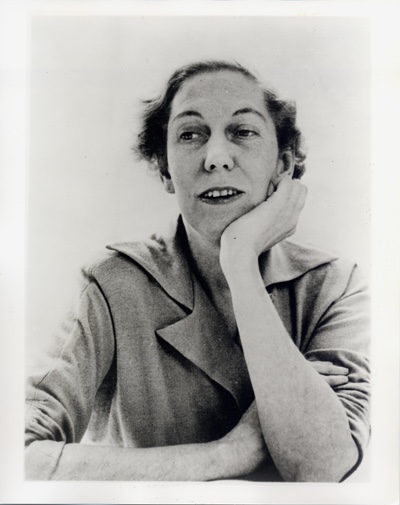
Attending the far-flung SB Writers Conference (conducted at that time by the great gadfly-novelist-matador, Barnaby Conrad), Fannie had gauzy hopes of seeing, from across a crowded room perhaps, her literary idol Eudora Welty. Fannie would not only meet Eudora Welty – but would literally be handed first prize in the conference’s short story-writing contest by her idol.
The event is winding down, and a polite gaggle has formed. “Nice meeting you, darling,” Fannie says to me. We pose for a picture, the photographer a bone-dry humorist named Dirk Brandts. Someone should introduce him to Maria. “Give me a full head of hair,” I request. “And jet black,” he assures.
Can Fannie Flagg be as salving and whole and genuine as she seems? The attendees don’t clamor but stand about like neighbors after church, gabbing and awaiting their several minutes each of earnest banter over the metaphoric backyard fence; nourishing chit chat with a dear, dear friend. I watch carefully. To a person they walk away from their brief encounter smiling to themselves. The world in February 2026 is roiling and here is our calmingly genteel emissary from elsewhen. She prepares to leave. “Bye!” she hollers to the clearing room, flapping her hand.
Good grief, Patsy. I guess you figured it all out. See you around the whistlestop.
You might also be interested in...




You must be logged in to post a comment.