
Alan Bergman Believed in Spring
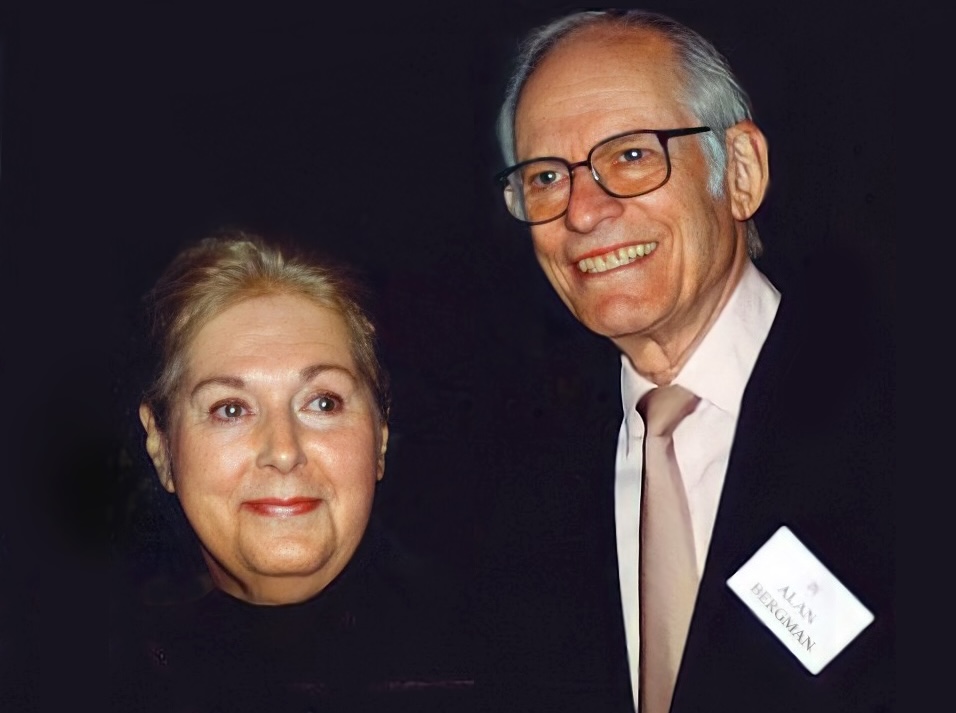
1974. The Oscars. The place is packed with Old and New Hollywood cognoscenti. Groucho Marx and Tatum O’Neal are breathing the same air, though likely from separate tables. Henry Mancini (Henry Mancini!!) is in the pit conducting the Academy Awards Orchestra.
Now Burt Bacharach and the amazing Ann-Margret are at the dais – Burt in his trademark tux and fluffy salt-n-pepper coif, Ann-Margret dressed this evening as Olga Mara; Singin’ in the Rain’s fleetingly glimpsed Black Widow. Awkwardly chewing through the stilted patter that once characterized these telecasts, the two now solemnly name the hopefuls for Best Original Song. Hollywood is in the throes of something, the recently ductile nature of the Dream Factory evident in the odd mix of nominees, a gang that includes John Williams, the great Sammy Cahn, Paul McCartney, Mel Brooks, and a married couple from Brooklyn.
Bacharach opens the envelope, reads the card, and happily hands it to Ann-Margret, whose live reading is nearly indecipherable, she is so excited. Bacharach reacts with a huge, genuine grin and single triumphant handclap.
Future Montecitans Alan and Marilyn Bergman and their songwriting partner, Marvin Hamlisch, rise from their seats near the back of the overstuffed Dorothy Chandler Pavilion, sidle past a dangerously overexcited Liza With a Z, and make their way to the dais. The orchestra strikes up a brassy rendition of “The Way We Were.” The couple’s individual acceptance speeches are brief and gracious – pure class and neatly expressed appreciation. Their co-writer Marvin Hamlisch, though, is a heart-torquing melodist – his emotionally stumbling acceptance speech as effulgent as his art.
It was a time.
Wife Abducts Alan Bergman

Some 42 years later I’ve wrangled an interview with legendary songwriter, President of ASCAP, and (ironically) 1974 Best Song also-ran to the Bergmans – Paul Williams. That evening, Williams will be chatting up the legendary husband and wife songwriting duo on the Granada stage, where Alan and Marilyn Bergman will discuss their now classic Oscar-winning tune “The Way We Were,” the conversation to be followed by a showing of the film.
At the end of our interview Williams says, “Jeff, we’re having a little gathering here before the show tonight. Care to join?” The little black dots immediately swarm my periphery, suggestive of approaching hypoxia and a humiliating collapse right in front of the great Paul Williams.
“Oh yes… are you sure? That would be lovely,” I intone.
Judie and I show up at the McCune Founders Room and its crowd of impeccably dressed, thunderbolt-hurling Titans. I feel I’ve entered the room in the manner of Winnie the Pooh – pot-bellied and naked but for a bright red crop-top hiked up to my collarbones. Alan Bergman is standing in the corner, entertaining a small crowd and tossing his head back in congenial laughter. What are we doing here?
“There he is!” I raggedly whisper. It is absolutely Alan Bergman. I’m in the room with him. I’m in the room with Alan Bergman. Long a rabid fan of songcraft (if not an outright freak), I’m having a double header of a day, having spoken with my idol Williams this afternoon, and now this Alan Bergman madness. I turn to Judie to say some inane thing and she’s gone. I see then that she’s now standing next to Alan Bergman and is talking to him. The guy co-wrote Sinatra’s innuendo-packed “Nice n’ Easy,” Brasil 66’s “Like a Lover,” Tony Bennett and Bill Evans’ “You Must Believe in Spring,” and dozens of other standards. There is no gilded composer Alan and Marilyn have not teamed with to produce gorgeous, undying songs. And now this.
I watch in horror as Judie gestures in my direction and Alan Bergman looks up, briefly scans the room, sees me and smiles. Bergman and my wife break off from his clutch of gifted show business pals and head my way. The black dots!
“This is my husband, Jeff,” Judie says, very pleased with herself. As she should be.
“Hello, Jeff,” Alan Bergman says with a huge smile and warmly extends his hand. I gather myself and swear the room can hear my sloshing blood pump.
“Hello, Mr. Bergman,” I murmur in an attempted lower register – because when I’m stressed my already reedy voice rises an octave to the insectoid. I’m conversing with the gentleman who, in partnership with his wife, Marilyn, has co-written a host of toweringly gorgeous 20th century standards that we’ll still be singing when the exhausted Voyager I shows up again a billion years hence, limping into our solar system and clutching its sad little golden da Vinci record. {final communication: “…cosmos teeming with life. no turntables anywhere…”]
We speak for maybe five minutes and Bergman is delightful and exultant. He charmingly spools out the story of he and Marilyn first meeting Michel Legrand – with whom they will co-write “What are You Doing the Rest of Your Life,” the melodically bewitching “You Must Believe in Spring,” and many others. Bergman explains their being introduced to Legrand by Gene Kelly over a game of tennis at the home of director Richard Brooks. Gene Kelly! I take all this in with a frozen, open-mouthed smile and hoisted, congealing canapé. Bergman’s own expression while telling the tale is one of wonder at the crazy technicolor mise-en-scène he and Marilyn inhabit. Songwriting has been good to them, and vice versa. Never mind their long romance, only recently paused – a marriage made of music.
“I mean,” Bergman concludes quietly, shaking his head. “Playing tennis with Michel Legrand…”
Words and Music
Alan Bergman, a longtime Montecitan, passed on July 17th of this year at 99, and in the course of his near 100 years of life fittingly helped write the soundtrack to an American century of lasting and deeply felt popular art. His Marilyn passed back in 2022, and Alan was left to carry forward – alone – an artistic adventure they’d shared for some 60 years.
Born in the same Brooklyn hospital, Alan and Marilyn wouldn’t actually meet till they’d both emigrated to Los Angeles in the late 50s. By the by, Alan – then pursuing a master’s in music at UCLA – would be informally mentored by none other than Johnny Mercer (“Moon River,” “Skylark,” “Autumn Leaves,” “Come Rain or Come Shine”…). Mercer would invite the awestruck Bergman – a college student – to his home. “Show me what you’ve got, Alan”.
In the fullness of time and courtship, the penniless Alan Bergman would propose to Marilyn Keith – not with flowers or a ring but with a scratch recording of a song he’d co-written, a song based around Alan’s loving, lyrical description of Marilyn’s face. Alan had managed to have his tune recorded by Marilyn’s favorite singer – a guy named Fred Astaire. It worked.
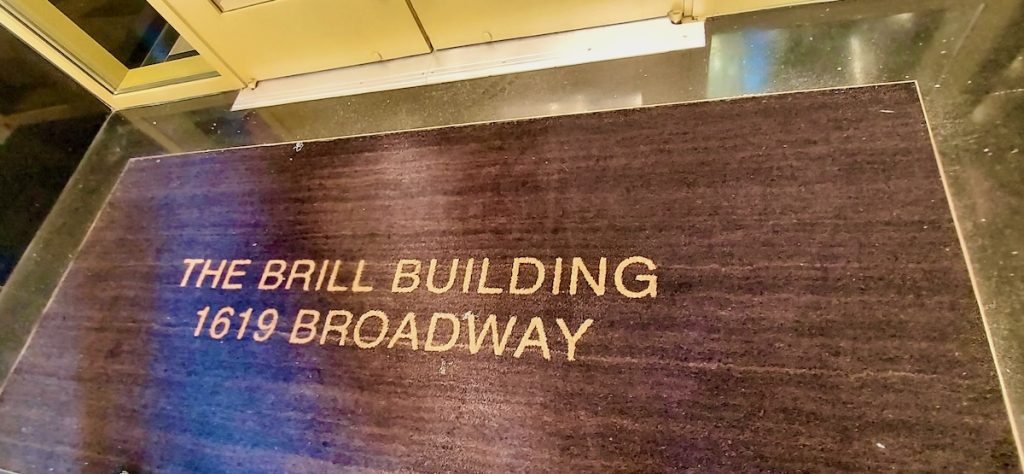
Songwriting can be powerful magic. I’ve always known it. In NYC’s Brill Building, teams used to lock themselves into little offices and craft songs around the piano, sonic carpenters of melody. Those old songwriting team photos? One boring-looking guy at the piano while another bore leans over his shoulder and smiles wanly at the sheet music? That to me is one of the most potent glyphs humankind has yet produced. The magic of a melody is indecipherable – a series of notes on the air that, when “heard,” move the heart. Why? How? A “song” is as ephemeral and inexplicable as the quantum wave function; and as arguably elemental.
So long, Alan and Marilyn, and thanks for throwing yourselves at the magic in the name of our common exaltation. You two are surely strolling around the constellations, probably clutching Lafond java. We’ll remember. So in a world of snow, of things that come and go, where what you think you know, you can’t be certain of…you must believe in spring.
And love.
You might also be interested in...




You must be logged in to post a comment.