
Tecolote’s 100th. Mary Sheldon. Golden Age Montecito. Kapow.
Tecolote Bookshop? Our flagstone-wrapped salon in the Upper Village? This year the place turned 100. Yeah, as in “years old.” This means [holds fingers aloft like a savant and moves them algebraically] … Tecolote Bookshop opened in 1925. There’s more.
“My mother would drop me off at Cold Spring Elementary School every morning and I would walk home. Every once in a while – if he’d been out on errands – Ganna Walska’s chauffeur would see me walking after school and give me a ride.”
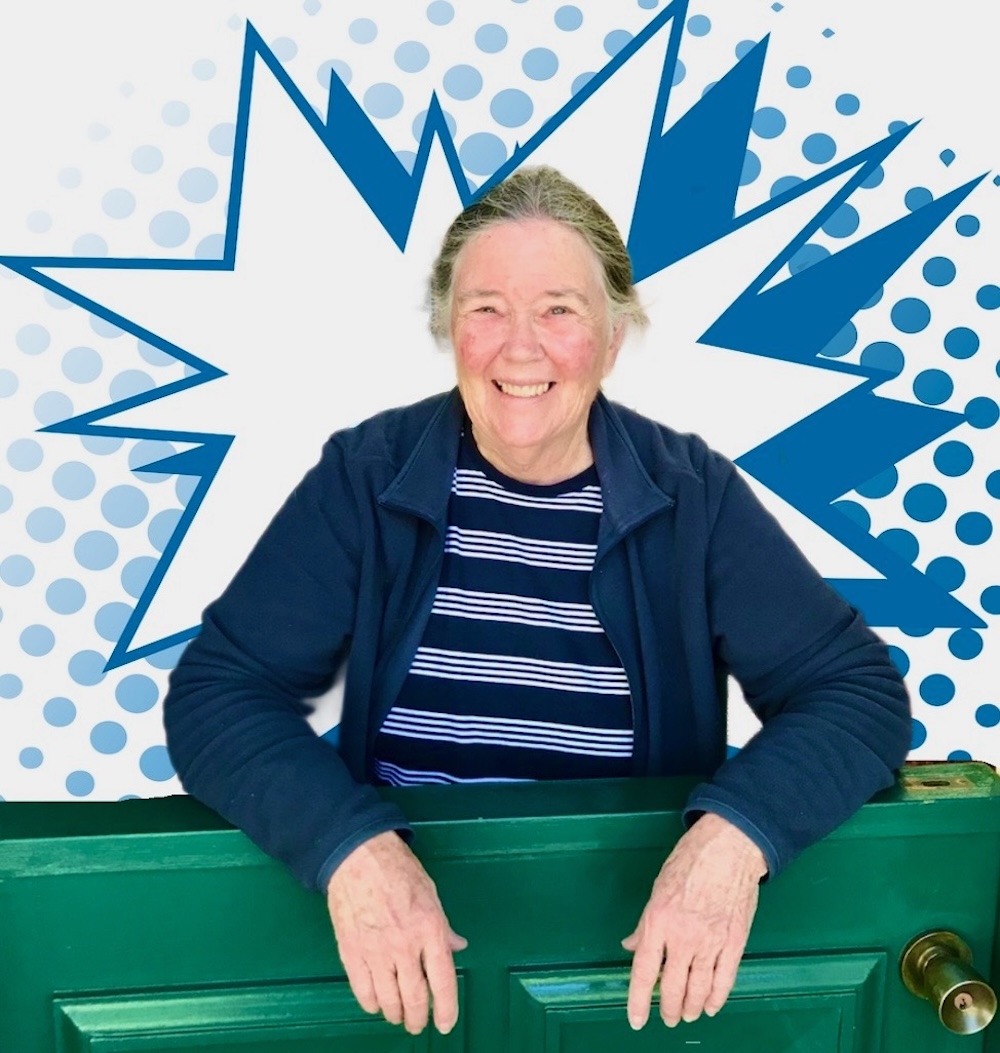
Okay. Every mildly eccentric (you know it’s true) forested village idyll boasts a singular persona who embodies the place’s spirit. In the case of our deciduous little hamlet, that would be Mary Sheldon; Head Bibliophile and Literary Den Mother of the aforementioned paper-and-glue sanctum known as Tecolote Bookshop.
“We moved here from San Fernando in 1953, and we’d had a very rural life there,” Mary says. “I always tell people I didn’t live on a paved street until I moved to Montecito.” The weird gyrations that planted Tecolote in our bipolar burgh’s fabled Upper Village, and then brought Mary Sheldon into the shop’s bookish embrace? Let’s talk.
First, a sidenote about Tecolote’s tether to the very founding of the Republic. Yeah. Do bear this deeply rooted factoid in mind next time you’re wondering where to pluck your next beach read. And best you set down your Caramel Macchiato at this point, lest you do a spit take all over Josh Brolin.
Get a Load of Tecolote
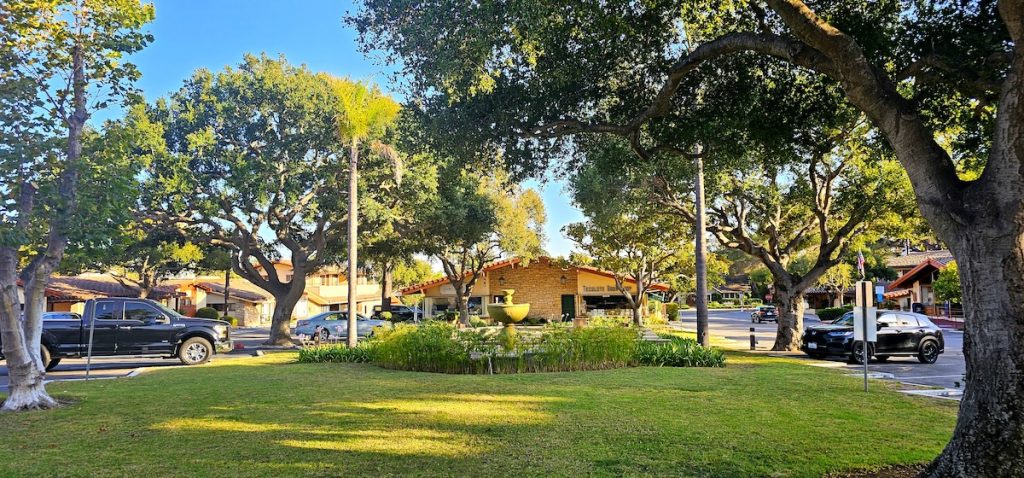
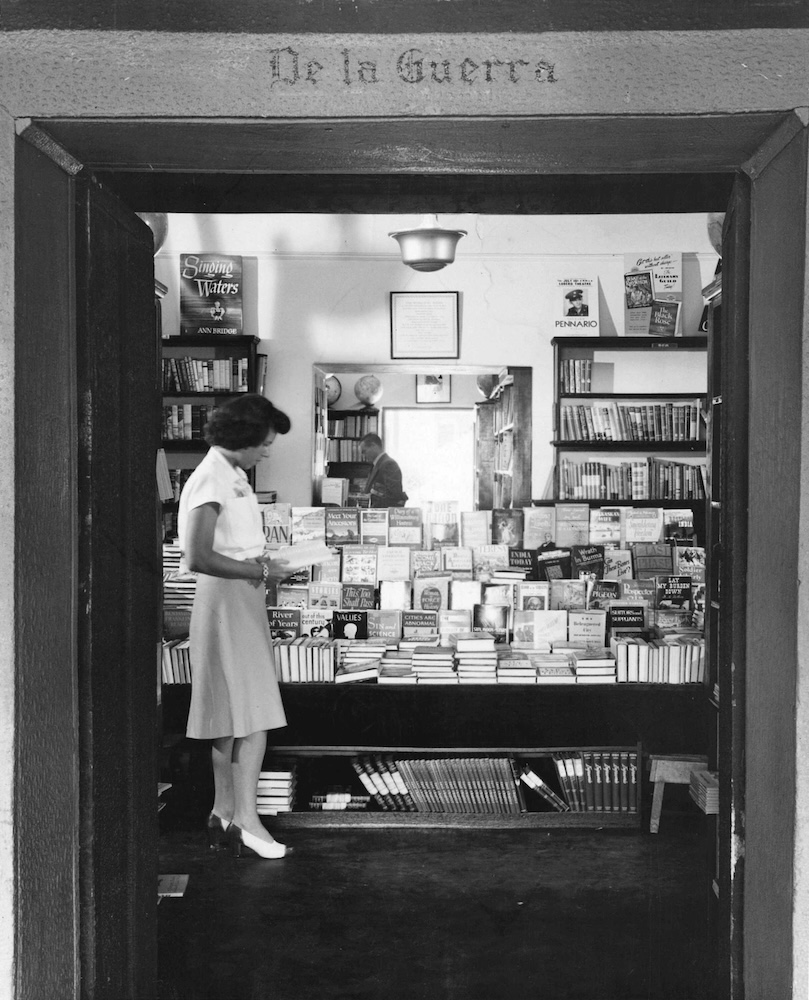
Our village bookshop is strangely freighted with history. Tecolote’s first true owner – an acerbic wit and bibliophile named Roger Sherman Gates Boutell, Sr. – was a former attorney and Law Librarian at the Library of Congress. In the early 1920s, Boutell fled the rigors of Washington, D.C. and retired to bucolic Santa Barbara with his fam. He bought a lovely house in the foothills, and immediately began seeking an outlet for his page-turning predilection – a bookstore, say (see sidebar). In an essay published in the Spring 1948 issue of the Quarterly Newsletter of The Book Club of California, Boutell wrote of his own bookselling acumen. “I did try, more or less in vain I am afraid, to overcome the tendency of a number of book buyers to judge books as they would biscuits; by how long they had been out of the oven, rather than by their intrinsic merit.”
As it happens, Boutell was (and in genealogical fact remains) the great-great-great grandson of a certain Roger Sherman; a Founding Father of our country and the only person to have signed all four great state papers of our once-scrappy Republic – the Articles of Association, the United States Declaration of Independence, the Articles of Confederation, and the United States Constitution – a signatory whirlwind that speaks well of the man’s ball point pen (in my experience likely a Blue Medium Point Bic).
Boutell’s bewigged and busybody ancestor, Roger Sherman, was also an early member of the U.S. House of Representatives from Connecticut and a signer of the Treaty of Paris (which ended the Revolutionary War). And it was Roger Sherman who – as the nascent breakaway U.S.A. was being formed in the womb of Liberty (so to speak) – proposed the dual system of congressional representation; a legislative filtration system that we now call the House of Representatives and U.S. Senate.
Not to be alarmist, but it’s arguable that – through blood lineage – this Founder, Caffeinated Signatory, early Congressman, and inventor of the bicameral U.S. Congress – Roger Sherman of Connecticut – is the great-great-great-great-great grandfather of our Tecolote Bookshop in today’s shade-dappled Upper Village. Which would explain the place’s self-satisfied grin.
Mary in Her Wheelhouse
Let’s begin this section with Mary, her mom, and her older sister alighting in Montecito. It was the year Dwight D. Eisenhower moved into the White House.
“I went to Cold Spring school when it was a two-room schoolhouse,” Mary says. “There were only six of us in the sixth grade there.” Before we wander too immediately into this Laura Ingalls Wilder reverie… what brought the Sheldons to Montecito?
“My mother and father got a divorce” Mary says. “My mother was a teacher, and she applied to various places for a teaching job, including Australia, Hawaii, and Alaska. Those last two were still territories. None of them would take her because she had dependent children.”
Whether her mother’s prospective employers sat in judgement of Mrs. Sheldon’s being a divorcee or simply considered her single motherhood difficult to reconcile with a teacher’s regimen, Mary doesn’t say.
Ultimately, after all that U.S. Territorial searching for a teaching gig, the Sheldons’ destiny lay a scant 86 miles away from their San Fernando homestead. Having spent summers beaching in Carpinteria, the Central Coast was broadly known to the roaming trio, and so Mrs. Sheldon turned her (their) attention to Santa Barbara. Mary’s mom secured a job teaching the lower grades at Lincoln Elementary (then near the corner of Cota and Santa Barbara streets) and a house was purchased off Sycamore Canyon Rd. Mary was home. And has been ever since.
Herbarium to Librarium
I asked Mary if she wanted to discuss her Montecito teen years at all.
“Nope.”
So. In due time, Mary graduated SB High School, attended SBCC and landed at UCSB. Her major was Environmental Studies with an emphasis in Botany. “I’d worked with Al Flink in the biology department at the City College. He got me started in botany. He still had connections at the university, which made it easy for me to get a job in the herbarium on campus.”
Soon after transferring, Mary began her student work at UCSB, her horticultural interests introducing a side road which would prove an unlikely route to a future in books. “At UCSB I worked for [globally renowned California botanist and classroom legend] J.R. Haller, who taught an undergrad course called Plants of California [Botany 103]. I was a plant collector for Haller.” What happened next I would chalk up to bibliotropism. Not a real word, but it should be.
Shortly after graduating UCSB, Mary found herself at the Santa Barbara Botanic Garden; leveraging her botany emphasis, you see. “They needed someone to run the bookstore, which was about this big.” Mary holds up her hands to indicate a shoebox, then breaks into a smile. “I was allowed to expand it.”
That gift of autonomy would be the template for all of Mary’s future bookshop endeavors. But she didn’t know that then. The intersection of Mary’s botanical scholarship and her discovery of book buying as a vocation? This would prove a fruitful union. “The Botanic Garden said ‘Go for it’, and I did. I’m very proud of this. Visitors would comment on it, saying this is one of the best selections of natural history books that we’ve seen in California.”
After nearly a decade at the Botanic Garden, Mary’s yen for the purveyance of books generally took her to Chaucer’s Books, where for several years she worked alongside (recent former) owner Mahri Kerley. Mary estimates she’d been at Chaucer’s for some seven years – immersing herself in the minutia of bookshop best practices and, of course, books themselves – when she got The Call. It was 1992.
“Peggy Dent called me and asked me if I was interested in helping her with Tecolote.” Margaret “Peggy” Dent had bought Tecolote in 1990 (see sidebar. again.). Mary speculates Peggy, possibly while surreptitiously poaching Chaucer’s while disguised as a patron, must have witnessed Mary at work, seen something of Mary’s expertise there, and decided to make her move. At any rate, she brought Mary aboard her recently acquired bookshop, and two years later made Mary Tecolote’s general manager. In effect, Mary would run the store. She was given free reign.
In 1998 she was joined by Santa Barbara indy bookstore avatar Penny Mast McCall, she having managed the SB Art Museum Bookstore and having worked as well in an antediluvian iteration of the dear old Earthling Bookshop when it was a wood-paneled whistlestop on E. Victoria. In 2020 came Justine Togami. “She’s much more technical than I am,” Mary says, and one has the charitable sense that is not a terribly high bar to have to vault. But Justine seems to be the Motherboard of the place. “I don’t even know where the on off switches are,” Mary continues in computerspeak. “Yeah, Justine is a great help with that. And she loves books!”
In 2007, owner Peggy Dent announced she would be retiring. Might Mary be interested in purchasing Tecolote? Well, yes and no. The purchase would be beyond Mary’s means, if not her heart’s desire. It was then a beloved regular customer, a Mary Sheldon fan, a giant in the business world, and a deeply humor-filled sweetheart of a supporter stepped up. These were not four men but one.
He knew what Tecolote meant to the community, and so Herb Simon – a wryly funny litterateur and generalized conqueror of various realms – teamed with two business partners, worked out the mechanics, and magnanimously purchased Tecolote Bookshop – effectively on Mary’s behalf. In the throes of all this transacting, Herb came strolling into the store one day with a somber expression. Before signing anything, he had one more question for Tecolote’s prospective new Proprietor.
“Mary,” he intoned, then broke into a Cheshire Grin. “Are we going to be able to have fun with this?”
Pages Turned
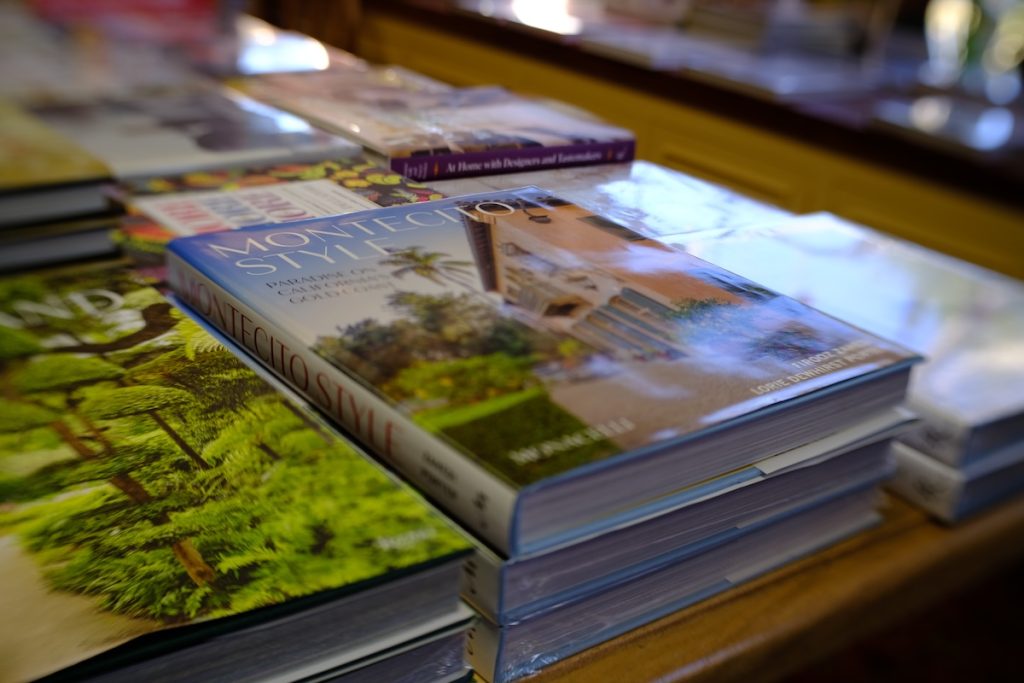
At this writing, Mary Sheldon has lived in Montecito for 72 years, 18 of them as dear Tecolote’s Literary Empress (not an actual title). “My sister and I spent a lot of time in Cold Spring Creek just messing around, just kids,” she says. “I still live in the house that my mother bought.” Has the village changed? A naïve question. What doesn’t change after 72 years? Apart from memory.
“We always had books in the house, and my mother always read to us at night,” Mary says. She’s been speaking with an air of fond remembrance of a time when her world was defined by creeks and hedges and wooded acres – and whatever book she could get her hands on. Now she laughs lightly. “We had a World Book Encyclopedia,” she says with a startled expression. “And I think I read that twice.”
You might also be interested in...




You must be logged in to post a comment.