
Armoured
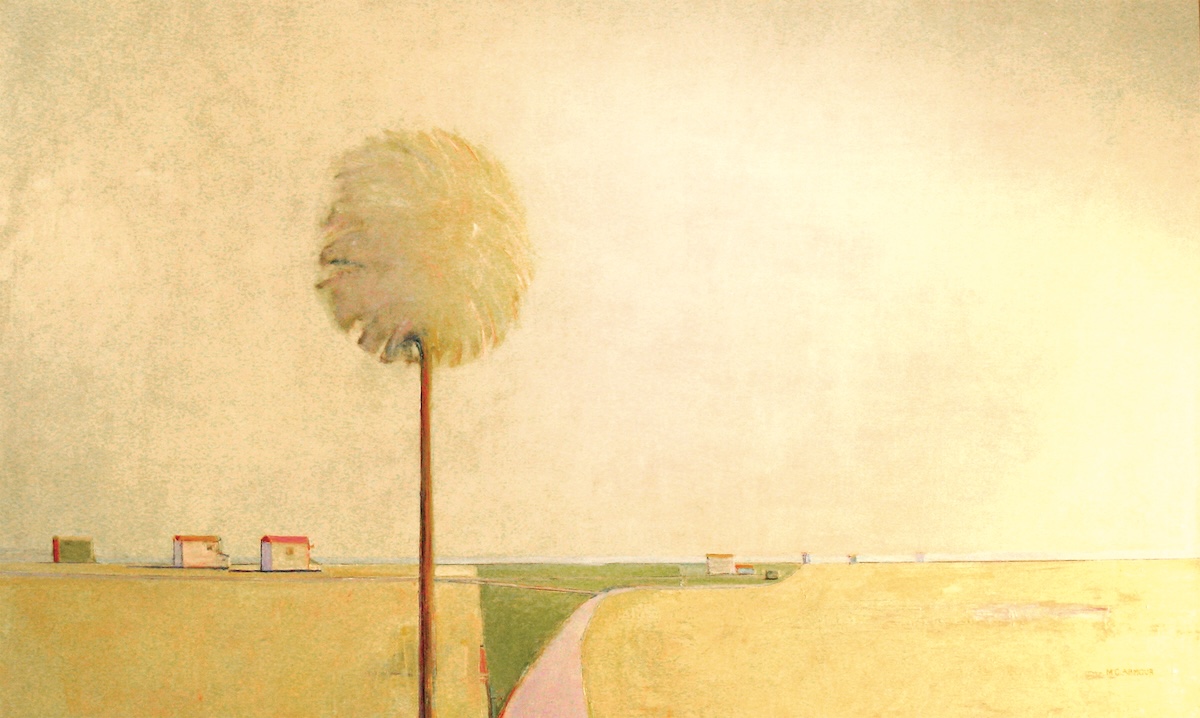
“We sold the book to Leonardo DiCaprio a long time ago,” Michael Armour says. He’s told the story so many times – lived with it for long enough – the episode’s clearly been stripped of its power; except for the power to make Armour’s stomach sink. “He and the director held onto the book for three years after which I got it back.”
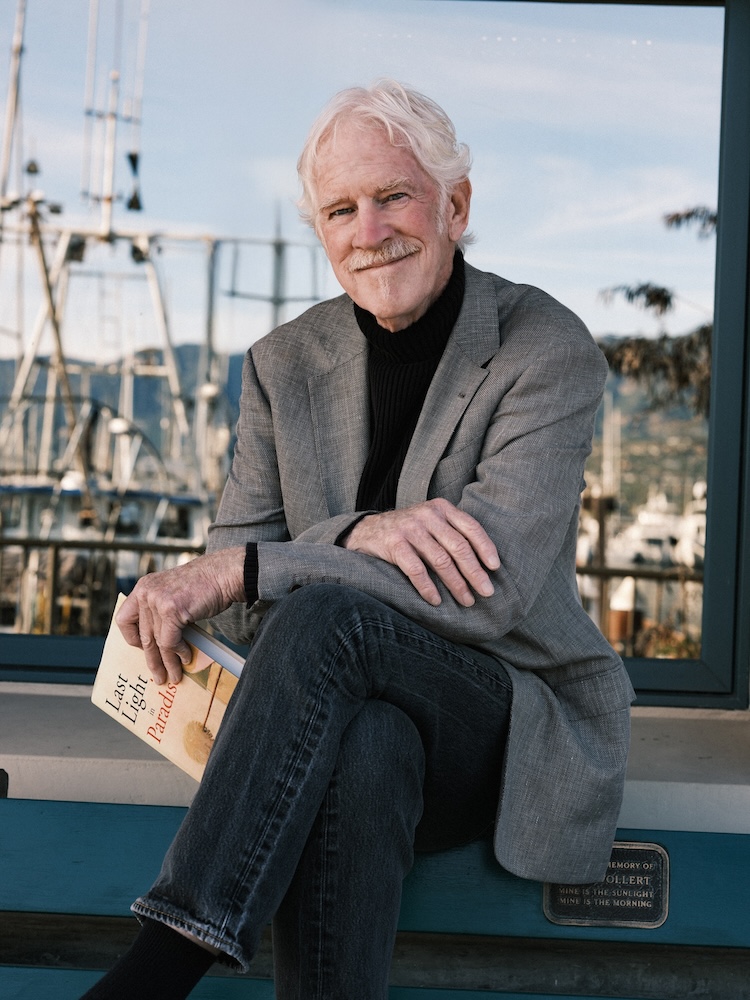
(photo by Kim Reierson)
The book he’ll be fêting at Tecolote this Saturday at 3 pm is THAT book; the novel whose lead character DiCaprio was – for a brief shining moment (as they say) – excited to play onscreen. Last Light in Paradise is a depression era murder mystery set in a 1930s Santa Barbara depicted with such easy granularity, the reader is seduced as readily by the nascent seaside movie village as by the headless body that washes up on its beach. Last Light is aswarm with preening film folk, inept local toughs, and a stammering wartime romance rekindled stateside – right there on lower State and in absolute Technicolor. This is one of those novels whose reading takes you wholly into a second life. Yeah, it’s a property which DiCaprio and Warner Bros. wanted so badly they couldn’t wait for the thing to be published to contractually possess it. That was about a dozen years ago. So what happened?
“Amazon was crashing the publishing world,” Armour says. “It was panic time. Hundreds of publishers folded and the big ones started consolidating.” That day’s contemporaneous sources had their own reportage to float. Variety during that period detailed (with their usual prim schadenfreude) the quick collapse of ICM refugee Jeff Berg’s brand-new power agency, Resolution, to which portfolio Armour and his novel had been very early “gets.” Other tinseltown criers suggested DiCaprio’s plate was so full he couldn’t possibly make the movie work within the option’s time frame. Armour broad-brushes the post-mortem.
“Lynn Nesbit – biggest agent in the game – loved the book but couldn’t place it. Just too risky with an unknown writer. Rick Horgan (Scribners) same: ‘…there is a kind of genius here that is hard to ignore. Creek is the closest thing to Gus McCrae I’ve read since Lonesome Dove…’”
Someone else described the novel in terms designed to dial up the Hollywood volume. ‘This is Chinatown for a new generation’.
“It just went on like that,” Armour says with a complex smile. “Painful to remember…”
Summitting
“It’s a really brutal process,” Armour heroically understates. He’s talking about the process whereby an “intellectual property” (I.P.) slowly morphs into an actual film. This was back before writing was called “content.” This artist has long walked in the Valley of the Shadow of Regularized Self-Recrimination; that barefoot hike over jagged rocks more euphemistically called The Artist’s Way. Armour is a novelist, and he looks it – which, granted, could mean anything. From elfin testosterone experiment Norman Mailer to doomed Catholic power-penitent Flannery O’Connor, it does take all kinds. Possessed of Sam Shepard’s lankiness, McGuane’s amused Montana squint, and something of Harrison’s brilliantly shaded gift for character and dialogue, Armour – all flinty grin and open collar – could be a Texan.
He ain’t. He grew up on Padaro Lane, which he’d described to Gwyn Lurie in an earlier chat as “$24 a month for the shack we lived in, and the ocean, ferocious, 40 feet out in front of you…” Then what, I ask?
“My father split. He was charming but he was gone, left us high and dry. Then I had a different father, a stepfather, and we went east and he just… changed our lives. He was running one of the largest companies in the world, and he kind of aimed me high and said, ‘You’re going to go to boarding school.’” Feeling lost, the possibly dyslexic kid was, for the first time in his life, determined to please a father figure he loved.
“And I had a guy there at school that really helped me. I was so tangled up with language, but in the course of that time I read Keats and… I just could not believe somebody could write language like that. I didn’t believe somebody could make things that beautiful. It just knocked me on my ass.”
Cinematic Momentum
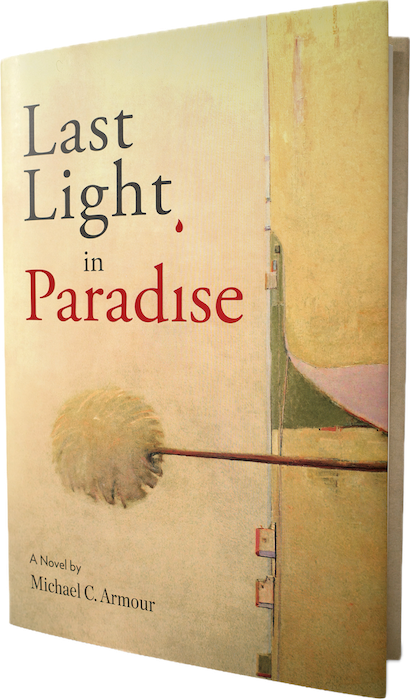
is as entertaining as it is moving.” – Fannie Flag, Author of Fried Green Tomatoes
Last Light in Paradise has the cinematic momentum that got DiCaprio so hot and bothered, and Armour is himself a classic. Per the American literary tradition, Michael Armour figures he’s toiled at a couple dozen blue collar gigs in his time – that unvarnished working life long held to be the esteemed wellspring of a writer’s source material; dialogue, plot, the venal and secretive motivations that turn otherwise beige humans into liars and beasts and – on certain alchemical occasions – bus-riding angels.
Armour’s access to the American vernacular has been unbridled and various. He’s a celebrated painter, an equestrian, a children’s book author. He’s been an adman with two of the country’s preeminent agencies, a carpenter building and repairing units for the indigenous population of Nome, Alaksa. His travels in the Last Frontier even featured the threat of gunplay. “A guy I knew was out of the clink and he was gunning for me,” Armour says. “He was a bad, bad, bad man and I wasn’t going to hang around, so I got out of there. I wound up in the advertising thing, but I was pretty sure I was going to get shot.”
The novel could be the penultimate symbol of Armour’s tenacity, his relationship with the work not unlike Ahab’s to the whale; without the monomaniacal cerulean hatred and peg leg, of course. When DiCaprio and Warners went south, the book began its second iteration as an omnipresent millstone of doubt. This went on for some time. Then something happened.
Armour gave the book to his friend Brett Matthews, who in turn gave it to his friend Gwyn Lurie. Gwyn, coincidentally, is our Executive Editor and CEO. She was so taken with Armour’s novel she offered to publish it through the offices of the MJ. Lurie turned out to be an excellent recipient of Armour’s manuscript for another reason: Lurie is herself a veteran of more than 20 years riding the Hollywood roller coaster.
Lurie’s script for the movie The Music Never Stopped, based on an Oliver Sacks story, and which eventually starred Oscar winner J.K. Simmons and opened Sundance, languished for more than a decade while it bounced around various movie studios and the bedside tables of innumerable ADHD stars, starlets, and directors. Lurie knew better than most that languishing is almost integral to the progression of an intellectual property into a film you can actually stream.
“That’s why we serialized Last Light in the Journal,” says Lurie. “Hopscotching around the Hollywood system says nothing about the potential merits of an intellectual property. Development Hell is more like a rite of passage. As they say, ‘The best wine comes from the most tortured vines.’”
That book – Last Light in Paradise – will be the keynote at Tecolote on Saturday at 3 pm, when the author signs and happily discusses his life’s work – and maybe those benevolent forces whose faith in Armour himself bore the book aloft. Some of this early change agency seemed to originate with his stepfather. Fair statement?
“Oh, absolutely! For all three of us, for my two brothers and me and my sister, who’s an actress. He was a guy that we just kind of fell in love with. He actually was a pro-hockey player for a while and then he was wiped out in the war…” Armour reconnoiters.
“It was just… I saw a bigger world. Just like when I went to Worcester to this little boarding school out in the country. I saw the world.” Armour is becoming animated, preparing to lift the veil. Why does he write, exactly?
“Those characters that are in Last Light, I know them, and other people know them. They know that person’s incredibly funny, but there is also incredible pathos there, and incredible sweetness, and ugliness.” Armour stares into the middle of my tumbledown office. “All those are real people,” he says, as if to himself. “And I love people.”
Visit https://tinyurl.com/MJ-Last-Light-CH1 to read the first chapter of Last Light in Paradise
What:Last Light in Paradise book signing with author Michael Armour
Where: Tecolote Book Shop, 1470 E Valley Rd.
When: Saturday June 20, 3-4 pm
You might also be interested in...




You must be logged in to post a comment.