
Sanctuary Centers: The Fine Art of Bootstrapping a Miracle
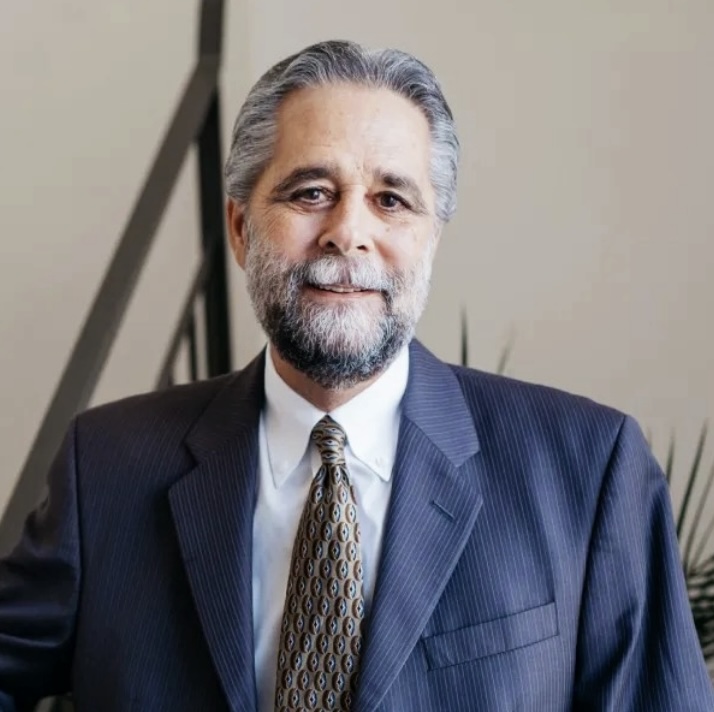
This all happened some time ago, but Barry Schoer explains the episode with residual heat. “I was seeing that when people graduated from Sanctuary House they didn’t have anywhere to go. Even if I got them a Section 8 voucher, landlords didn’t want them. They’d say to the prospective tenant, ‘Where have you been living? ‘Oh, I’ve been in Sanctuary House.’” Barry Schoer pauses. “They couldn’t help but be honest,” he murmurs. “Bless their hearts.”
Civic life is of a piece. There are hospitals and courtrooms and traffic lights and storm drains and grocery stores. We don’t know by what municipal magic all this comes to be, nor do we need to know. We navigate the Everyday with the fuzzy background notion that all this beneficence is ordained through meticulous strategizing and blueprinting – the glacial, orderly processes by which the civilized world puts one elephantine foot in front of the other. Broadly true? Yeah. But there are striking exceptions.
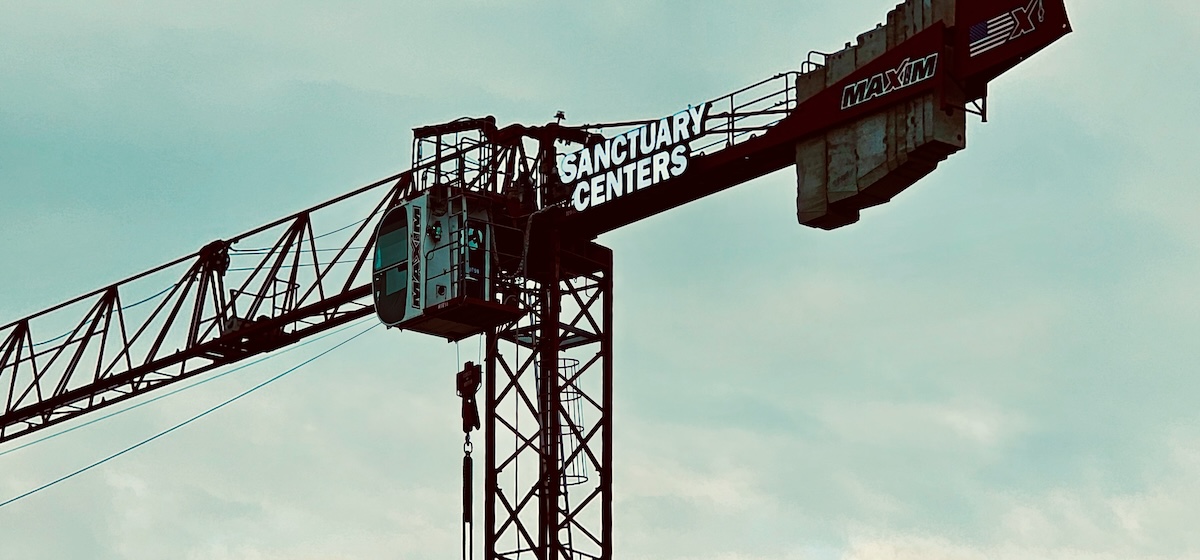
For instance, at this writing an enormous crane dominates Santa Barbara’s downtown like an ill-conceived special effect. What’s that doing here? The crane anchors a building project on W. Anapamu – but also represents a Proof of Concept: Not every institution is built, per se. Some are hammered together on the fly by the pugnacious.
“So the landlords just wouldn’t rent to them, and we had to find a place to house them,” Schoer continues. His Sanctuary House cohort had worked their asses off to lift themselves. He was not about to graduate them onto the streets. As can happen, a solution came from the next room. “Someone who worked for our career services owned a duplex on the west side. She said, ‘I’ll rent you my duplex.’” Schoer beams in the telling. “Each duplex had two bedrooms, we could put two to a bedroom… ‘Okay!’”
We’re in a meeting room at the building site, and I glance across the table at Sanctuary Centers’ CEO Stephanie Drake, PhD. She arches her eyebrows minutely and the message is clear. “Barry”.
11-Year-Old Runaway Lavishly Finds Sanctuary
To understand today’s Sanctuary Centers and the high-octane tenacity that has brought them to this transformative pass, you have to understand something of the provenance of Barry Schoer’s deep sense of mission and tactically combative character.
Schoer had met me for our hard hat tour in front of the Sanctuary Centers’ Arlington Apartments, adjacent to the new build. His neatly trimmed viceroy beard and tailored gray suit accurately signaled the gifted juggernaut/advocate who’d spent some four decades pulling Sanctuary Centers to this weighted moment. But there was something else about him – the cadence of his speech, his relaxed gait, the way he dropped a hand into his trouser pocket when he walked; a mild Leo Gorcey vibe, maybe.

Schoer – President and effective founder of today’s Sanctuary Centers – is NYC-bred but has lived out here for 50 years or so. Still, his conversation is seasoned with relaxed expletives tossed out as casually as sweets at a parade. I’ve struck these from the narrative that follows. It was either that or the word “fiddlesticks” all over the place.
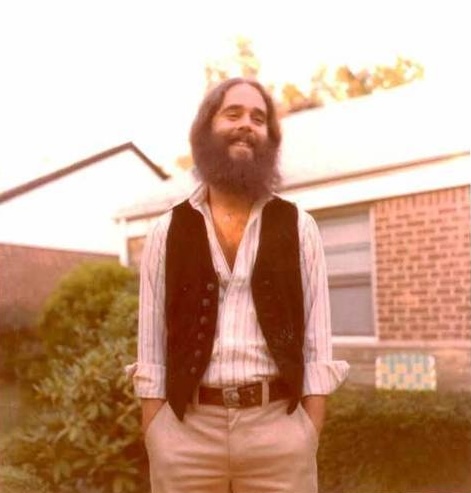
“I was a runaway at 11 years old. That was the 10th time I made the attempt. First time I ran away, I only got as far as the Port Authority Bus Terminal in New York City. This time I hitchhiked to Northern California where my cousin lived on a commune.”
For the past 50 years, Schoer has advocated, hollered, and (figuratively) bunched lapels in his shaking fists in the name of humane and effective mental health care. The guy came by his inclinations the hard way. As is frankly described on the Sanctuary Centers site, Schoer’s mother was tormented by mental health issues. His scarifying childhood experiences would form Schoer’s future personhood and sense of mission. At the time, of course, the kid couldn’t understand the ink-dark shadows enveloping his mom. He just knew he had to leave.
A serial runaway, Schoer was often accompanied on his sprints by one or another pal with a similar truant wanderlust. He and another kid had in fact tried the Escape to California scheme once before. They quit the city and got as far as Ohio, where his buddy’s crying jag put the kibosh on their shared dream and they headed back home. “So I decided to go by myself,” Schoer says, not unreasonably. Having by now perfected his Greyhound Houdini act, the kid made it to California.
When the 11-year-old cross-country argonaut arrived, his surprised cousin showed him around. “It was a commune above Walnut Creek in a little town called La Honda,” Schoer says. His cousin had dropped out of Northwestern following a windfall. “He played the stock market on the side, made a fortune, dropped out of school, and then found drugs.” It’s worth noting here that at 11 years old, Schoer had already been introduced to the vicissitudes of precarious mental health and co-occurring disorders – the latter a keynote in Sanctuary Centers’ present revolution-in-progress. The commune was an eye-opener.
“They were all heroin addicts but they ran a bread baking business,” Schoer says. “They sold to all the bakeries in Walnut Creek and Berkeley. They were renowned for their baking, but their breads were subsidizing their lifestyle.” The 11-year-old Barry nevertheless reveled in his time at the commune, as one would. His cousin had other ideas.
“After four months we got up one morning and my cousin said, ‘Here.’ I said, ‘What’s that?’ He said, ‘It’s a bus ticket. If you don’t do anything else, finish high school. You’re going home today.”
Lobbying and Lobotomies
The firmness of his cousin’s directive (and later an engaged H.S. counselor) saw Schoer to his next chapter. He was studying Law at Syracuse U. when an elective psych class waylaid his Atticus Finch, and he ended up graduating with a degree in Psych and Social Work. His post-grad intro to the profession included vertiginous highs and lows. He worked for a nonprofit that took him along to the state capital of Albany to witness a lobbying effort aimed at changing public intoxication from jail time to treatment time. “I got to go to Albany and that was cooler than anything. Watching all these legislators, that’s really what made the shift,” Schoer says.
A later stint at then-infamous Bellevue Psychiatric Hospital gave Schoer’s determination horrified ballast and momentum for the contentious journey ahead. “The staff carried cattle prods. Probably 50% of the patients were in four-point or six-point restraints at any given time. They were still doing partial lobotomies. They were doing hundreds of electroconvulsive therapy treatments a week, and I had to assist on all of those. What I saw at Bellevue was everything I came to abhor about mental health treatment.”
Next week: Barry Schoer and Stephanie Drake, PhD explain Sanctuary Centers’ implausible past and paradigm-tweaking future
You might also be interested in...




You must be logged in to post a comment.