
The Fred Toye Shogunate

Meeting one’s hero can be perilous. On paper, anyway. “I wrote him a letter,” Fred Toye explains. Let’s call Fred’s outreach a Message in a Bottle. The earnest missive was written, after all, to Robert Wise – storied Hollywood director of The Sound of Music, West Side Story, The Sand Pebbles, The Day the Earth Stood Still. Wise edited Citizen Kane. You get the idea.
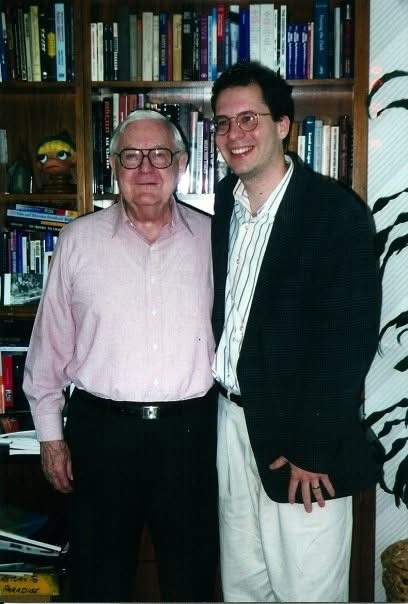
The likelihood of Fred’s dispatch reaching Mr. Wise was that of a sealed note hurled blindly into mountainous seas. It’s as if Fred’s mother hadn’t raised the young man to understand the curtailing limits of this plain brown wrapper we call Life. Right? Excuse me, but it’s not all red carpets, sky-sweeping Klieg lights, and-and-and… fancy little statuettes, is it? Um…I guess I should let Fred talk a little.
“This was in ‘88 or something like that. I sent him a handwritten letter. You know, ‘Hi, my name’s Fred Toye. I want to meet you someday. I’m a huge fan of your work. This is what I experienced in watching your movie. I want to be a director someday, too.’”
Spoiler alarm (or whatever It’s called). Toye is today an Emmy-winning director, having been handed the statuette for his work on the resplendent FX series Shōgun. In fact, by the end of the 76th Emmy ceremony, Shōgun had made history as the most awarded single season of television in Emmy history. Forgive the exclamatory italics, but c’mon.
But it’s 1988. Fred is not an Emmy-winning director with a lockjaw-producing CV, but a fledgling Production Assistant. In a Century City movie theater, he’d taken in a lengthy film he alone in all the world seemed to have missed on the first couple of go-rounds. By the time Christopher Plummer and Julie Andrews are cresting the wildflower-strewn Alps with the Von Trapp kids, Rodgers and Hammerstein’s “Climb Ev’ry Mountain” soaring like a benediction, Fred has been emotionally and creatively delaminated by the film.
Loosely following Spielberg’s famous unannounced appearance at the Malibu door of Ben-Hur director William Wyler in the late seventies (“Well, come on in Steve. Let’s talk movies…”), Fred pours himself into a letter to Robert Wise, who will welcome the wonderstruck young fan with similar grace, sharing with Fred – over many visits – inside Hollywood anecdotes, career guidance, and burgeoning friendship. The whole episode still stuns Toye.
“It was all because I wrote that letter. I just stuck it in the mail. Two weeks later, the phone rings and it’s Robert Wise.” Fred mimes putting the phone to his ear. “’Hello?’ ‘Fred, it’s Bob! I love your letter! Come in and talk to me! I’m on Robertson! Why don’t you come on Tuesday?’” Recalling that first visit, the Emmy winner’s eyes widen. “He had the little marionettes from the The Sound of Music on his desk.”
Red Carpets and Sky-Sweeping Klieg Lights.
The 76th Primetime Emmy Awards find the Television Academy’s membership besotted. Outstanding Drama Series, Outstanding Lead Actor in a Drama Series (Hiroyuki Sanada), Outstanding Lead Actress in a Drama Series (the implausible Anna Sawai) – Shōgun is sweeping. A week prior to the Primetime Emmys, Shōgun had taken 14 categories at the Creative Arts Emmys, which recognizes costumers, sound designers, camera operators, set builders; tech and craftspeople without whose mastery production is a caterer’s table and dog-eared script.
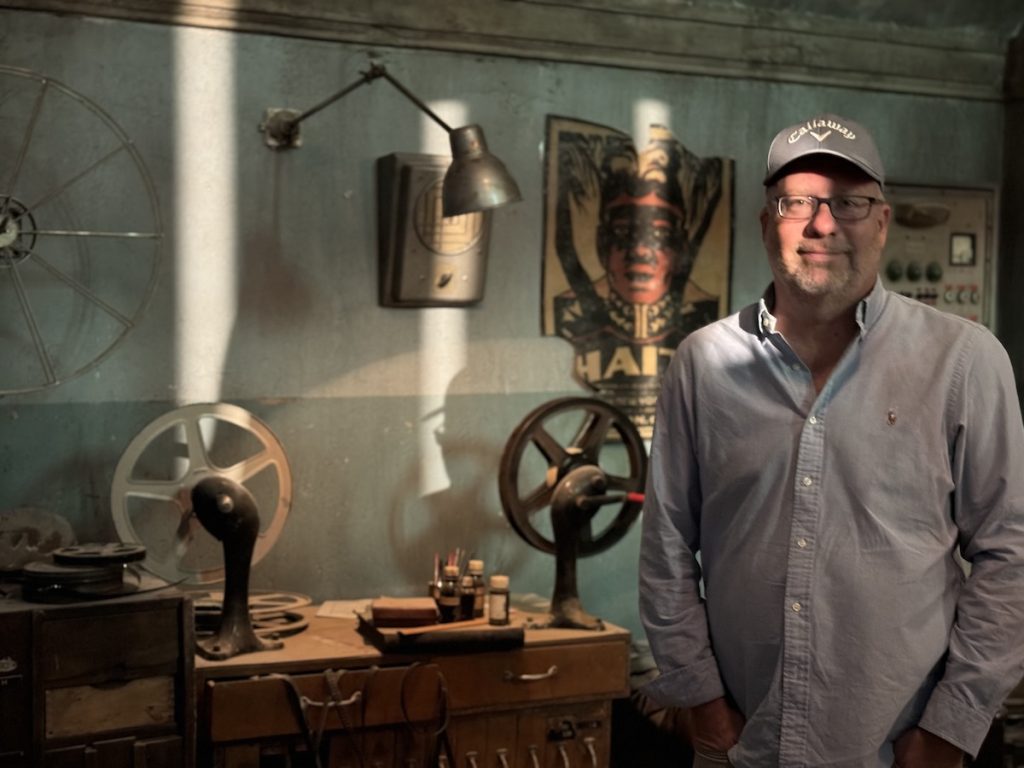
That Creative Arts evening had already bagged Shōgun the distinction most Emmys ever won by a program in a single year. When the following week Fred and co. grasped four additional statues, once reliable superlatives began to wilt in the heat.
Finally, Jane Lynch announces the candidates for Outstanding Directing for a Drama Series {Stephen Daldry, The Crown; Mimi Leder, The Morning Show; Hiro Murai, Mr. & Mrs. Smith; Frederick E.O. Toye, Shōgun; Saul Metzstein, Slow Horses; Salli Richardson-Whitfield, Winning Time}.
Brendan Hunt – Ted Lasso actor/co-creator and Jane Lynch’s amusing foil tonight – opens the envelope. It’s Fred! A grinning Mr. Toye rises from his seat, and before some seven million television viewers turns to his wife and longtime pal, Sandy. Their eyes lock and she glares at Fred with an expression that could tease a throat-cramping, stifled sob from the most jaded awards telecast habitué. These two have walked through fire. Fred strides through raucous applause and climbs the small set of stairs to receive his Emmy – a winged Muse yearning skyward en pointe and bearing aloft an atom; television as the fusion of art and technology. He murmurs something to Jane Lynch as she hands him the prize and she throws back her head and laughs.
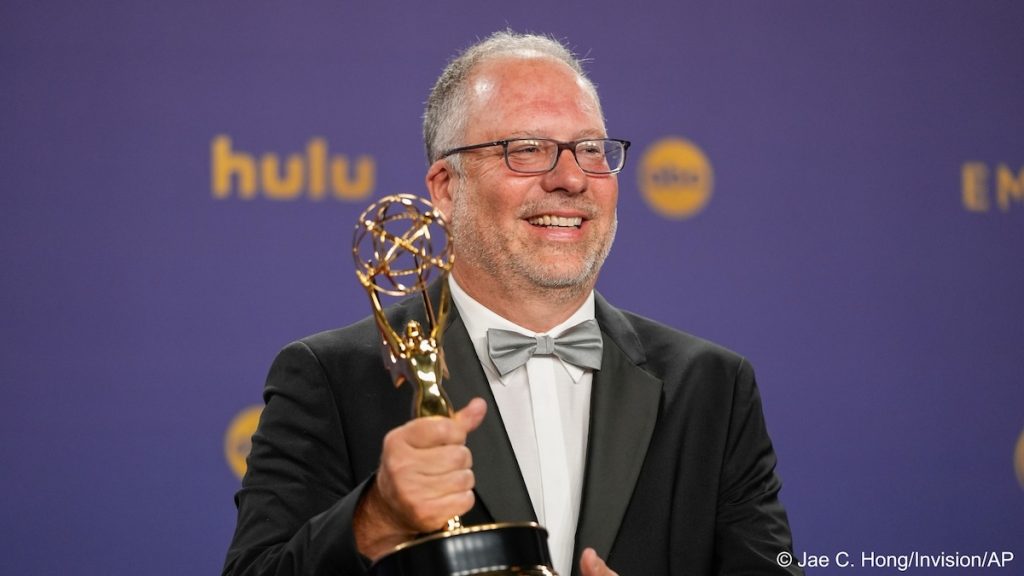
At the daïs Fred thanks “my mom and my dad, and my sister, who’s here, my three daughters and my wife, Sandy…” At that, the camera cuts to the evening’s Outstanding Lead Actor in a Drama Series, Hiroyuki Sanada. Shōgun’s fearsome and taciturn Lord Toranaga – decked out tonight in a classic Dior tux and Allen Edmond shoes – nods vigorously and grins at Fred’s mention of family; giddy emoting that would surely have cost him dear in the wild 17th century melee that is Shōgun’s heart-twisting engine. Fred ends his acceptance speech by name checking his heroes: David Lean, Alfred Hitchcock, Robert Wise, and Akira Kurosawa.
Sometime later we’re chatting on the shade-dappled Corner Green, the Upper Village’s Pocket Central Park. Toye is describing the youthful moment of epiphany that lit his creative fuse and prompted him to dash off that letter to Robert Wise.
“There used to be a theater in Century City called the Plitt Century Plaza. I was there by myself and saw The Sound of Music in 70 Millimeter. The memory is very clear, and it was pretty straightforward. ‘I’m going to find a way to do that.’”
“…you need to think for both of us…”
One imagines with wonder the writer’s pitch to FX brass. “Set in the year 1600 –” (gathered TV execs clear throats and rustle papers) “– a cranky and not terribly likable Englishman is shipwrecked in pre-modern Japan, where he is swept up in byzantine court intrigues and a nuanced power tango with a doomed regent, the whole thing presented with the sort of expensively layered veracity that makes historians stammer with joy. Oh! And about 80% subtitled.”
In fact, Shōgun has more in common with Heinlein’s classic sci-fi novel Stranger in a Strange Land than with any costume drama you will have seen, and is as thrillingly mind-blowing. But let’s pivot now to the fountainhead of self-discovery and pugnacious determination that brought Frederick E.O. Toye to this pass.
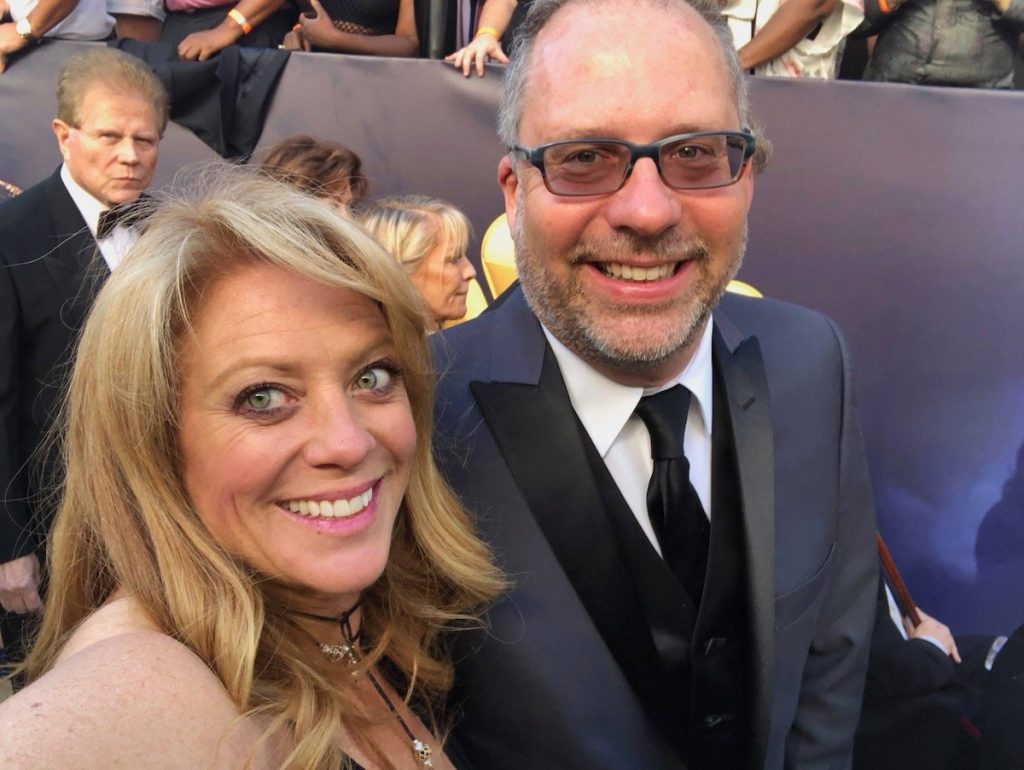
An ‘89 graduate of UCSB’s Film and Media Studies program, the guy has a CV like the tail of a comet. Editor, VFX Supervisor, Producer, Director, Toye has worked on Watchmen, Lost, 11.22.63, Snowpiercer, Westworld, The Walking Dead, The Boys, Fallout, The Good Wife, American Gods, Chuck, Alias, Hawaii Five-O…this is a sampling.
“What brought me to visual storytelling was I watched a lot of TV when I was a kid,” Toye explains. “So all the seventies and eighties TV that I’m sure you watched as well. Of course at the time it’s like, ‘you’re wasting your life watching all that TV!’” The vaunted director laughs. “But television in that era was not like it is today. For a TV show to survive it was all about character. M*A*S*H is a character drama. It’s Hawkeye and BJ, and All in the Family is Archie Bunker…”
The instinctual treasures absorbed by the young TV fiend would later be contextualized by higher ed’s set-top rabbit ears, which tuned the signal to a comprehensible discipline, that of Directing.
“UCSB was the right choice for me because it was a cinema studies program, and we watched movies and wrote papers. That was the program. We weren’t learning how to use the camera.” He elaborates by mapping a scene from a beloved classic to its narrative constituents. “That scene in Casablanca where Ilsa comes to Rick and says, ‘You have to think for the both of us.’ Okay, beautiful moody lighting, we’ve already set up the intrigue of Casablanca, French Morocco, and the Vichy government. We’ve done all of this. What is the intent of that scene?” Fred’s passion for classic cinematic minutiae is nonpareil. The question’s rhetorical nature and my cluelessness combine to keep me silent.
“She’s putting on display the fact that their relationship meant as much to her as it did to Rick. And when she says, ‘You need to think for both of us,’ it provides the pivotal moment in the story for Rick to be able to say, I’m going to do the right thing for everyone; for you, me, and the Western world.’ Big scene, big moment. But if that scene is about, oh, she’s got to be crying, and oh, the lighting has to be like this – well, you’ve lost the point. As long as you know the scene and you have the central sense what it’s doing in the story, then you can just start layering and layering and layering.”
How to Form Chops: 140, 50, 15
Speaking of layering, Fred Toye’s ascent to Directorial eminence is a story of formal education, adoration of craft, and constant progress along that continuum typically described as time in the trenches.

“I’ve directed 140 episodes of television, and edited 50 or so before that, and worked on 15 movies before that. It was just a lot of exposure.” For once, “exposure” isn’t code for “millstone-hauling.” Fred walked into his onerous “dues-paying” Production Assistant phase with his footwear already several feet above the floor. The Emmy-hoisting, Director’s Guild of America-winning Hollywood maestro projects the enigmatic calm of Tom Hanks in Big.
“It was like, I love being a production assistant! It was really fun, really super fun,” he exults. “I’m meeting all these people and helping them and going to recording studios and delivering scripts to actors’ houses and getting hamburgers for famous actors. What could be more fun than that?” (commas expunged to more accurately reflect interviewee’s outburst). “I could say to myself, ‘This sucks. I want to be a director.’ But it didn’t suck!” Buoyed by workplace wonder, Fred Toye rose.
“After production assistant, I started working on set as assistant to a Visual Effects Supervisor. This was the original Addams Family. I was also a production assistant on Dances with Wolves…”
Loving the experience but fearing it was not nourishing the storytelling instincts he knew were central to his becoming a good Director, Fred leaned into editing and was fortunate to be counseled by two greats: Dede Allen (Little Big Man, Slaughterhouse Five, Dog Day Afternoon, Bonnie and Clyde…) and Arthur Schmidt (Coal Miner’s Daughter, Back to the Future, Forrest Gump…).
“Dede knew I wanted to learn. ‘Fred, come in here, let me show you this. This is what I’m going to do.’ And I kind of was like, oh my God, what?” A second revelation awaited Fred Toye – or maybe a 50th revelation. Who’s counting? “The director shot all these performances, and Dede’s saying ‘…this isn’t fast enough, this isn’t slow enough. Where’s the music?’ And I was like, oh She’s telling the story. It came clear to me in those moments, I needed to be an editor to be a storyteller. And then Santa Barbaran Artie Schmidt invited me to work with him as editing assistant on Forrest Gump. That was edited here in Montecito, by the way.”
Family Plot
Fred’s coming into his own as an artist seems to have been a long series of revelations, and on-the-fly mentors grateful to have an insatiably curious mentee willing to grasp the torch. “Fred. Fred! C’mere, kid. Have a look at this.” And then there is the Positive Parent Trap.
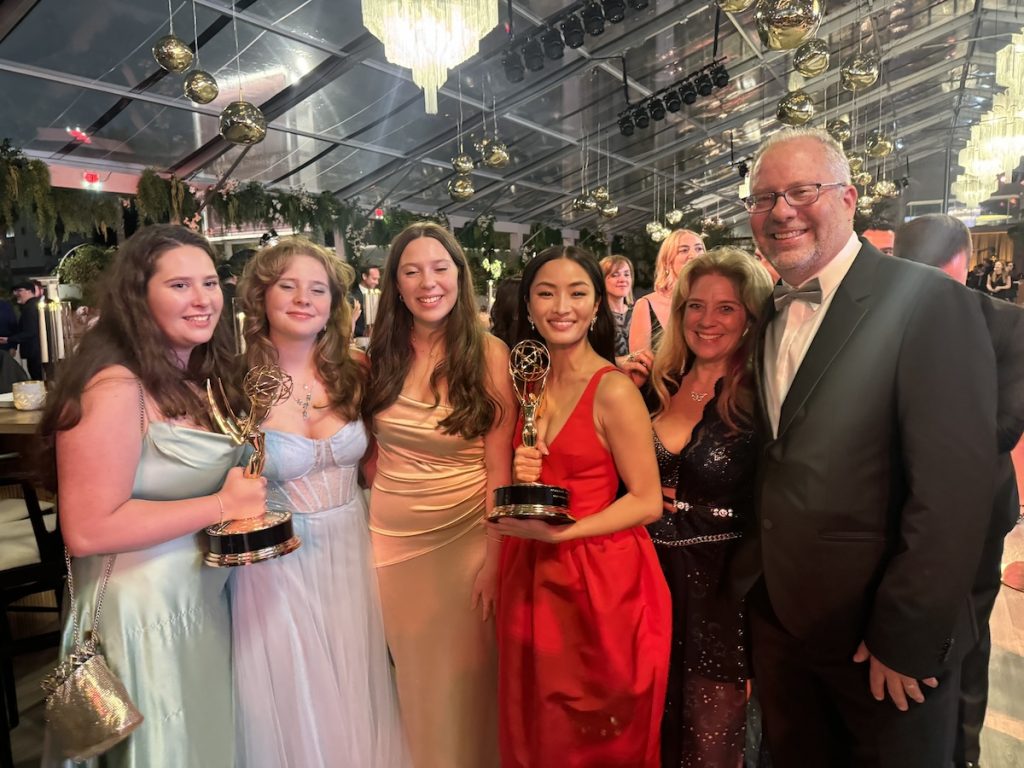
“My mom’s nonstop encouragement is key to this very day – always there, always watching, always comfortably seated in the first row. And of course my dad, an amateur documentary filmmaker, had the foresight to give me my first camera when I was five. Granted, it was made with a squirt gun and toilet paper roll.
“My own daughters Jayna, Sabrina, and Melody are all amazing artists themselves, and each carving their own path. I’m so lucky to be close to them. It was Sandy’s idea to move to Santa Barbara 15 years ago and my daughters have the good fortune of living in a small town in our beautiful SB… a block from my parents, and I am so grateful for that as well.”
Still happily haunted by the glance Fred and Sandy exchanged at the Emmys, I mention it. For those several seconds in that sequined auditorium, her expression telegraphed both this momentary culmination of their shared history – and her mighty effort not to go to pieces on TV. At my mention of Sandy, Fred’s demeanor throws sudden gamma.
“She and I started dating when I was a Production Assistant on the first Addams Family movie in 1990,” he says with a boyish grin. “She has helped me and supported me with great cheerleading through all of it. I couldn’t be more grateful.”
You might also be interested in...




You must be logged in to post a comment.