
Tidal Influence
exercise routine
The bait ball moving with the ebb and flow of an incoming morning tide had attracted a decent chunk of Elkhorn Slough inhabitants toward the frenzied food source. We sat motionless in our kayaks and watched from inside the second largest tract of tidal salt marsh in California, the San Francisco Bay being the largest.
Located in Monterey Bay, this seven-mile-long teeming wetland of mudflats, winding, serpentine-like channels, coastal prairies, and oak woodlands provides much-needed habitat for hundreds of species of plants and animals, including more than 340 species of birds. It has been designated as a protected Ramsar Site – a wetland of international importance – since 2018.
Launching off the beach inside Moss Landing was arguably the easiest launch I’ve ever experienced, and Elkhorn Slough has always been one of the best places to photograph wildlife from a kayak. The teeming wetland possesses the largest concentration of southern sea otters in California, with at least 120 individuals.
Main Channel
The calm, glassy waters rippled with baitfish, sending ravenous squadrons of double-crested cormorants running on the surface of the water, but also seemingly snake-like below while pursuing fish. From above, we followed the somewhat grating calls from aerodynamic Caspian terns as they strategically soared and hovered above before diving into the shallow waters, mostly successful while gobbling baitfish on the fly. They are North America’s largest tern species and arguably the noisiest!
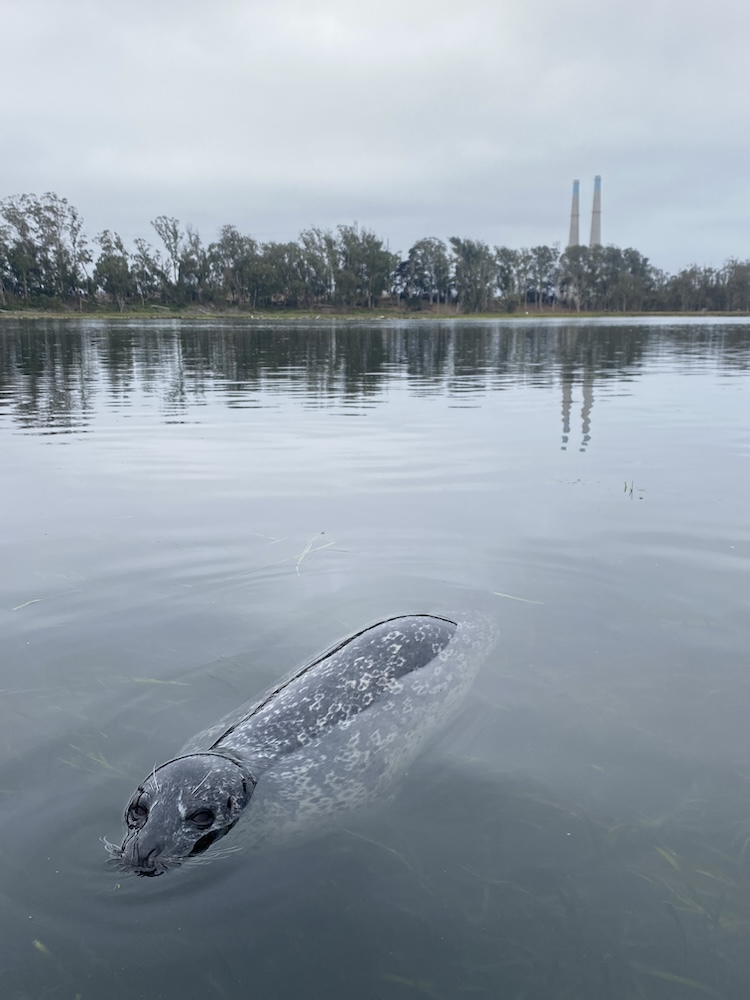
As the bait ball shifted with the tide, my girlfriend Holly and I let the incoming tide take us where it wanted, our kayaks floating above the fray as we followed the food source. Harbor seals maneuvered in, sidling along our kayaks as swarms of western sandpipers, the biggest concentrations of these shorebirds I’ve ever seen, buzzed by us mudflat to mudflat.
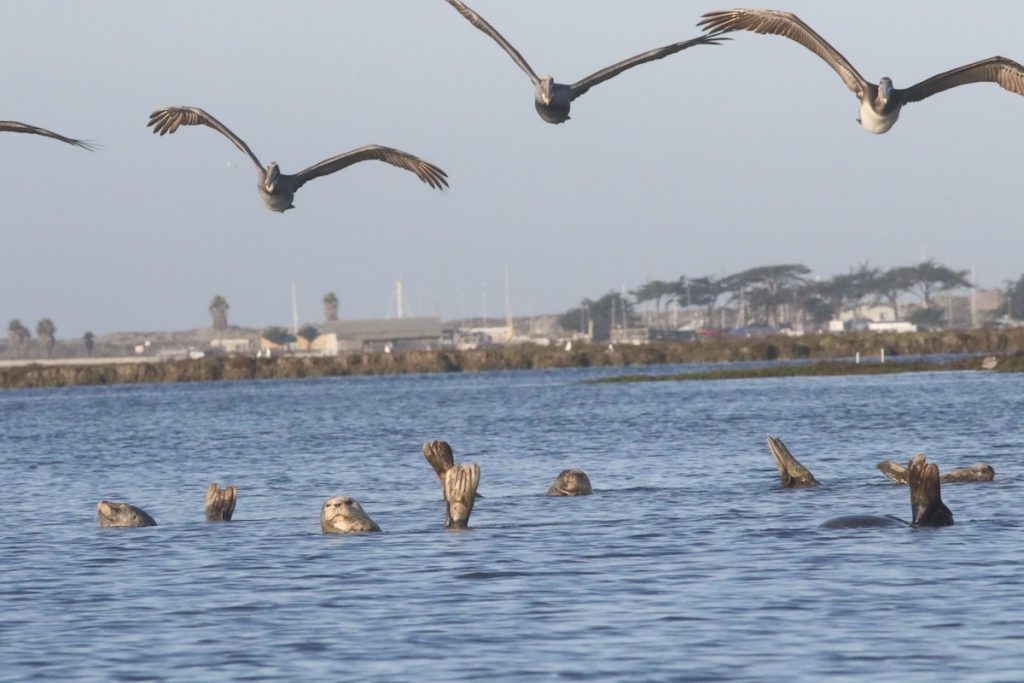
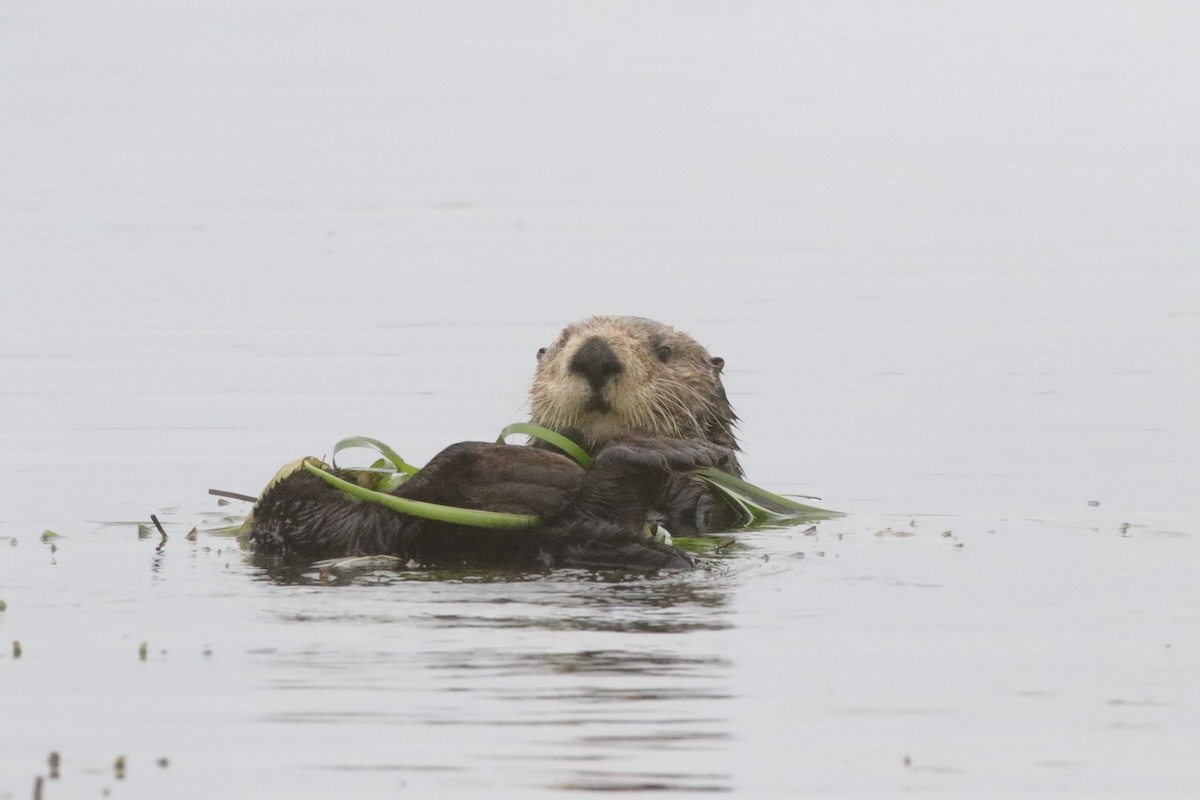
Columns of great egrets and great blue herons waded in the shallows, joining the feeding-frenzy of birdlife and blubbery harbor seals. The only animal seemingly disinterested in the baitfish was a lazy raft of southern sea otters wrapped up in eel grass, some with their padded paws covering their eyes during a mid-morning snooze.
Elkhorn Slough and its serpentine-like channels offer great habitat for otters, seals and sea lions, especially when pupping. The 45,000 acres of wetlands also attract various researchers monitoring everything from sea level rise to flora and fauna and water quality.
Classroom on the Water
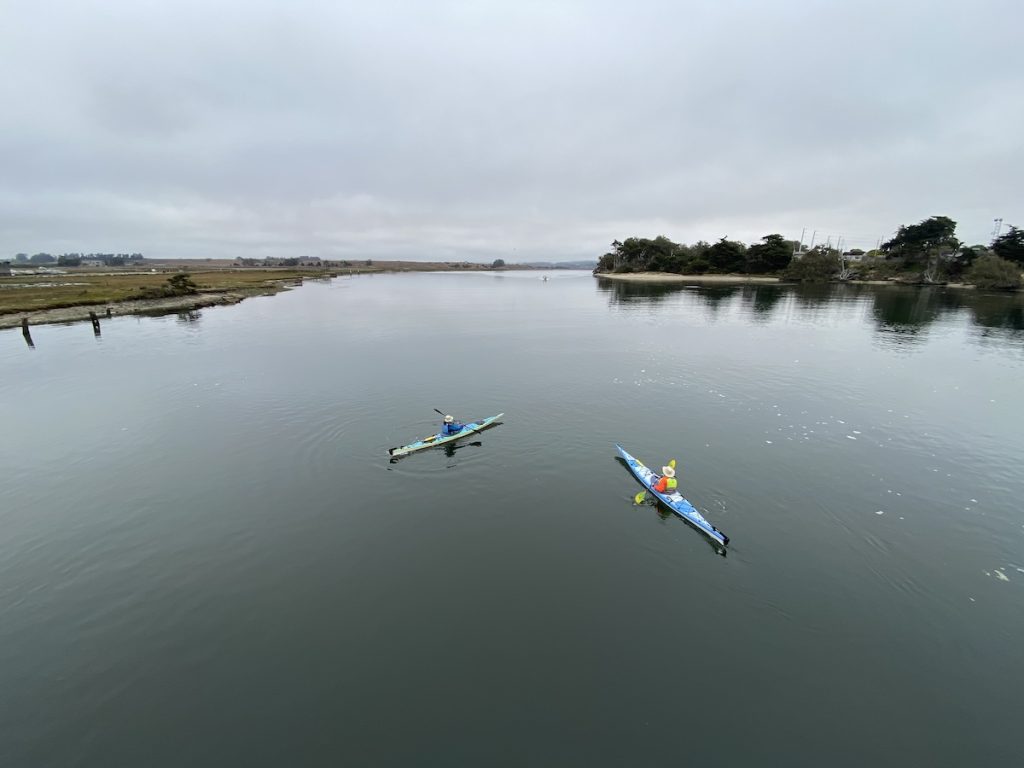
Amongst all the flora and fauna, kayakers and standup paddlers use Elkhorn Slough for recreation. It is a terrific place to paddle and observe and photograph so many species in their natural habitat.
We couldn’t help but notice a kayaker with a mounted iPad, an education specialist for the National Marine Sanctuary. Not wanting to disturb him, I simply had to ask what he was up to. He said he was about 30 seconds away from delivering a live Zoom from the field for 6th graders, a great way for kids to experience and learn from California’s second largest remaining wetland.
Elkhorn Slough represents some of the last 10% of remaining wetlands in the Golden State, always a startling number. I’ve heard this figure many times over but am alarmed every time I hear it again. It forces me to reflect on the Carpinteria Marsh Reserve and Nature Park where I live. That was once slated to become another marina lined with condominiums. I’m thankful for the City of Carpinteria, the UC Reserve System, and nonprofits having come together to right the ship and preserve what is a mere postage stamp of what once was.
Of Mudflats and Pickleweed
The inside of Elkhorn Slough is an aquatic utopia of birdlife, invertebrates, and marine mammals easily coexisting, the ebb and flow of the tide providing food and shelter between extensive mudflats, a maze of narrow channels, and the soft hues of densely soggy pickleweed.
There were common loons swimming alongside sea otters. Large flocks of western sandpipers, Caspian terns and double-crested cormorants shared secluded mudflats while basking in the morning sun. Snowy egrets stood watch from the pickleweed overlooking nursing harbor seals as we floated by in our kayaks, the yelps of needy pups the only sounds we heard as northwest winds steadily increased by early afternoon.
Elkhorn Slough and its many inhabitants are surrounded by agriculture, a power plant, a dairy farm, a harbor and a frenetic Highway 1. Still, Elkhorn Slough thrives, proving that wild things in wild places can coexist beyond the forces of nature.
You might also be interested in...




You must be logged in to post a comment.