
A Day in the Life of a Northern Elephant Seal

The early morning king tide was surging up to the base of the wave-battered bluffs along the Central California coast. At several gullies I waited for sweeping surges of tide to recede outwards so I could run to the next big rock to balance myself above the ebbing tide.
When I reached the wide-open beach a mile up the coast, I stood next to a gurgling creek and listened to the cacophony of northern elephant seals, their sounds drifting across the entire rookery of the second largest seal in the world. There were lots of snorts, bellows, yelps, and cries to nurse. It was barely light when I rounded the end of the bluff and walked right into a marauding coyote. We were only 10 feet from each other when it turned and loped away on top of a windswept marine terrace.
Then I heard some yelping behind me. A northern elephant seal pup had emerged from the surf and was galumphing onto the muddy hardpack. Freshly weaned from its mother, this lone pup would’ve been no match for an adult coyote despite all its thick neck rolls bulging on five weeks of mom’s rich milk. I visualized the pup’s thick neck protecting it from the suffocating choke hold applied by an opportunistic coyote.
Beach Scrum
Being a northern elephant seal pup is no day at the beach. No pun intended. Nature is cruel for squawking pups that are with their doting moms for only five weeks. Every moment of every day is an act of attrition. Grumpy, dominant northern elephant seal bulls that weigh 3,000 to 5,000 pounds, can easily squash a pup as beachmasters defend their territories and patrol crowded harems of 30 to 50 females. When this happens, the pups can also be separated from their moms, which leads to orphaned pups. Big high tides accompanied with large surf also contributes to this separation. The combination of the girthy males and the weather causes havoc for hungry pups just trying to stay as close to their moms as possible.
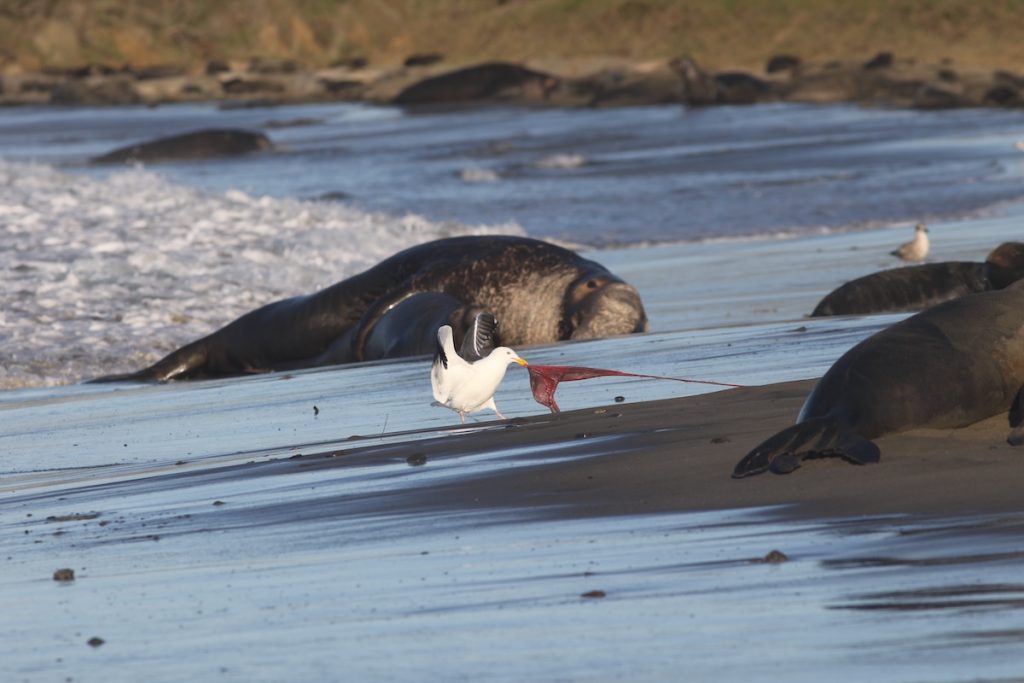
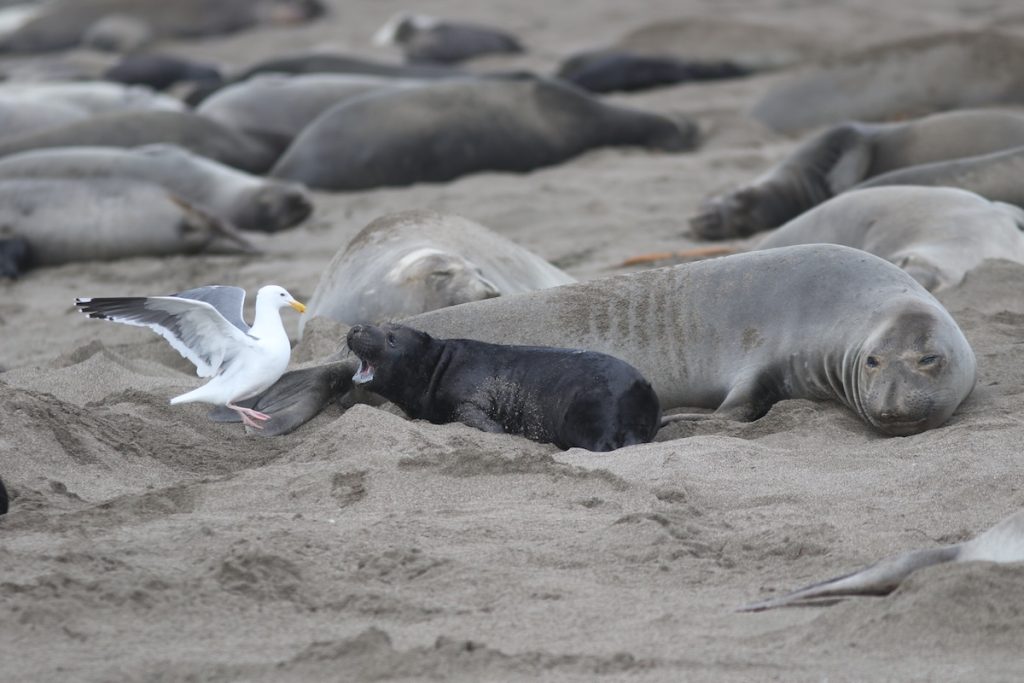
Western gulls, snowy egrets, and even shorebirds such as western sandpipers, killdeer, and black turnstones all benefit from northern elephant seal rookeries. When the pups are born during January and February, the placenta from each birth is highly coveted by hordes of gulls. It’s a stressful time for the moms and their pups. The ravenous gulls hover around the females that are the most pregnant, and when they give birth there are tense moments but also entertaining tug-of-wars over the protein-rich afterbirth. The moms lunge at the gulls in vain, and even the pups are easily agitated by all the attention they get from the scrum of seabirds.
Snowy egrets and shorebirds are less annoying and hover around moving elephant seals. When the seals move, the egrets tiptoe in and nab flecks of old skin or remnants of discarded afterbirth but also swarms of sand flies gathering within the scrum.
Everything is connected, and nothing goes to waste at these rookeries. Those pups that do become separated and eventually orphaned typically starve to death. However, following an act of Mother Nature, sometimes a tolerant mom can be seen nursing more than one pup, with as many as five pups sidling up to a mom in the hopes of nursing.
After the dust has settled and pups don’t survive, the cleaners of the rugged Central Coast capitalize on any northern elephant seal pup carcasses scattered across remote windblown beaches. Squadrons of turkey vultures soar over the rookeries, their black wings in V-formation, teetering in perpetual northwest winds. With their keen eyesight, they easily locate and scavenge their next seaside meal.
Golden Hour
The sandbar at minus low tide was a perfect platform for hundreds of gulls to roost the late afternoon away.
Relaxing in my van, binoculars around my neck, I had a perfect vantage point for what transpired next. When the gulls lifted off in unison, I immediately thought, “Peregrine falcon.” Raucous seabirds filled the afternoon glare, shrouding Piedras Blancas north of San Simeon.
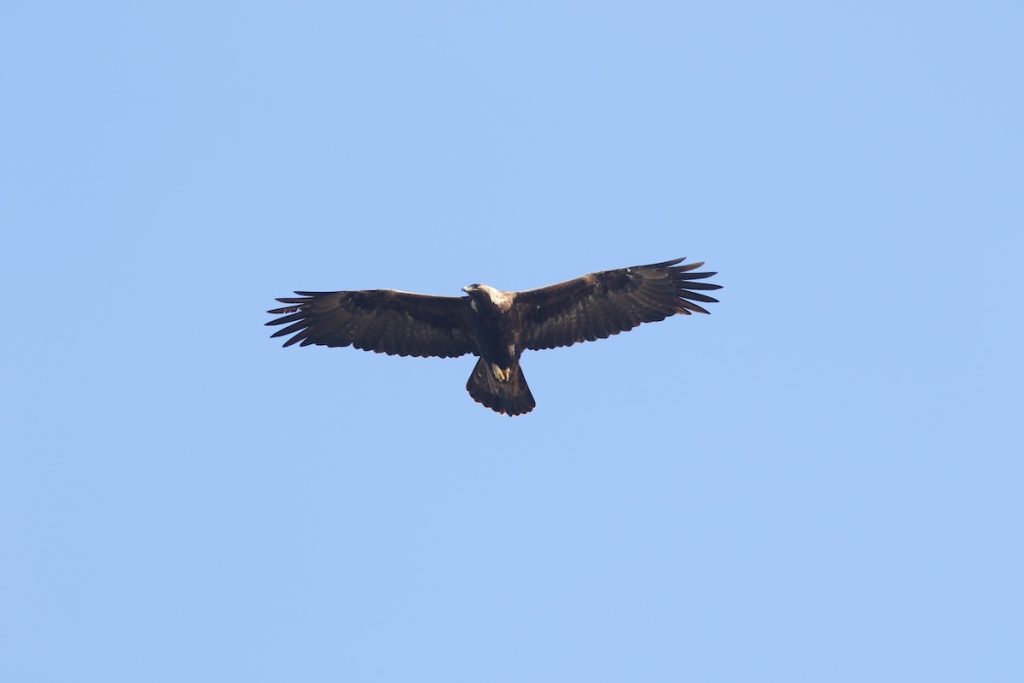
However, any thoughts of it being the fastest flying bird in the world quickly dashed when a very large bird landed on the tallest sand dunes between me, the crowded northern elephant seal rookery, and the now gull-free sandbar. In the glare it was too hard to tell what species of raptor it was. There were only two possibilities. I was hopeful it was a scavenging California condor. They were recently released in the region. Instead, I gladly settled for a marauding golden eagle.
As I fumbled for my camera, it took flight, soaring north along the wave-battered coastal crags. In the meantime, I quickly hiked between the dunes and bluffs hopeful for a golden moment.
There’s always a lot happening within a northern elephant seal colony. Still, when that golden eagle flew back, it stealthily soared just a few feet over the burly seals. The raptor was looking for a carcass to scavenge, but there wasn’t a seal on the beach that knew the predatory bird was there. Sometimes silence is golden.
You might also be interested in...




You must be logged in to post a comment.