
Japan Travels Part 6: Kyoto Lessons…A Day of Tea, Music and Craft
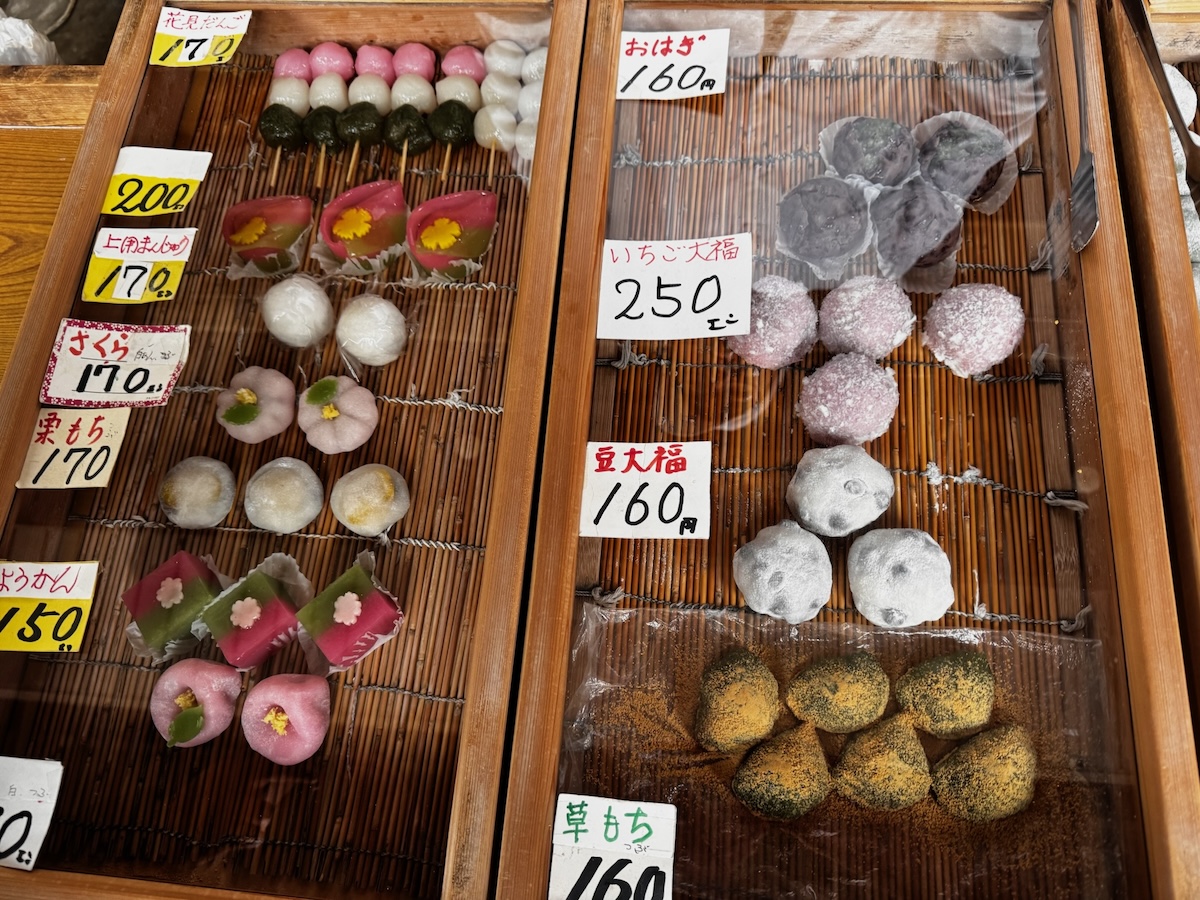
Olivia – my fairy goddaughter #1, now a wife, mother, and doctor of Oriental medicine – was my traveling companion in Kyoto. One particularly memorable day began with pastries at a fancy little bakery before we headed to Tadoro, a tea showroom established in 1790.
There we learned about “open-sky” teas, grown in open, unshaded fields, and bought several fine teas as gifts. After a quick, tasty vegetarian “Buddah bowl” lunch at Veginny, a tucked-away restaurant down a stairwell, we hurried off to a very special music lesson arranged by Wabunka (https://wabunka-lux.jp/kyoto), a terrific company that curates cultural immersion experiences throughout Japan.
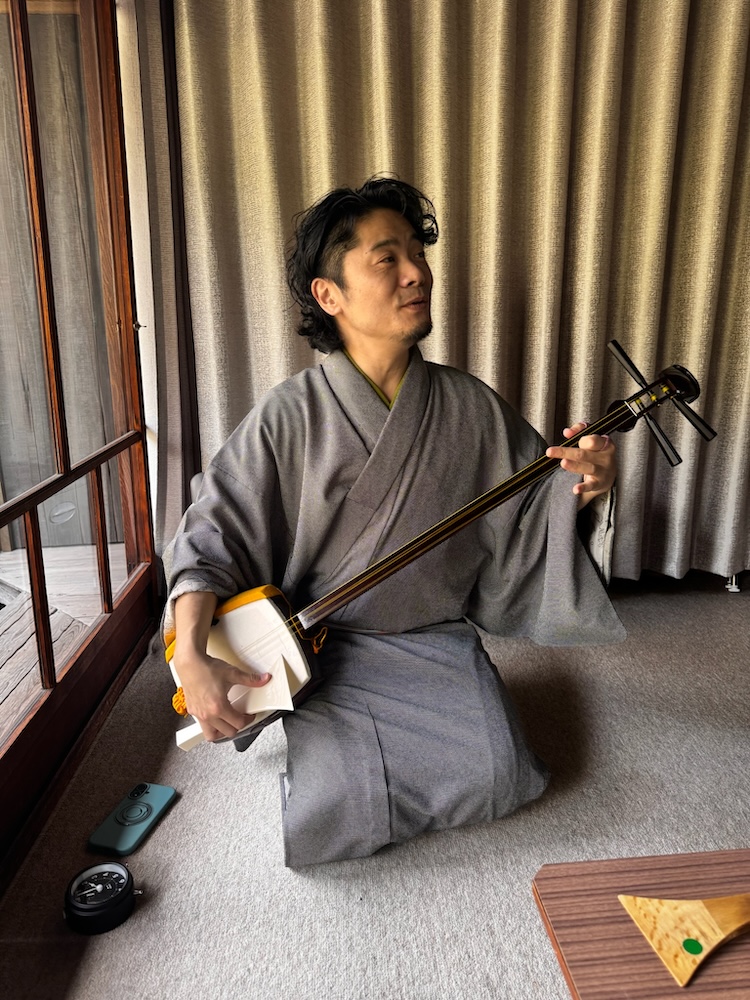
Our 90-minute shamisen lesson took place in a private room overlooking a garden at Daijo-in Temple, an area not ordinarily open to the public.
The shamisen, a traditional three-stringed instrument with a sound reminiscent of a banjo, seemed a fitting choice for me. My father, a jazz musician, had been stationed in Kyoto with the U.S. Army during the Occupation. He served as a bridge guard while also playing piano and drums for fellow servicemen. He even composed a melancholy song there after another soldier gave him lyrics to set to music.
Our teacher, Hakumai Yamada, a performer with the Nagauta Kabuki ensemble, began by explaining that the Japanese musical scale can sound foreign to Western ears. The shamisen dates back about 450 years and was later adopted by traveling blind musicians who could, he explained, “feel the music on their skin and imagine the scenery.”
He played “Matsu no Midori,” a song celebrating spring, pine trees and the transformation of a young woman into a courtesan. Listening to its strange, haunting beauty in that secluded temple room, I couldn’t help but think of my father playing music (albeit of a different sort) in Kyoto nearly 80 years earlier.
Hakumai explained that the music celebrates spring, the wind blowing through the pine trees and the growth of a girl into a woman.
I even wrote a little haiku on the spot for him:
Firefly lights delight
Pine tree-shaped geisha dances
Cherry blossoms float
Hakumai then demonstrated the song we would learn. We were shown how to hold the instrument and taught the fingering. After a few tries, we were playing together, accompanied by his singing.
Once we had “mastered” the shamisen, Hakumai invited us to sing along to Louis Armstrong’s “What a Wonderful World.” I belted it out, a bit off-key but with my usual enthusiasm.
“Wow!” Hakumai exclaimed. “That is the first time that any of my students have sung along!”
I think we got an “A.”
What a treat it was to meet Hakumai and try our hand at this ancient instrument in such a special setting, where we felt not only the change of seasons, but the quiet flow of time.
Before we left, he handed each of us a small paper blessing tied with a blue grosgrain ribbon, made by a friend of his.
“It means that your wish will come true.”
It already had.
After our lesson, Olivia went for an acupuncture treatment while I wandered off for a crafts workshop.
I strolled along the Kamo River, watching cyclists and pedestrians, friends and lovers sitting along the banks and enormous ravens swooping down to steal food from startled picnickers. After crossing the river repeatedly during my explorations, I began wondering whether one of these bridges might have been the very one my father had guarded in 1947.
I had no way of knowing. But somehow it felt right.
My next stop was POJ Studio in the Shimogyo district, a beautifully curated shop filled with Japanese craftsmanship: cherrywood sake cups, handmade ceramics, leaf-shaped incense, woven hangings and exquisite silk and linen kimono jackets. I was there for a kintsugi workshop – the ancient art of repairing broken ceramics with tree sap and powdered brass or gold.
Alongside a charming couple from Maui, I learned the basics, made a small repair and left with a little ceramic vessel safely packed to cure for a month.
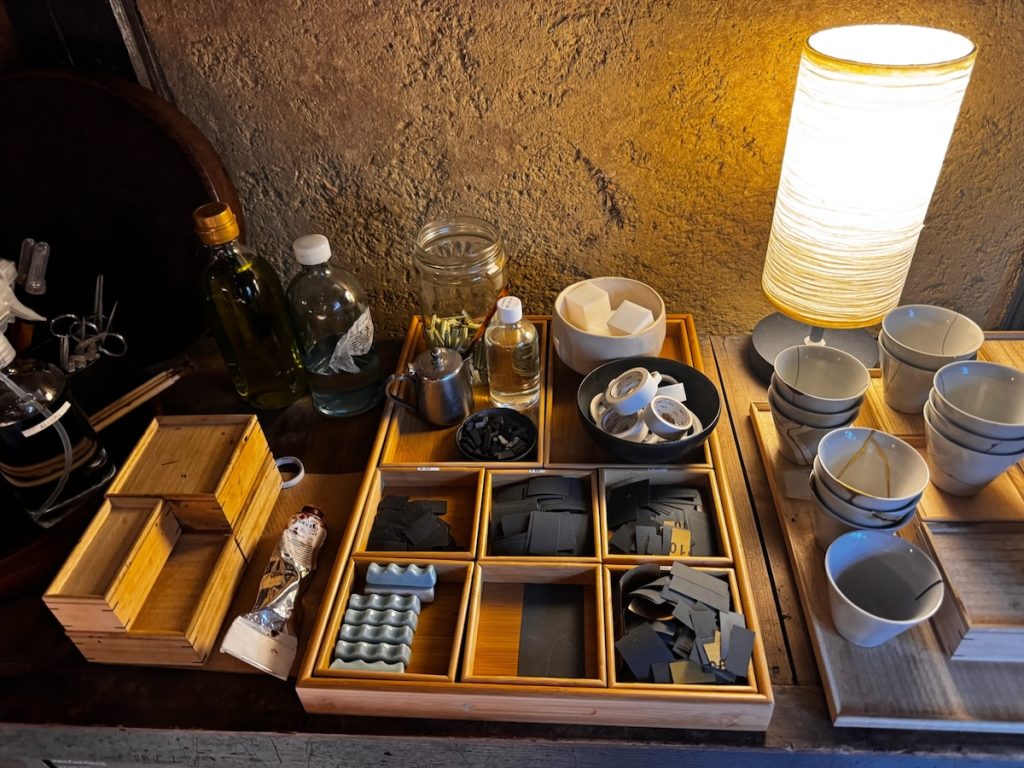
There was something particularly satisfying about learning a craft built around the Japanese idea that broken things need not be discarded; their scars can become part of their beauty.
That philosophy seemed to echo something I was discovering throughout Kyoto: the past is not simply preserved here. It is carried forward, repaired, reinvented, and made part of everyday life.
One evening, after our only disappointing meal, I became fascinated by a restaurant I had passed earlier. Its entrance was marked by a koi pond, and only five tables were visible inside. It wasn’t on Google Maps, so I wrote to the ryokan next door.
Unfortunately, the reply came after we’d left: “So sorry I just found your message. The name of the restaurant is Nishiiji Oedo. I think it’s too late… so sorry.”
It was yet another small example of the kindness and thoughtfulness I encountered everywhere in Japan – even when the answer arrived too late to be useful.
Perhaps that, too, is part of the pleasure of traveling: not finding everything you seek, but discovering things you never knew you were looking for.
You might also be interested in...




You must be logged in to post a comment.