
Music Through Conversation and Art

No introduction to speak of. No words of explanation from the musicians. No mentioning which paintings or sculptures inspired them to choose their piece(s) to perform. Just a few words from the Music Academy staff before and after the first of three events in the galleries of the Santa Barbara Museum of Art, dubbed, with apparent appropriateness, “Beyond Conversation: Dialogues in Music through Art.”
The fellows picked works that spoke to them after viewing SBMA’s current exhibition, As if in a Dream: History, Fantasy, Future, curated by James Glisson, chief curator at the museum. The exhibit is a collection that explores unconscious thoughts, dreams, and imagination across two expansive galleries. The mini-concerts left it up to the listener to figure out those connections, although folks were welcome to approach the musicians to talk about it afterward.
The laudable idea went off swimmingly last Friday afternoon, July 24, although the security guards had their hands full keeping the scores of visitors clear of the artwork, especially as they roamed between the expansive galleries to get up close to the players, who performed in front of the works that had inspired them.
“We toured the exhibition and let the art inspire us in picking the repertoire,” explained violinist Megan Lin, who played a solo piece by Katherine Balch called “Iaspis.”
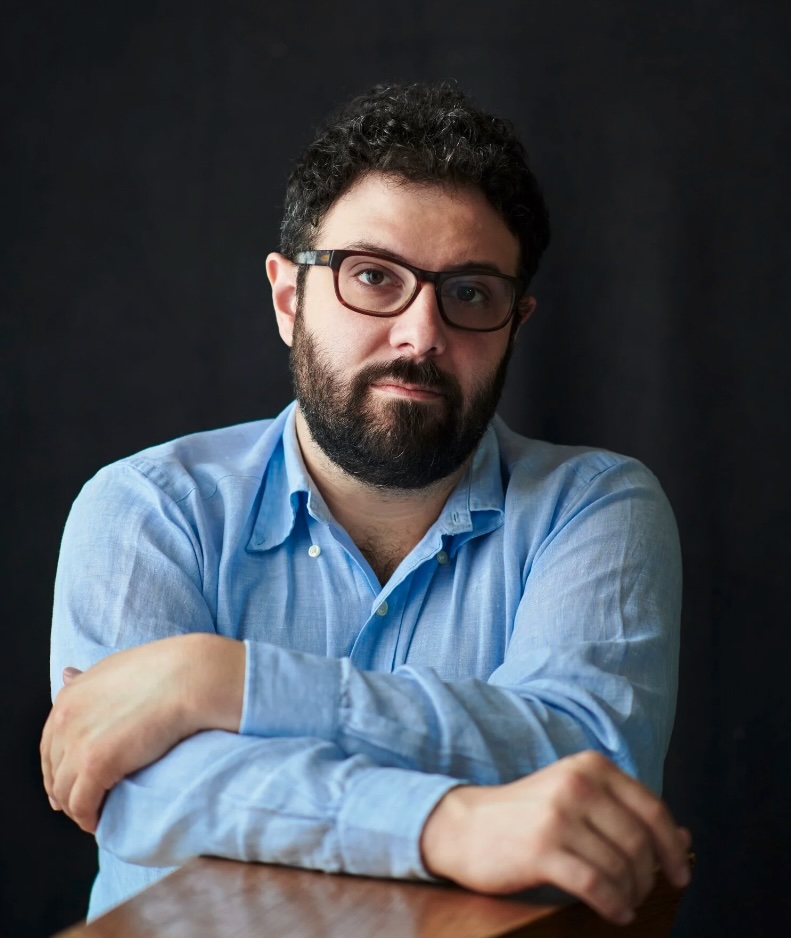
The final two events in the “Beyond Conversation” series take place this week, with all-new fellows featured on July 30, save for harpist Raquel Nisi, the sole such fellow on campus this summer, who I stood behind for last week’s performance, getting an up-close view at the workings of the pedals. She’ll play “La Madone, Op. 43,” by Caroline Lizotte, a Québécoise harpist and composer, while cellist Corinne Turgeon will play her pianist-composer mother Anne Louise-Turgeon’s “Snow Domi,” with pieces by Kaija Saariaho and Arvo Pärt also on the decidedly international program.
The series concludes August 4 with two works by Ravel along with ones by Telemann and Carl Engel. It’s a bold new idea that went over very well last Friday, with the audience applauding long enough to delay the start of the final piece. The “dreaming” takes place at noon each day, free with regular museum admission until each event’s limited capacity has been met.
The other two free Music Academy events this week, which taken together are in many ways among the most fascinating of the season, have the exact same repertoire, with the location serving as the only variable. It’s the West Coast premiere of Guest Composer Christopher Cerrone’s “The Only Way Is Through,” which just had its world premiere on July 19 with Sandbox Percussion and members of the Young People’s Chorus of New York City. That world premiere took place outdoors at the Caramoor Center for Music and the Arts in Katonah, NY, about an hour north of the city.
The MAW performances on campus will feature the percussion fellows and members of the Sing! children’s choir. “The Only Way Is Through” will be conducted by Erin McKibben, who has known Cerrone for years through her own role as flutist and singer with Wild Up. McKibben readily agreed to conduct when the composer suggested the upcoming local performances. As was the world premiere, these performances will also be enjoyed outdoors, at the lush Anne’s Garden on campus July 31, and on August 1 at the Michael Towbes Library Plaza in front of the Santa Barbara Public Library, a decidedly urban environment.
Cerrone, who claimed his first Grammy earlier this year, shared on his website that the piece takes its title from Robert Frost’s “A Servant to Servants,” but was inspired by his first year of fatherhood, when he was “obsessed with the daily challenges of sleep, food, the basics.”
He wrote “In a sense, I’m saturated… I zoomed out and tried to connect that, conceptually, to the saturation everyone seems to be experiencing now – one moment of chaos into the next, political instability worldwide, a pandemic. I wanted to write something that moves forward rather than back.”
The forward movement is literal, too, as the piece opens as a processional with the percussion quartet moving through a line of the choir. The work is meant to come across as an interactive exploration of the fundamental human process of learning to exist in the world.
The kids who comprise the chorus may not understand that existential question, but they’re enthusiastically taking on their roles, despite – for a long period of time – only singing the single word “Through” for a large section of the piece, which grew out of Cerrone’s system of self-soothing by whispering the word to himself late at night when he felt overwhelmed.
At another point, the choir is simply making “shushing” sounds, a vocal form of percussion, McKibben said.
Eleven of the singers are also tasked with playing harmonicas in a textural context that also evolves and changes over time, she said.
“I perform a lot of new music with Wild Up but it’s a totally different thing than any of them have ever done before,” she said. “It’s a whole new world where we get to look at these little melodic or rhythmic cells and the importance of the musical materials that are very different from Mozart. It evolves over a long period of time but they seem to be enjoying it.”
The percussion quartet play chimes, pipes, glockenspiels and the like, both for textural and auditory opportunities, McKibben said.
“I think he wanted to have instruments that sounded like children’s toys and would be able to be heard outdoors, as they’re standing in four different corners of the space after the procession,” she said.
How the piece evolves – particularly between the garden and the plaza – will be among the fascinating and illustrative portions of the events. Admission is free, but once again, seating is limited. Get there early.
Upcoming@MAW
Thursday, July 30: Mosher Guest Artist Stephanie Blythe, the renowned, mega-versatile mezzo-soprano opera singer and recitalist, begins her MAW residency by running the vocal master class, where perhaps we’ll hear a preview of some of the selections a few fellows will be performing in an all-American program of pop tunes of the 1930s on Tuesday. Or perhaps it will be an entirely different repertoire. (3:30 pm; Hahn Hall; $10)… Guest Composer Christopher Cerrone also makes his MAW residency debut tonight when his chamber sextet work “Why Was I Born Between Mirrors?”– which features Camerata Pacifica cellist Ani Aznavoorian in her second year as an MAW teaching artist – opens the x2 Series concert titled “Mirrors, Mars & Eternity.” The fascinatingly ethereal/existential program that pairs faculty with fellows also includes Ian Venables’ “Songs of Eternity and Sorrow, Op. 36”; Joel Thompson’s “On Mars”for mezzo-soprano, viola and piano (with faculty pianist Tamar Sanikidze, who played the January 2025 premiere in Atlanta, reprising her role), and Brahms’ more earthbound “Variations on a Theme by Haydn, Op. 56b,” for two pianos, with a total of 18 musicians playing over the evening. (7:30 pm; Hahn Hall; $10-$65)
Friday, July 31: The afternoon brings the West Coast Premiere of Cerrone’s “The Only Way Is Through”at Anne’s Garden on campus at 1:30 pm (see above for more)… With only one week left in the season, it’s a packed Picnic Concert program tonight, with 19 different fellows foraying into works by Poulenc, Mozart, Prokofiev, Hindemith, Brahms and Jacob Gade’s “Tango Fantasia” arranged by Toke Lund Christiansen. (7:30 pm; Hahn Hall; $10-$65)
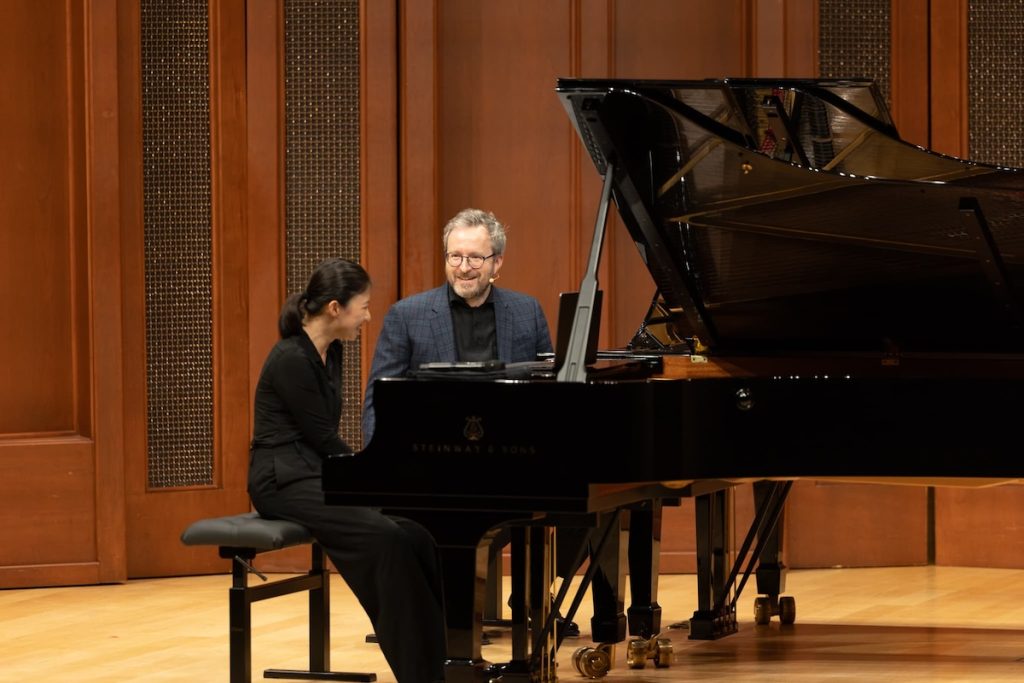
Saturday, August 1: “The Only Way Is Through”gets a second free performance at Santa Barbara Public Library’s Michael Towbes Plaza at 2 pm (see above)… Now that the opera is over, the full-fledged Academy Festival Orchestra returns to the Granada with an exciting appetizer perhaps serving as the pièce de résistance. “No Such Spring,” by Samuel (son of John) Adams, features longtime faculty artist Conor Hanick – who has added Piano Department Chair and Creative and Artistic Advisor to his roles at MAW – as the soloist. The “Piano Concerto” was written for Hanick, who premiered it with the San Francisco Symphony in 2023. Sibelius’ sumptuous “Symphony No. 1 in E Minor, Op. 39,” closes out the night, likely receiving a superior Scandinavian reading as Finnish countryman Hannu Lintu is the conductor of the piece which features Finnish folk tunes in the finale. (7:30 pm; Granada Theatre; $10-$125)
Sunday, August 2: An All-American Fanfare is the theme for the sophomore Brass @ the Bandshell concert at the recently-refurbished Plaza del Mar Band Shell across from Santa Barbara Sea Landing. The 15 brass fellows will perform an array of works anchored by American composers in celebration of the nation’s 250th anniversary summer in the historic site, with activities including food trucks, an instrument exploration station and games for family and friends to enjoy. (12 noon; 131 Castillo St.; free)
Monday, August 3: Both Brahms (“Sonata for Violin” and “Piano No. 2 in A Major, Op. 100”) and Hindemith (“Sonata for Alto Horn and Piano”) are back, along with a sonata by Strauss (“Violin and Piano in E-flat Major, Op. 18”), as the three pillars of the new-for-2026, fellows-powered Sonata Nights program. (7:30 pm; Hahn Hall; $10-$50)
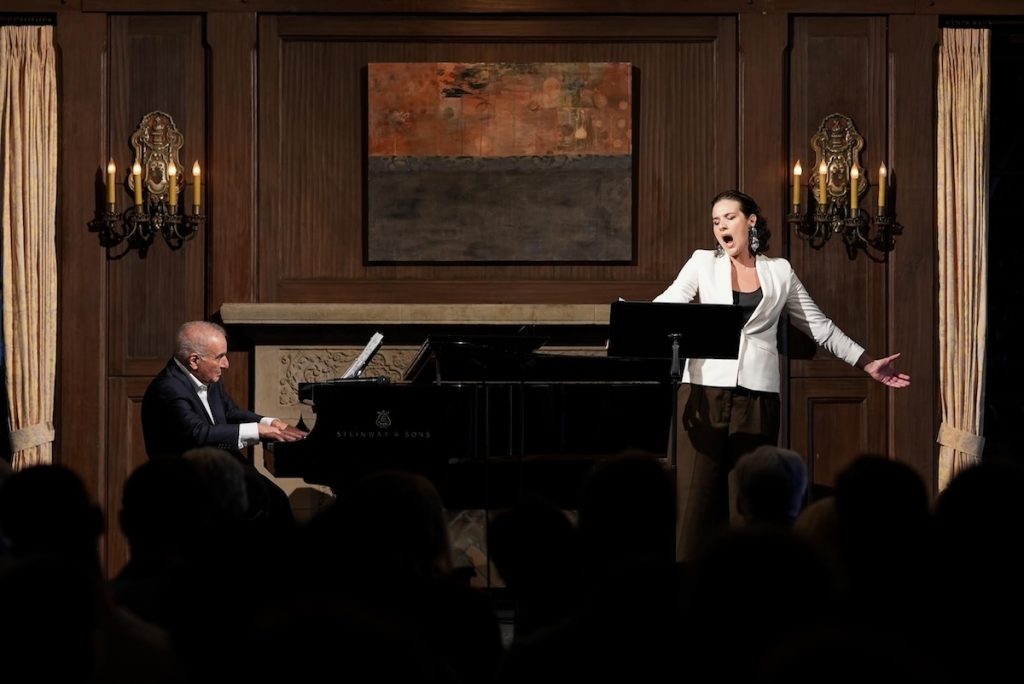
The Salon Series featuring instrumental fellows in the MAW main house returns this Wednesday, August 5 (courtesy photo)
Tuesday, August 4: Noon brings the second of the three-concert series Beyond Conversation: Dialogues in Music Through Art at the Santa Barbara Museum of Art, where select Music Academy fellows play pieces inspired by the new exhibition. See above for details… Tonight, Blythe is back at Hahn to perform with select vocal and vocal piano fellows in an evening billed as “Dreams of America,” starting with another nod to democracy at the nation’s 250th birthday with Alan Louis Smith’s “Vignettes: Ellis Island.” The piece is followed by a bunch of tunes from the Great American Songbook and Tin Pan Alley, including “It Had to Be You,” “Ain’t We Got Fun?,” “You’re the Cream in My Coffee,” and “Button Up Your Overcoat,” among others, in the closest event since the elegant Cabaret fundraiser that used to close out the summer festival moved on. (7:30 pm; Hahn Hall; $10-$80)
Wednesday, August 5: André Caplet’s “Conte fantastique” for string quartet plus harp, and Elgar’s “Piano Quintet in A Minor, Op. 84,” comprise the program for tonight’s Salon Series concert featuring instrumental fellows…following a glass of wine in the MAW main house, of course. (7:30 pm; Lehmann Hall; $10-$65).
You might also be interested in...




You must be logged in to post a comment.