
‘Beethoven’s Tango’ and ‘Stranger’ things
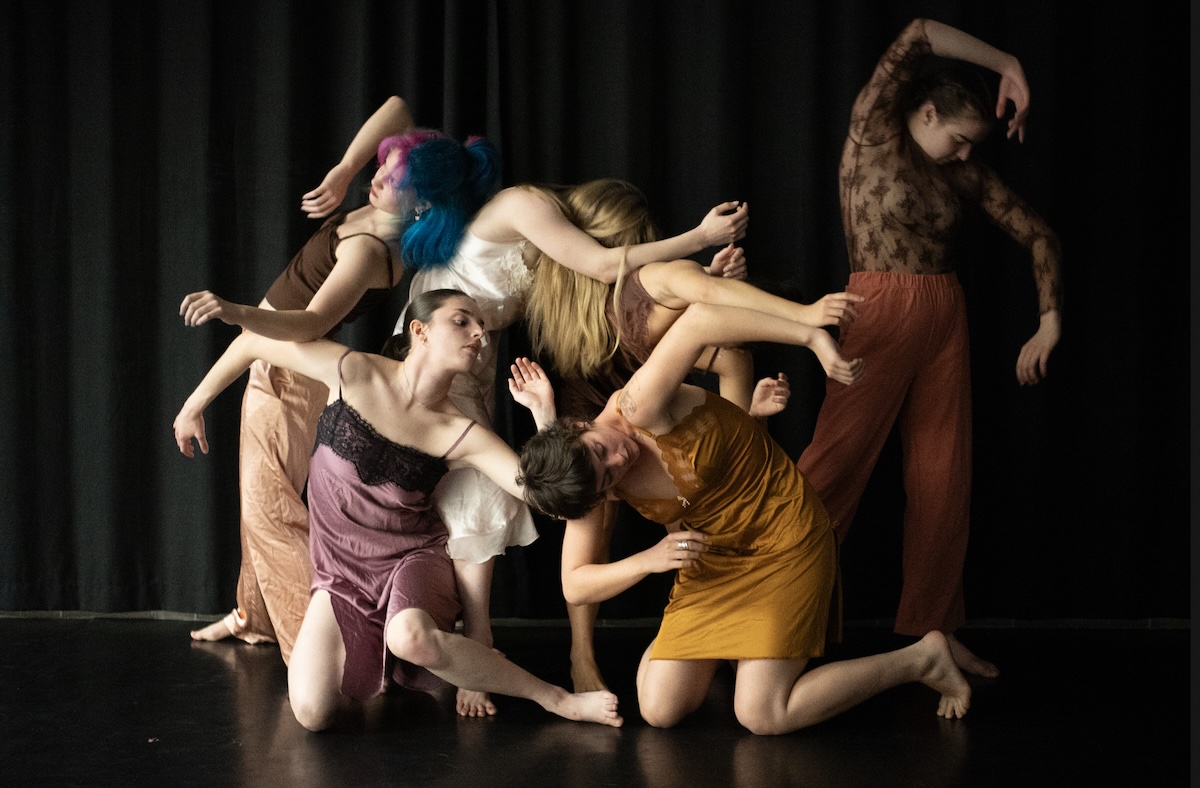
Last year, the Santa Barbara dance organizations Selah Dance Collective and Nomad Tango collaborated on a program called Malena: Between Two Worlds, which brought together champion Boston-based Argentine tango dancers Fernanda Ghi and Silvio Grand with Selah’s contemporary dancers. This weekend, they return to the Lobero with an even more ambitious double bill dubbed Beethoven’s Tango in reference to the post-intermission piece that joins Selah’s distinctly different The Stranger, each creatively exploring questions of identity, alienation and how we encounter one another. Unlike last year’s show, there’s no integration between the companies’ performers on stage, which might make the theme seem even stronger.
Selah’s founder and artistic director Meredith Ventura eschews a literal adaptation of Albert Camus’ novel The Stranger in favor of using it as a point of departure to ask questions about how societies construct and constrict outsiders.
“Camus’ character was inspired by someone he met who was potentially on the autistic spectrum, given the way that he interacts with other people socially,” she explained. “The translation I found has a Hemingway-esque style, with very short sentences and the very dry, very off-putting character. There are several ways I interpret that in the piece.”
Among Ventura’s methodologies is transforming about half of the dancers into stagehands à la Kabuki theater, dressed in the same color as the backdrop, including gloves and face coverings. When they move props and even the other dancers, it seems like they’re floating in midair, an uncanny and disconcerting effect. It carries the character’s lack of typical human emotion into the physical realm, as does the inclusion of aerial acts soaring above the stage with their apparatus covered in black so as not to be seen.
In another section, the black-clad dancers remove the gloves so that it just seems like only their disembodied hands are moving through space, representing the people who are sitting in judgment of the stranger.
“I wanted to abstract the idea of off-puttingness into dance and movement,” Ventura said.
Ventura also contrasts “free and wild movement” with a section depicting a 17th century court dance to “play with the idea of formality as a way to give structure and depict the character getting caught up in a kind of machine feeling.”
Similarly, Ventura set The Stranger against the precision of remastered music by J.S. Bach, having the piece collide with the mathematical musical structures with humor, theatrical absurdity, grotesque imagery and unpredictable physicality, all part of imbuing the character’s world with depictions of “the inability to care.”
Passion is more the order of the day post-intermission, when Ghi and Grand team up again to perform Beethoven’s Tango, which was created through more than two decades of artistic collaboration between Ghi and pianist, composer and anthropologist Alfredo Minetti. The piece imagines the famed composer’s conflicting inner worlds of agony and creativity as he dealt with his increasing deafness, still determined to create new work. The work explores the artist’s struggle through three imagined forces shaping his world, including the Muse, the Angel, and the Duende. The drama of Beethoven’s despair and drive is set against a score of Minetti’s bandoneon music performed by Latin Grammy Best Tango album nominee, Richard Scofano.
The evening begins with the premiere of John Behring’s Paradoxical Ballerinas, a short film that grew from the Hollywood director’s photographs of Selah and (Ventura’s newer company and school) Novus dancers occupying unlikely spaces, from a cemetery to the desert to Park Avenue and elsewhere, echoing the show’s theme of bodies pushed beyond their expected boundaries.
The single performance takes place Friday, September 11, at 7:30 pm. Tickets are $50, $32 for students, and $75 for VIP seating, which includes access to a post-performance reception with the artists.
Visit www.lobero.org.
You might also be interested in...



