
Bridge Over Troubled Waters: SEC Whistleblower/Novelist Michael Cox Explains All

“He’d just taken us to dinner at Bettina with two other couples,” Michael Cox explains. “Andrew and Helen Waters paid the bill, of course. We’re walking back to our cars – I remember this so explicitly – and we passed a couple who’d just come out of the grocery store. The guy has a six pack of Bundaberg Ginger Beer on the trunk of his car. Andrew notices and he says, ‘You know Bundaberg Ginger Beer?’ And I said, ‘Yeah, I know it.’ He goes, ‘That’s my family.’”
This tale was one of many breadcrumbs of the Andrew Waters origin story. He was a man of providence, these stories implied. Someone born with the Midas touch. Like all the other stories, this claim to Bundaberg lineage seemed plausible but was impossible to prove or disprove, and that was the genius of it. Given how the rest of Waters’ claims panned out, the betting odds suggest heavy skepticism is warranted.
We could ask the source directly except that Andrew and Helen Waters are on the lam. Common to many a ‘60s TV cop show, on the lam connotes jittery flight from law enforcement and/or justice generally. On TV, the legal establishment are typically caught flat-footed by bad guys skipping town.
“Say, where’s Carl? He’s late for his deposition.”
“Where do you think, detective? He’s on the lam!”
In Middle English “lam” meant a beating, and to be on the lam meant fleeing one. Former Montecitans Andrew and Helen Waters are on the lam; not from a beating but from the U.S. District Court’s final judgment in the SEC’s Securities Fraud case, which ordered more than $3.2 million in disgorgement, interest, and civil penalties. Andrew was the one charged with fraud; Helen was named as a relief defendant, accused of receiving investor money rather than committing the fraud itself. They are reportedly holed up in Australia, Andrew’s home country, dodging the judgment and the Long Arm of the Law that would otherwise make them pay for the fraudulent investment scheme that handily relieved a throng of credulous Montecitans of their cash.
It all began over a series of lavish dinners – a particularly unguarded hour of the day for locals.
“It was the lifestyle,” Cox says. “The dinner parties, the wine, the horseback riding, the surfing. It was the fact that they clearly had the wealth to just pick up and move their family from Sydney to Hong Kong to Montecito on a whim and live in this beautiful house. They were generous. Andrew presented himself as the former chairman of an investment banking firm who had started his own private equity firm and done ground-breaking deals with tycoons like Peter Scanlon. And now here he was, taking over a U.S. company, set to do it all again just like all those incredibly wealthy serial entrepreneurs you read and wonder about.”
Waters’ grinning dinner guests might quizzically poke him for more info on the investment opportunities he seemed genuinely reluctant to share, but those inquiries over copious wine pours were gently massaged into acquiescence.
“You know,” Cox says. “Ultimately, it was an offer to hitch your wagon to his star. Questions were kept at a minimum because people felt like they were being done a favor. ‘Sure, sure. That sounds great. Thank you, Andrew. I’m excited for the opportunity.’”
To Have and Have Not
When the drama began, Michael Cox, Stanford MBA and fledgling novelist, was in a good place. “It was January 2020, and I was feeling pretty optimistic. After years of struggling, I had just landed my first literary agent for my first novel. In my mind I was about to launch a writing career, and Andrew was recruiting me for a very specific, consulting-related role with this interesting company he was building. It had the trappings of legitimacy and the timing seemed perfect.
“Six days after I started, I’m in Manhattan at the offices of Hearst Global, meeting with Debi Chirichella, who is now the head of Hearst Magazines. I’m there with Andrew and a lawyer and we’re negotiating a purchase agreement for Andrew’s company to buy this retail outlet in China that had a license from Hearst to use the name ELLE, as in ELLE magazine. And I thought, ‘This is great.’”
A harbinger of future turbulence began in short order. COVID, at first a strange and not terribly alarming news story, fully unpacked its bags and stopped the world, including the publishing world.
“While I was digging in with Andrew, my literary agent took my first novel to market. It was March of 2020, right when COVID was becoming a thing. Suddenly, my story of workplace drama set in the great financial crisis was completely uninteresting to the literary world. Within a few months, my writing dream seemed dead. It was hardly the worst consequence of COVID, but it was a tough pill to swallow.”
Cox had discovered the writing path over the decades he worked in the investment world, seasoning his research reports – a genre not given to rapturous reading – with just enough color to engage the reader. “I got to where writing the research became my favorite thing. People would say, ‘I love your research reports. These are so fun to read.’” Cox would take that cue to heart, remaining in finance but dedicating himself to spending several years writing his first novel – with an alacrity and discipline and growing sense of self-discovery that would wow a future agent. When COVID blundered in and swept that opportunity aside on the seeming cusp of long-awaited validation, he took the blow with a true writer’s equanimity. “I had to put it aside.”
Meant To Be
In Andrew’s telling, the Waters – late of Hong Kong, Shanghai, and Sydney – had discovered Santa Barbara around Christmas 2018, renting a Rincon abode for a surfing vacation and falling in love with the area.
“They ended up in a house on Schoolhouse Rd., just around the corner from MUS,” Cox says. “From the beginning, they were just sort of in the community. Montecito Union was a key lever. They threw themselves into the school. Helen was actively involved, meeting with other moms there. My son and the Waters’ daughter were in the same second and third grade class. That was how we first met them.”
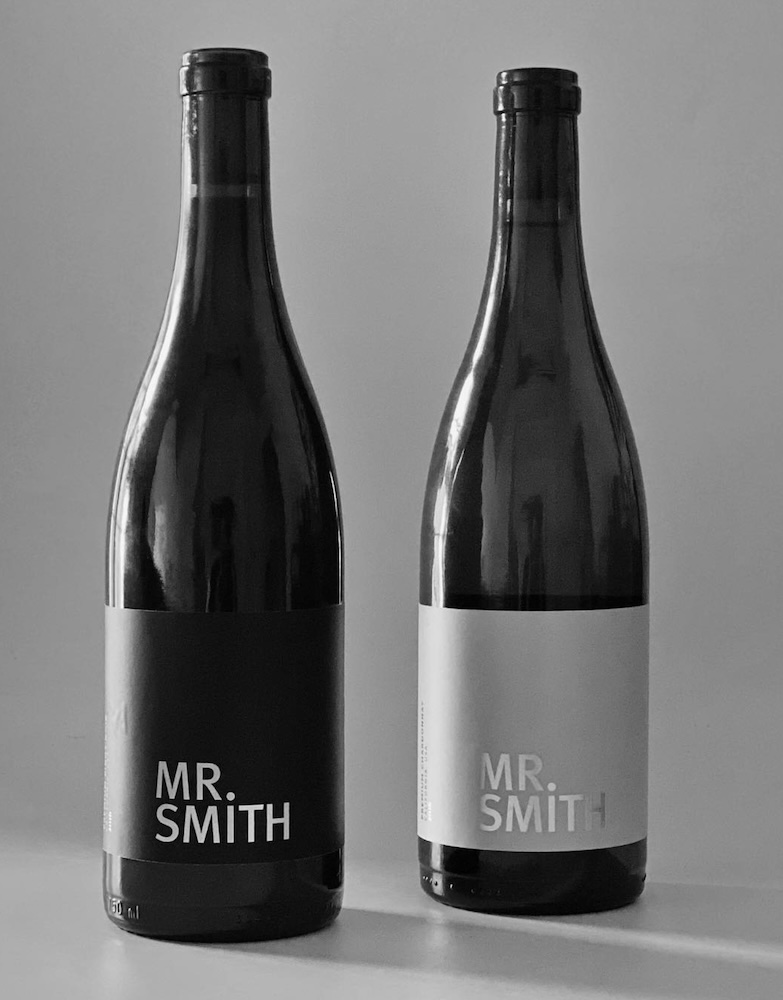
As the Waters endeared themselves to the community, they seemed to exemplify the neighborly, liquid essence of their adoptive new hometown. “They were super generous, hosting parties at their house with a seemingly endless invite list, pouring bottles of Andrew’s wine called Mr. Smith. When it was time to leave, Andrew would thrust a bottle into your hands, saying, ‘Take a bottle with you.’”
Cox’s interest was piqued, but the internet offered curiously little where Andrew Waters was concerned. He was not on LinkedIn. His stories of Chinese private equity deals were a black hole. The appropriately named Mr. Smith wine proved an early token of the Waters’ opacity.
“He never named the Australian investment bank he rose to run,” Cox says. “His business entities always had very strange, boring names. One named in the lawsuits was First Capital Partners. Another was called Co-Brand Partners. The core business was called Ecom Products Group. It’s like a word salad. You can’t Google it.” In the face of this brick wall, Cox consoled himself. “Truly wealthy people don’t need to advertise their wealth, right? Their private equity funds are private. So, your brain automatically goes and fills in the gaps.” When Andrew pitched to Cox the finance role and board of directors’ spot in his company, it all made sense.
“He was a good storyteller, but he was really bad at putting things in writing or presentations, and he could not do spreadsheets and numbers. And so he inserted me into all the things that really required someone who had an investment banking, private equity, finance background. My primary responsibility was to help him get the Hearst deal over the finish line.”
His living room on Schoolhouse Rd, 10 o’clock in the morning.
The tale accelerates, as do the dinner invites; elaborately hosted four-course soirées that invariably end with Andrew hesitantly – grudgingly even – mentioning investment opportunities, a voluminous ELLE retail mailing list of top-drawer marketing targets, Chinese free trade zones, all the while suggesting Andrew’s obligation as a foreign national to divest himself of company stock since his offshore status legally caps his holdings at 50% – a phony legalism, according to the fraud allegations later filed against him, that he successfully uses to convince prospective investors that he is giving them a sweetheart deal.
The show is going like gangbusters. Andrew is the reticent, soft-spoken yin to Helen’s loud and amusingly boisterous 6-foot-tall yang, and together they are captivating. Then Andrew asks Cox for a favor.
“Andrew says to me, ‘I need you to help on our finances. We need to get current filings with the stock exchange so our stock can resume trading.”
It’s while fulfilling Andrew’s request to examine the company’s financials that Cox begins pulling on curiously miscolored threads. When he does so, the Waters’ edifice unspools in bewilderingly short order.
Cox, the Stanford MBA, settles down with the comparatively pedestrian work, and things start to look strange. “At this point, I’ve spent five months with the company, and now I’m looking at a bank account that is constantly at zero. So I started digging into the financials and I’m seeing money transferred around all over the place. Nothing resembles legitimate revenue. It’s very strange.”
Not just strange, but troubling. Cox begins to wonder, and not idly. “I was waking up every day with a massive pain in my stomach, physically feeling sick about the work. There was something really bothering me. I was working 60, 70 hours a week and only going to get paid in stock that was dependent on closing this deal with Hearst. My perspective changed to, ‘I need this to work.’”
Eventually Cox reaches a cul-de-sac in his work with the financials. “I had questions and Andrew had no answers. So I asked Andrew’s permission to contact the company’s former accountant – a guy who quit just before I started. ‘Can you help me understand this stuff?’”
Waters’ former accountant is agreeable, with one largish caveat. “The guy writes back and he says, ‘I’m happy to help, but I’m not going to get involved in the company until I have proof that the $2 million lawsuit has gone away.” Crickets. “I was like, ‘What $2 million lawsuit?’
Every successful deception has a moment when all the disparate pieces fall into place and the hidden picture is revealed. This was Cox’s. It turned out that the $2 million lawsuit alleged a straight up shell game heist. According to the suit, Waters had received $2 million from a former company board member and siphoned it off to other shell company bank accounts. When the board member asked for his money back, Waters claimed that the receiving bank account had been frozen for suspicious activity thanks in large part to the board member’s infusion. Waters said his hands were tied. The money was stuck.
It was a lie, the lawsuit claimed.
“I suspected he would tell me the same story he had told his victim, but I decided to give him a chance to explain,” Cox says. “I met with him in the living room of his house at 10 am on a Friday and asked him to explain the supposedly missing $2 million dollars. I think he flinched, but he didn’t change his story. I handed him my letter of resignation and disappeared from his house for the last time.
“From discovery to me being out was just two days,” Cox says. The knot in his stomach that had grown unabated during his six months with the company was instantly released. This singular revelation tore all the curtains down, the sudden flood of sunlight both cleansing and disorienting. “This was the end, and it felt good. I felt free.”
Old Headaches
Because Waters had installed Cox in a position of prominence, Cox receives a lot of phone calls from investors and partners alike wondering about his sudden departure. “While I was suspicious of everything, I could only say what I knew. I explained what I learned about the $2 million and that was enough for anyone listening. No one dismisses a red flag like that.”
The SEC and the FBI were quickly involved – Cox was subpoenaed by both – but their investigations moved at a snail’s pace. Andrew, Helen and the kids decamped from Montecito to Aspen, Colorado in 2022, and wash-rinse-repeated the same blueprint. It was while in Aspen that Andrew landed one of his biggest victims, someone who, per the SEC’s complaint, lost more than half-a-million in the scam and was set to lose millions more before reaching out to Cox.
“It felt great to help people avoid the Waters’ snare,” Cox says. “But it came at a great personal cost.”
The cost was a “breach of confidentiality” lawsuit that, Cox says, cost him nearly two-hundred-thousand dollars to get dismissed. While Cox was awarded nearly a quarter million in damages, he says Waters has paid zero.
Days after the SEC finally deposed Andrew and Helen Waters, they fled their home in Colorado and began a game of global hopscotch that continues to this day.
New Beginnings
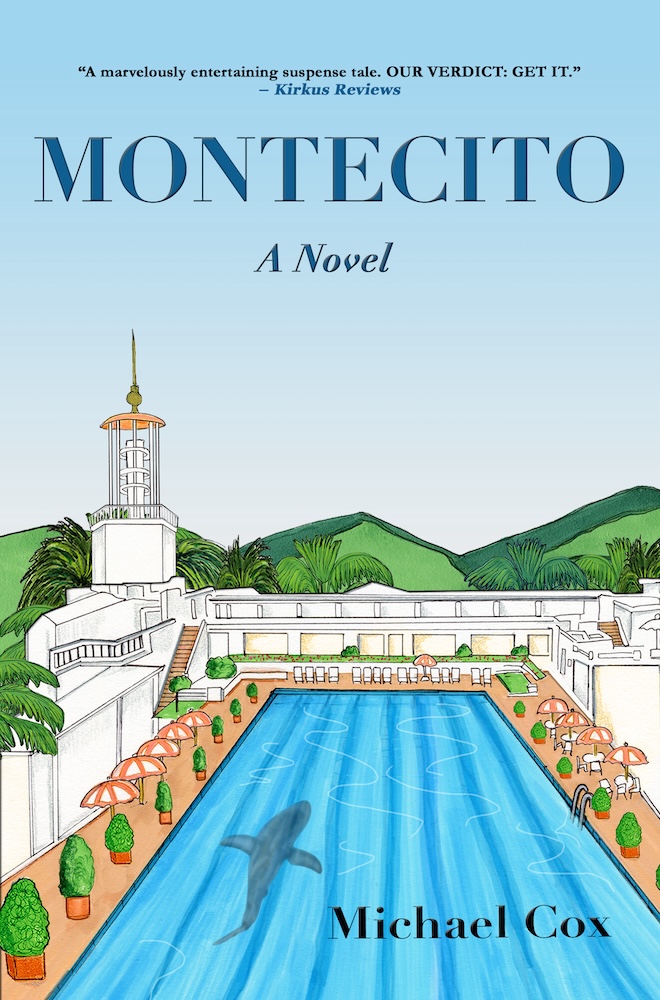
The silver lining in all this wastefulness was the resurrection of Michael Cox’s writing dream. “Montecito: A Novel is not a retelling of this true story, but it was inspired by it,” Cox says. “It was a very painful way to source new material, but I had it, and I couldn’t wait to put it on paper.”
If the SEC and FBI move slowly, then the publishing world is vying for second place. “I can’t believe it’s been six years since all this happened and four years since an earlier version of Montecito was serialized in your paper,” Cox says. “But by the same token, I believe the long, winding road was purposeful. I needed to grow as a writer. I needed to improve the story. And maybe the story needed to wait for the Andrew and Helen Waters’ Securities Fraud case to finally be over. Who knows? But it doesn’t matter now. I couldn’t be more excited for the book to be out and I’m grateful for all the twists and turns that brought me here.”
The Montecito Journal is not an idle bystander to this fantastical journey. On July 7, 2022, we began an experimental serialization of Michael’s novel with zero expectations. Meant to last a scant four weeks, the novel’s serialization ultimately sprinted from cover to cover thanks to unexpected reader enthusiasm.
Montecito: A Novel was published last week in print, eBook, and audiobook formats to rave reviews from Kirkus Reviews and early readers. It is available at Tecolote, Chaucer’s, the Santa Barbara Public Library, and at all online retailers.
You might also be interested in...




You must be logged in to post a comment.