
Bounding Bighorn
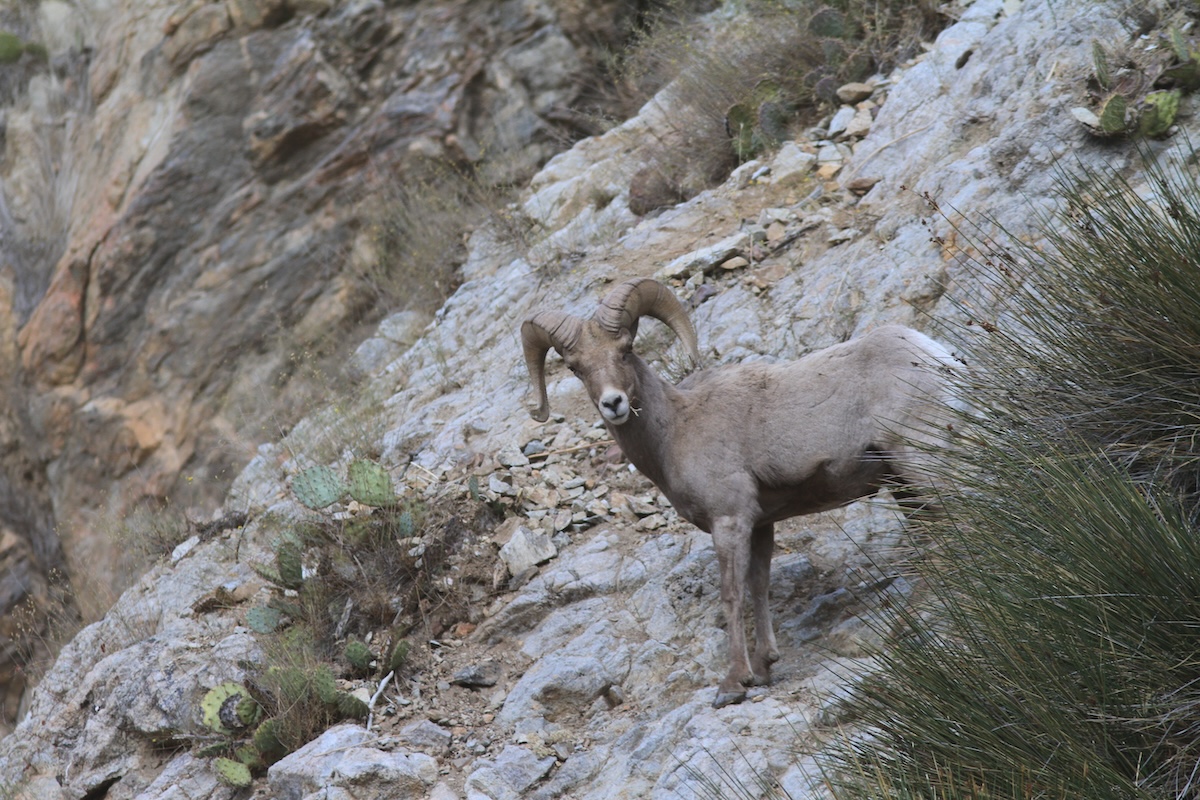
All it took was a crumbly shard of shale cascading down a steep cliff face forcing me to look upward into the blue skies above the rugged Sespe Wilderness, part of the Los Padres National Forest.
It was a majestic desert bighorn ram nimbly traversing toward me. Suddenly, I forgot how exposed I was on a precarious three-foot-wide ledge. Its gaze captivated and its gregariousness knew no bounds as it approached to within 25 feet of me.
Still, hunger was a priority for the burly ram. It quickly grew bored with me and easily turned its attention to a steady diet of birch leaf, mountain mahogany, Hooker’s primrose, holly leaf cherry, and spiny rush, a pantry of backcountry flora fit for nimble-hoofed herbivores.
Soon, he joined 13 other bighorn sheep, and it became apparent it was his herd. There was one other smaller ram in the group, but the rest were ewes. In between feeding, the dominant ram sniffed each female to see if they were in estrus. It was backcountry bliss until it was not. A rocket launch from Vandenberg Airforce Base sent a far-reaching shockwave across the Sespe Wilderness, inducing the bighorn herd to take immediate flight.
As disruptive as that sonic boom was to all things wild in the Sespe, it was astonishing how powerful and nimble those bighorn sheep were. For the most part, they all leapt vertically in two huge strides. It was evident that lofty perches with the advantage of utilizing open space was key to their survival.
Sespe Haven
For over 100 years desert bighorn sheep had been extinct from the Sespe Wilderness. The usual suspects: hunting pressure, disease from livestock, and critical habitat loss wiped out the iconic desert dwellers by the late 1800s.
However, in 1985 and once again in 1987, California Fish and Game performed two separate translocations of desert bighorn sheep totaling 36 animals. The translocated bighorn arrived from Cattle Canyon in the San Gabriel Mountains. As the California condor flies, that mountain range lies 60 miles to the southeast. The Sespe Wilderness has always been the furthest west in desert bighorn sheep’s historic range. They were released near the south slopes of San Rafael Peak at 6,634 feet high and Mutau Flat.
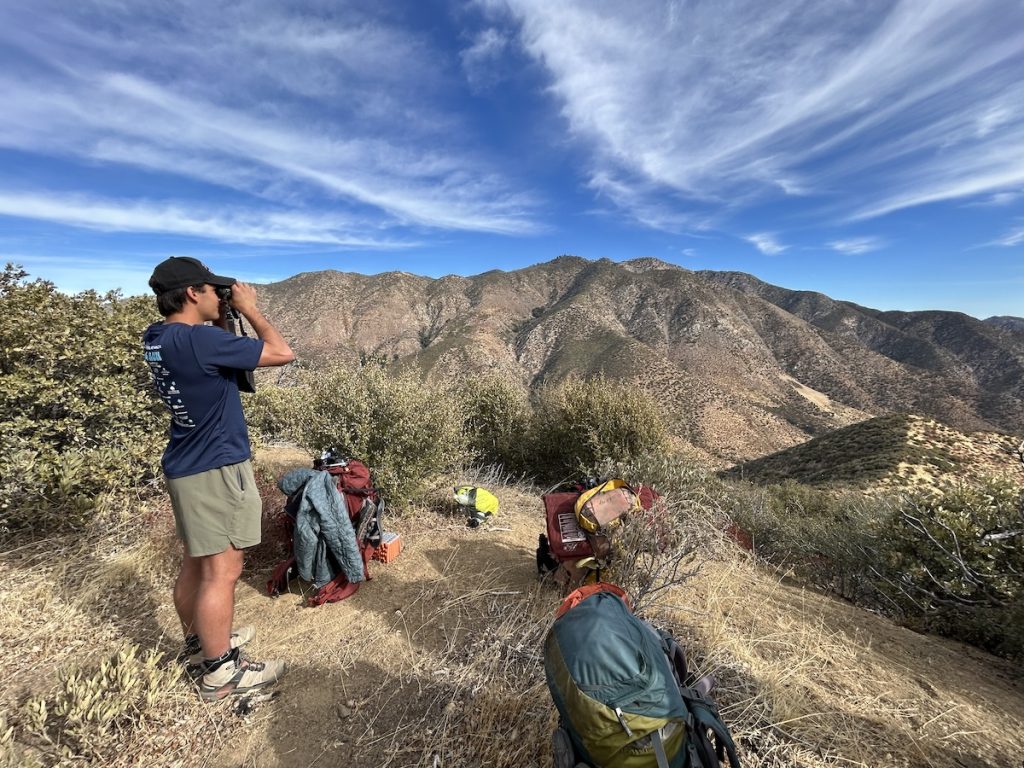
And although the initial translocation was successful with 28 of those bighorn sheep fitted with VHF radio collars, the aftermath was not. Following the two translocations, powerful windstorms scattered the small herds far and wide away from vital escape terrain like the sparsely vegetated San Rafael Peak, Unfortunately, by 1989 16 of those bighorn sheep were confirmed dead, likely by mountain lion predation.
“Monitoring efforts for this population were extremely difficult in the 1990s and early 2000s with a small population in highly inaccessible terrain,” said Dustin Pearce, an environmental scientist with California Fish and Wildlife, and who is the unit biologist in Santa Barbara and Ventura counties covering the Sespe bighorn sheep population. “By 2003 the population was considered extremely reduced/extirpated.”
Then the Day Fire happened in September 2006. The blaze consumed 160,000 acres burning through the chaparral-choked Sespe Wilderness. However, it was just what the Sespe bighorn needed. Bighorn sheep rely heavily on their keen eyesight for spotting apex predators, mainly mountain lions.
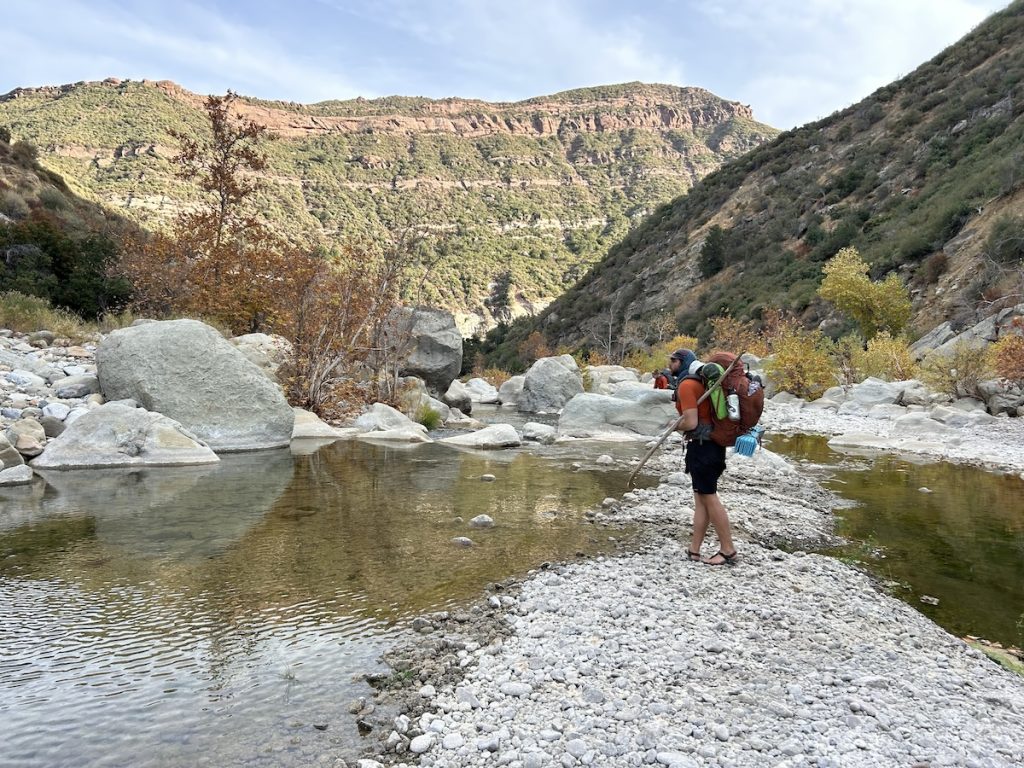
When the two translocations occurred in the 1980s, their habitat surrounding San Rafael Peak was overgrown allowing predators to pick off unwary bighorn. However, the Day Fire leveled the playing field for prey and predator, enabling desert bighorn in the Sespe to increase their numbers. It also allowed hikers and backpackers to occasionally spot bighorn traversing steep cliffs and narrow canyons in their wide open, arid habitat.
As those sightings increased, bighorn survey efforts began anew with an intensive collaring effort that took place in 2017. In all, 19 animals were radio collared, providing new information on their home range and habitat use. In 2019 the population estimate was 119 bighorn sheep with a confidence interval of anywhere between 88-150 bighorn.
And there is optimism that these desert bighorn sheep will continue expanding their range in various regions of the Sespe. Unconfirmed reports include sightings of bighorn near Thorn Point several miles west of San Rafael Peak, and there are confirmed reports of them east to McDonald Peak at 6,870 feet high.
Confirmed Sighting
They were resting on a steep, west-facing slope on a nameless potrero between San Rafael Peak and the narrow spine of Johnson Ridge. Ten desert bighorn sheep basked in the morning sun.
A couple of us were armed with
binoculars, and that’s when Jerry blurted out, “there’s some bighorn right there,” he said, pointing in their direction. We all gazed at the same sweeping slope, amazed at what we were seeing. They were at least a mile away from us, and about four miles north of the Sespe River.
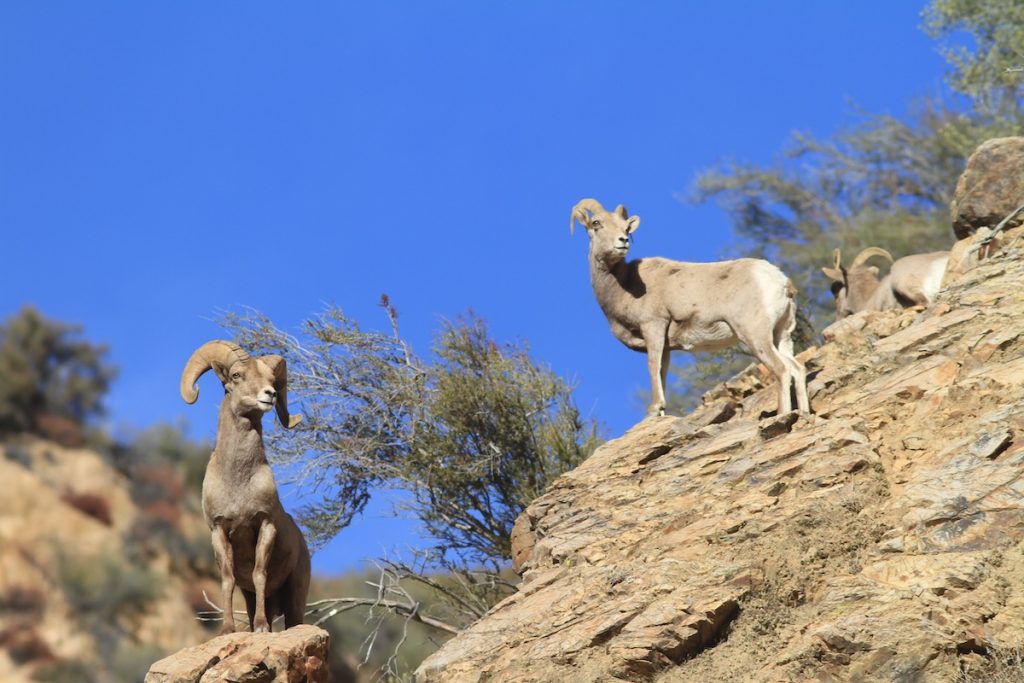
The ram sat above the band of sheep no doubt keeping a keen eye on his herd that included two lambs, a great sign that their numbers continue to grow in the Sespe. While descending Johnson Ridge, we kept tabs on the sheep as they enjoyed mild, mid-winter, 60-degree temps in the backcountry. During our last rest stop on an exposed ridge, we watched the small band of bighorn rise, stretch, and gradually saunter eastward into a narrow ravine that descended several hundred feet below into a shaded creek. They vanished into the dense chaparral, their tan fur easily melding into the seemingly impenetrable backcountry biome.
“Since 2019 we have not had any helicopter surveys for this population but have had ground surveys, when possible,” continued Pearce. “The population does appear to be healthy, but we will need additional information soon on vital rates (survival, reproductive rates) and specifically genetic diversity.”
You might also be interested in...




You must be logged in to post a comment.