
‘Don Giovanni’ in Tinseltown
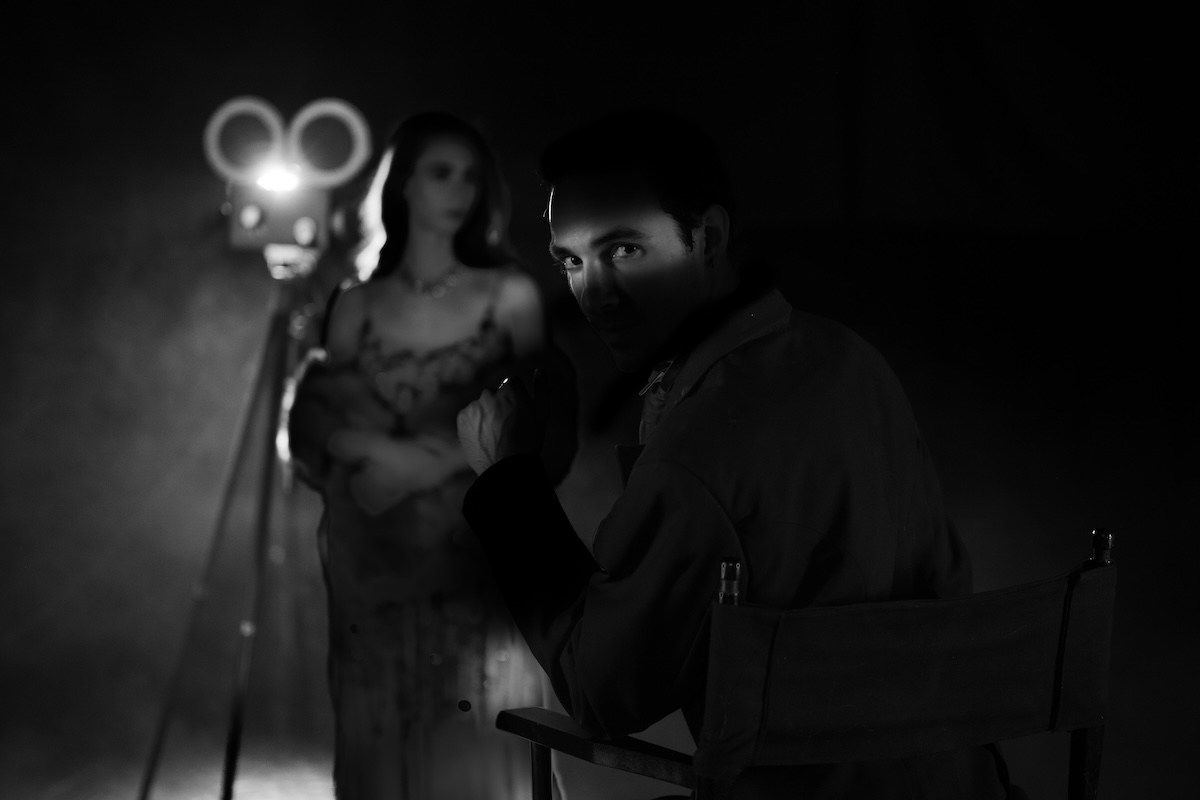
Opera director Mo Zhou made her Music Academy of the West debut two summers ago with a reimagining of La bohème – from 1830s Paris to Brooklyn in 2011. This weekend, Zhou and the talented MAW vocal and instrumental fellows take on Mozart’s Don Giovanni, with the director moving the time and place from Spain in the 17th century to 1930s Hollywood, where the titular character, loosely based on the legend of the fictional libertine Don Juan, is now inspired by Harry Cohn; the infamous head of Columbia Pictures who created the Hollywood studio system and the casting couch culture.
“It’s a perfect setting for the story, because while Hollywood’s most famous sexual predator is Harvey Weinstein, such a prominent scandal means that there’s been generations of collective enabling behind it,” Zhou said. “If you trace all the way back, the toxicity and unspoken rules of the movie culture were established with Harry Cohn.”
The parallels work because the story of Don Giovanni is not just about one man but the system that allows the power to go unchecked, a cadre of people who choose silence over accountability, the director said. Using real historical figures to reframe the opera as a reflection on power, complicity and resistance in 1930s Hollywood provides an anchor for the Lehrer Vocal Institute fellows.
To that end, Giovanni’s right-hand man Leporello is inspired by Sidney Buchman, an early screenwriter and producer who at first worked within the system but later challenged it – at a cost. The Commendatore, who represents reckoning and justice in Don Giovanni, harkens to William C. deMille, the silent movie director whose values opposed the Hollywood machine, while his protégée Dorothy Arzner, among the first generation of female filmmakers, informs the opera’s Donna Anna. Similarly, Donna Elvira is Joan Crawford, Giovanni’s victim Zerlina represents Rita Hayworth, and Zerlina’s fiancé Masetto can be considered a young Orson Welles.
Surprisingly, Zhou’s imagining Giovanni characters as real 1930s Hollywood players isn’t so far-fetched for the Chinese born director.
“My mom is a big fan of Golden Age Hollywood movies, and I grew up watching all of those 1930s and early ‘40s movies,” she said. “That’s partly how I learned English.”
Scenes in MAW’s Giovanni take place on a studio lot that could actually have been in Santa Barbara, where many of the early movies were filmed. There are very clearly on and off camera moments, and a lot of meta moments in the opera, Zhou said.
“You see the dark, gloomy and dangerous haunting dark alleys of the film studio, but also the glitzy side,” she said. “Young starlets’ obsession with the camera and fame and what’s even bigger and deeper behind it enabled how Harry Cohn or Harvey Weinstein had so much power, and why everyone succumbed to them. It’s very relevant in the early career of a young woman to associate the approval and validation of men in power with one’s own worthiness. It’s what still happens in a lot of industries.”
The solution, as it is in the original opera, is to have a similar collective rise up to bring down the libertine or other abusers of power, Zhou said.
“You can’t bring them down by yourself. That’s not possible. It takes a community to stand up, call out and fight against the system to overturn and fix the system.”
As a female director, Zhou said she feels called to make sure that the women in Don Giovanni have a “very clear arc of their progression and growth through this pursuit of justice. The world we’re creating parallels that.”
The women are “much deeper and more complex” than the typical male director might have portrayed them over the centuries. Having previously assistant directed six productions of the opera, Zhou had a passion to put her own stamp on the story with her first turn at the helm several years ago in Florida.
“I wanted to give those women a backbone, not have them just be reacting to what’s happening around them. It’s about making clear the camaraderie and the strength between them. So while the concept might change, my focus has never wavered.”
Of course, the words and the music don’t shift, which suits Zhou just fine.
“The drama and intention of the story are all there in the music,” she said. “Everything stems from the music. With Giovanni, it’s very easy to translate the setting and make everything justify all the musical gestures in the opera.”
Zhou said that it’s been easy to work with conductor Christian Reif for the first time on the MAW production because they share that same ethos.
“Everything for him is from the drama, the storytelling of the music, so it’s been very, very smooth and happy collaboration because we’re going for the same end result. It’s been a dream working with him.”
The cast has also been a joy, Zhou said, starting with Joshua James Klein as Giovanni, who has performed in previous productions several times.
“He knows the show inside out, and he’s very organic, a natural actor,” she said. “His voice, his command of language, the comedic timing, everything’s fantastic.”
It’s all part of the formula for creating a moving and relevant Don Giovanni.
“Doing an opera production is like making a ginormous lasagna,” Zhou said. “Everyone brings one layer of flavor to the process, something brilliant and unique into creating this dish. In the end, what the audience has is very rich and delicious, something you can experience in that very moment.”
Thursday, July 17: Get a head start on opera weekend with this sneak preview that actually serves as an opportunity for the eight Lehrer Vocal Institute (LVI) fellows who serve as understudies for the principal roles in Mozart’s Don Giovanni to run through the entire masterwork in front of an audience. It’s a far more intimate setting but no stage set or orchestra, and Robert W. Weinman offers a pre-concert talk on stage at 1 pm. (Hahn Hall; 2 pm; $10)… Tonight brings the final installment of faculty pianist (and McArthur “Genius” Award winner) Jeremy Denk’s three-day immersion in Beethoven’s powerful piano sonatas, each blending performance and intriguing insights. “Sonata No. 16 in G Major, Op. 31, No. 1” and “Sonata No. 31 in A-flat Major, Op. 110,” bookend Nina Simone’s “Just in Time”and two works by Wagner. (7:30 pm; Hahn Hall; $75-$80)
Friday, July 18: It’s a double bass debut as new faculty member Scott Pingel coaches the fellows in the instrument’s versatility (1 pm; Weinman Hall; $10) (See last week’s issue for my interview with Pingel.)
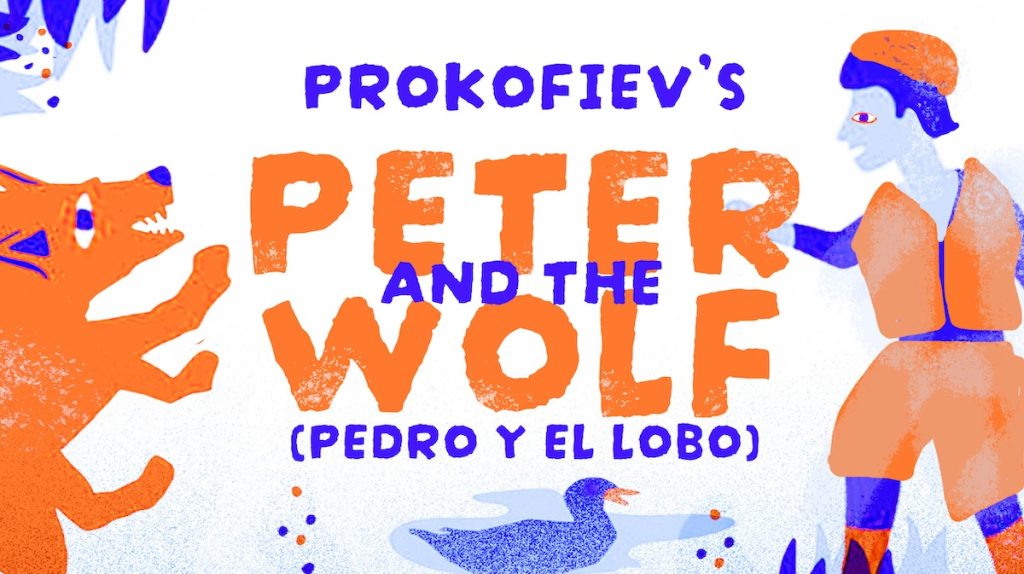
Saturday, July 19: MAW goes bilingual again this year in a double-barreled community outreach program that brings Prokofiev’s popular symphonic tale for children Peter & the Wolf (Pedro y el Lobo) to the Lobero Theatre for a family-friendly morning concert. Instruments portray the personalities and capers of the characters as Peter (strings) defies his grandfather (bassoon) to climb over the garden wall where he encounters a wolf (horn). His animal friends – a bird (flute), a duck (oboe) and a cat (clarinet) – help Peter to persevere. César Cañón is a pianist, vocal coach, educator and conductor, and a devotee of both instrumental chamber music and art song and operatic repertoire. He’ll be wielding the baton for the Academy Chamber Orchestra (the fellows not performing in this weekend’s opera production), with acting and narration in both English (Michael Boudewyns from the vaudeville-inspired troop Really Inventive Stuff) and Spanish (Luis Moreno, a local actor, singer and musician well-known for multiple appearances in town). An Instrument Exploration Station on the Lobero patio at 10 am is when kids can get up close and personal with the instruments of the orchestra through the Santa Barbara Symphony’s Music Van Program. The concert also includes Alberto Ginastera’s Estancia Suite, Opus 8a – four dances extracted from his ballet score as an orchestral suite. (11 am; Lobero Theatre;
$25-$50)
Tuesday, July 22: Tonight’s Solo Piano Spotlight features the program’s five fellows featuring fiery displays of their prodigious power as well as subtler, softer sections of several sonatas, revealing why the keyboard remains music’s most versatile storytelling instrument. Part 2 is next Tuesday. (7:30 pm; Hahn Hall; $40-$45)
Wednesday, July 23: The nine singers who make up MAW’s 2025 Studio Artists get a chance to demonstrate their talents through performances of opera arias and art songs in an afternoon showcase (1:30 pm; Lehmann Hall; $40)… Tonight’s Salon Series concert has been titled “Bolcom and the Bestiary” after two of the program’s pieces, Poulenc’s “Le Bestiaire”and William Bolcom’s “The Walrus and the Carpenter.” Golijov’s “Last Round”and Clara Schumann’s “Piano Trio in G Minor, Op. 17,” round out the fare that will be spread among 18 different instrumental fellows, two LVI singers and faculty pianist Martin Katz. (7:30 pm; Lehmann; $55)
You might also be interested in...




You must be logged in to post a comment.