
The Neighborhood Watch: Protecting the SB Channel Means Thinking Beyond Our Own Waters
Montecito has always had an interesting collection of neighbors. Celebrities, artists, eccentric millionaires, and the occasional visiting royal.
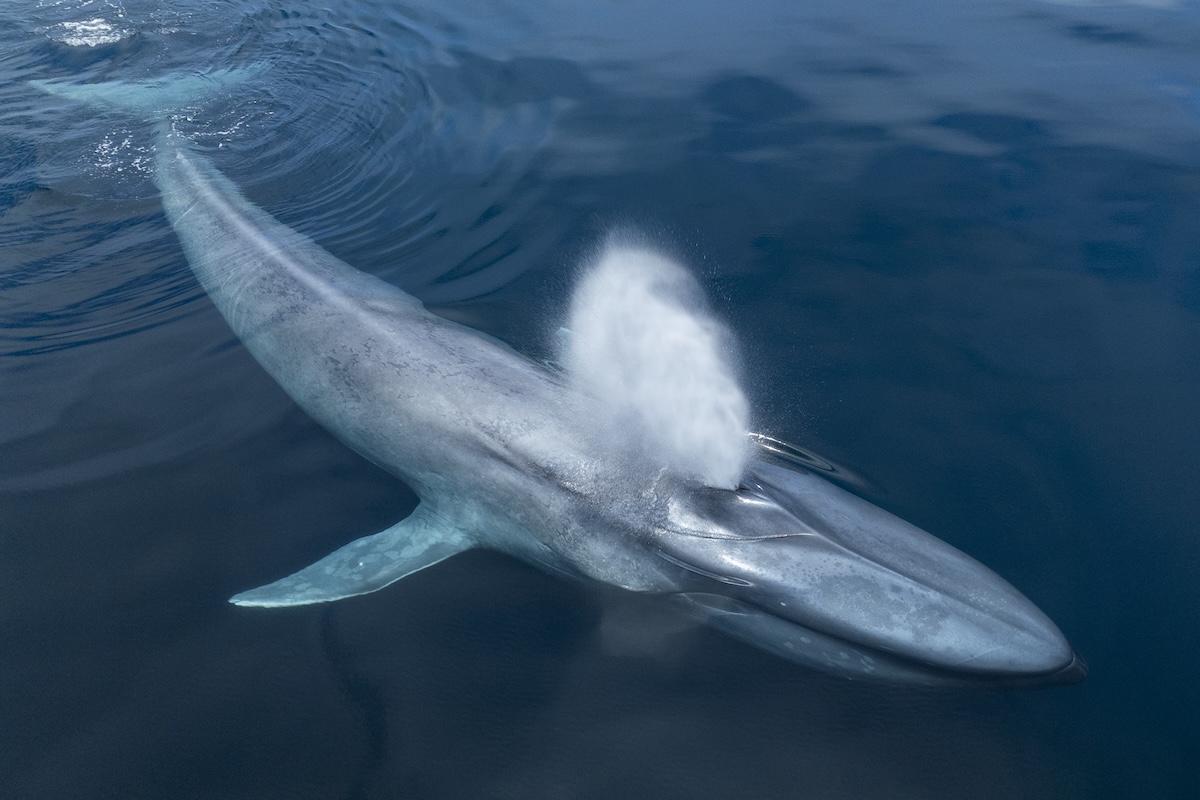
And then there are the ones who weigh 100 tons, eat several tons of krill a day, and rarely bother to introduce themselves.
Our marine neighbors are considerably less interested in real estate prices, although they have some legitimate concerns about traffic.
The Santa Barbara Channel is an important feeding ground for blue, humpback, and other great whales, whose annual migrations carry them along a coastline increasingly crowded with container ships, fishing activity, and human development.
On November 12, the Santa Barbara Maritime Museum will gather an unusual neighborhood watch of scientists, attorneys, and environmental storytellers for “From Local Waters to Global Change,” a panel exploring how protecting our marine neighbors requires cooperation far beyond Santa Barbara.
Because when your neighbors travel thousands of miles every year, the neighborhood gets rather large.
Fortunately, ours has some particularly dedicated residents keeping an eye on things.
Marine biologist Holly Lohuis has spent decades studying and sharing the wonders of the Santa Barbara Channel, first working aboard Island Packers vessels in the 1990s before spending more than 20 years traveling with Jean-Michel Cousteau and his expedition team. Today, she serves as Co-Director of the Santa Barbara Channel Whale Heritage Area, a designation earned in October 2023 that recognizes the region’s commitment to responsible whale watching, conservation, research, and education.
The designation functions much like an environmental accreditation, requiring communities to demonstrate their commitment to protecting cetaceans and their habitats. In Santa Barbara, that means bringing together scientists, federal agencies, conservation organizations, tour operators, and even restaurants serving sustainably harvested seafood.
An impressive neighborhood association, particularly considering how few of its most important members attend the meetings.
The Whale Heritage Area’s steering committee meets several times a year to discuss research, conservation initiatives, and the changing conditions of the Channel. Among its most important partners is Protecting Blue Whales and Blue Skies, a program encouraging commercial vessels to reduce their speeds in designated areas, lowering the risk of collisions with whales while also reducing underwater noise and air pollution.
For Lohuis, the importance of protecting these animals extends far beyond their considerable charisma.
Whales, she explains, are ecosystem engineers, enormous creatures whose everyday activities help sustain the intricate marine food web.
And one of their most valuable contributions is rather less majestic than a breaching humpback.
Whale poop.
The nutrient-rich material whales release near the ocean’s surface helps fertilize phytoplankton, the microscopic organisms that form the foundation of marine ecosystems. These tiny organisms use sunlight to grow, supporting a food chain that eventually circles back to the ocean’s largest animals.
Lohuis calls it the “poop loop,” a particularly effective way of explaining marine ecology to schoolchildren and, presumably, anyone who appreciates a good bathroom joke.
“They’re like the farmers in our fields,” she says, describing how whales enhance the productivity of the ocean.
The significance becomes clearer when considering the devastation of commercial whaling. Lohuis points out that more than 800,000 whales were killed worldwide during the 1960s alone, removing an extraordinary amount of biological activity from marine ecosystems.
Blue whales were driven to a fraction of their historical numbers, while other species suffered similarly catastrophic declines.
Their recovery represents one of conservation’s great achievements, although the challenges have changed considerably since the heyday of industrial whaling.
Today, warming waters are altering where whales find food, while commercial shipping brings the hazards of underwater noise and vessel strikes.
The Whale Heritage Area recently premiered Whales in a Changing Ocean, a 30-minute documentary produced by Adam Ernster examining how changing ocean conditions affect blue, gray, and humpback whales in the Channel.
Lohuis hopes the film will help audiences understand that even an animal weighing 100 tons remains dependent on the smallest organisms in the sea.
And that protecting these relationships requires looking well beyond the Channel Islands.
Following the Money
For Allie Butkiewicz, Director of Major Gifts at ClientEarth USA, the connection between Santa Barbara and the wider Pacific became particularly clear through an environmental dispute hundreds of miles south.
In Mexico’s Gulf of California, the proposed Saguaro Energia liquefied natural gas project has attracted opposition from environmental organizations concerned about its potential effects on marine biodiversity, local communities, and migrating whales.
The project involves transporting natural gas from the United States to a proposed export terminal on Mexico’s Pacific coast. Environmental advocates argue that the associated industrial infrastructure, vessel traffic, and underwater noise could threaten sensitive marine habitats.
ClientEarth USA has approached the controversy from an interesting direction.
Rather than concentrating exclusively on environmental regulations, its attorneys are examining the financial relationships that could make the project possible.
Their question is straightforward. Even setting aside the ecological concerns, does financing the project make good business sense?
In a March 2025 letter to JPMorgan Chase CEO Jamie Dimon, ClientEarth USA urged the bank to reconsider its involvement with the project, citing litigation, financial uncertainty, biodiversity concerns, and potential reputational risks.
The letter outlined lawsuits challenging aspects of the project’s permitting and infrastructure, while questioning whether the investment aligns with the bank’s publicly stated environmental commitments. These are ClientEarth USA’s legal and financial arguments, rather than judicial findings against the bank.
For Butkiewicz, the approach illustrates how different organizations can contribute their particular expertise to a shared environmental concern.
“It’s really key that all these organizations work together,” she says.
ClientEarth USA, a separate nonprofit within the international ClientEarth network, specializes in corporate accountability, using legal and financial arguments to challenge business practices it considers harmful to people and the planet.
And its connection to Santa Barbara goes back further than one might expect.
Butkiewicz recounts that founder James Thornton conceived the organization’s name while walking along Santa Barbara’s beaches with his husband. The area has remained personally meaningful to the organization, inspiring Butkiewicz to develop relationships with local environmental advocates rather than simply arrive with another fundraising pitch.
Those relationships eventually brought her together with Lohuis and the Redford Center, creating the foundation for the November 12 panel.
Three Ways to Make Waves
The evening brings together four speakers representing three complementary approaches to conservation.
Lohuis will provide the scientific perspective, drawing on her experience with the Santa Barbara Channel and marine life around the world. Joining her is Joel Reynolds, a senior attorney with the Natural Resources Defense Council whose decades of work include campaigns protecting gray whales in Baja California and addressing ocean noise pollution.
Danielle Lackey, Executive Director of ClientEarth Americas, will discuss environmental advocacy through corporate law and accountability.
Rounding out the panel is Jill Tidman, Executive Director of the Redford Center, the environmental storytelling organization founded by Robert and James Redford in 2005.
The Redford Center will share an exclusive segment from A Life Illuminated — a film about marine biologist Dr. Edie Widder’s bioluminescent deep dive — bringing filmmaking into a conversation otherwise centered on science and legal strategy.
For Butkiewicz, that combination is particularly important. Scientific research can explain what’s happening. Legal expertise can identify opportunities for intervention. Film and storytelling can help audiences develop the emotional connection that inspires them to care.
Lohuis has witnessed that last element firsthand throughout her career.
“We could share stories, we could share the research, but really, people just need to get out there and get their own emotional connection,” she says.
Technology is making those encounters increasingly personal. Through the Happywhale platform, whale watchers can photograph the distinctive markings on a humpback’s tail and help identify individual animals, sometimes following their sightings across years and thousands of miles.
On a recent Condor Express outing, Lohuis and fellow passengers encountered four humpbacks, identifying three through photographs of their tail flukes. Two already had names.
Suddenly, the enormous animal disappearing beneath the surface becomes a familiar face. Or at least a familiar tail.
And there are ways to help even without boarding a boat.
Lohuis encourages consumers to consider how their purchases are transported, support companies participating in whale-safe shipping initiatives, volunteer with conservation organizations, and experience responsible whale watching firsthand.
Ultimately, the panel aims to make ocean conservation approachable, connecting global challenges with the waters just beyond Santa Barbara’s shoreline.
Because protecting the neighborhood means understanding everyone who passes through it.
Even the neighbors who never stop to say hello.
From Local Waters to Global Change: Protecting Our Ocean and Planet takes place Thursday, November 12, at the Santa Barbara Maritime Museum. Visit https://sbmm.org/santa-barbara-event/whale-panel-discussion for more information. Make an evening of it and also visit Judi Weisbart’s Art & Soul exhibition! (Read more about that here!)
You might also be interested in...



