
Gully Watch
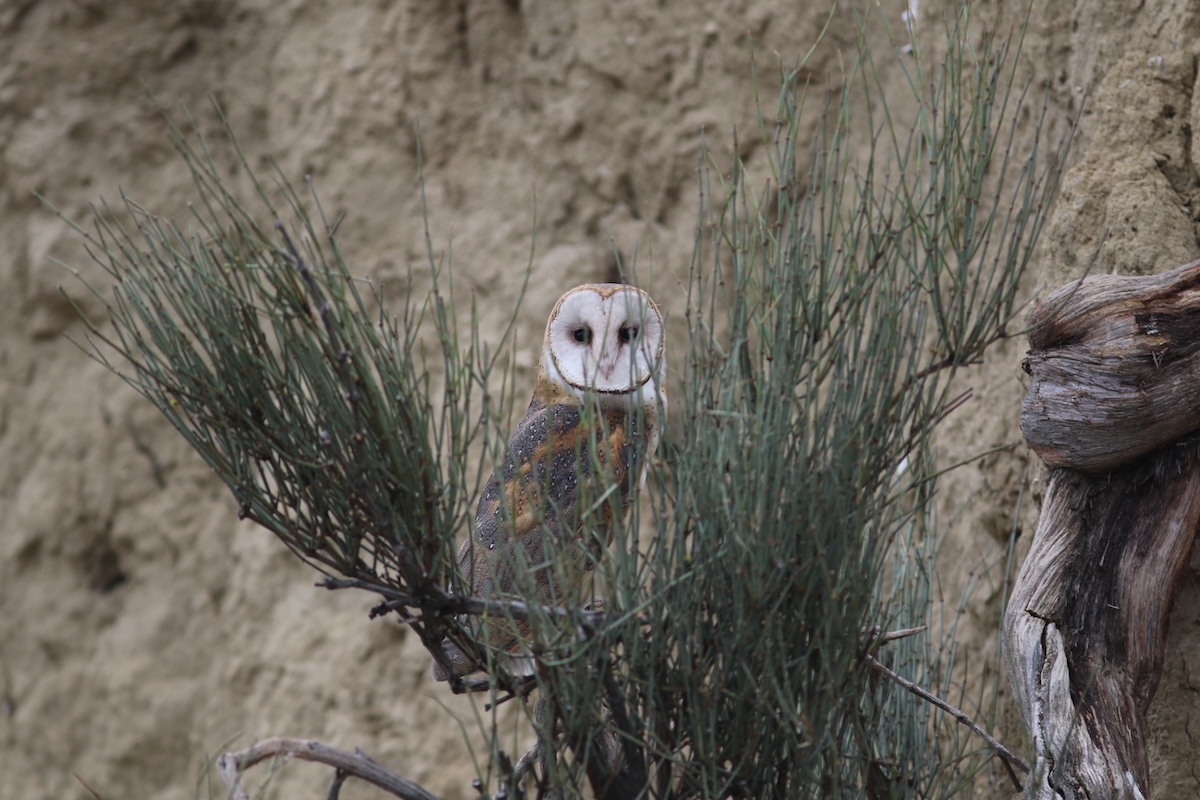
There’s nothing like a good gritty gully. It was a fine tangled maze of chamiso, green ephedra, milkvetch, desert woollystar, and Menzies’ goldenbush, high plains flora concealing unique grassland fauna on the eastern fringe of the Carrizo Plain National Monument.
I stood at the fork of the gravelly gully, briefly contemplating the path I should take. As a wildlife photographer, most of the time I simply need to just go to know. Happenstance has always been something to lean on. The nameless gulch to the northeast had been swept clean by the deluge of December 2025, the downpour in mid-February 2026 the only significant rains of this past winter.
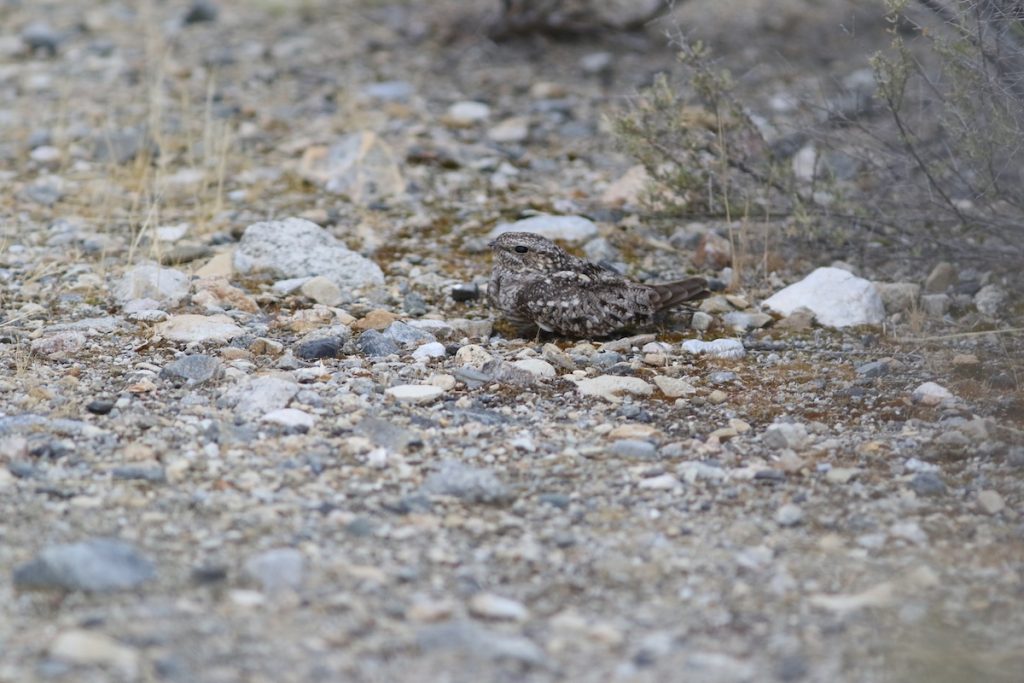
The entrance of the ravine to the northeast had been severely gouged by those rains. Still, the chamiso had held sturdy like no other semi-arid vegetation. That’s when I heard the haunting, low rapid trills of a grounded lesser nighthawk concealed in the thorny vegetation. Its hawk-like flight pattern fooled me at first. As it took flight, I saw its distinct white wing bands. It didn’t fly far. Instead, it swooped and circled above the gully until it vanished behind more dense cover.
A Diverse Landscape
The Carrizo Plain is more than its sweepingly vast, semi-arid grassland prairie. Mountains to the east and west of the plain cast long shadows at sunrise and sunset stretching across its entire expanse. Ephemeral creeks and seasonal arroyos lead to hidden vernal pools scattered across the north section of the national monument. The striated badlands of the Panorama Hills straddle the Carrizo Plain to the west and the higher, elevated Elkhorn Plain to the east. Freshwater springs in the foothills of the Caliente Mountains offer a reprieve for wildlife surviving on the plain.
On foot, there’s much to explore. There are few trails on the Carrizo Plain. Sometimes it’s just a feeling, as I point at a feature on the map and approach it, or a distinct geological landform catches my eye, begging to be sifted and hiked to on the spur of the moment.
I’ll drive my van until I can’t, and then leave it behind, my binoculars and camera pack becoming an extension of me. So, when I flushed the lesser nighthawk from its concealed, low-lying perch, I got as low as it did and immersed myself in that gully. I’d never seen a lesser nighthawk before, because they are mostly nocturnal. It was simply by chance.
The gully I chose was significant to the landscape. It connected the higher elevated Elkhorn Plain with the vaster Carrizo Plain below it. I hiked the entire length of that winding ravine. It was a popular place intertwining several ecosystems, and a natural path for wildlife to roam. I tiptoed past active coyote dens; their fresh piles of scat marked their territories. I came across freshly dug out American badger setts, their burrows being a big part of their intricate subterranean lifestyle.
I also wasn’t expecting to see a family of barn owls nesting in the sidewall of the crumbling gully that was about 15 to 20 feet tall throughout. However, it looked like the parents knew what they were doing. The female had found a sturdy enough alcove and built it out with branches. It was enough to rear two owlets that were still hanging around the nest site.
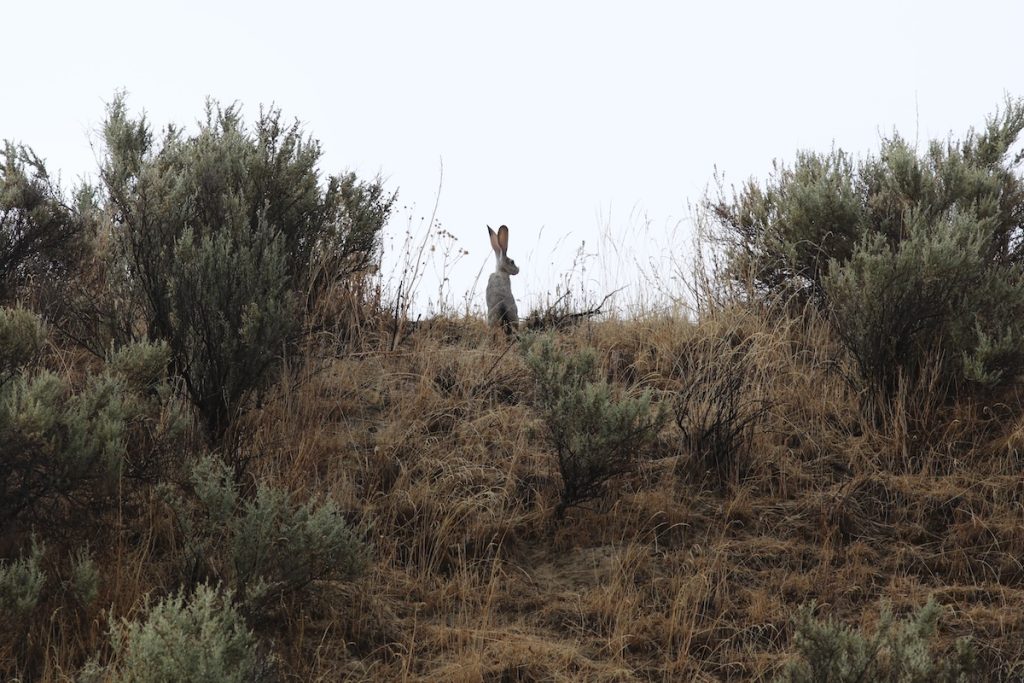
Their piercing screeching sounds carried across the length of the gully, drowning out the melodious calls of western meadowlarks, loggerhead shrikes, and fluttery sage sparrows. Their screeches also spooked an already jittery black-tailed jackrabbit, its tall ears were perked upward and backlit in the warm, late afternoon sun, shafts of light breaking through puffy cumulous nimbus clouds.
Rocking the Wren
Moments with wildlife out on the Carrizo Plain can be fleeting to say the least. Lots of times they utilize each other’s dens and burrows. It could be a quick respite from the sun, or to duck a potential predator. So, I never know what creatures might reveal themselves.
When I saw a family of rock wrens emerge from a burrow at the base of the gully, the frenetic birds had taken advantage of what was available to them. They were huddled together in the entry way. I spooked them, but they didn’t fly off, especially the three fledglings. They bounced around from saltbush to green ephedra to whatever branches protruded from the gully walls.
Their calls are pretty and their songs are vast. The males can possess over 100 song types with mixtures of keree, keree, keree, or deedle, deedle, deedle, then tur, tur, tur. They were way more pleasant to listen to than the bloodcurdling screeches spewing from the barn owls.
The Grasslands Beckon
As I left the gully, this time I flushed two lesser nighthawks, a mating pair that really enjoyed the gully where it forked east and northeast. With their beaks agape, they chase insects through the night. It felt like that fork was advantageous for them; great cover and a food supply.
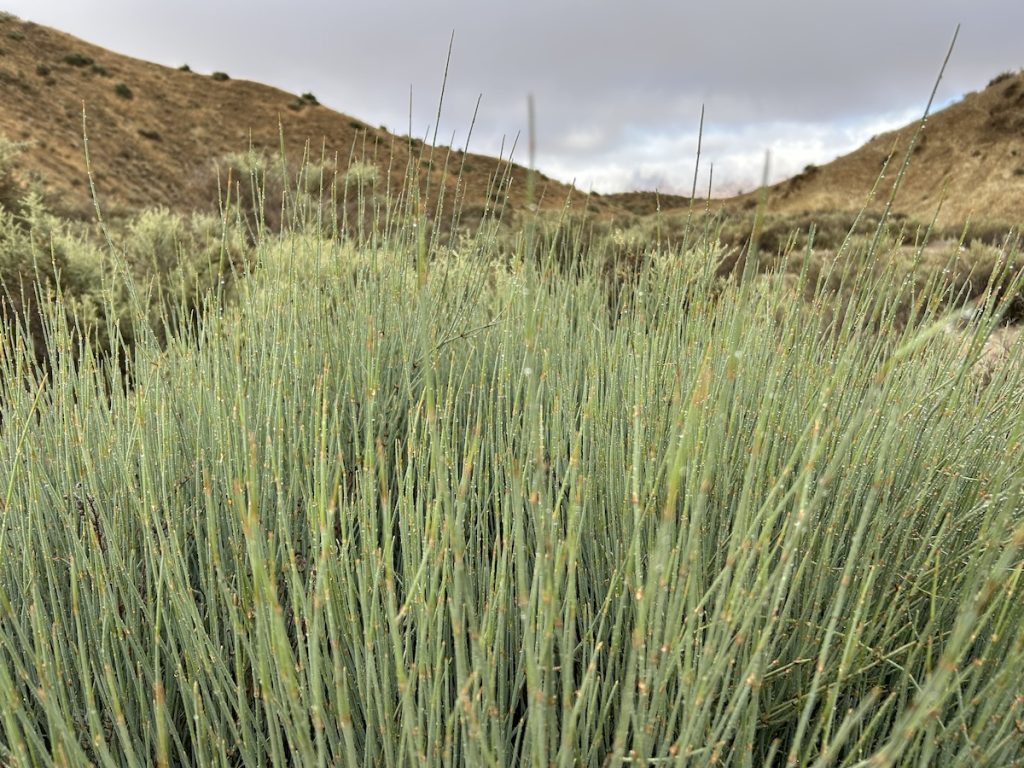
I saw my van in the distance, and beyond it was the Carrizo Plain. It was amazing how that gully drained out to the grasslands, a small microcosm contributing to a vaster landscape.
It resembled a vein running down a forearm, one of the many ecosystems that act as a lifeblood to one of the most unique and rugged habitats throughout California.
You might also be interested in...




You must be logged in to post a comment.