
The Hornstrandir Experience
As we paddled across the frigid but silky-smooth fjord of Höfðaströnd in the Hornstrandir Nature Reserve, the far northwest fringe of Iceland, our Icelandic guide, Oli, said with a wry smile, “I think the woman in the red cabin would like for us to stop for a visit over a cup of coffee.”
Oli said he wasn’t sure she would invite us in for a visit, but he had a hunch that she might. It turned out that Oli and the elderly woman knew each other, coming from the same fishing village of about 200 people. This village, Súðavík, is just a few minutes’ drive east of Isafjordur, the main hub for exploring the wilds of Hornstrandir.
Oli also said Ásthildur Gunnarsdóttir, or Asta, was 85 years old and lives alone in her cabin from May until the last boat leaves the area in September. She has been going there with her family since 1974. He also said she reported a polar bear encounter at her cabin in 2024, the first person to report that wayward apex polar predator that summer and the first on Icelandic soil since 2016. To say I was intrigued was an understatement.
Ever since my first trip to Iceland in June 2016, I had wanted to return specifically to visit Hornstrandir. There’s so much to explore in Iceland, and I simply ran out of time to experience Hornstrandir. It took a decade to return, but that first encounter in Iceland was also where I (don’t laugh) used my first cell phone and drank my very first cup of coffee. So, it was kind of ironic that my second cup of coffee ever was also consumed in Iceland, but while enjoying the stories given by blue-eyed Asta.
After several knocks at her weathered front door, she initially greeted us with a wide smile and curious looks. Oli, myself, and my two friends, Craig and Charlie, were clad head to toe in colorful orange and red drysuits, the Icelandic waters a brisk 40 degrees.
We followed her through her rustic, humble home. The rooms were small but filled with old family pictures. There was a lot of history in her cabin. One of the rooms was Asta’s great uncle’s room, and it had been mostly untouched for decades. There was a portrait of him on the wall.
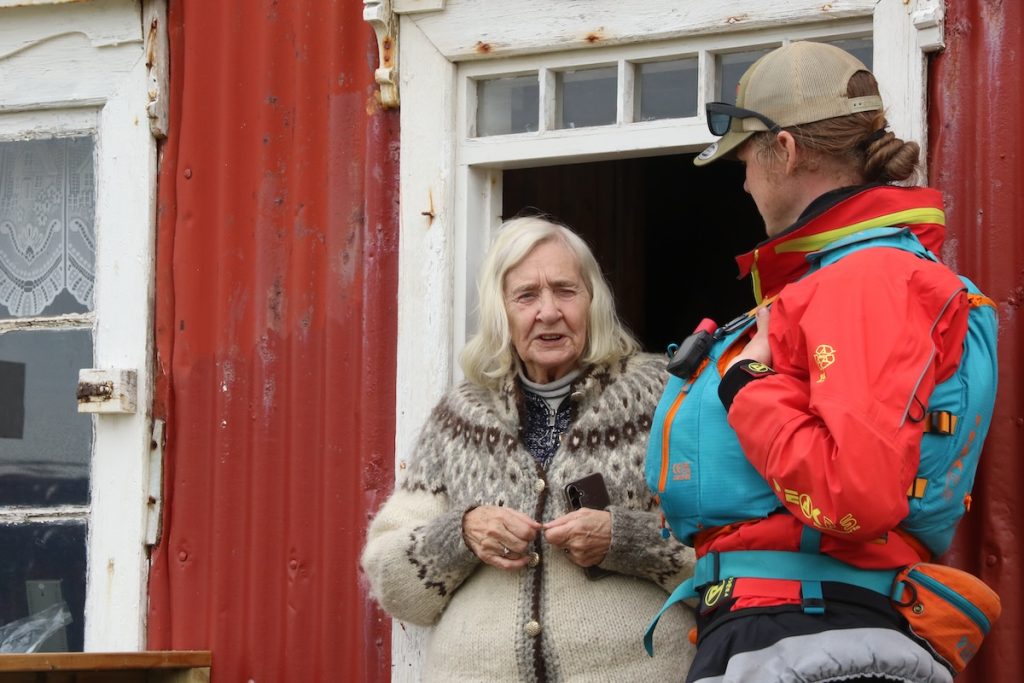
A tea kettle emboldened with Icelandic character was already warming on the stove. We all sat in her breakfast nook, as Asta opened a brand-new box of doughnuts. She didn’t speak English, so Oli translated for us. Asta sat at the head of her table like a strong matriarch should. She had one bobby pin in her wavy, silvery hair and wore a classic Icelandic wool sweater that I was envious of.
“I wasn’t afraid,” said Asta, referring to her astonishing polar visitor and the entire dialogue translated by Oli. “At first I thought it was a whooper swan.”
That made sense to me. That species of swan is Iceland’s largest bird, and we saw and heard them frequently during our six-day kayaking trip.
“That flash of white fooled me,” she continued. “I saw the white behind my clothes drying on the clothesline, but when the bear started ripping at my laundry blowing in the wind, I could see the bear clearly.”
I listened intently as Asta gazed out her kitchen window. As I finished off my second doughnut, I couldn’t stand my cup of coffee anymore and drowned it with hot chocolate mix. Asta caught me and laughed. Oli explained to her it was only my second cup of coffee ever.
Asta said after she knew it was a polar bear in her front yard, she calmly grabbed some food and coffee and headed upstairs; no small feat for an 85-year-old lady with her hands full, clambering up a narrow staircase. We followed her up the stairs, where she had terrific views of the fjord’s depth and patches of lingering snowfields surrounding it. She showed us where the bear curled up and took a nap. It was right where we landed our four sea kayaks.
“I tried calling 112 (Iceland’s version of 911) but service was poor,” said Asta. “I got ahold of my daughter on Starlink. Everyone thought I was crazy.”
Polar Dilemma
Reports of polar bear sightings are rare in Iceland. The last report was in 2016, and there are about 600 recorded sightings since the ninth century, but the far north of Iceland is extremely remote, and it is very likely other bears have made the journey without notice.
That would involve floating across on ice floes from Greenland for hundreds of miles. including lengthy swims for which polar bears are known, swimming for several days straight in search of food.
The bear Asta encountered likely arrived along Hornstrandir’s northern fringe, coming off the water and then traveling overland to the south, before swimming across the fjord to Asta’s shoreline cabin. It was a small bear, maybe 400 pounds.
Polar bears are not native to Iceland. Most, if not all polar bears that are known to reach Iceland are shot and killed, a controversial process considering a warming climate and less sea ice resulting in polar bears going far and wide in search of food. Polar bears are protected under Icelandic law and are considered marine mammals. However, if a bear is deemed a threat to people or livestock, then it can be killed. There also isn’t enough prey in Iceland to sustain a polar bear population, especially mothers attempting to rear their young.
After the bear was shot by police, a necropsy followed, revealing an emaciated animal with only a piece of paper in its stomach. It’s a grim outcome for one of the faces of climate change and rapidly melting sea ice.
Paddle On
After our enjoyable two-hour visit with Asta, it was something to ponder as we paddled into our next breathtaking fjord beneath sheer cliffs. There were too many cascading waterfalls to count as squadrons of kittiwakes, Arctic terns, northern fulmars, and black guillemots swooped overhead.
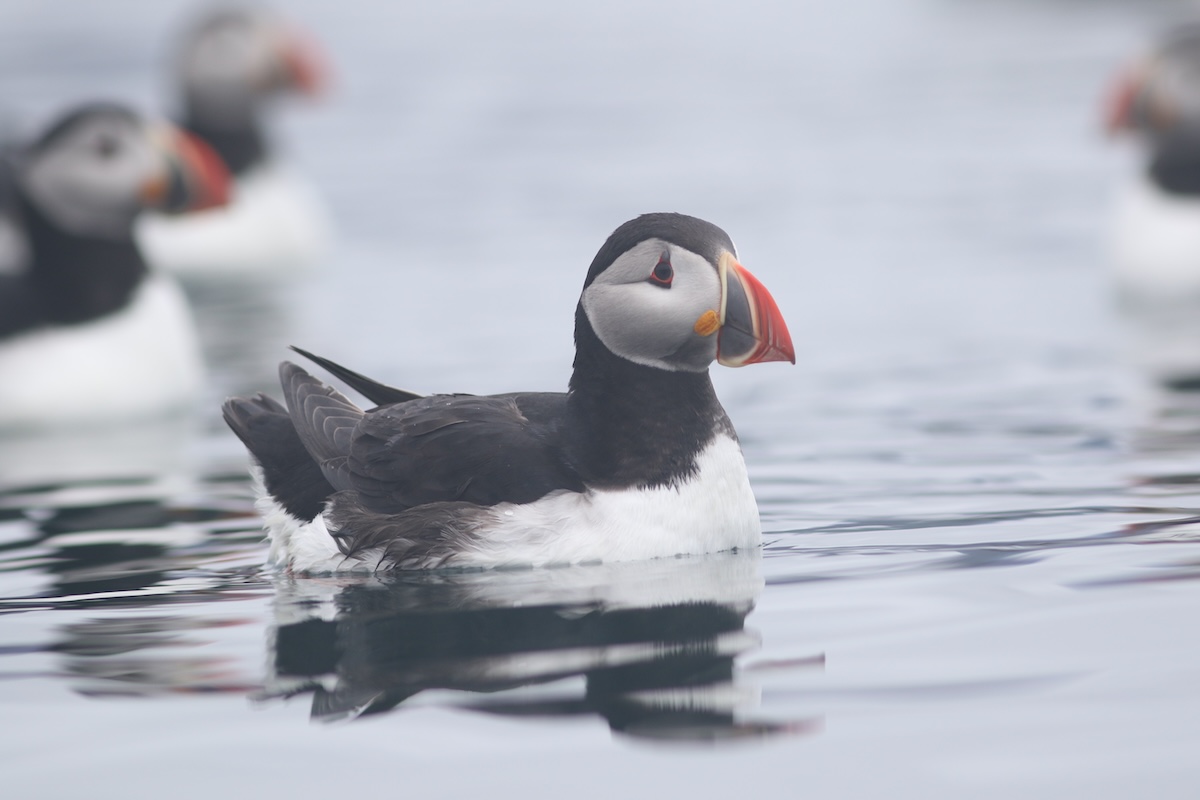
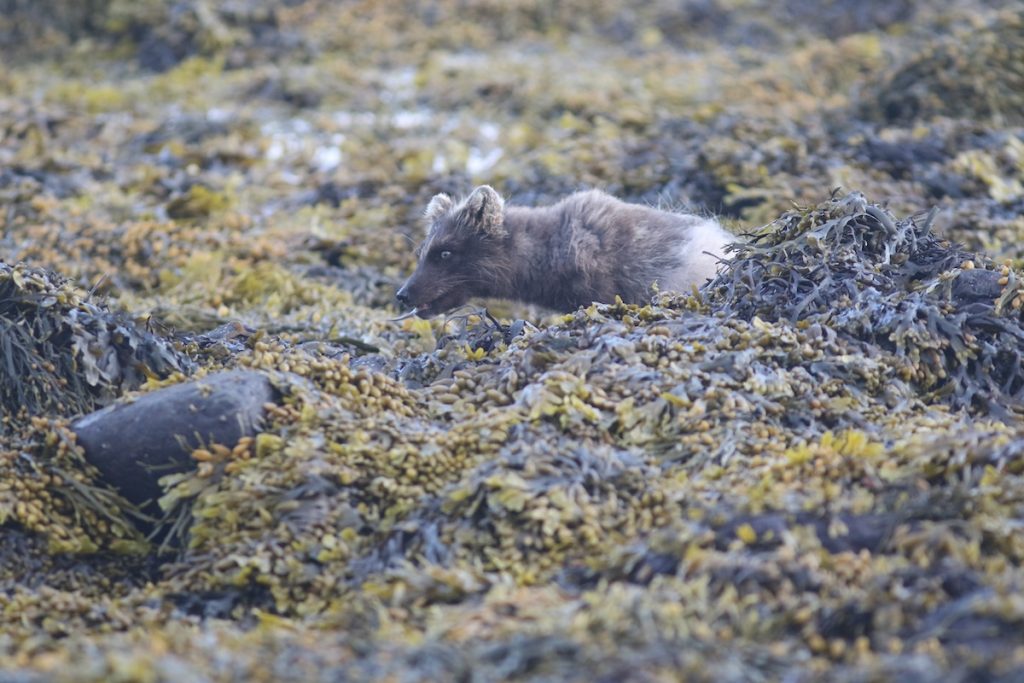
We still had several days of paddling before reaching Ísafjörður. Our chances of spotting a polar bear were slim to none. However, I gladly settled for several thousand photogenic Atlantic puffins and a close encounter with wily Arctic foxes, Iceland’s largest land predator.
You might also be interested in...




You must be logged in to post a comment.