
Santa Barbara County Search and Rescue. They Walk Among Us.
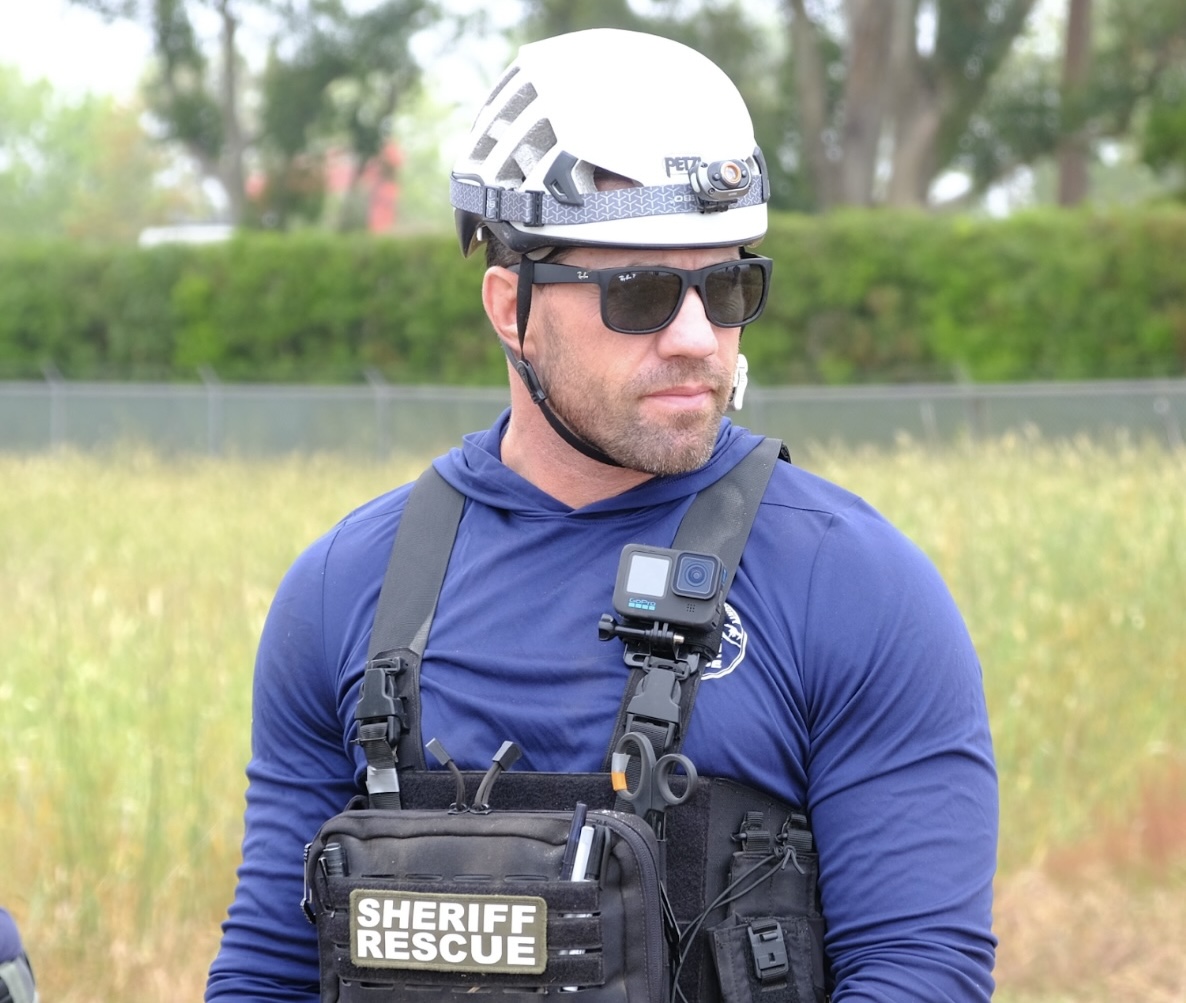
There is something very DC Comics about Santa Barbara County Search and Rescue. One minute Clark Kent is strolling around the Daily Planet newsroom and in the next he’s in a phonebooth frantically struggling into tights. For SBCSAR’s volunteer rescuers the tights-and-phone-booth situation has been obsoleted, but not the sudden call to arms. When someone is in distress anywhere in Santa Barbara County and the signal goes out, you may see your co-worker drop everything and briskly leave the office. Santa Barbara County Search and Rescue’s volunteer guardians are scattered throughout the city, working and living alongside us, cohering into a seamless force for good at a moment’s notice. Joe Plowman explains.
“The reason we have 47 members and not 12, for instance, is that we’re all working; doctors, teachers, attorneys…” That is, highly trained Santa Barbara County Search and Rescue volunteers summoned in the middle of a workday are all over the city working the 9 to 5. “When dispatch receives the call,” Joe says, “we’re alerted through our cell phones via proprietarysoftware. And it’s loud. It cuts through anything except airplane mode with a loud, audible noise.”
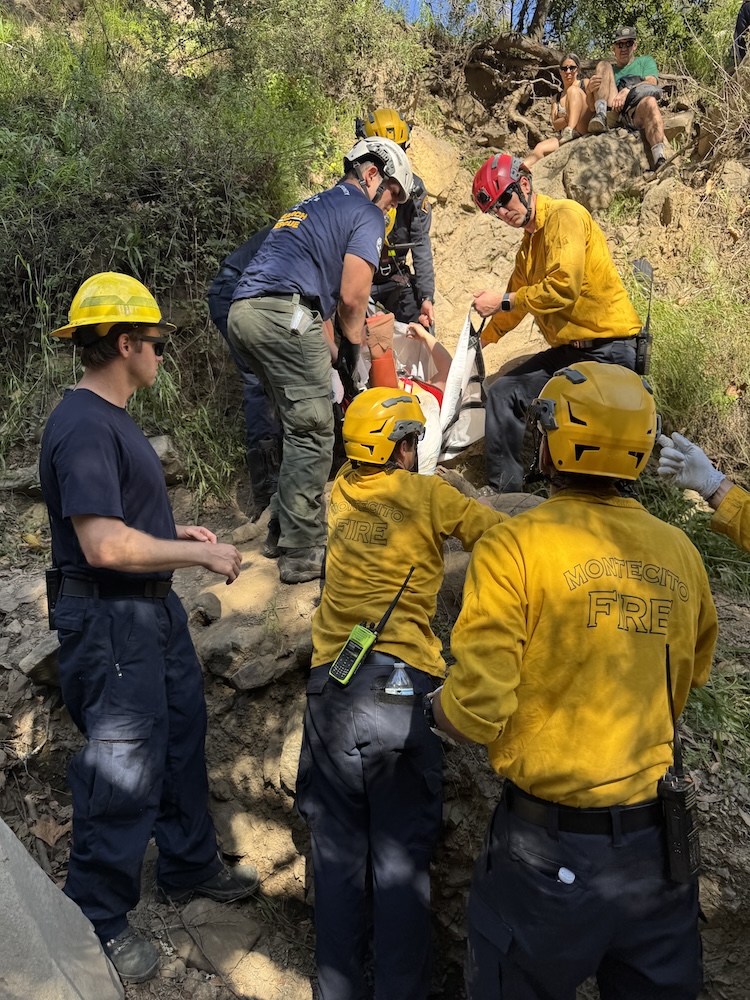
Once the responding members are on the move, the software connects the whole of the mobile team, showing the live location of the individual activated team members, availability of apparatus, and a score of other data points that sharpen and optimize the mission’s efficacy.
The all-volunteer nature of SB County Search and Rescue seems almost cinematic, our friends and neighbors and co-workers dropping everything to pivot to the seamless rapid-response mission for which they’ve been rigorously trained. The volunteer nature of the gig is that way for a reason. Any fleeting hesitation on the part of the person in distress could lead to a devastating outcome.
“The theory,” Joe says, “is let’s not have someone in jeopardy up in the mountains worrying about what the rescue will cost, what they might have to pay. That can delay their call. And so we want them to call immediately. That’s why every single search and rescue in the United States is all-volunteer, working under a Sheriff’s Department.” The ironclad self-reliance doesn’t end there. If you’re going to build a search and rescue juggernaut that lives up to its name, it can’t be beholden to purse strings, political vagaries, or any other expedience that could stand in the way. The plain business of saving lives isn’t a business at all, but an obligation.
“We receive no direct funds from the Sheriff’s Department, or state or federal money for our vehicles or equipment. All the volunteers contribute their own gear when you finish the academy. It comes to about $5,000, and we continually invest about that much again every couple years in our personal gear. And then we raise money for our trucks and all the other equipment.”
The vetting of willing recruits seems to be ongoing. Presumably the process of signing on is a meticulous but quick turnaround.
“The interview process takes about 8 months,” Joe says. “You’re sent to the Sheriff’s Office to undergo about a 3-month background check, lie detector tests, and everything a law enforcement officer would go through to get considered to be on the team. We weed it down from maybe 100 to 50 applicants to about 10. They go through an academy, and about eight pass. Those eight go through an apprentice phase for about a year, year and a half; responding on calls and fully participating, but they’re not allowed to work alone. And so after about a year and a half of this training in the field, the board and the operations groups review your application.”
I sit there blinking.
“And then,” Joe says with a grin, “you become a full rescue member..”
“There’s a lot.” The Foundation and the Truck

There are only 19 teams in California with Type 1 certification by the Mountain Rescue Association, and SBCSAR is one of them. “And we’re one of the busiest search and rescues in California,” Joe says.
Santa Barbara County Search and Rescue has been operating since 1962. “The current 501(c)(3) was formed in 2001 when the county teams unified,” Joe says. “There were about six different teams and the Sheriff at that time brought them all together and created Santa Barbara County Search and Rescue.”
When Joe signed up and saw all the moving parts, it was an eye-opener. “I’m a business guy, so I joined the team, and immediately…there’s a lot,” he says. “We have to join two committees, minimum, like marketing, ropes, K9. We have, you know, the drones.” He pauses, eyebrows arching. “So I’m like, ‘Wait a second. I have to train most weekends, I have to be on a couple of committees, and I have to raise money?” Never mind the bit about climbing, rappelling, rescuing the incapacitated and dodging churlish rattlesnakes. “I said, ‘let me work with a few guys I know. Let’s see if we can create a foundation…”
Plowman tapped a number of talented folk to get the foundation off the ground, including (but not limited to) friend John Van Donge, former president of the Santa Barbara Police Foundation and Police Activity League; retired CPA and Los Padres Council Legacy Award winner Bob Maloy; and Thomas Tighe, retired President and CEO of Direct Relief. Joe is treasurer of the Foundation he bootstrapped, and which operates under the auspices of the Santa Barbara Foundation.
“Our goal is to raise $5 million and create an endowment so the team never has to raise money again. We would use the interest of the $5 million to fund operations. SBCSAR is about $350,000 to run a year.” He pauses. “And then when we have big purchases like a truck, we have to raise that on top of the $350,000.”
With a little help from their friends (as they say) SB County Search and Rescue have just procured a new truck for the fleet. It’s good to have the support of powerful and compassionate friends.
“We needed a new Incident Command and Response Truck to replace one of our aging vehicles that was basically falling apart after years of heavy backcountry use,” Joe says. They’d raised a majority of the funding through private donors, community grants, their own foundation events like Rescue Roundup, the upcoming iteration of which is fast approaching and not to be missed (see inset). The dear Montecito Community Foundation kicked in $50K, as reported to me by a delighted Ruth Green, MCF president. Then who should arrive in leather pants but the rock n’ roll pal of every First Responder within shouting distance.
“We were right around $20,000 short of our final target when One805 came through at the 11th hour with that final grant,” Joe says with a grin. “We expect to take official delivery of the truck and put it into active service in the coming months. It’s going to make a massive difference for our team’s response capabilities across the county.”
Falls from cliffs, fast water rescues, lost and dehydrating nature lovers – SBCSAR is what every mountain-adjacent community of overexcited weekend trailblazers needs. “And they were here in force for the Debris Flow for 40 consecutive days,” Ruth had told me with feeling on an earlier phone call. “Pretty great.”
We’re talking self-equipped volunteers who train throughout the year and endanger themselves while extracting the rest of us from our wilderness missteps. How do you sum that up?
“We have about 47 members,” Joe says. “And this is what they do in their spare time.”
You might also be interested in...




You must be logged in to post a comment.