
Japan Travels Part 5: Kyoto, Beyond the Temples

Kyoto, a sprawling city of 1.5 million, is a captivating patchwork of old and new. More than 400 officially recognized Shinto shrines and approximately 1,600 Buddhist temples are woven into its neighborhoods, along with countless tiny neighborhood shrines tucked into unexpected corners. I picked up a free Rakyo Taxi Kyoto map highlighting 81 temples and shrines, including 17 UNESCO World Heritage sites – an impossible list to tick off.
The contrasts are everywhere: high-rises alongside traditional wooden houses; rivers threading through the city, inviting leisurely walks along their banks; narrow streets buzzing with bicycles, pedestrians, and the occasional car, electrical wires crisscrossing overhead. Around every corner are restaurants, ryokans, hotels, tea shops, and opportunities to experience Japanese culture.
In some neighborhoods, Kyoto can even feel surprisingly like downtown Los Angeles – until, almost magically, you turn a corner and find yourself standing before an ancient shrine or immaculate garden, the urban noise suddenly giving way to stillness.
People queue outside tea shops, coffee houses, and perfume boutiques. “Kyoto is where you go to buy tea – and crafts,” a friend had advised me. I took her advice seriously.
I brought home gifts from temple shops, exquisite candies from confectionery stores, flea-market treasures, beautiful paper journals, accordion books, and a few rather pricey gemstone bracelets from Ryōan-ji, one of Steve Jobs’ favorite stops and home to the world-famous Zen rock garden. Sadly, the garden was packed with tourists the day we visited.
But Kyoto’s real treasures aren’t necessarily things you can fit into a suitcase. The city offers countless ways to step inside its culture: classes in calligraphy, papermaking, wood carving, indigo dyeing, ceramic repair, knife making, and traditional music.
I decided the best way to get beneath the surface – to move beyond simply sightseeing and begin to understand the soul of this ancient city – was to explore some of these hands-on traditions.
We spent our first five nights in an Airbnb I had randomly selected online. It didn’t quite live up to its pictures, but our Chinese host, who spoke little English, was congenial and helpful. The spacious tatami room, with futons on the floor, was comfortable and reasonably priced. Best of all, we were in a quiet neighborhood where we could glimpse everyday Kyoto life away from the tourist crowds.
And what a neighborhood for food.
On our first night, we stumbled upon Nicolas, a tiny, sublime, one-Michelin-star soba restaurant that was perfect for Olivia’s gluten-free diet. Nearby, a cozy Indian-Nepalese restaurant provided cheap, tasty and filling meals. When we craved Western food, we headed to the Hyatt Regency (not in our neighborhood) for Italian – pizza for me, gluten-free pasta for Olivia.
Another memorable find was a tiny buckwheat noodle restaurant recommended by Matsumoto, a taxi driver and self-described foodie. We were the only foreigners in the eight-tatami dining room, reached by climbing a narrow staircase.
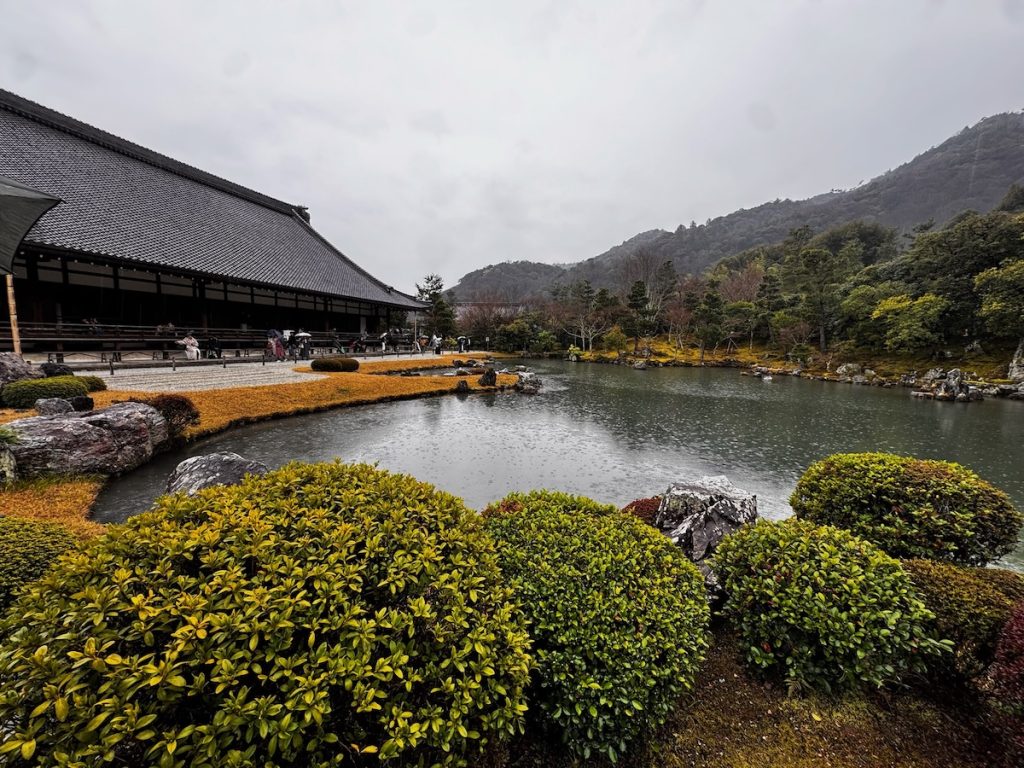
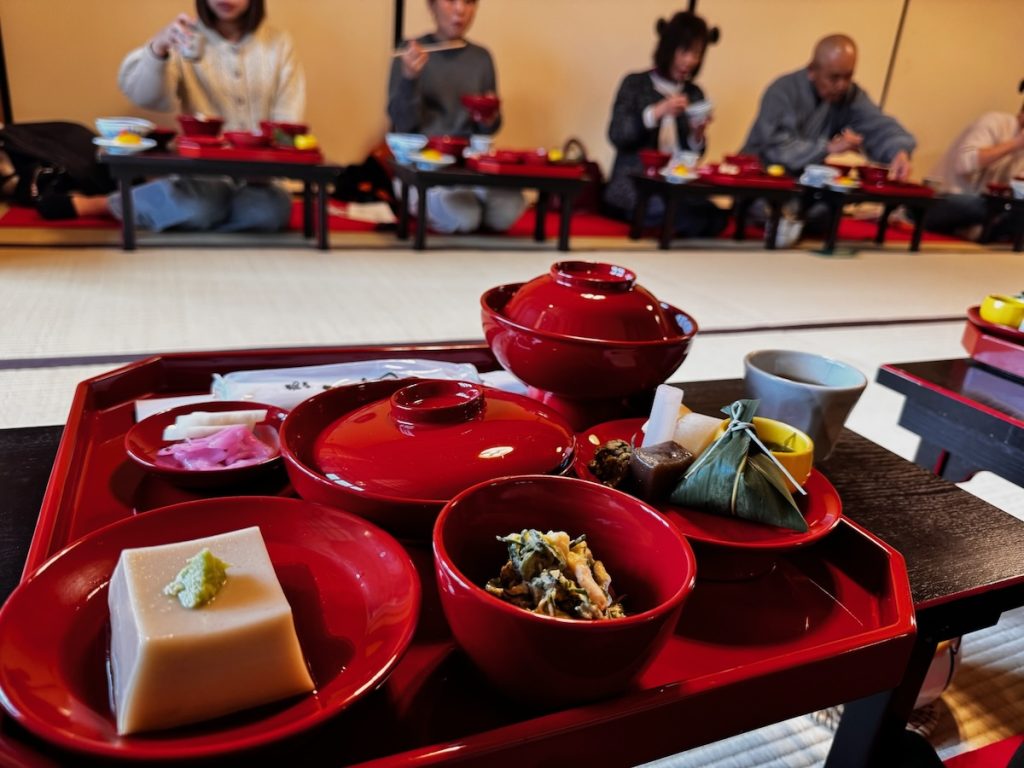
My favorite meal in all of Japan, however, was a vegetarian lunch at Shigetsu, within the grounds of Tenryu-ji Temple in Arashiyama. The monks prepared traditional shojin ryori, the elegant plant-based cuisine of Zen Buddhism, served on vermilion-lacquered trays in a serene tatami room. Afterwards, we walked through the magnificent gardens in the rain. Travel writer Pico Iyer once told me that rain is considered a blessing in Japan, and that afternoon it certainly felt like one.
Breakfasts and coffee breaks became another daily pleasure. At Café Perch, a classic Bill Evans CD played while we ate thick almond toast and soft scrambled eggs. (No photos allowed.) At Café 13F, we encountered “Waltz for Debby” yet again – if I had a thousand yen for every time I heard that song in Japan, I could have paid for my trip – while sipping sesame oat milk and noshing on homemade cherry blossom cake. At Hive Coffee, thick toast, bacon, eggs and salad came with bluegrass music and beans roasted on site.
These seemingly ordinary moments – the neighborhood meals, morning coffee, river walks, and chance discoveries – were becoming as memorable as Kyoto’s famous temples.
Perhaps that is the secret of the city. You can arrive with an ambitious list of monuments to see, but Kyoto continually invites you to slow down, look around, and notice what is happening just beyond the tourist trail. And that was exactly where our journey was
taking us.
You might also be interested in...




You must be logged in to post a comment.