
Wandering Americana with McMurtry
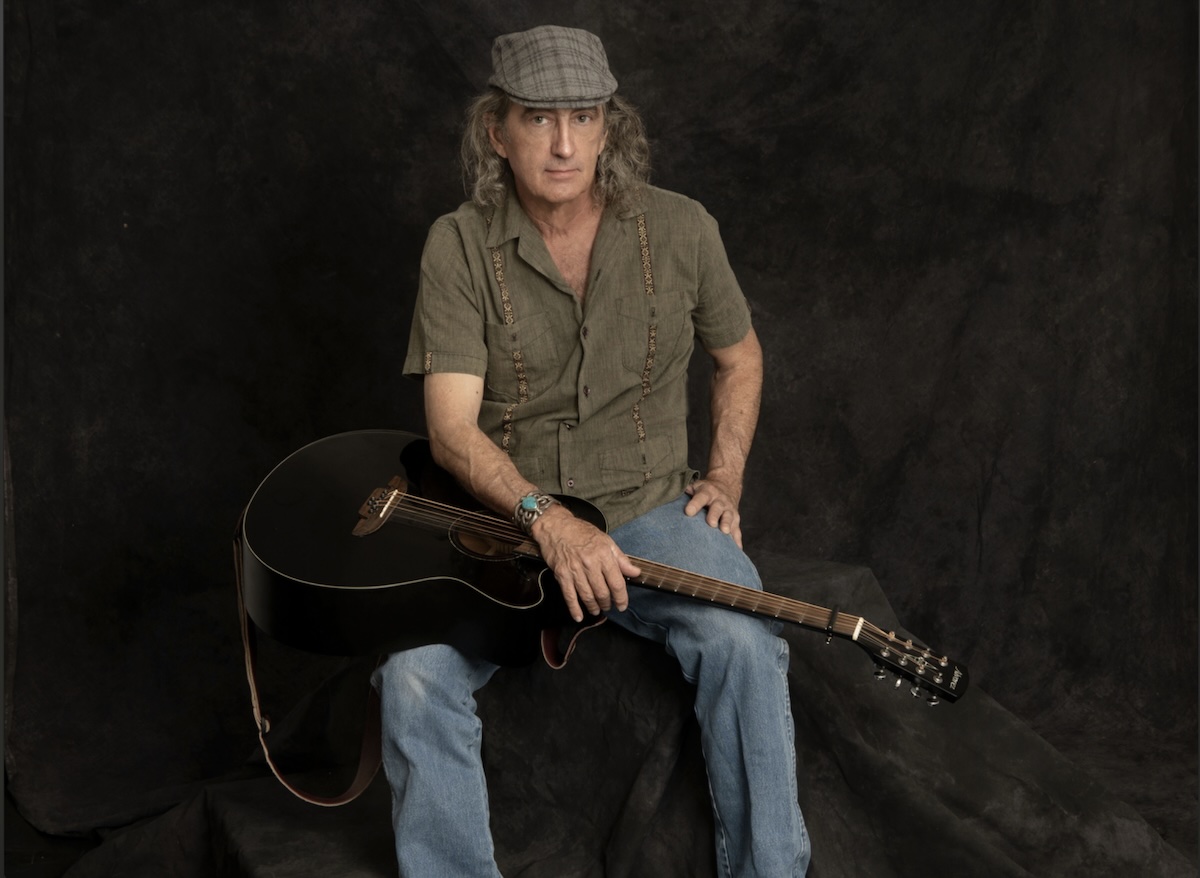
James McMurtry found critical and commercial success early in his career when his song “Painting by Numbers,” from his John Mellencamp-produced 1989 debut album Too Long in the Wasteland, connected with disaffected members of America’s heartland and became an MTV video hit. He’s been on the road ever since, almost incessantly touring northwards of 100 dates every year, releasing a dozen albums of mostly original material full of rootsy Americana about, well, Americans and America in all of its often-dysfunctional depths, including 2002’s “Choctaw Bingo,” McMurtry’s most enduring hit.
So it seems both disingenuous and important to ask the singer-songwriter – who has been called one of the best “poets of plight” since Bob Dylan – about his famous father. That would be the much-heralded Western novelist and screenwriter Larry McMurtry, whose books exploring similar themes include Lonesome Dove, The Last Picture Show, and Terms of Endearment, and the screenplay for Brokeback Mountain. Especially since his July 21 date at SOhO somehow represents his Santa Barbara debut.
But the question doesn’t get very far.
“I read an interview that says you inherited your dad’s gift of narrative and nuance –”
“That’s b–s–!” McMurtry exclaims over the phone from the car stopped at a New Mexico gas station where driver BettySoo – the singer-songwriter who opens the show and is part of his band – was filling up with “high-test.” “There’s no evidence to suggest that it’s genetic. Larry is the only writer in the line, actually the only one in his side of the family who even read for pleasure.”
Instead, McMurtry said he grew up wanting to be Johnny Cash, until he heard Kris Kristofferson at age nine.
“I had never given any thought to where songs came from. I just wanted to sing and play guitar like Johnny did. Kristofferson changed my whole world. He wrote really tight verse and that had much more influence on my writing than Larry. I probably got more from listening to him tell stories on the porch than reading his books… And from voice lessons, because you’re writing songs for your voice. The words have to be sung. You can’t have things that’ll tie your tongue up.”
Still, McMurtry allows that he shares a talent for turning time and place into stories, or story songs, that have specific details while reflecting the larger human experience. James’ world encompasses a great distance.
“We spend most of our time on the road,” he said. “We travel so much that we see the details, at least through the windshield. The stories will come to you and just happen to get set where they do. The more places you pass through, the more points of reference you have. I try to know enough about the place that I can fake my way through it.”
Or sometimes, the spark comes from his old family home.
That’s the case with the title track from his most recent album, 2025’s Don Dixon-produced The Black Dog & the Wandering Boy.
“After Larry died, his wife asked me if he’d ever talked to me about his hallucinations, if he’d ever mentioned the black dog and the wandering boy,” McMurtry said. “I said, ‘No, but I’m stealing that.’ You can’t let something like that go by and not use it.”
The singer-songwriter changed the protagonist to a very different character, an adult mental patient living at home – “I’m a fiction writer,” he said.
Meanwhile a rough pencil sketch of a young McMurtry by Ken Kesey serves as the album cover art, one drawn when the leader of The Merry Pranksters stopped by the family residence as part of the famous bus trip documented in Tom Wolfe’s Electric Kool-Aid Acid Test.
McMurtry only went back a few decades to find Dixon, who helmed the album that contained “Choctaw Bingo,” after self-producing several of his records.
“I kept running into Dixon on the road and figured maybe I’ll try to see what he’s learned in the last 30 years since he doesn’t have any set philosophy, as far as what format to record in or what process to use,” he said. “It worked out well.”
The new album also features guitarist Charlie Sexton, bassist Bonnie Whitmore from the alt-country band The Mastersons, and singer-songwriter Sarah Jarosz. But it will be his longtime band under the newish moniker of The Martial Law Review that will play at SOhO. It’s another method of protest for McMurtry, who also traded outfits with Betty Soo in Tennessee, Texas, and Montana to stand up against anti-drag laws.
“My label got pretty antsy about Nashville,” he said. “They thought it was the end of my career. We were just trying to do something for these people because we figured if we don’t stand up for the drag queens, then who’s going to stand up for us when they come for us?”
McMurtry said the SOhO show will have lots of songs from Black Dog as well as several dating back as early as his second album. And the last third of the show gets deeper into the political material.
“It’s a responsibility. Anybody with a voice needs to use it.”
You might also be interested in...



