
Riverflow & Remembrance
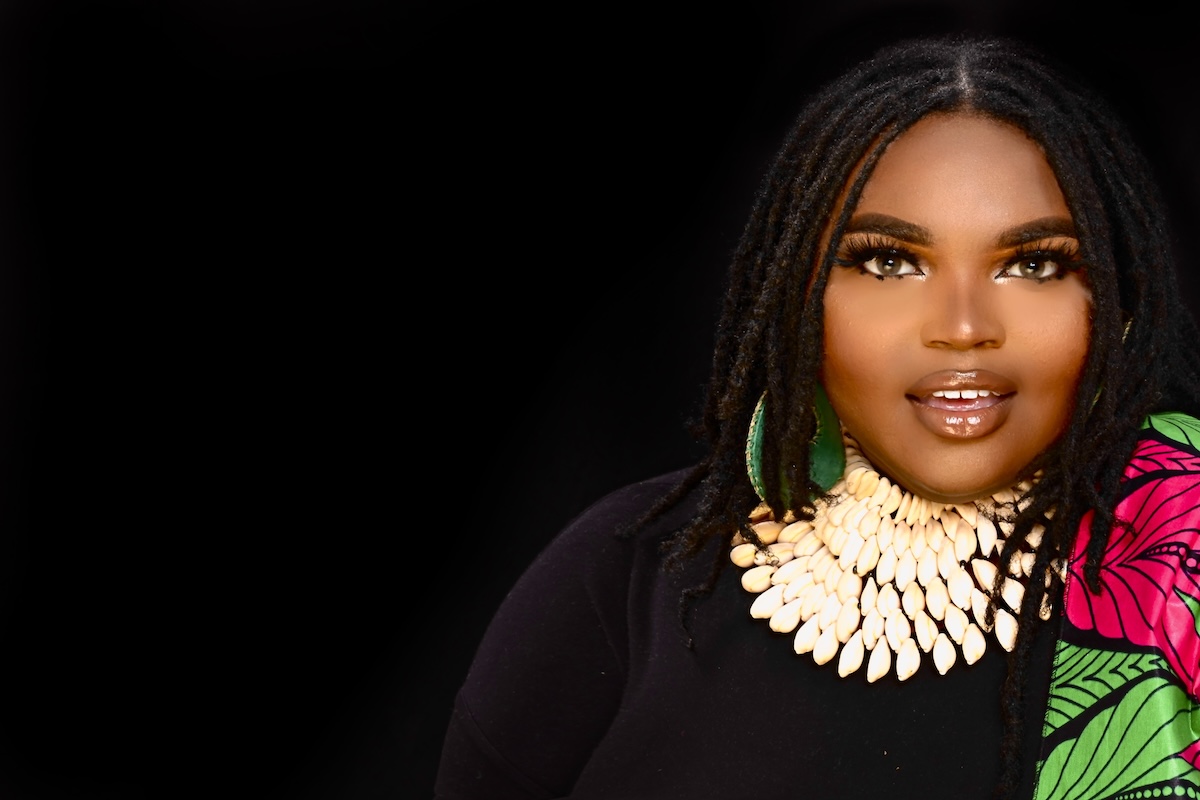
Back in 2016, Baltimore native Jasmine Barnes was preparing for her senior recital at Morgan State University. But then fellow African American Freddie Gray was murdered by six Baltimore policemen, who left him unsecured in the back of a van during an erratic drive downtown, causing fatal injuries to his spinal cord.
“The riots broke out the day before the recital,” Barnes recalled. “It was incredibly stressful because as soon as the riot started, the National Guard was sent in and whether you were rioting or not, your existence was being threatened. Just being outside at all was dangerous because of the curfew. The campus was closed because there were cars exploding outside of my dorm. It was literally crazy.”
It was a huge influence on Barnes, a mezzo-soprano who was also studying composition. The riots and her direct experiences of racism and prejudice came together to serve as the catalyst for much of her ensuing composing career.
“The riots pointed things towards my own personal existence and things I saw around me then, which of course are still going on,” Barnes said. “It shaped my desire to compose, and what I wanted to write about. My identity as a Black woman, as a student, especially at an HBCU (Historically Black Colleges and Universities), made me reconsider how I can use what I have to be an activist in a different way.”
Barmes said much of her early work, including her first song cycles, were about the identity of Black women. But then she began to appreciate the value of opening it to everyone.
“Not that I forsake my own identity, but I know that everyone’s narrative can fit into the story if it feels right at the time. I just want to continue to reflect our times, in both what I write and how I process what things really make me passionate to write. I’m always thinking about if my identity has a space, and about creating the things that I wanted to see coming into the field, things that would’ve brought me to composing sooner. Or even the things that other people can resonate with who don’t even have to look like me, just because as humans we’re connected.”
Among her more publicly known works are the opera She Who Dared, which premiered at Chicago Opera Theater in June 2025; the wind concertante KINSFOLKNEM, which celebrates the lively musical traditions of Black family gatherings and premiered at Carnegie Hall in 2024 with the National Youth Orchestra; and the choral orchestral song cycle Portraits: Douglass and Tubman, commissioned by Baltimore Choral Arts Society.
A more recent work is the 34-year-old Barnes’ American Lament, which provides a song cycle setting for most of Langston Hughes’ 1935 poem “Let America Be America Again” – which he wrote while riding a train from New York City to Ohio. Hughes’ verse bemoaned how the reality of life in the United States doesn’t reflect the promise of the American Dream, particularly in the way freedom and equality have largely escaped marginalized groups. Barnes’ Hughes-inspired piece was commissioned by Sasha Cooke, the 2002 Music Academy alum and two-time Grammy-winning mezzo-soprano who has been co-director of MAW’s Lehrer Vocal Institute since 2022.
“We had conversations around (the then-upcoming) America250, which brought up how far we still have to go,” Barnes said. “To celebrate 250 years of a freedom that didn’t exist for people that look like me, that is a rough space in itself. So we looked at what we wanted to say as artists right now, and what stood out in texts to both of us. ‘Let America Be America Again’ could have been written today. It’s nearly a hundred years old, but those same problems are happening now.”
Barnes and Cooke also agreed on Claude McKay’s short poem “America,” which had never been set to music, and Barnes also wrote her own poem called “The River Remembers,” which ties the commissioned piece together over a shared theme of water, the composer said.
“Water had a lot to do with the settling and growth of America,” said Barnes, who also incorporated the spiritual “Deep River” into the piece. “No matter where it comes from, if you put it together, it will come together. It will merge, it will blend. That’s what we need as a people right now.”
Cooke sang “American Lament”in recital six times last November, including the premiere at The Kennedy Center, which venue has its own implications since 2025. Now, the work is getting its orchestral premiere right here at the Lobero Theatre, as Cooke reprises her role in the centerpiece of the MAW fellows-powered Academy Chamber Orchestra concert on July 18.
“I’m excited to hear it orchestrally,” said Barnes of having her adaptation performed live. “I also just want to relive this piece again, especially as the America250 just happened on July 4. It feels like the stamp on challenging what America actually looks like to us. What ideals have we let go of as a people? The entire song cycle really holds a space for all of us to reflect, to dream up what a united country would look like.”
Upcoming@MAW
Friday, July 17: After having brass and percussion fellows part of the July 4th parade, MAW gets uber-Montecito local again to kick off the weekend, with a pop-up concert on Coast Village Road. The music takes place at Caldwell Snyder Gallery amid the Alireza Varzandeh artist reception. The four bassoon fellows collaborate with the two ultra distinguished bassoon teaching artists currently on campus – Judith LeClair, who joined the New York Philharmonic as Principal Bassoon at 23 in 1981, when she was the same age as a typical MAW fellow, and William Short, a 2007-08 alum who was appointed Principal Bassoon of the Metropolitan Opera Orchestra just four years later. The half-hour program will be announced on site. (Reception 4-6 pm, performance at 5 pm; 1266 Coast Village Rd.; free)… Ten instrumental fellows comprise the cast for tonight’s Picnic Concert, with pianists populating four of the five works, including pieces by Beethoven, Rachmaninoff, and French composers César Franck and Cécile Chaminade, plus the Alima Quartet playing a Haydn string quartet. (7:30 pm; Hahn Hall; $10-65)
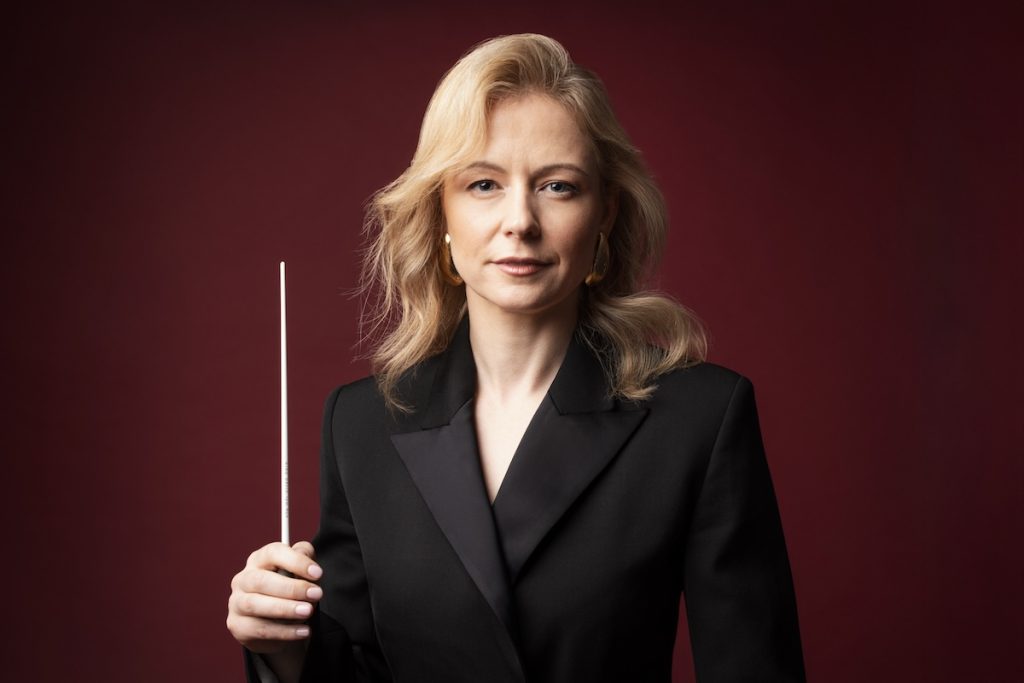
Saturday, July 18: The Academy Chamber Orchestra, a smaller contingent of the full-fledged AFO, opens with two deeply reflective American works, including Copland’s “Lincoln Portrait,” narrated by Montecito’s own Christopher Lloyd, and the orchestral premiere of “American Lament”by Jasmine Barnes (see interview above). Schumann’s “Symphony No. 2 in C Major, Op. 61,” closes the concert conducted by Gemma New, Artistic Advisor and Principal Conductor of the New Zealand Symphony, and a former Los Angeles Phil Dudamel Conducting Fellow. (7:30 pm; Lobero Theatre; $10-$125)
Tuesday, July 21: Mosher Guest Artist Jennifer Koh returns to teach a master class at the familiar space of Hahn Hall, where the decorated violinist has performed several times on the Bach & Beyond programs (which she’ll bring to Hahn on Saturday night), among others. A few select lucky fellows will reap the rewards. (1:15 pm; Lehmann Hall; $10-$25)… A trio of instrumental fellows performing one-on-one with collaborative piano fellows? That’s not-a too bad. Sonata Nights Series II boasts Beethoven’s “No. 3 for Cello,” Saint-Saëns’ “Bassoon Sonata,” and Brahms’ “E-flat Major” piece for viola. (7:30 pm; Hahn Hall; $10-50)
Wednesday, July 22: Schumann (“Piano Trio No. 3 in G Minor, Op. 110”) and Bloch (“Piano Quintet No. 1, B. 43”) are the composers featured in tonight’s Salon Series performance by the fellows – following the ear-opening joys of sipping a glass of wine prior to entering the beach-facing former ballroom of the Marilyn Horne Main House (7:30 pm; Lehmann Hall; $10-65)
Thursday, July 23: Expect something a cultural cut above John Candy’s famous film in tonight’s x2 program dubbed Trains, Lies & Romance. The uncanny concert pairing fellows and faculty features Marc Cerrone’s “Uncanny Valleys” – the composer’s 2024 two-piano meditation on technology (AI) and human emotion – Shostakovich’s “Seven Romances on Poems by Alexander Blok,” Mosher Guest Artist Missy Mazzoli’s “Lies You Can Believe In”(with Mosher violinist Jennifer Koh), and Steve Reich’s still astounding “Different Trains” for string quartet and pre-recorded tape. (7:30 pm; Hahn Hall; $10-65)
You might also be interested in...




You must be logged in to post a comment.