
Red Gorgonian, Eugorgia Daniana
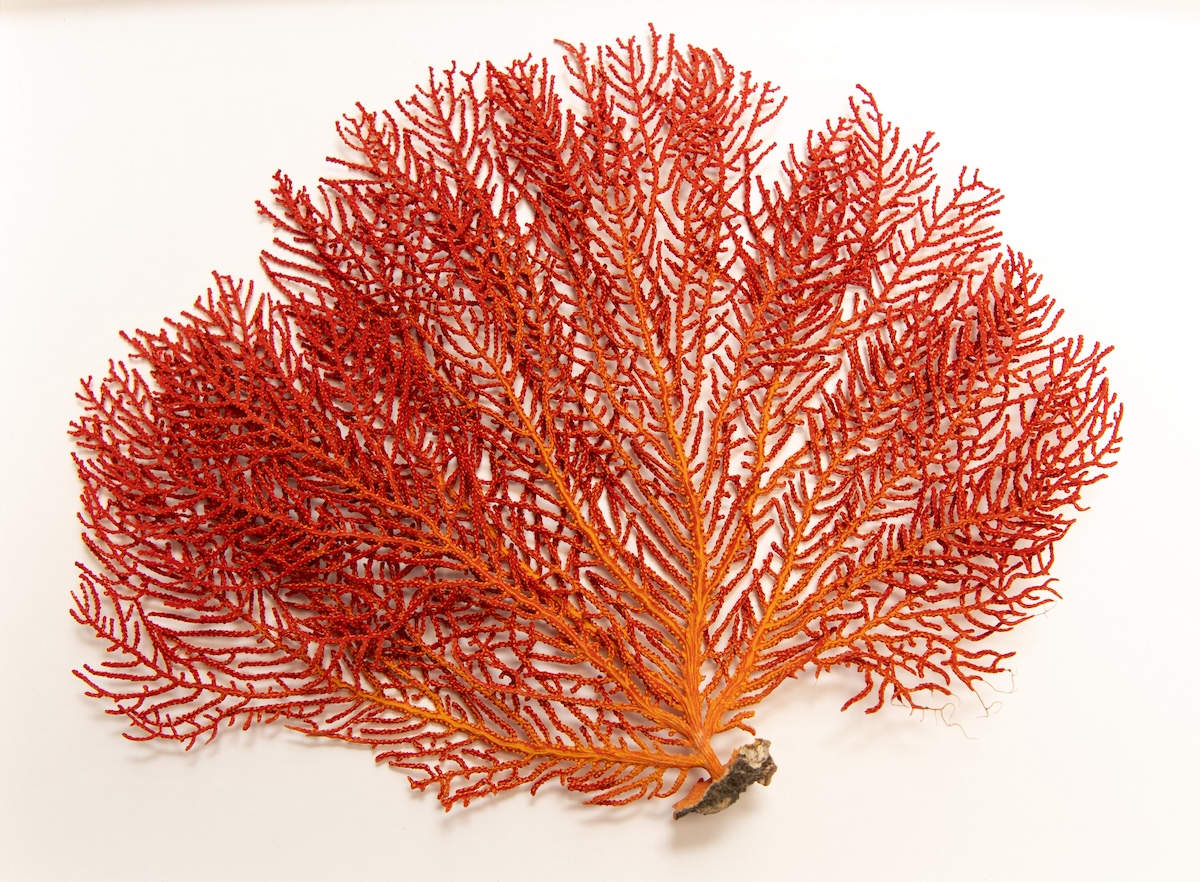
Though plantlike in appearance, this is actually a specimen of a soft-coral colonial animal. It’s Eugorgia daniana, a species of gorgonian. Unlike their hard-coral cousins, gorgonians don’t build reefs but are still capable of creating impressive structures.
A gorgonian’s body has a firm internal axis that looks like a dead tree. Depending on the type of gorgonian, that axis is made up of either a complex protein known as gorgonin or tiny calcified hard parts known as sclerites. The tiny individual animals – called polyps – secrete the axis and sclerites collectively.
Over the organism’s lifetime, individual polyps are born and die, but the distinctive branching pattern that connects them endures. Undisturbed colonies have been known to live for 300 years. This specimen is one among millions of marine invertebrates preserved in the Santa Barbara Museum of Natural History’s collections and stewarded by Associate Curator of Invertebrate Zoology Vanessa Delnavaz,MA.
You might also be interested in...



