
The Other Side of the Kahane
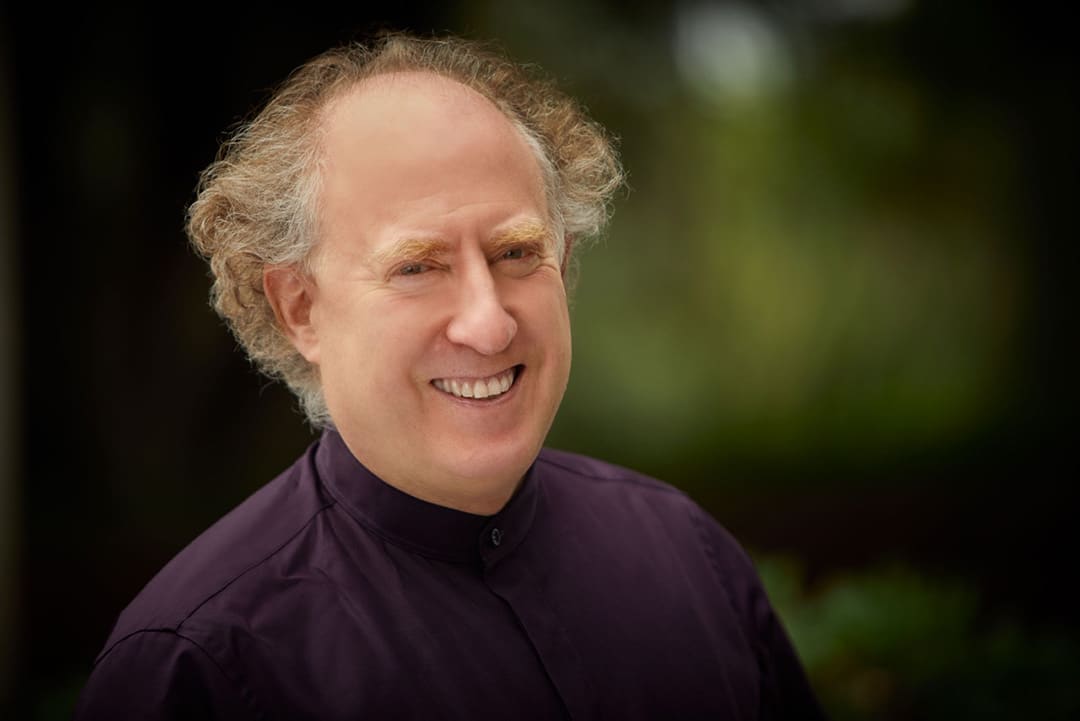
The Music Academy could have brought Jeffrey Kahane to town to conduct an Academy Festival Orchestra concert, engaging the former longtime leader of the Los Angeles Chamber Orchestra (or LACO, which appeared at the Granada under his baton for CAMA back in 2015) to conduct the fellows in the middle of the summer. Instead, Kahane is coming to make his Music Academy debut in his other endeavor – as a solo pianist with an equally long and even more illustrious career as a performer and recording artist.
As one of the summer’s prestigious Mosher Guest Artists, Kahane will perform in a chamber music concert at the Lobero on Saturday, June 20, both as a solo pianist and alongside violinistMargaret Batjer, violist Yura Lee, and fellow Mosher luminary Zlatomir Fung on cello. But first, there’s a master class for solo pianists attending the inaugural High School Intensive the day before, when Kahane will indulge in another joyous outing he’s enjoyed for decades; working with young musicians – something he’s done for the past 10 years as a professor at USC’s Thornton School. That’s where our interview starts.
Q. You’ve been passionate about teaching and working with families almost since the beginning of your career. Why is it such a strength for you?
A. Teaching has been a central part of my life for as long as I can remember. Usually it’s college students, but I love to also work with high school students who aren’t even at the beginning of their professional career… I was very instrumental in establishing our family concert series at LACO and conducted almost every concert for years. I also did all of the concerts on what we call Meet the Music, where we either would go into the schools or bring students in to play for them. It’s very important.
I’m told the other musicians on your Mosher concert are longtime colleagues.
Well, Margaret Batjer sure is. She was my concertmaster for 20 years with LACO, and Margaret and I have done literally several hundred concerts together. I’ve conducted concertos with her playing, we’ve performed many, many duo recitals including all the Beethoven and Brahms Sonatas, and also many chamber concerts in various configurations. She is one of my very closest friends. I’ve only worked with Yura Lee a couple of times, and just once with Zlatomir, when I conducted the Brahms double concerto at the end of last season in San Antonio. We had an extraordinary experience working together on chamber music.
Brahms’ “No. 2 in A Major, Op. 26” is the anchor for the program on Saturday night. Why did you choose that piece?
While I love all of the major well-known piano quartets, there’s a special place in my heart for this one by Brahms. All three of his piano quartets are sublime, but this one has a radiant, luminous glow and a very deeply moving slow movement. It’s a towering and monumental masterpiece. The Turina “Piano Quartet in A Minor” is a lovely work I would describe as Spanish/cosmopolitan. It’s a wonderful example of early 20th century music, a beautiful first course, and a perfect foil for the Brahms.
The concert starts with a few pieces for solo piano, which I think you also picked.
The Music Academy specifically asked me to play a few pieces composed by Americans as part of the theme for the season. Barber is of course a beloved mainstay of the 20th century repertoire, and these excursions are a set of four just exquisite miniatures which are meant to evoke different American musical or cultural traditions. The first one is like a syncopated urban landscape with a feeling of either car or train horns, the third is meant to be a dreamy cowboy piece that quotes from the song, “The Streets of Laredo.”
I’m following that with two short pieces Timo Andres, who is a brilliant composer and a phenomenal piano virtuoso. They’re a joy to play because what he writes is so wonderfully idiomatic for the instrument. He’s actually just recently written a major work for me, a single movement solo work, which I’m still in the process of learning and hope to premiere next spring. I think the first one, “Fiddlehead,” is based on the fern, which is sort of like lace in that they’re extremely intricate, very refined. It’s absolutely delightful music. “American Coda,”which is relatively simple for him, based on “America the Beautiful,” with a wonderful surprise, which I’m then following with my own improvisation on the beloved song.
Before we end, how do you decide to split your time between conducting – either as music director in San Antonio or as a guest – or performing on piano?
For almost 40 years, I’ve done equal parts solo recitals and concertos and conducting and also a lot of chamber music as well. People always wonder what I like to do best? I love them all! And I feel very blessed to be able to do them all.
Upcoming @ MAW
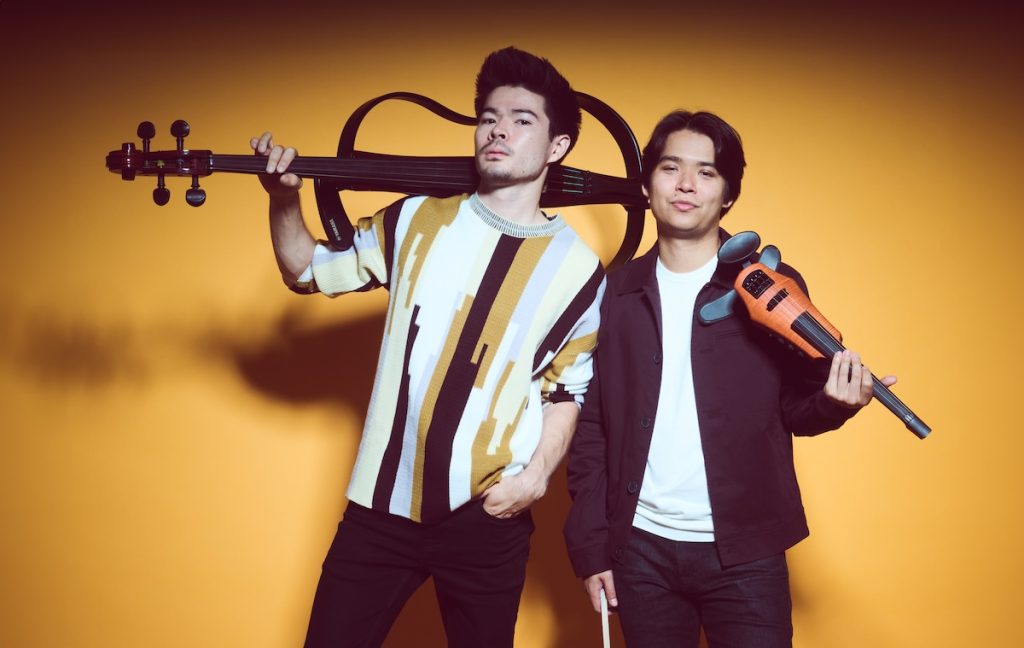
Friday, June 19: Cellist and Mosher Guest Artist Zlatomir Fung, who plays his own season-opening recital on June 18 and then joins Kahane (see above) on June 20, leads one of the summer’s first masterclasses, the public events that are a hybrid between performance and coaching session and in many ways the backbone of the Academy. Fellows, or in this case, the advanced young students at the inaugural High School Intensive (HSI), perform a section of a solo piece or sonata and then receive one-on-one coaching from Fung, with tips that can range from technique to artistry. (3:30 pm; Lehmann Hall; $10)… Tonight, MAW’s most modern concert of the summer and maybe of its entire 79-year history boasts electroacoustic violin and cello duo ARKAI in what’s now being billed as the first of the Celebrity Recital Series. Who’s to argue when the inaugural act just won a 2026 Grammy for their album Brightside just a few months ago, rewarded for their prowess at embracing new technology with gusto, verve, and astonishing artistry. The duo deliver a program that explores how classical instruments work with modern music, with pieces ranging from original works to covers in a variety of genres in an event that should be particularly inspiring to the youngsters in the HSI on campus. Cellist and sound designer/producer Philip Sheegog was a fellow at MAW just nine years ago, now he’s not only a Grammy winner but an in-demand artist who has premiered over 80 new works by living composers and collaborated with such disparate groups as the Steve Miller Band and the hip-hop/classical collective ShoutHouse. (7:30 pm; Hahn Hall; $10-$65)
(courtesy photo)
Saturday, June 20: The six solo pianists in the HSI share the stage for a public piano recital tonight, with a program that includes short pieces and movements by Liszt, Shostakovich, Haydn, Von Weber, Mendelssohn, Chopin, and Beethoven. Aside from fine music, it’s a chance to meet some of tomorrow’s possible stars in advance of launching their careers. (1:30 pm; Lehmann Hall; free)
Tuesday, June 23: The Takács Quartet teaches a Chamber Music Masterclass to launch its annual MAW residency, a series of three public events at the summer festival before founding cellist Andras Fejer calls it a career. Even though it’s during the HSI, the performers are the fellows in the String Quartet seminar, on campus early to get ready for their June 26 concert. (3:30 pm; Hahn Hall; $10)… Tonight, it’s the second Teaching Artist Showcase on just the first Tuesday of the summer festival, this one called “Angels Speak” in reference to the opening, a movement from Jeff Scott’s trombone and percussion piece of the same name. Works by Charles Ives, Mikhail Glinka, Madeleine Dring, and Zoltán Kodály round out the program, with the artist roster introducing a number of MAW newcomers, including flutist Marianne Gedigian, oboist Xiomara Mass, violinist Rebecca Reale, and bassoonist Judith LeClair, with clarinetist and now-permanent Montecito resident (when he’s not teaching at Rice) Richie Hawley among the veterans. (7:30 pm; Hahn Hall; $10-$65)
Wednesday, June 24: The small ensembles composed of the HSI student musicians get a chance to perform in public with a pair of Chamber Music Recitals in the afternoon and evening. The 17 total pieces to be performed span centuries and the gamut, from well-known to much more obscure, and range from string quartets to trombone trio and percussion quartet. (3:30 & 7:30 pm; Lehmann & Hahn; free)
Thursday, June 25: The inaugural High School Intensive comes to a close with the Orchestra Finale anchored by Dvořák’s cheerful “Symphony No. 8,” with a double dose of appetizers under the baton of Shostakovich’s “Festive Overture, Op. 96,” and Copland’s “An Outdoor Overture.” Miguel Harth-Bedoya, the Emmy award-winning and Grammy-nominated 35-year veteran conductor, wields the baton after leading the orchestral masterclass earlier in the week, and hosting a conductor seminar for the would-be future music directors. Harth-Bedoya then leaps into the regular season to conduct the summer’s first concert by the Academy Festival Orchestra on July 3. (2 pm; Hahn Hall; $10-$25)
You might also be interested in...




You must be logged in to post a comment.