
Great Scott! Legendary Jazz Artists Grace the Grand
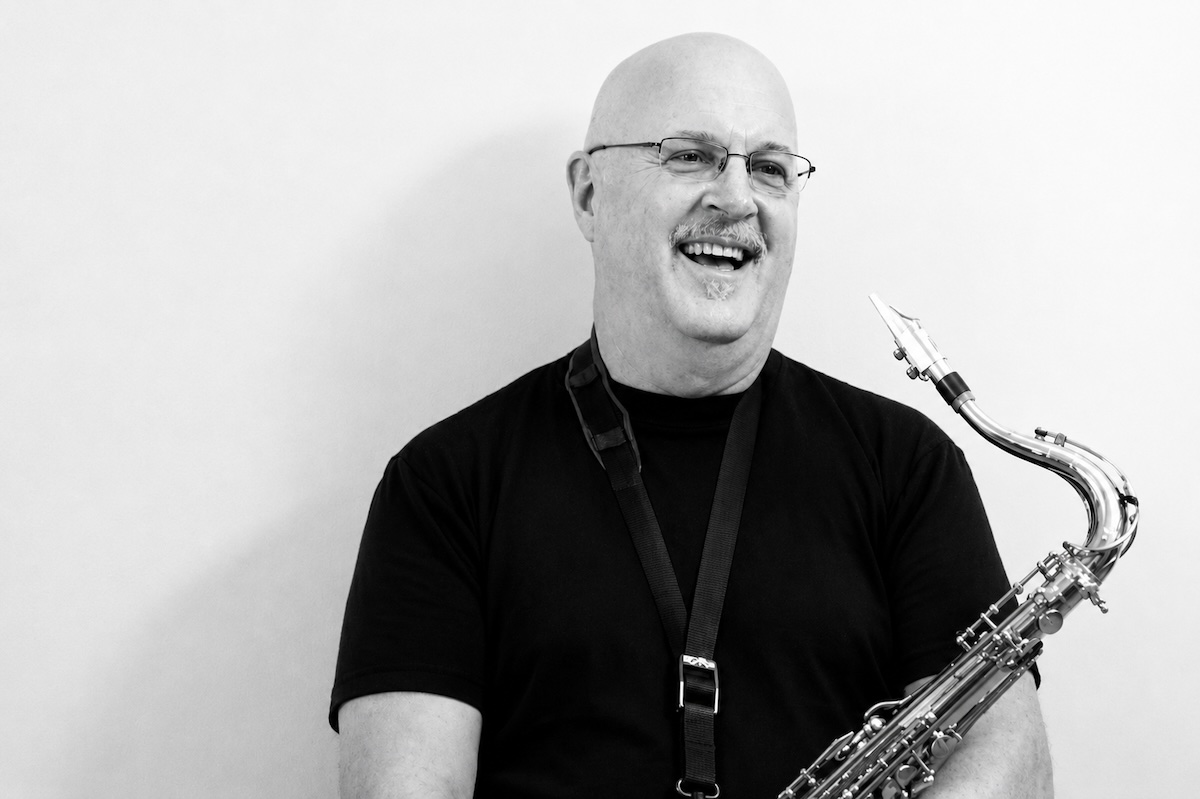
Tom Scott may not be a household name, but it would be safe to bet the farm that someone in your house has heard lots of Scott’s music. That’s his sax solo in the middle of Paul McCartney’s “Listen to What the Man Said,” Toto’s “Rosanna,” Carole King’s “Jazzman”, Blondie’s “Rapture,” and Steely Dan’s “Black Cow.” Not only is he the guy who plays sax and other reeds on Joni Mitchell’s “Court and Spark,” Scott also arranged this legendary album, which remains on a lot of singer-songwriter fans’ Desert Island Discs more than half a century later. Other session work includes recordings with Barbra Streisand, Quincy Jones, The Blues Brothers, Frank Sinatra, Aretha Franklin, Pat Benatar, Carole King, and Aerosmith.
Scott’s sax work also shows up on several significant movie soundtracks including Taxi Driver, The Jerk, Three Days of the Condor, Heaven Can Wait, Sea of Love, Who Framed Roger Rabbit?, Toy Story 2, Monsters Inc., and A Star Is Born. Scott served as composer, arranger and saxist on several other film scores, including Uptown Saturday Night, Stir Crazy, and The Sure Thing, while his TV composing and conducting credits cover the themes for Family Ties and Starsky & Hutch, plus background scores for Baretta, Cannon, Barnaby Jones, and Streets Of San Francisco. He was a musical director for the Academy Awards, the Emmy Awards, The Carol Burnett Show and The Pat Sajak Show, and had the same role on Mitchell’s milestone Miles of Aisles tour as well as road shows for artists as disparate as George Harrison and Olivia Newton-John.
Then there’s his 33 (!) solo recordings under his own name or that of his L.A. Express band that have collectively earned 15 Grammy nominations (including one this year) and three wins. Suffice it to say the saxman/arranger/composer’s list of credits tallies north of 2,000, running so long on his online bio that my hand got a cramp just scrolling through them.
And so long that not even Scott can recall them all.
“No, of course not,” he said over the phone from his L.A. home recently in advance of his gig at The Grand on State. “How could I? Some of the gigs were a couple of hours on records that didn’t become big hits and were just another day at the office for me.”
The lapse can occur even when he’s listening to one of his tracks, including a Diana Ross song where he thought, “That doesn’t sound like me” until it came to the sax solo two minutes in.
But even when called in to do a typical session with Ross, for instance – asked simply to come in and record a prepared chart – Scott takes it as a challenge.
“I always want to make it as good as I possibly can, regardless of the style of the music or whether I liked it or not,” he said. “For me, it was always thinking, ‘How good are you, Tom, as a musician; to adapt and sound like whatever you’re playing is set down with love and conviction, full of emotion and heart.’”
Far more interesting were the vast number of sessions where he was asked to fill the solo slot or come up with an instrumental passage to enhance a song.
That was the case with McCartney, especially because Scott was only noodling around without realizing the tape was rolling.
“I just thought I was warming up, fooling around with the groove and see what came out,” he recalled. “I didn’t realize I was being recorded before I stopped playing and saw that people in the sound booth were applauding. That’s what ended up on the record.”
Such moments are what kept him in the pantheon of First Call session players, in demand by musicians across the spectrum of styles and genres.
“I am reluctant to call myself an artist, but I very enthusiastically characterize myself as a craftsman. My craft is writing out parts, arranging, and in a sense composing, which of course I’ve done plenty of on my own albums.”
For many years, Scott spent his days in the studios with TV, film scores, and recording sessions, then stayed up late into the night working on his original albums.
“I would sit at the piano and figure out some tunes,” he said, pointing to his extremely prolific father Nathan Scott, an in-demand soundtrack composer a generation earlier. “I guess it was my destiny. I don’t want to say addiction. Let’s say extreme obsession. Doing all those sessions allowed me the luxury of making my own records.”
Still active in both arenas at age 78, Scott is heading north to perform at The Grand on State, the intimate and sophisticated new jazz club located next door to the Granada Theatre, to pursue that great love. He’ll be the kid on the stage at the Saturday, May 23, gig as he appears with old friend Roger Kellaway, the Grammy Award winner and Academy Award-nominated pianist and composer who has recorded more than 250 albums.
“I’ve known him since I was 16, when the very first record that I did as a featured soloist was with his trio on a live album, Spirit Feel.” Scott said. “He’s one of the great musical geniuses of our time, able to play everything from Dixieland to avant-garde. We played together all the time in the late ‘60s, into the mid ‘70s. He even started on the tour with Joni Mitchell for Court and Spark.”
The acoustic duo set will focus on straight ahead jazz and pop standards from the Great American Songbook, including “All the Things You Are,” “Cottontail,” “Autumn Leaves,” “Days of Wine and Roses,” “Stella by Starlight,” and “Take the A Train,” among others.
Kellaway, who lives in Ojai, doesn’t play regularly anymore, but “he’s getting his chops back together for the gig,” Scott said. “When Roger puts his hands on the piano, every note he plays is magic. He’s still got every bit of the beauty of making music that he’s always had.”
Meanwhile, the show at The Grand in its final “soft opening” weekend represents giant steps toward claiming a place on the serious jazz circuit. Seats are very limited.
You might also be interested in...



