
Bringing Early Education into the Great Outdoors
First 5 Santa Barbara County was established in 1999 after California voters passed Proposition 10, a state constitutional amendment that imposed a 50-cent sales tax on tobacco products and directed those revenues to support early childhood development. Governed by the First 5 Santa Barbara County Children and Families Commission appointed by the Board of Supervisors to oversee the strategic implementation of those efforts, First 5 partners across communities advance health, early learning, and family support systems for young children. Its efforts are concentrated in four Focus Areas: Improved Family Support, Improved Child Health, Improved Child Development, and Improved Systems of Care.
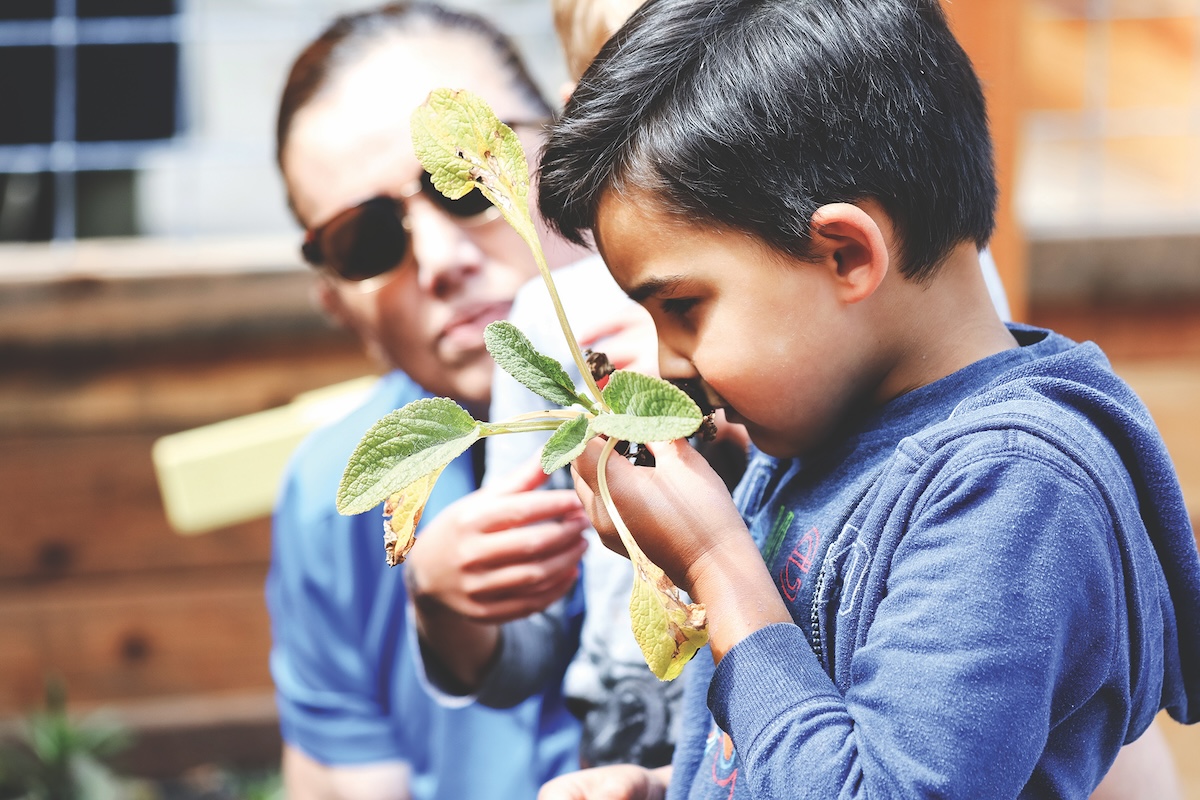
Its initiative for advancing child development in recent years has manifested in the championing of outdoor classrooms as an equitable, research-based approach to early learning, specifically in the Transitional Kindergarten grade that now serves as a huge percentage of children’s introduction to public school. First 5 SBC works to ensure young children – especially those facing geographic, transportation, or neighborhood barriers – can engage with nature daily through supporting Model TK and Outdoor Classroom Design.
“We advocate for quality not only inside the classroom but also outside, because children that young really need hands-on natural environments in order to reach their developmental milestones,” explained First 5 Deputy Director Michelle Robertson, who is spearheading the outdoor classroom initiative. “These are research-based intentional learning environments where children are not just running around but actively engaging, and it’s advancing their development. Educators are starting to see how these environments for children really positively affect their learning.”
It’s a simple concept, Robertson said.
“The idea is that anything that could be taught inside can also not only be merely taught but enhanced by being outside. Instead of a teacher demonstrating a science experiment or a math problem, you set up the environment outdoors and children actually are doing it themselves, learning by using natural materials.”
An additional benefit of the approach is that being outdoors lowers the stress levels of both the children and the teachers because, unlike an often-overcrowded classroom, there’s enough space outdoors to spread out, Robertson explained. That leads to additional advantages usually not available indoors.
“There are physical benefits to just breathing fresh air, but outdoor classrooms also address obesity issues because the children are moving more,” she said. “So you get enhancements to education in math, science, and technology with problem solving opportunities and hands-on investigation, but also health benefits.”
The Outdoor Classroom initiative also directly addresses disparity in opportunities experience by children from different income-level families, Robertson said.
“Access to nature is an equity issue. There are kids who live in Santa Barbara County who’ve never seen the beach, who’ve never been to the mountains and who maybe even live in a ‘tree desert.’ Investing in this system that every kid is going to go through allows everybody to have access to these opportunities. Doing that at schools is the most efficient method, because all kids go to schools. And it shouldn’t matter what school or which school district they go to, they should have the same opportunities, including the opportunity to engage with nature daily.”
Over the past five years, First 5 SBC has invested in replicable model outdoor classroom sites across Santa Barbara County’s public elementary school districts. The learning experiences are embedded into daily instruction rather than treated as an add-on. With eight districts already participating and completed sites at Oak Valley Elementary and Harding University Partnership School, First 5 SBC is building a scalable framework that strengthens child development outcomes and supports educators. The organization has invested more than $1 million in outdoor classrooms and nature exploration areas to date.
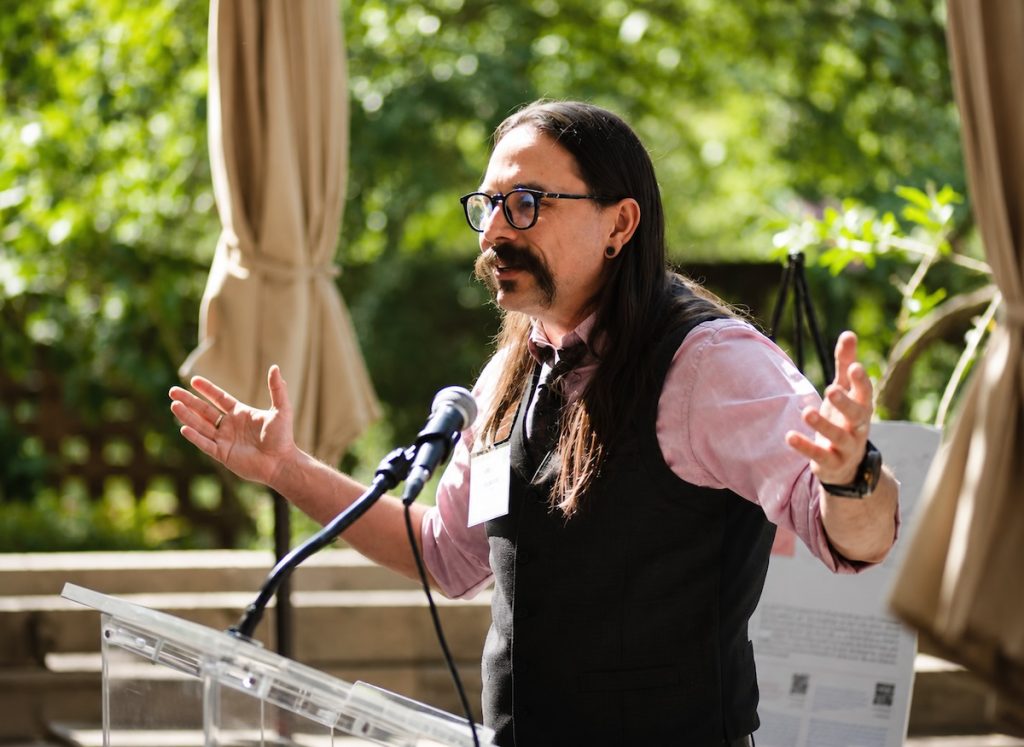
Earlier this month, First 5 SBC hosted its inaugural Nature and Learning Research Forum at an appropriate locale of the Santa Barbara Museum of Natural History, which already integrates outdoor learning into their own educational programming. More than 115 early care and education professionals, teachers, school leaders, researchers and advocates gathered to explore how outdoor learning environments support healthy child development, school readiness, and long-term community well-being. The event highlighted a growing body of research linking nature-based learning to improved cognitive development, social-emotional health, physical activity and stronger outcomes for young children, while also examining the long-term economic benefits of investing in outdoor learning spaces at schools and childcare centers.
The event reinforced First 5 SBC’s ongoing commitment to supporting environments and systems that nurture healthy development during the critical early years of life. Philanthropic help can work to enhance those efforts, as Proposition 10 funding has dramatically decreased over the years due to adult cigarette smoking in the state dropping by over 60 percent since 2000.
“As human beings, we’re really happy that tobacco use has gone down, of course,” Robertson said. “But as an organization that’s 100 percent funded by people’s vice, it also means our funding has gone down. We’re receiving only about a third of what we did 25 years ago. We’ve partnered with several local foundations in that time period and now we try to practice collective impact and leverage each other. But people helping to fund the initiatives
makes a difference.”
Visit https://first5santabarbaracounty.org for more information
You might also be interested in...




You must be logged in to post a comment.