
Sandspit Convergence
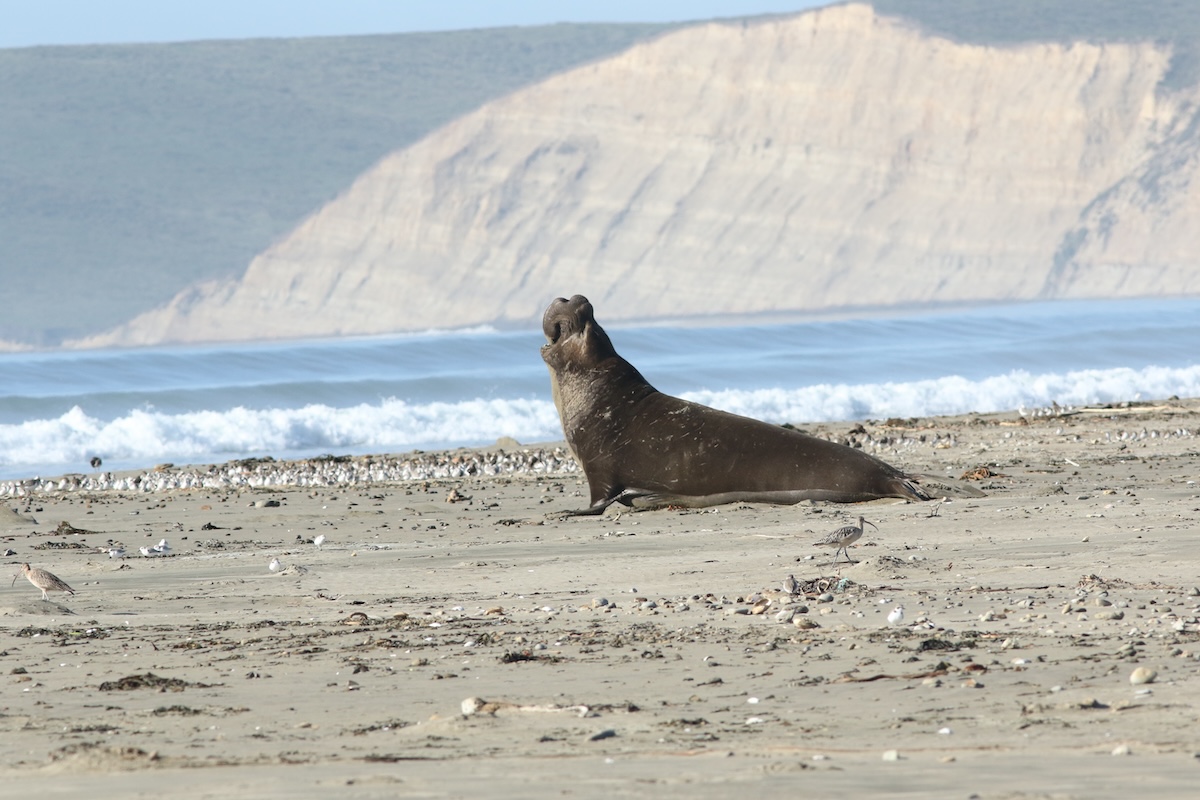
The incoming tide and building westerly swell were sweeping across a broad, gritty sandspit at the mouth of Drakes Estero at Point Reyes National Seashore. As I steadied my kayak inside a counterclockwise eddy, it was the only spot that was relatively calm among a surging rip tide and cresting waves.
The sea conditions forced all the sea and shorebirds to move away from the tip of the sandspit. Marbled godwits, long-billed curlews, whimbrels, sanderlings, western snowy plovers all had to find higher ground, scampering just beyond the high tide mark. There were only two species that remained at the fringe of the littoral, seemingly unaffected by the daily trend.
Every time I’ve looked at a map of Drakes Estero, it always reminded me of a gnarled hand with long, crooked fingers, maybe something out of a horror movie. However, each finger extends to the back of a bay, and each is a haven for wildlife.
Seasonal Mainstays
Every time I’ve paddled the six-mile round trip, out-and-back kayak excursion, I’ve always counted on plump American white pelicans roosting near the mouth of Drakes Estero. Migrating south from their breeding grounds in Montana, Idaho, and southern Canada, North America’s largest pelican doesn’t spend time on the ocean diving for food. Instead, they seek refuge in bays, sloughs, and rivers, preferring to stay on the waterways near the almighty ocean.
However, during the winter, whether they want to or not, American white pelicans must share that massive sandspit during the winter after northern elephant seals have arrived following their lengthy annual migration from the frigid Aleutian Islands. Subadult male elephant seals pushed out by the dominant beachmasters are still large, at least a couple thousand pounds each. And although those subadult males don’t get to mate with females, if they survive the oncoming year, they’ll continue to mature and challenge the dominant bulls as those big brutes patrol their beaches and harems. In the meantime, the subadult males create pecking orders on fringe beaches, and inside the mouth of Drakes Estero.
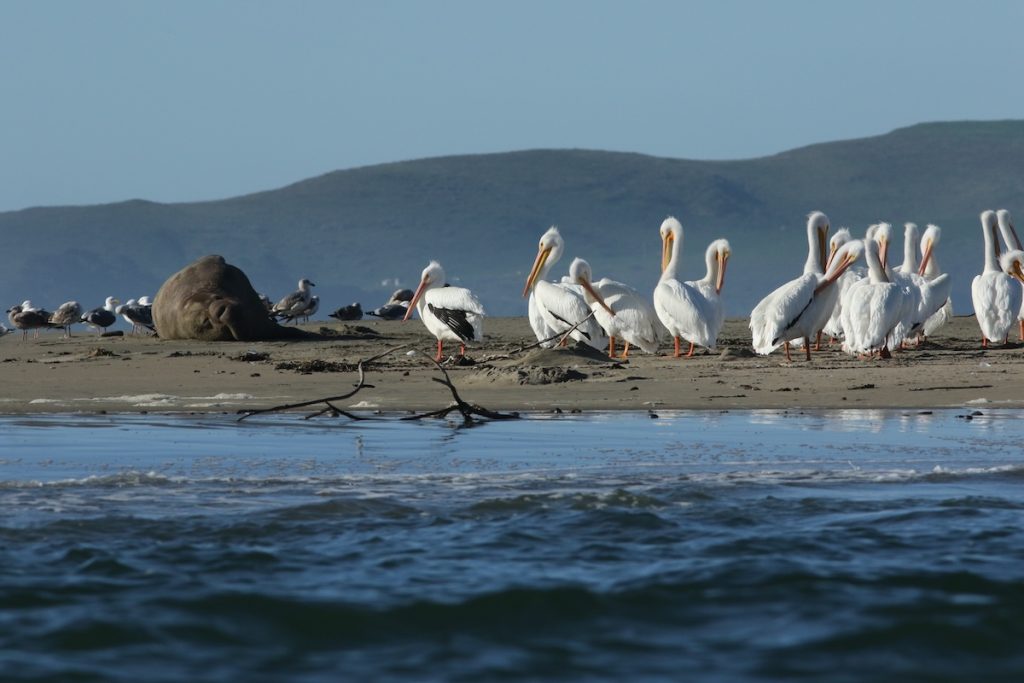
It’s comical watching a group of American white pelicans sidestep in unison across the beach, as girthy male elephant seals galumph their way across the strand. Their droopy proboscis’ flop and swing around as these massive seals search for their sweet spots along this rugged shoreline. They have zero regard for the second biggest animal on the sandspit, completely ignoring these pearly-white pelicans.
From the seat of my kayak, I had the best vantage point in the wetland. I gently spun around in the counterclockwise eddy, as I watched the bow of my kayak swirling with the incoming tide and the cresting current. Bull northern elephant seals are seemingly immoveable objects. With incoming tides and crashing waves they don’t budge, but at 16-feet-long and weighing a svelte 3,000 to 5,000 pounds, it would take an impressive force of nature just to nudge a burly bull.
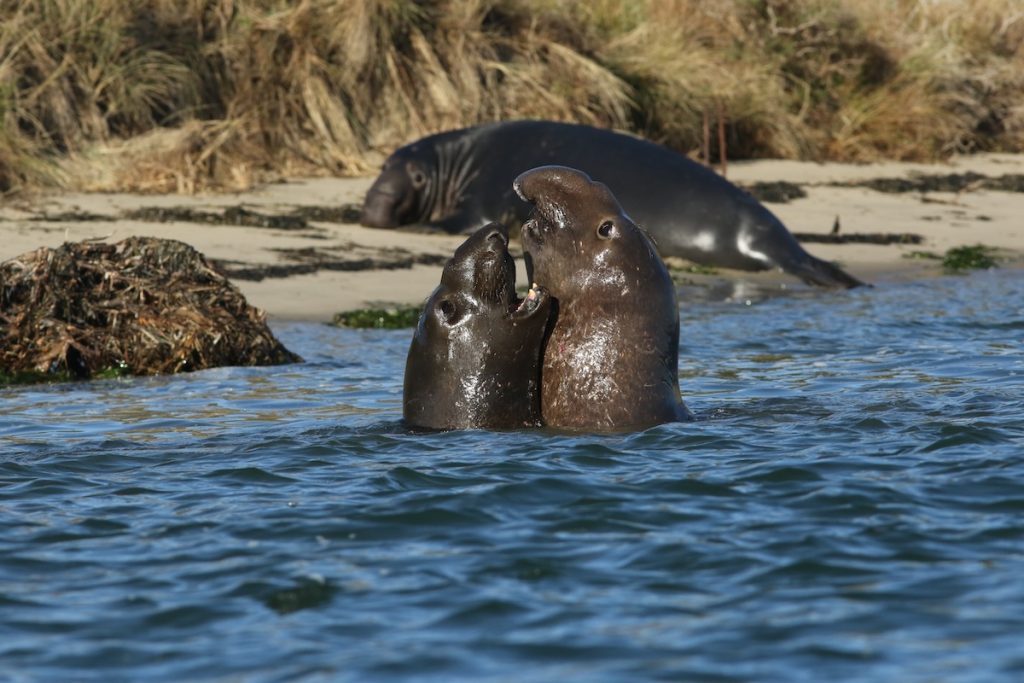
Drakes Bay is massive, and it’s become another growing northern elephant seal colony, one of a handful located up and down the central and northern California coast. The first confirmed birth of a northern elephant seal was in 1981. Since then, their numbers have gradually climbed. As of January 2026, nearly 1,300 seals utilize the beaches surrounding Point Reyes where the historic lighthouse towers over turbulent seas. There’s not a lot of depth to the secluded beaches within Drakes Bay. During extreme high tides elephant seals lay along the narrow strips of beach side-by-side resembling giant sausages pushed up against the beige-colored bluffs inside Drakes Bay.
The sandspit and adjoining beaches in Drakes Bay is the refuge where pecking orders are established. Mock fighting takes place not only on the beaches but also inside the shallows of Drakes Estero all the way to the monument commemorating the explorations of British explorer Sir Francis Drake.
Proboscis Perspective
The berm on the northeast side of the sandspit was steep, a part of the beach that constantly fluctuates with ever-changing sea conditions, but on this day, it offered the best perspective from my kayak. It involved the American white pelicans huddled on the sandspit, the berm so steep that I was looking up at the gawky birds from my kayak. A solitary northern elephant seal bull displayed some of its dominance on the southerly fringe of the breeding colony.
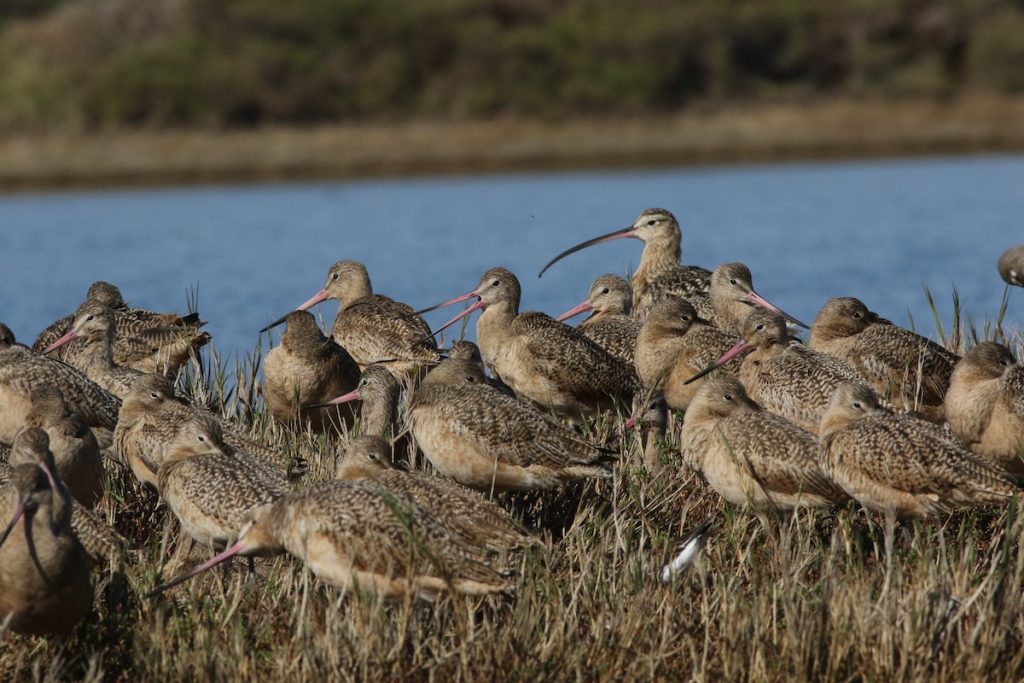
I was still situated in the counterclockwise eddy, away from the rip tide and the surging incoming tide. It allowed me to stay put and watch the lone bull entering the water well below the sunbathing pelicans. When the bull elephant seal entered the sea, it vanished into the swift-moving water.
Several minutes passed as I waited patiently for it to resurface, it was difficult to anticipate where it might pop up. When it did, it offered some great perspective from my kayak. As it blew saltwater out of its floppy snout, it was between me and the creamy-white pelicans who completely ignored the bull’s impressive bellows that carried across the mouth of Drakes Estero.
It was the power of the ocean and the largest seal in North America converging on a lonely strip of beach. Their only audience was a flock of disinterested pelicans ruffling their white feathers, and an intrigued paddler in a blue kayak.
You might also be interested in...




You must be logged in to post a comment.