
Marshall Law: Melodies Matter
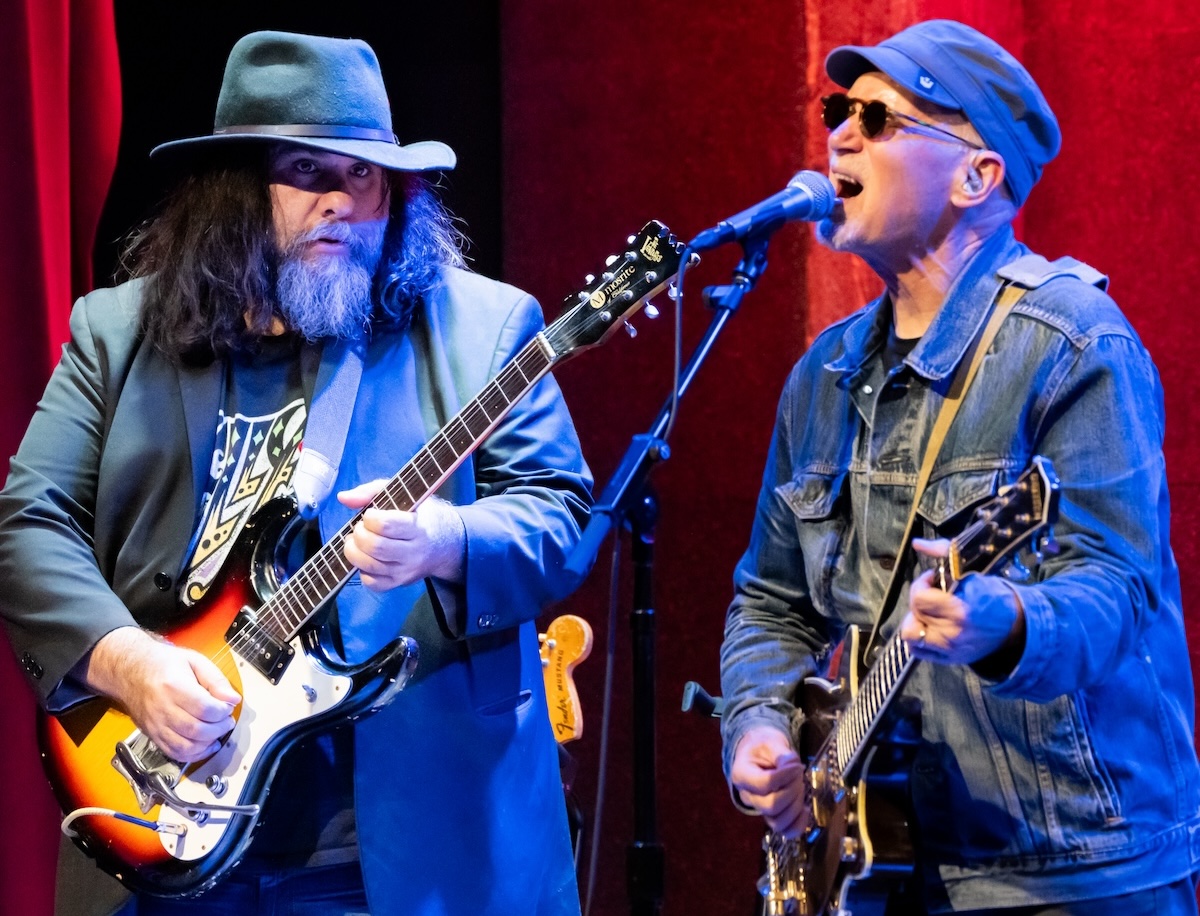
You’d be hard-pressed to find a more perfect pop debut than Marshall Crenshaw’s self-titled 1982 album, which was chock full of indelible hooks and riffs, a sound and a quirky approach to storytelling that were both fresh and classic at the same time. Forty-four years and a dozen albums later, after nearly half a century since Crenshaw’s first big show biz gig touring as John Lennon in Beatlemania, the Grammy and Golden Globe-nominated Detroit native who has lived in New York since the early 1980s is still at it.
We caught up with the 72-year-old singer-songwriter-guitarist in advance of his show at SOhO on Wednesday, April 8, when James Mastro, the singer-songwriter leader of the seminal power-pop 1980s band The Bongos, opens.
Q. I want to ask you about the early days, when you recorded your own version of “Someday, Someway” even after Robert Gordon had covered it. I actually saw him perform at the Lonestar Cafe down in the Village back then. But hearing yours – when the great WNEW-FM DJ Meg Griffin started playing it on the air – gave the song a lot more depth.
A. When he put that record out, she was the first to jump on it, which helped it get embraced by New York Rock Radio. That was a life changer for me. I put out my own album on a local label, and my promo guy took it to Meg Griffin and said, “You liked ‘Someday, Someway,’ so check this out.” She started playing my single (“Something’s Gonna Happen”) so I had two songs on WNEW getting played all day long every day. We were already starting to develop momentum and that really blew everything up for us in New York. It was a real catalyst for my career.
Those were both such great rockabilly records, which lead to you being compared to Buddy Holly, who you actually ended up portraying in La Bamba a few years later. That style has underpinned your music more or less ever since. What was the draw?
I grew up with rock and roll from the mid to late ‘50s. That was the first stuff I really heard that I just loved. So when I was starting to create my own thing, I’d already re-embraced all that music from my childhood. But I wasn’t locked into it. I was also really interested in the New York scene and was like an omnivore, listening to whatever was in the air and on the radio, including urban stations and Caribbean music. It all got thrown into the mix.
You’ve had that ability where the melody, guitar hooks, rhythms and sound all come together to make the words almost not matter, although they’re great also. I know you write the music first and I’m wondering what led to that process?
The starting point is always the groove. I’m really grateful that I have a good sense of rhythm and a good sense of time. Drummers talk to me about it. They say, “Man, I’ve been wanting to play with you because of that right hand.” I love that because that’s where the songs come from. When I like something of mine, it’s because it feels good. That’s Square One, and then I just build it up from there, wherever it goes.
I’d always imagined with early titles like “Cynical Girl,” “Brand New Lover,” “Whenever You’re on My Mind” that the lyrics influenced the music. Do you know what you’re writing about, the subject matter early on?
No, I never know what the words are going to be at first. I got to figure that out later on in order [to be unconstrained] in getting the music together first. I’m just trying to get the words on the page and have them fit the melody and the music. I’m just trying to create something that works in totality.
That blows me away when I think of “Cynical Girl” and that first verse of “I hate TV. There’s gotta be somebody other than me who’s ready to write it off immediately.” Was that true at the time, or did it just fit?
No, I meant that. It’s kind of like a tongue-in-cheek song, but it was like a slap at mass culture. Even back then, I thought it’s really just designed to program you. I was right about that.
I also still love “You’re My Favorite Waste of Time,” another one of those with some irony. That phrase has entered the lexicon.
That’s the only time where I ever got a title first when I was writing a song. It hit me and I just said, “Oh, okay. Well, let’s take it from there.” … All these songs that you’re naming are ones that I wrote 40 plus years ago. I’ve never stopped. I have a really good catalog.
Well, I have to apologize as I’m probably one of your worst nightmares in that I was such a big fan in the ‘80s but haven’t heard a lot of your more recent music, although I know there’s only been one entirely new album in more than 10 years. But the tour is part of the “40-plus Years…” dates, and you did re-claim ownership of your U.S. copyrights for those albums and put out the first two again recently.
That’s true, but the one I did last year was a compilation album of stuff from 2012-2016. It was my favorite album of mine. But I always like whatever my newest thing is best. I always think I really blew it with all those other records, but now I finally got it right with this one. The new one that’s coming out later this month is called The Bootleg Sounds of Marshall Crenshaw, 1984 to 1987. I went through all my tapes and it was really illuminating, and it was fun to discover. Now that it’s coming out, it’s my best one.
What do you think is the through line from the stuff way back in the beginning to what you’re doing today?
It’s just myself. I drag it out of myself, whatever it is. And it represents my life experience at the time.
Maybe because I’m getting on in years, I always want to know: Did you think you’d still be out rocking at 72? How is it to still be performing a lot of your great pop songs that you wrote in your 20s and early 30s?
Actually, it feels good. Number one, I want to push back against aging. That doesn’t mean that I’m going to get plastic surgery or anything. I embrace life and try to take good care of myself and address it and work at it. So I do that. Going out on the road sharpens my mind and the physical labor part of it is good for me too. With the artistic part, I’ve always been on a learning curve all my life. Sometimes it’s a slow learning curve. But what I’m saying is I feel like I get better all the time.
You might also be interested in...



