
Symphony’s ‘Bella Italia’ a Bounty for Accordionist
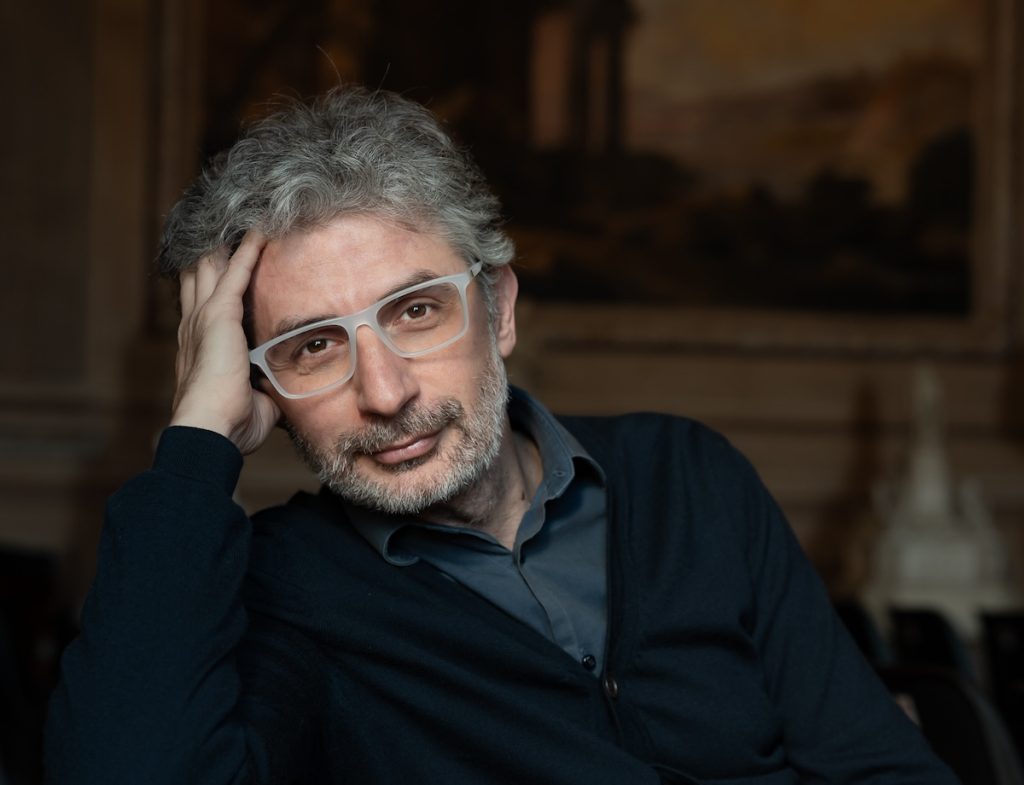
Santa Barbara Symphony Music and Artistic Director Nir Kabaretti channels his Italian heritage in this weekend’s pair of concerts at the Granada entitled Bella Italia. The program boasts a four-century journey through Italian masterworks, bookended by the “Winter” movement from one of the defining Baroque concertos in Vivaldi’s The Four Seasons opening the concert, and in the second half by Puccini’s “Capriccio sinfonico” and Respighi’s “The Pines of Rome.” The modern work comes in the middle in the North American premiere of Cristian Carrara’s “Rosso Corsa”accordion concerto, co-commissioned by the Symphony.
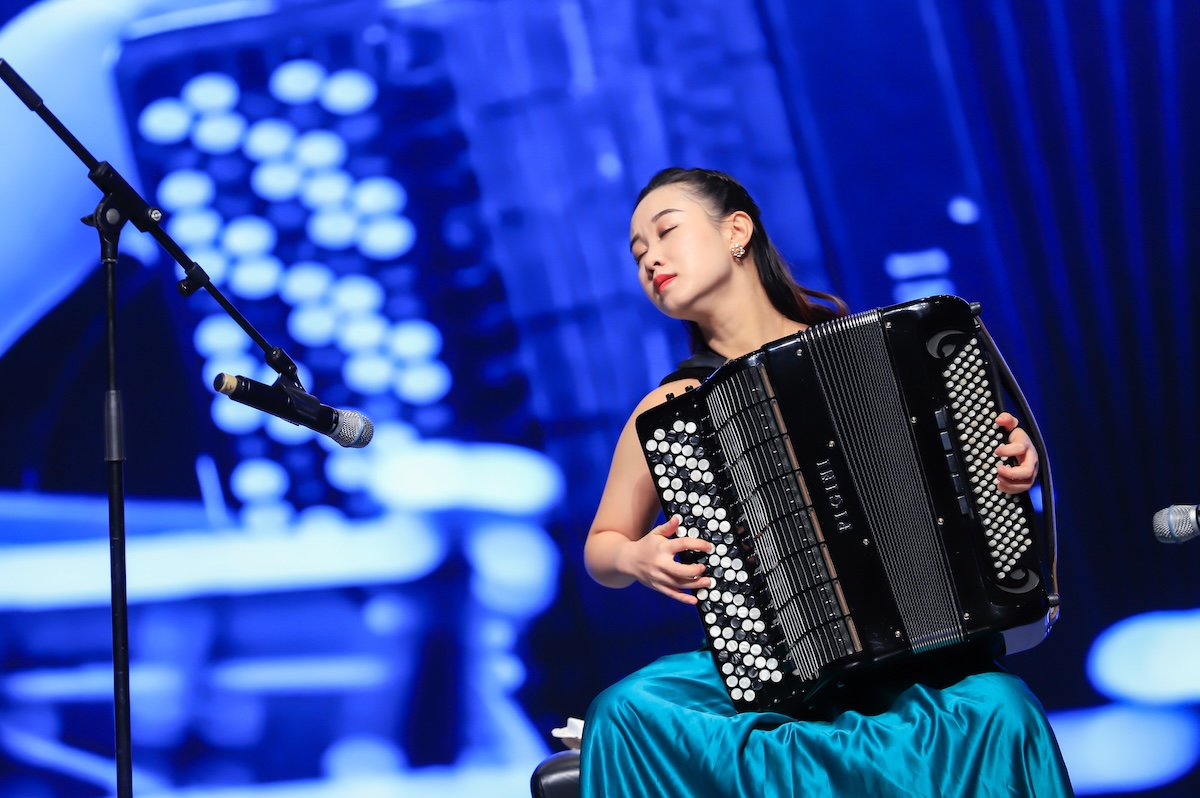
Guest artist Hanzhi Wang – the first accordionist ever admitted to Young Concert Artists – serves as the soloist for the entire first half, including the “Winter” movement and Cristian Carrara’s “Red Ferrari” concerto, stepping up to the Granada after previous appearances in town at Hahn Hall, the Lobero Theatre, and, just last January, at Campbell Hall as part of quartet led by violinist Nicola Benedetti, where Italian music was also a significant part of the program.
That’s no surprise, as the accordionist shares a strong affinity for Italy, too.
The China born-and-educated Wang first fell in love with the instrument as a six-year-old when she overheard it on the soundtrack of the movie Cinema Paradiso that was playing on TV in her family home.
“I heard the most beautiful sound I’d ever heard in my life,” Wang recalled in our interview six years ago. “It’s like it was telling a story, someone talking very kindly and warmly, and it just touched me.”
That sound, and the music of Italy, still connects deep inside, Wang said over the phone last week.
“That initial inspiration is still in my memory. I get to play all kinds of music now, but I still appreciate that moment when I heard the beautiful Italian music.”
In another connection to the new concerto, Wang’s current exqusite accordion was made in Italy.
“I know I somehow have this connection with Italian culture,” she said. “It just made me feel like it’s some kind of destiny for me to play the concerto.”
Not to mention that the toy squeeze box her parents got her back when she was six just happened to be red, a version of the same hue that inspired Carrara to write “Rosso Corsa,” which translates as ‘Red Racer.’ Red is also, of course, the famed color of the Ferrari – from its limited run of Testarossas to much of its F1 racing line.
“He was inspired by the beauty of the car and the artistry of the handcraft that goes into making them,” Wang said. “The accordion is what he thought of as the instrument that could best represent the whole idea of diversity and versatility of the concerto. We have a lot of techniques that people usually don’t know about, ways of making all kinds of beautiful sounds.”
Wang had only begun to work on the piece when we spoke, but said that the concerto’s three movements represent different emotions and tempos, which are both challenging and fun to play.
“The first movement is titled ‘Speed,’ which phrases the accordion starts and the orchestra then chases or repeats,” she said. “Things speed up or slow down. It’s very fun to play.”
The second movement has echoes of the Vivaldi “Winter” movement, Wang said, adding that she believes Carrara borrowed from the famous work and added variations. Wang is very familiar with the piece as she has arranged the violin solo portions of the work for accordion, and will be the soloist when the Santa Barbara Symphony performs it in the March 28-29 concerts.
The closing movement, called “Dream,” has a nuanced array of feelings that move in various directions, as a car might as it explores and threads the Italian cities and countryside.
“There are movie music similarities,” she said. “I think it’s very entertaining for the audience. But I’m not sure what motivated the composers. I have a lot of questions, too, and I’m glad he’s coming over from Italy so I can ask him.”
The accordionist plans to stick around for the second half of the concert and enjoy the trip through Italy over the centuries represented by the pieces being played.
“I’m really excited for the program,” she said. “It’s like a dialogue from 300 years ago, a series of connections or conversation through hundreds of years.”
But it’s not the same as playing Italian music on the accordion, evoking memories from years ago back home in China, and connecting physically with both the instrument and the score. “We are hugging the accordion close to our hearts. It feels like a part of my body, a big part of who I am,” she told me six years ago.
“That’s still true now.”
Looking Ahead to the 2026-27 Season
The Santa Barbara Symphony has announced the details of its upcoming 74th season, which runs October 2026 through May 2027. It can be said that the eight-month series will perhaps place more focus on beloved orchestral masterworks, but not at the expense of its devotion to colorful surprises: guest artists, a cinema-centric concert, and community collaboration.
Some program highlights in the area of regular repertoire include Debussy’s “Prelude to the Afternoon of a Faun,” Berlioz’s “Symphonie fantastique,” Holst’s The Planets, Rachmaninoff’s “Piano Concerto No. 2,” Shostakovich’s “Symphony No. 5,” Brahms’ “Symphony No. 3,” and, the most iconic of them all, Beethoven’s Fifth Symphony. But there are plenty of left turns along the way, including Boito’s “Mefistofele – Prologue in Heaven” and “Casta Diva: Homage to Maria Callas” (in music, dialogue and projected images) featuring the Santa Barbara Symphony Chorus and soloists; de Falla’s “The Three-Cornered Hat, Suite No. 2,” with a flamenco dancer; a second Valentine’s Weekend salute to cinema scores; new NASA-based projections for The Planets; and the subscription season-closing performance of Slaughter on Tenth Avenue, the ballet with music by Richard Rodgers and choreography by George Balanchine in a collaboration with State Street Ballet as part of that ensemble’s season finale.
A special performance of Mahler’s “Resurrection” is the Symphony’s season finale and not part of the series, as is the annual New Year’s Eve pops concert.
Season subscriptions are on sale now, with packages starting as low as $190 for a full seven-series package, which if purchased before May 16 includes complimentary tickets to Mahler’s “Resurrection.” Single tickets will go on sale August 1. Call (805) 898-9386 or visit TheSymphony.org.
Grand Gesture to Granada’s Symphony Weekend

The Grand on State, the gorgeous new piano lounge next door to the Granada that has yet to officially open, has its own world traveling weekend in celebration of the Santa Barbara Symphony’s Bella Italia concerts. Co-founder and keyboardist Brian Mann will be armed with his accordion – in recognition of Hanzhi Wang soloing next door – on Thursday & Friday evenings, March 26-27, playing Gypsy jazz with The Django Cats and Brazilian jazz with our own celebrated Teka on guitar and vocals. He’ll play a variety of keys at classic jazz night on Saturday, March 28, in a closing set with local phenom Colin Richardson on sax and vocals, following the Miles Julian Quartet. Doors open at 6 pm with music from 7-10 pm (6-11 pm Saturday). The Grand serves wine, beer and nonalcoholic beverages plus light bites for purchase. Visit www.thegrandonstate.com.
You might also be interested in...




You must be logged in to post a comment.