
A Manatee Skull and its “Marching Molars”
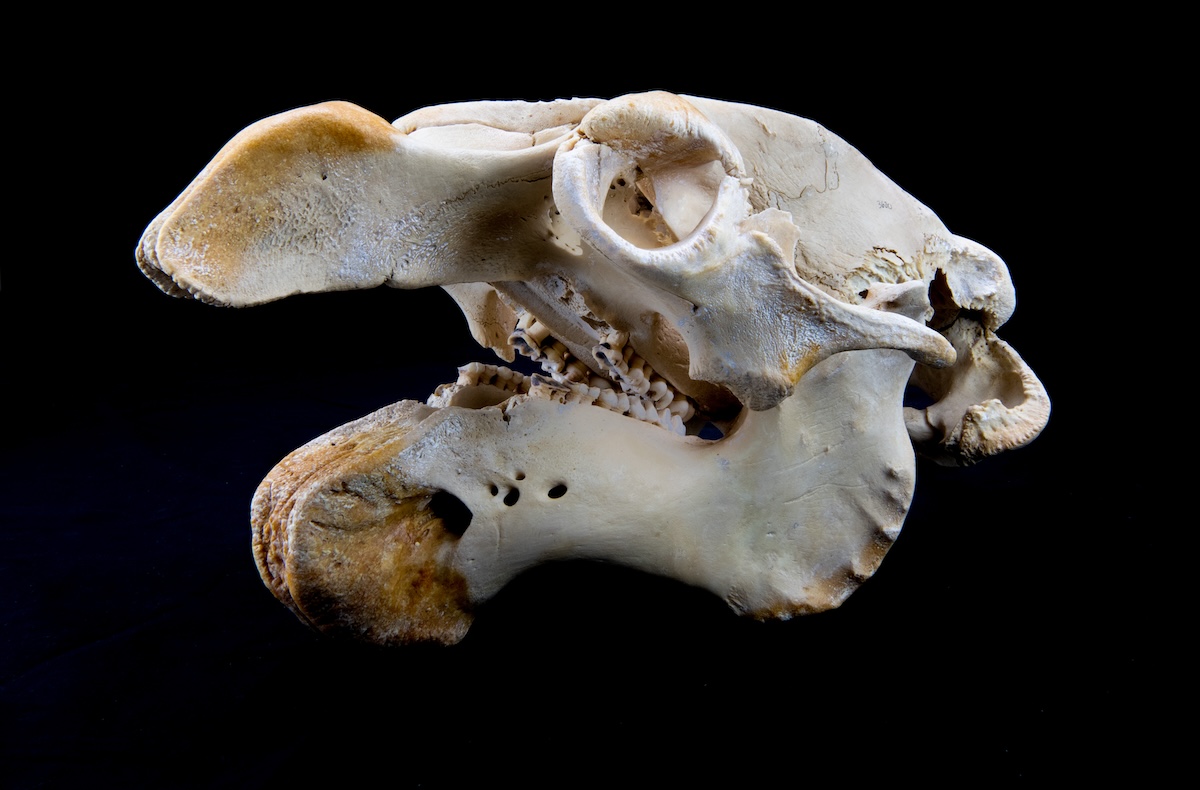
This skull may look strangely smooth in front. This animal only has molars, with no teeth in the front of their jaws. It’s the skull of a manatee, whose prehensile lips make possible the gentle nibbling of seagrass. Their teeth emerge at the back of the jaw, slowly advance, and fall out, to be replaced with more teeth emerging at the back, conveyor-belt-style. This skull is among over 44,000 specimens curated by the Department of Vertebrate Zoology at Santa Barbara Museum of Natural History. Elephants also have “marching molars,” and so did the pygmy mammoths of the Channel Islands. You can see many mammoth teeth on display in the Earth Science exhibits at the Museum. Their marching molars look a bit different from those of their cousins, the manatees, but their shared way of growing reflects their shared ancestry – descending from a common ancestor in northern Africa nearly 60 million years ago.
Nine Giant Pacific Seahorses are back at the Sea Center. Come meet them.
You might also be interested in...



