
The ‘Other Worlds’ of Dance
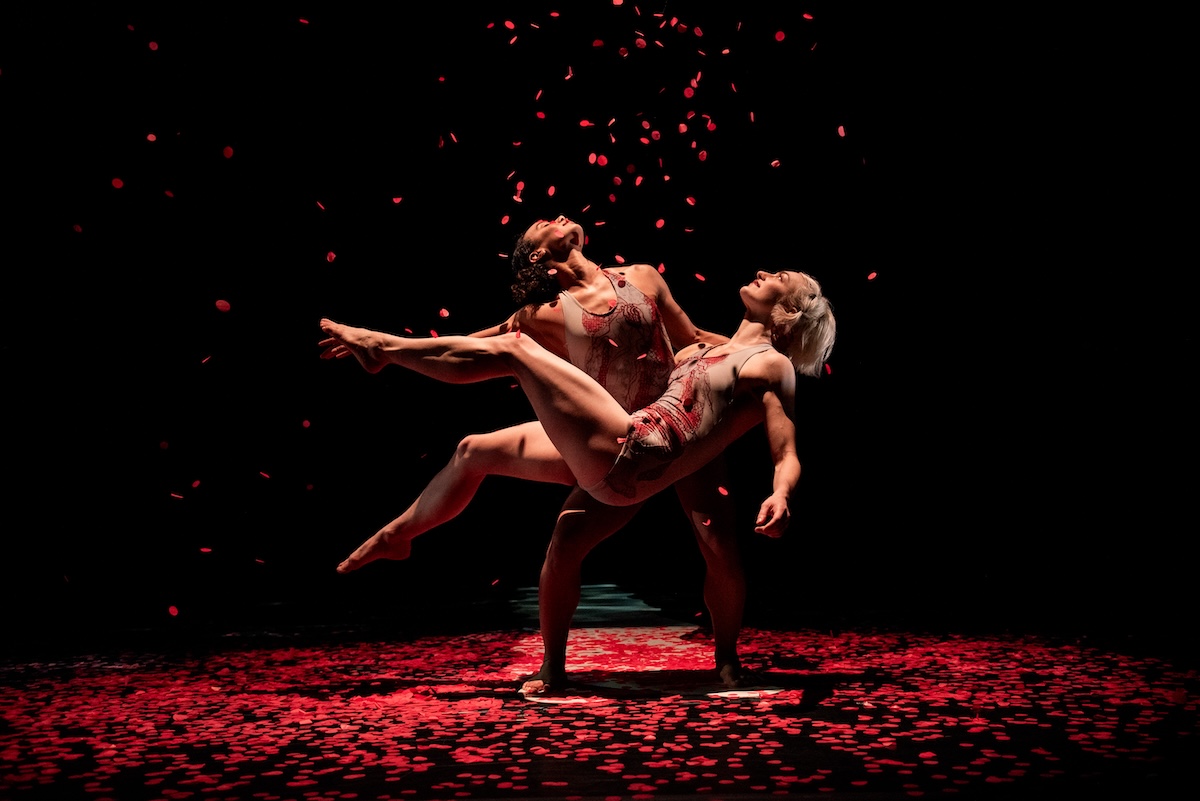
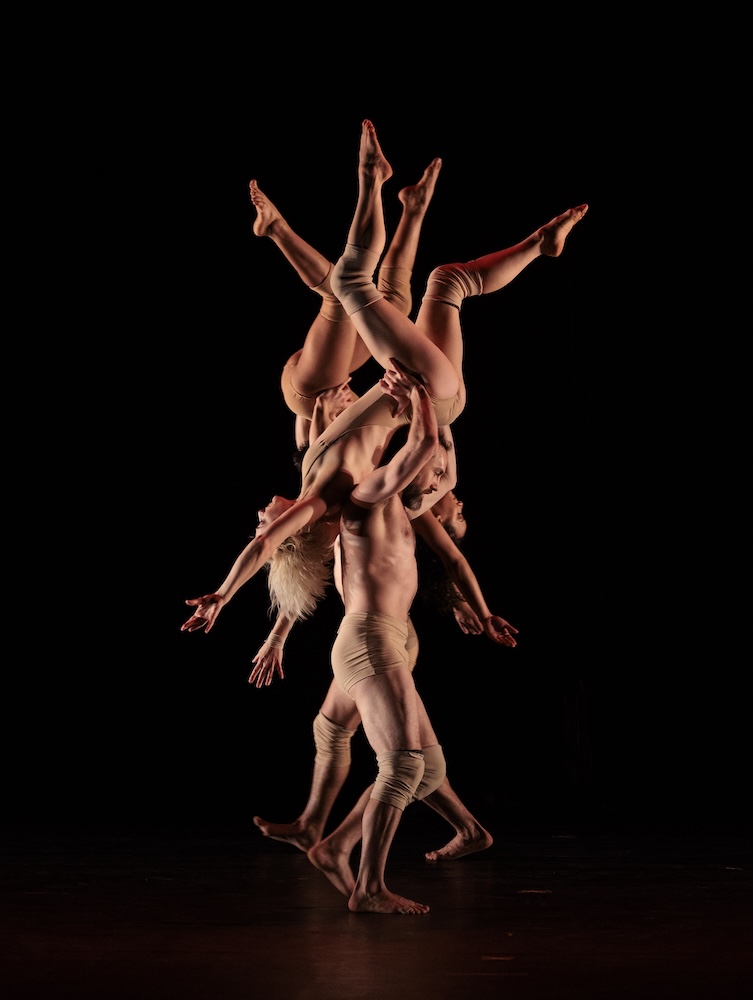
Pilobolus has been reshaping the world of modern dance since its formation more than half a century ago by students at Dartmouth. The continuously evolving cutting-edge company has been exploring the beauty and power of bodies connecting since 1971, performing feats that seem to defy the laws of gravity and physics, deftly intertwining their limbs while evoking images and emotions that defy categorization.
It’s instructive to note that Pilobolus last performed in town eight years ago as part of UCSB Arts & Lectures’ spectacular dance series that brings world-renowned choreographers and companies to perform in our comparatively tiny city. Pilobolus are now returning for a pair of performances at the Granada on March 18-19 under the aegis of Broadway in Santa Barbara. All of which goes to show how the company unfussily bridges seemingly disparate dance worlds.
We caught up with Executive and Co-artistic Director Renée Jaworski, who first joined as a dancer in 2000, to talk about the program called Other Worlds in what turned into an hour-long conversation. Here are a few excerpts:
Q. With the Academy Awards taking place just two days before Pilobolus plays at the Granada, I’ve got to ask you about when the company performed at the Oscars back in 2007. I just rewatched the clip and it’s still astounding to see human bodies get rearranged very quickly into shapes depicting each of the five movies nominated for Best Picture. I think you were among the dancers back then. What was it like?
A. I was. I was the dancer who played (host) Ellen DeGeneres in the shadows, getting eaten by the snake. It was totally fun. It happened because we’d created a car commercial for the Hyundai Santa Fe with the car in silhouette in shadow. Oscar Producer Laura Ziskin saw it and asked us if we could do something similar for the movies. We didn’t know but were willing to try, just like we had with the car. It was quite a challenge, and we had a lot of brains working on it with a much larger cast than normal because we only had 90 seconds to do all five.
We created a new medium for ourselves, which took off for many more gigs, which then led to us creating an entire show, Shadowland, using all of the material that we had created over those years. It was a huge breakthrough for us that was like the beginning of Pilobolus. The founders did something that nobody had seen before, and we did it again almost 40 years later.
That concept of creating recognizable shapes continues to influence the work at times nowadays, too.
Yeah, it does. The reason is that when people can grab onto something recognizable like that, it gives you license to then take them on another journey. It opens a door to the abstract. It’s a tool that we use quite often.
Which is a good idea, given that your company took its name from a spore-flinging fungus whose Mach-speed outreach adheres to and expands from its landing place. Pilobolus has similarly expanded its reach in so many directions of movement and emotion. As co-artistic director and now executive director, how do you honor the legacy while moving forward and expanding?
Well, the way we slice it is to bring back older works while always making at least one new piece every year, and continuing to collaborate with outside artists and thinkers. Also, our practice incudes education of both younger people and older adults. Our programming circles around collaboration, engaging with people using movement, but also problem solving and critical thinking, skills that you need in the world that AI can’t do. With the aging population, we’re working with them in person on balance and mobility, which are also at the core of what we do.
Let’s talk about the Other Worlds collection that you’re bringing to town. What’s the organizing concept, especially since there are three different programs as part of the tour?
It’s to call attention to the idea that each piece that we make is its own distinct little world. We are inviting you to take an intergalactic trip through the brains and minds and bodies of the Pilobolus choreographers and dancers. We think about the ups and downs of the trip in terms of movement and emotion, wanting to present the most varied program possible.
Let me ask you about the genesis of a couple of the pieces, starting with the opener, “Branches,” and the others, if you would.
It’s based on a dialogue with nature and was commissioned by (dance center, school, and performance space) Jacob’s Pillow as part of the opening of their Inside/Out stage, which is their outdoor venue. The very first thing we did when we made it was to take a walk through the woods where we live in rural Connecticut. We started just listening. What do we hear? What do we feel? Then finally what do we see? Because everybody always sees everything with their eyes and they don’t often let their body experience the place. What we ended up with feels like you’ve been at a lake all day during the summer and by night; you have this wonderful exhaustion but are also refreshed. It’s a little safari about the absurdity and the beauty of the natural world.
“Bloodlines” is a duet for our two women about intergenerational caregiving, what it’s like to take care of somebody who once took care of you. It’s an internal world, almost like you’re in the cave of the mind. Both of us [co-artistic director Matt Kent] and I were in our sandwich years, simultaneously taking care of our kids and our parents, which was part of our daily conversation. The piece is very sculptural, with both balance and strength, covering a run of emotions that came up in the process.
“Flight” was inspired by original Pilobolus dancer Lee Harris who loves flying his plane, and always said that dancing with the company felt like flying. We’d never made a piece about that, so we came up with a dreamscape with a woman who eventually catapults out of the stratosphere. It’s a playful and whimsical piece.
“Pseudopodia” dates back to the company’s early days, growing out of an experiment in movement. There’s a solo dancer moving like a little tumbleweed blowing around the red, dry desert. It’s a longtime favorite that’s different every time it’s performed.
“Lamentation Variations” is Pilobolus’ contribution to the 100th anniversary of the Martha Graham Company, when we were asked to make a new version of her famous piece. It’s like a rave on the stage – super fun and beautiful and very inspired by Martha Graham and her ingenuity.
You might also be interested in...




You must be logged in to post a comment.