
Bruce’s Bountiful, Light-filled Commission for Camerata Debuts
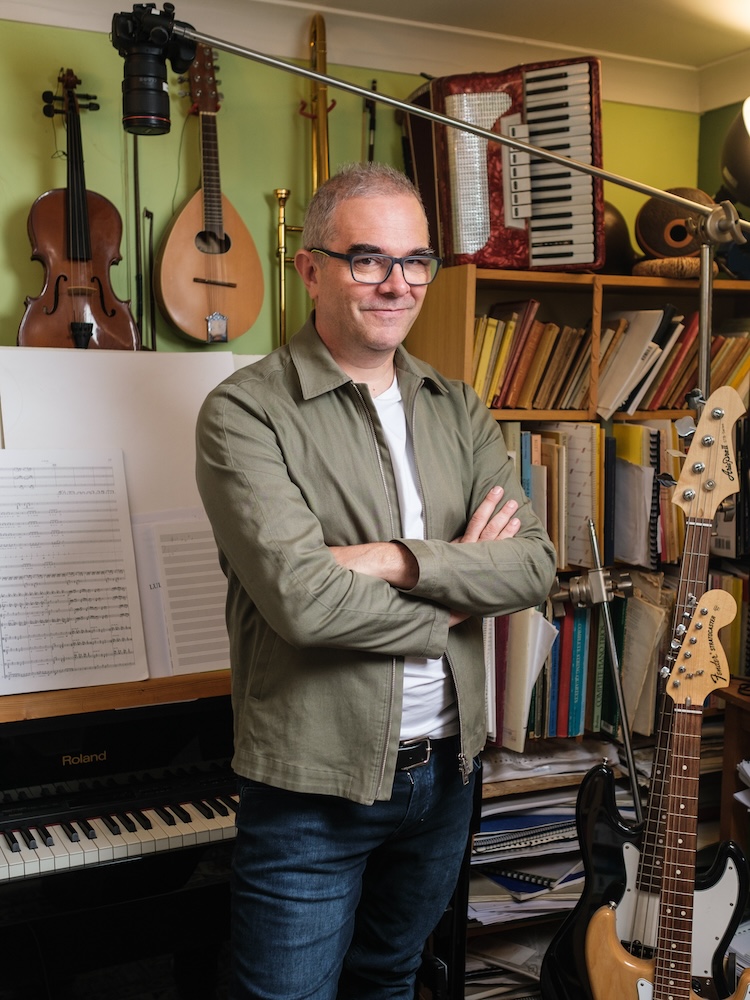
Camerata Pacifica’s concert this Friday night at Hahn Hall boasts the world premiere of Natural Light, the ensemble’s latest commissioned work by David Bruce, and a sizable one for wind quintet. Bruce, a prolific contemporary classical music composer, has created imaginative works in both the opera and chamber music idioms. He’s received previous commissions from Carnegie Hall, London Philharmonic Orchestra, BBC Proms, and Concertgebouw, among many other organizations, including one a decade ago for Cam Pac called Consolation of Rain. Natural Light will be heard amid three other pieces, including Madeleine Dring’s “Trio for Flute, Oboe and Piano,” “Thème varié, Op. 89,” a set of variations for solo piano by French composer Cécile Chaminade, and David Jolley’s adaptation of Dvořák’s “Piano Quintet in A Major, Op. 81,” for piano and wind quintet, in the latest example of the organization’s imaginative programming.
Bruce, who has lived in Britain most of his life, talked about the new work last week during an off day from rehearsals in town.
Q. The list of organizations who have commissioned works from you is mighty impressive. Camerata is pretty small in comparison. Why did you accept a second commission, and for a major piece?
A. I don’t need any persuading because it’s a unique and amazing organization that literally has some of the best players in the world. Every one of the winds is a remarkable soloist in their own right. So it’s absolutely a massive treat for me and makes me put my composing hat into top gear to write something worthy of them. I’ve written quite a hard piece, but we just had our first rehearsals, and they absolutely pull it off, with tremendous control and quality. There was a single note that the bassoonist played today and sounded so gorgeous.
Apparently, Musical America agrees with you. The magazine recently named founder/artistic director Adrian Spence to its prestigious list of Top 30 Professionals in Classical Music. Adrian can be an adventurous lad, too. I’m thinking of him calling you a sorcerer in the email promotions, complete with an AI-aided photo.
Let’s just say that composing can be quite a mysterious process for people. I think that’s where he was going. That’s part of why I started my YouTube channel about composition – to lift the curtain and give people a glimpse at how things get put together.
He also talks about the way you come up with unique sounds through blending tones in imaginative ways. How does that show up here?
A lot of my music has a visual quality, and I like hinting at images or atmospheres, where the music is not just notes but also suggests other things. That’s what this piece is partly about, the shifting lights… It’s inspired by an artist, Brian Clarke, who works in stained glass but places the spirituality normally seen in cathedrals in non-religious contexts. My idea was to make a piece of music that in some way did the same. I repurposed Gregorian chants for the wind quintet, keeping the spiritual energy but in a different context… For Brian, there’s a fragility to stained glass. He’s interested in the light that comes through, that it’s ephemeral, a hazy outline of something rather than anything concrete, passing and transient. To me, they speak to hidden aspects of the universe that feel very deep. I wanted to reflect that in the music.
You know how stained glass is surrounded by lead to keep the pieces together? Some of Brian’s work switches that so the main part of the image is lead with small bursts of very vibrant color in the middle. So I made a movement which has a quite somber chant-esque section, which it keeps returning, but gets more distorted as the piece goes on, all contrasted with the zany clarinet.
Then you added Thai button gong into the mix. How does that fit?
It’s a very beautiful and gentle sound, not like the massive gong you might normally hear. It’s one pitch, a very deep resonant sound, which heightens the spirituality. It speaks to you in the same way that the light coming through the stained glass in the Sagrada Família (in Barcelona) speaks to you, even if you’re not religious. It’s played in the background, a very slow pulse about every 20 seconds or so, and comes across with a sense of ritual that we might not understand.
That wasn’t part of the original commission. How did that whole process work? Was there a lot of input from Camerata or the sponsor or more complete freedom?
The commissioner who was involved to fund this was keen to have a standard ensemble in order to give the piece a chance at a future life rather than having some bespoke, complicated lineup. The gong obviously changes that, but I’m playing it here, and it works just fine without it. Also, the clarinet has the most prominent line, a soloist first among equals. That and a length of 25-30 minutes were the parameters. Knowing that with Camerata there were people who can play the most challenging thing you dare to think up gave me a lot of freedom, which is great, because I don’t tend to know what I’m writing before I start writing. I find it on the journey.
How do you hope or imagine audiences will receive Natural Light?
A lot of the music is pianissimo, very quiet. I remember seeing a singer one time who held a note at the sort of absolute limit of quietness, and it was so noticeable how the audience sat up in their seats, and had to actively then listen and come to the music rather than it being pushed out to them. That delicacy is what I wanted in some parts, so I hope that’s how it lands. As a composer even if you imagine the color you can’t quite picture the life and breath and vividness of musicians playing it live. The rehearsals have been great, because I feel like this is what life should be about – people trying to make something beautiful and giving all of their passion and commitment to it.
Camerata Continued
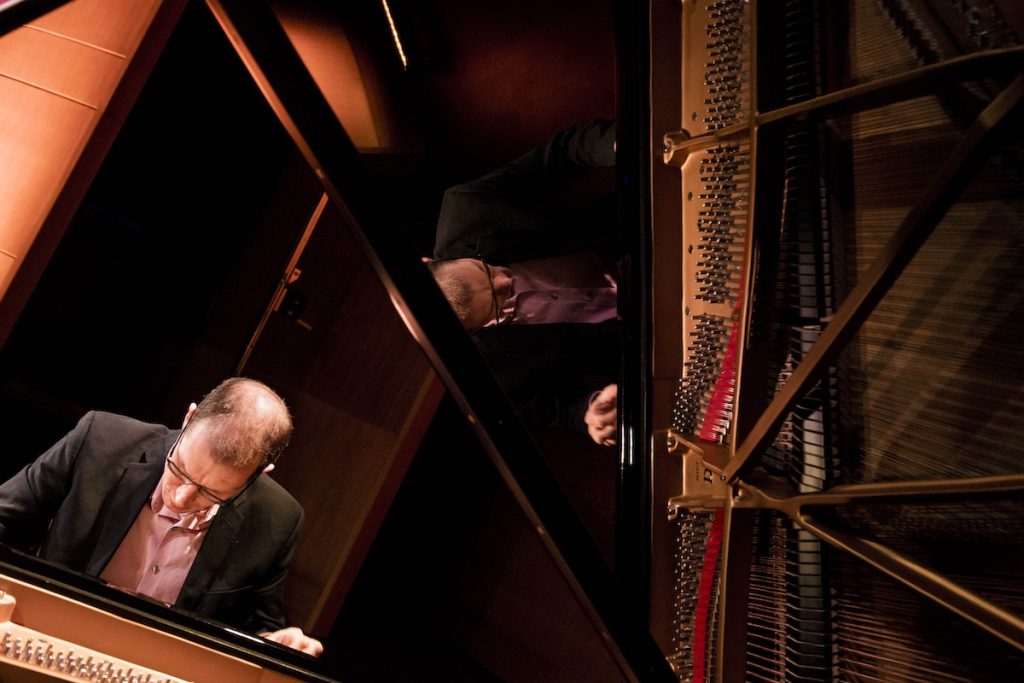
After the wind concert winds up at Hahn Hall, Camerata Pacifica will be back at the venue just two weeks later for the next installment of its “Beethoven 32” initiative, the three-year cycle featuring principal pianist Gilles Vonsattel performing all 32 of Beethoven’s piano sonatas in a hybrid blend of solo recitals and chamber programs. The Swiss-born American pianist will knock out one-eighth of the works in one fell swoop at the first solo recital of the series on March 20 when he’ll take on Beethoven’s beloved “Sonata No. 8 in C Minor, Op. 13 ‘Pathetique’” and “No. 23 in F Minor, Op. 57, ‘Appassionata,’” as well as “Sonata No. 13 in E-flat Major, Op. 27, No. 1, ‘Sonata quasi una fantasia,’” and “Piano Sonata No. 12 in A-flat Major, Op. 26,” the third movement of which was played during Beethoven’s own funeral procession.
Visit www.cameratapacifica.org
You might also be interested in...




You must be logged in to post a comment.