
Channel Islands Marine & Wildlife Institute
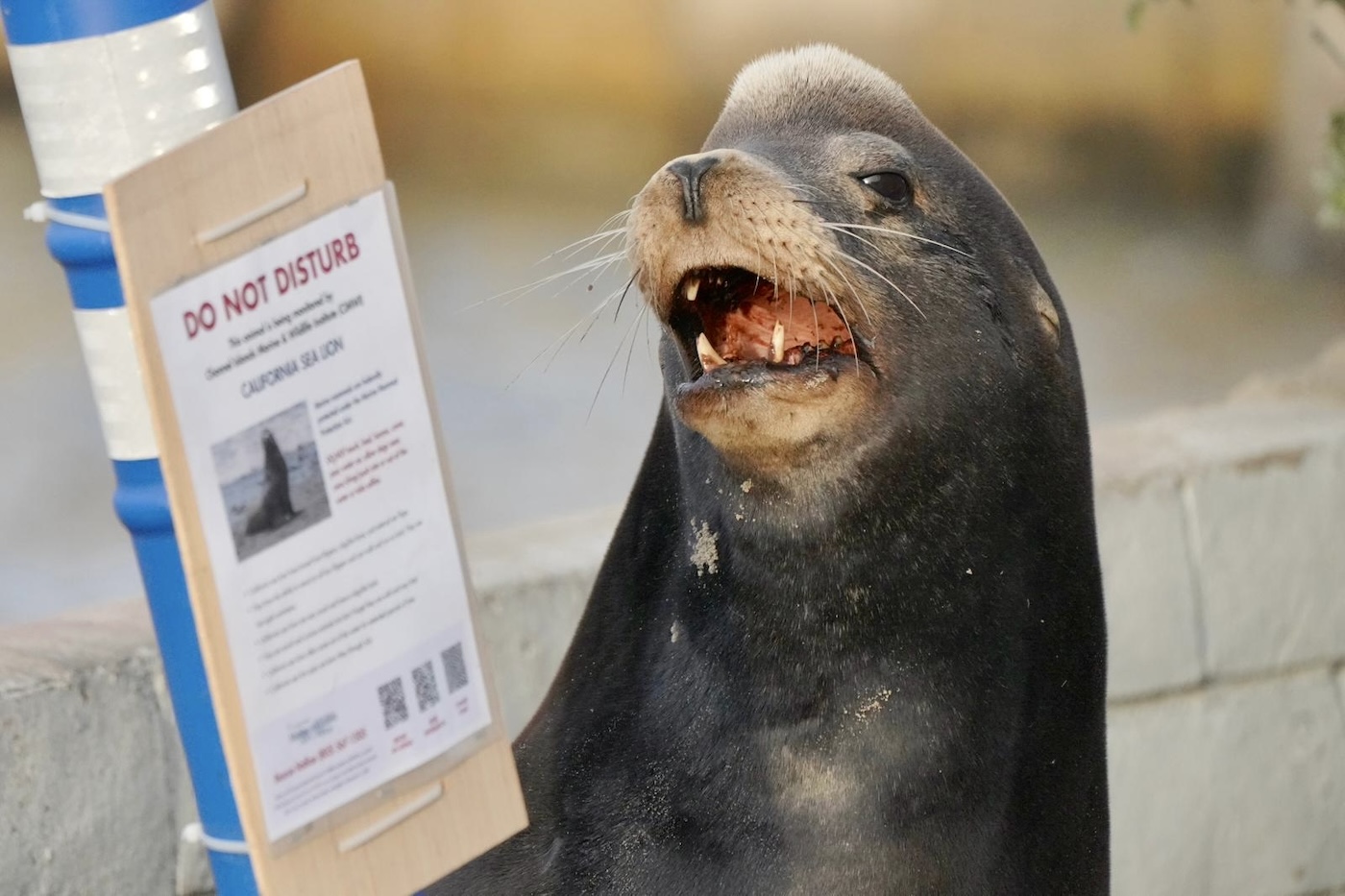
Plenty of local folks probably aren’t aware of CIMWI, let alone what the acronym stands for – Channel Islands Marine & Wildlife Institute – despite the local 501(c)(3) nonprofit’s primary mission of helping a significant subset of (mostly) cute critters that call our local waters home. It’s partly understandable. It’s not all that likely, after all, that you’d accidentally run into the organization’s facility, which is way out of town at the historic Vista del Mar Union School near the entrance to Hollister Ranch. That’s virtually midpoint in CIMWI’s massive territory, a jurisdiction covering 155 miles of coastline from the county line dividing Santa Barbara and San Luis Obispo in the north to the Ventura-Los Angeles County line in the south, encompassing more than 100 beaches as well as 100 harbors.
But CIMWI’s work over the last two decades in Ventura County – and slightly more than 10 years in Santa Barbara County – is critically important. The nonprofit is the sole organization responsible for responding to, rescuing, and rehabilitating sick, injured, malnourished, orphaned, entangled and/or oiled marine mammals.
CIMWI is the group that comes out to rescue and rehabilitate or retrieve live and dead pinnipeds (seals and sea lions), live and dead sea turtles, and live cetaceans (whales, dolphins and porpoises). Since inception, CIMWI has responded to over 46,000 reports of marine mammals in distress and provided care to over 2,700 rescued animals.
Big numbers. But why does it matter?
“Marine mammals are considered sentinel species,” explained Ruth Dover, CIMWI’s managing director, who co-founded the organization with her husband, Sam Dover, director of Veterinary Medicine, Research & Conservation. “They serve as early warning systems for both ocean and human health.”
The marine mammals are long-lived, high-trophic level predators, meaning apex predators who therefore are more likely to accumulate toxins and reflect environmental changes, such as pollution, harmful algal blooms and climate impacts.
“Their health directly indicates the state of the marine ecosystem and, by extension, potential risks to human health,” Dover said. “So many things can affect them, including oceanic changes that displace food sources, human harassment, maternal separation, pollution from rain runoff, getting entangled in fishing nets or debris, colliding with vessels, habitat destruction. It’s a lot.”
The animals are also covered by the Marine Mammal Protection Act, with the result that it’s illegal to feed, harass, hunt, capture or kill them.
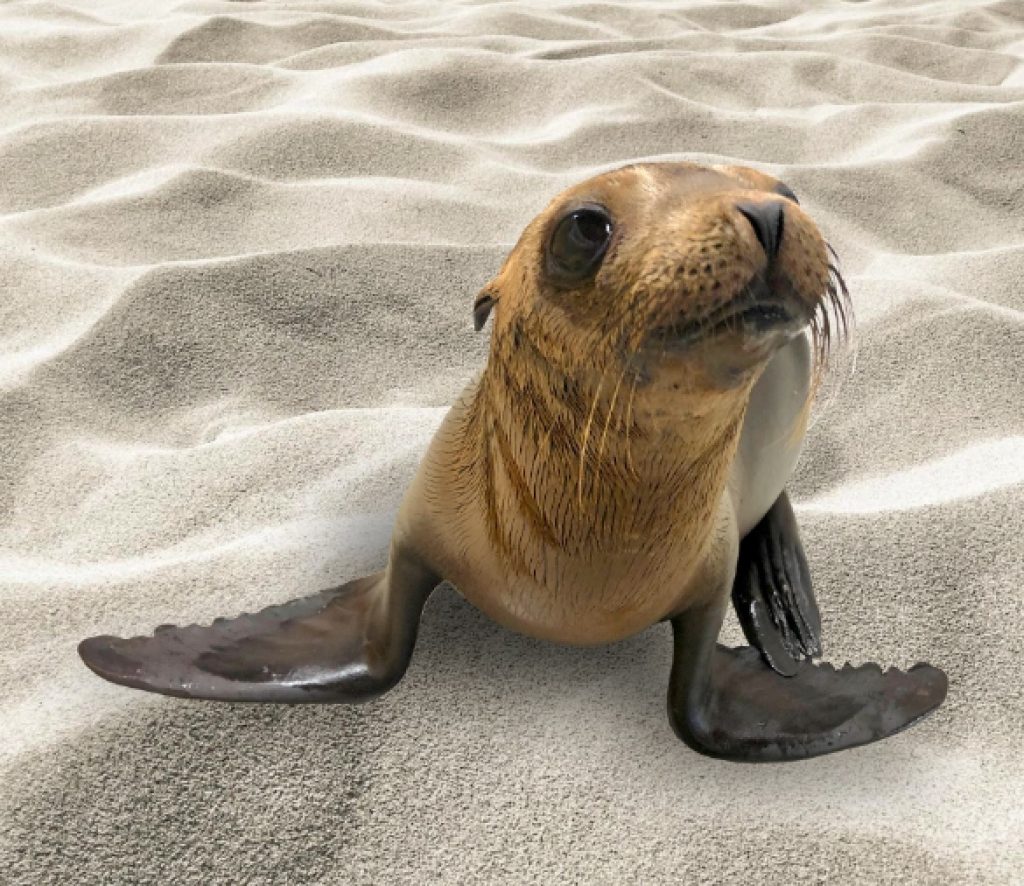
Meaning humans need to stay away from marine mammals, giving them a wide berth – even when they have only the best intentions of helping a distressed animal. In those situations, pick up the phone instead and call CIMWI.
“These mammals are not like birds or raccoons, which are OK to pick up and take to the Santa Barbara Wildlife Care Network,” Dover said. “You can’t touch them, cover them with water or even come near them. But do call us. Even if you think they’re probably OK. They may not need our help, but we want to come out and evaluate the animal in case it does need medical or other attention.”
Education has become a big part of CIMWI’s purpose these days, including letting people know they exist, what they do, how to reach them and what information makes a report more valuable. Salient reporting elements include observing the animal from a minimum of 50 feet and keeping other animals and people away, all the while noting the distressed mammal’s physical characteristics and condition, and providing a detailed description of the location. Then call the CIMWI Hotline (805) 567-1505.
“Don’t hesitate to call,” Dover said. “We don’t mind if the animal is actually fine. We want to go out. We hope they don’t need us. But either way, it’s a great opportunity for us to engage with the public. Our team members are really good at public interaction education. We love talking to the kids at the beach. It’s our opportunity to do outreach. And it’s a great way for us to also organically recruit volunteers or possibly even a donation from some people.”
Those last two items are essential to CIMWI. Volunteers make up the huge bulk of the staff, as they currently number about 140 vs. the three actual employees. The nonprofit is always recruiting, training volunteers in all aspects of the organization’s work, from administrative to on-site evaluation of the animals and rescue operations. While 140 seems like a big number – especially since all of them work at least one full day a week – CIMWI is also facing increased demand for its services due to major domoic acid (DA) harmful algal bloom events each year. These are partially responsible for an 80% rise in reports of marine mammals in distress, a 64% increase in animal rescues, and a staggering 925% surge in DA strandings, just over the last four years.
CIMWI also needs more volunteers to help implement its initiative for 2026, one that looks firmly to the future via education of schoolchildren.
The nonprofit’s “Marine & Wildlife Institute: Lessons in Conservation” curriculum, geared toward students in K-6 grade, was created to inspire the next generation of ocean and environmental stewards through engaging, standards-aligned, and grade-appropriate lessons about marine mammals and ocean conservation. The program combines hands-on activities, multimedia resources and real-world science to support students in developing a deeper understanding of marine mammal biology and behavior, human impact on ocean ecosystems, and the importance of community action and conservation. The content will be available to the public through CIMWI’s website, while locally CIMWI volunteers are being trained to deliver the lessons in person.
“You can book us to come into the classroom and deliver the lessons in person, which means we can answer questions and make sure the kids understand,” Dover said. “Hopefully the teacher, who will be engaged in doing classroom management while we’re teaching, will get comfortable with the material and then be able to teach it themselves each year.”
The exponentially increased demand for services also underscores why additional financial support is essential for CIMWI. Currently, every penny raised goes toward their work, as the salaries of the three staffers are covered by separate grants. It takes about $3,000 to cover the rescue and rehabilitation of a seal or sea lion before they are able to be returned to the wild.
“The more staff that we could have, the stronger our infrastructure will be,” Dover said. “Now, we’re a bit of an unsung hero. We make a big impact without a lot of splash.”
Visit www.cimwi.org
You might also be interested in...




You must be logged in to post a comment.