
Farm-ing Our Futures: UCSB Theatre gets Orwellian
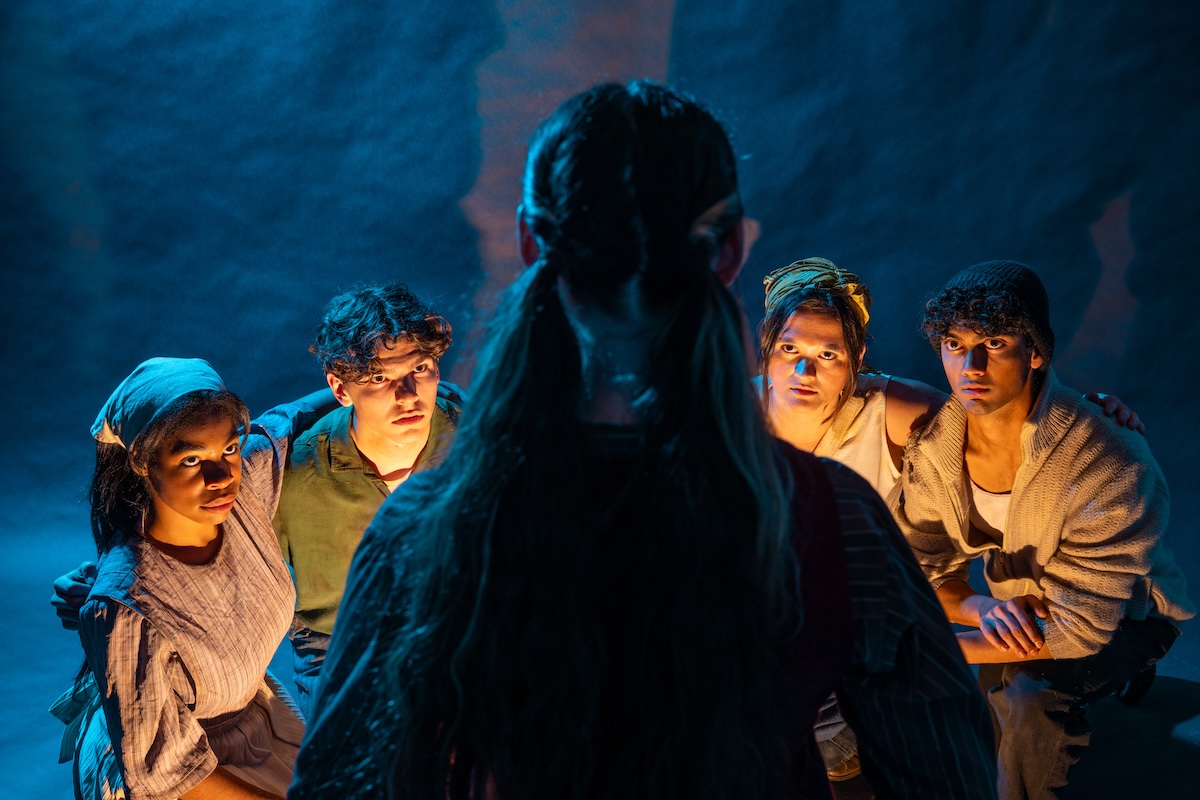
Eighty years after its publication, George Orwell’s novella Animal Farm resonates in our world, speaking as sharply to the abuses of authoritarianism across the globe today as it did in addressing Stalinist Russia and the dangers of communism in 1945. The actor-director Andy Serkis – famed for his motion capture and voice-over roles for such characters such as Gollum in The Lord of the Rings film trilogy, the title role of King Kong, and Caesar in the Planet of the Apes – started working on Animal Farm as an animated feature in the early 2000s, right around the same time that playwright Tatty Hennessy wrote a new stage adaptation.
While Serkis’ Animal Farm hits theaters in May, UCSB Theatre’s student production of Hennessy’s version arrives in town this weekend, offering five performances over the February 20-22 weekend at the Hatlen Theatre on campus. Perhaps surprisingly, bringing Orwell to the stage came at the suggestion of the theater department students themselves.
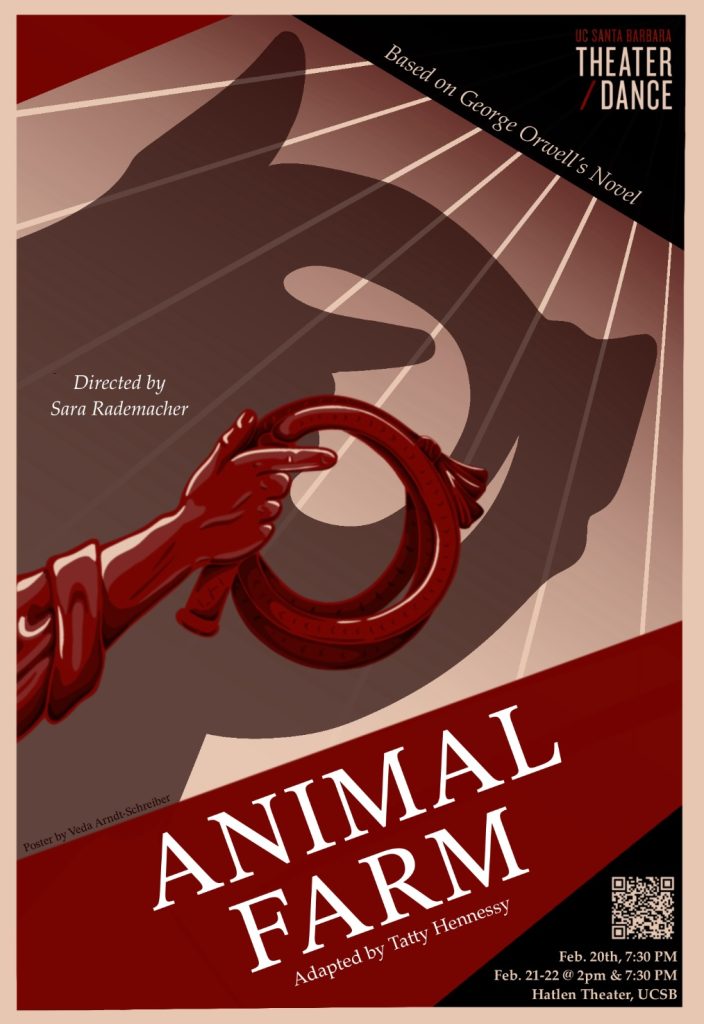
“It was a great idea,” said Sara Rademacher, the UCSB lecturer who is directing the production. “We haven’t done anything this ambitious and epic that needs the big proscenium stage in quite a while.”
Even more exciting, she said, is the opportunity to bring the adaptation to campus, given its theatrical scope and the up-to-the-minute themes.
“It’s very contemporary,” Rademacher said. “It doesn’t shy away from anything, coming off as very connected to the politics and the revolutions and rebellions that are happening as we speak… I started reading the script months ago and the headlines are showing up every day that are relevant. Right now, we’re seeing this authoritarianism playing out by questioning what the laws of the land are and if they’re actually enforceable.”
To emphasize that aspect, the production will project images onto a screen that is part of the set – images that have populated the actors’ social media and been roundly discussed throughout the rehearsal process.
Even on its own, Hennessy’s theatrical adaptation puts the emphasis on treating the animals as not very physically different from the humans they’re rebelling against – the animals’ own culture designed to be more fair and kind.
“The very first stage direction is that the animals look like us, whereas the humans actually don’t,” Rademacher explained. “Orwell’s book is actually subtitled A Fairy Story, meaning it’s a fable, it’s an allegory, and it’s not pretending to be anything else. Putting those characters into animal forms gives us that necessary separation to let us look at the situation without feeling responsible right away. Hennessy takes that away. Our actors look like actors, not animals. We play around a lot with animal characteristics, physicality and movement, but we’re trying to not allow the audience to feel disconnected. That makes it look more like what is happening to us right now, rather than 80 years ago with the political figures of that time.”
The adaptation has fueled the discussions about how a charismatic leader exerts control, manipulating the masses to maintain order and becoming the very thing that the animals were resisting.
“We spent a lot of time looking at why they submit,” Rademacher said. “What’s the risk if they don’t follow this leader that they’ve chosen? It’s pretty clear that it’s life and death, which is connected to our current situation. It doesn’t feel like something old at all.”
As in the book, the animals attempt to create a society that follows seven pillars, not unlike, say, our Bill of Rights. Among the commandments is that all animals are equal. But by the end, it’s changed to some animals are more equal than others.
As The Guardian put it in a review of a London production, the corrupting nature of power, the slow erosion of commonly held values, the seductiveness of strong leadership in a time of crisis, and how we collude with toxic leaders by believing their lies are all a subtle part of the script and the stage play.
“I came in wanting us all to look at how we are all responsible,” Rademacher said. “Even if we don’t agree and haven’t voted that way. Guess what? I still have an Amazon Prime account. Those tiny little things are a slippery slope. We are able to justify our actions because we also want to just live our lives and not be in battle all the time.
“The animals in the play are justifying their actions too. We’re all very good at that in our everyday lives.”
Diving deep into discussions of that dynamic was a big part of the rehearsal process, Rademacher said.
“Especially in the very beginning, the first couple of weeks when we were digging into the text. These young actors are still just trying to figure out their worlds and life. There were tears, there were fears as they made connections to their heritages and what has historically happened. It is scary. But as a leader of that room, I committed to just being as frank and honest as I could, because as those things were happening in the world, I wanted to say, look, you know what? I am scared too. I don’t know how to fix this. I am not going to tell you everything is going to be okay. But what’s also been powerful is that the 16 actors in the room are laughing and they’re playing, and they are living their lives. That became a mantra: Our joy is resistance. They can’t take that away from us.”
Rademacher said she hopes the audience walks away pondering those questions and issues of personal responsibility. Of course, just enjoying the play as entertainment is fine, too.
“We’re posing that question to everyone: How are my actions participating in or resisting the degradation of our democracy right now? I know that whether or not the play makes a huge difference in the community, for those of us who have been working on it for a while, it has already made a big difference.”
You might also be interested in...




You must be logged in to post a comment.