
Two Gardens
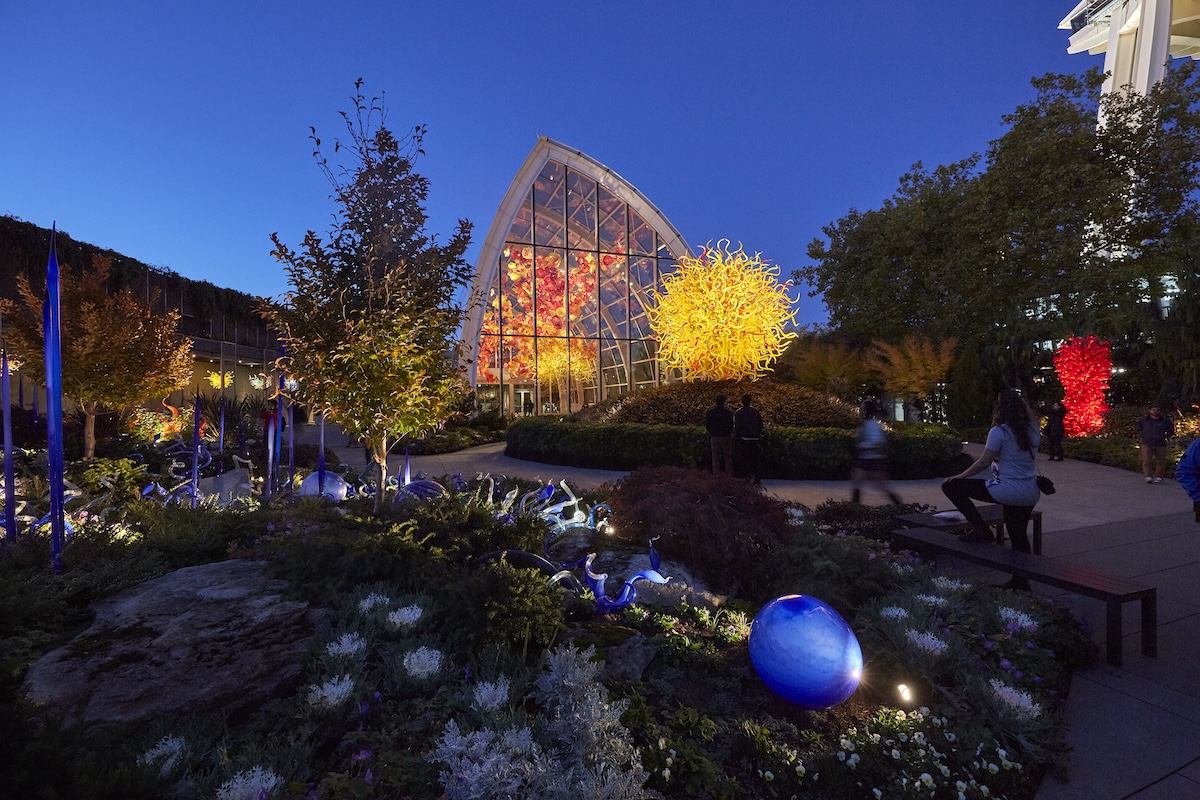
Chihuly Garden and Glass: Seattle
Recently I visited two gardens: In Seattle, it was one of glass, all brilliant color and eye-dazzling light. In Victoria, British Columbia, it was one of plants, whose patterns of flower and form painted the landscape like an artist’s brush.
Mystics speak of a realm that lies beyond human sight, a metaphysical domain where initiates with subtle occult perception are able to see the aura surrounding each human being – an emanation of shifting colors and shimmering light.
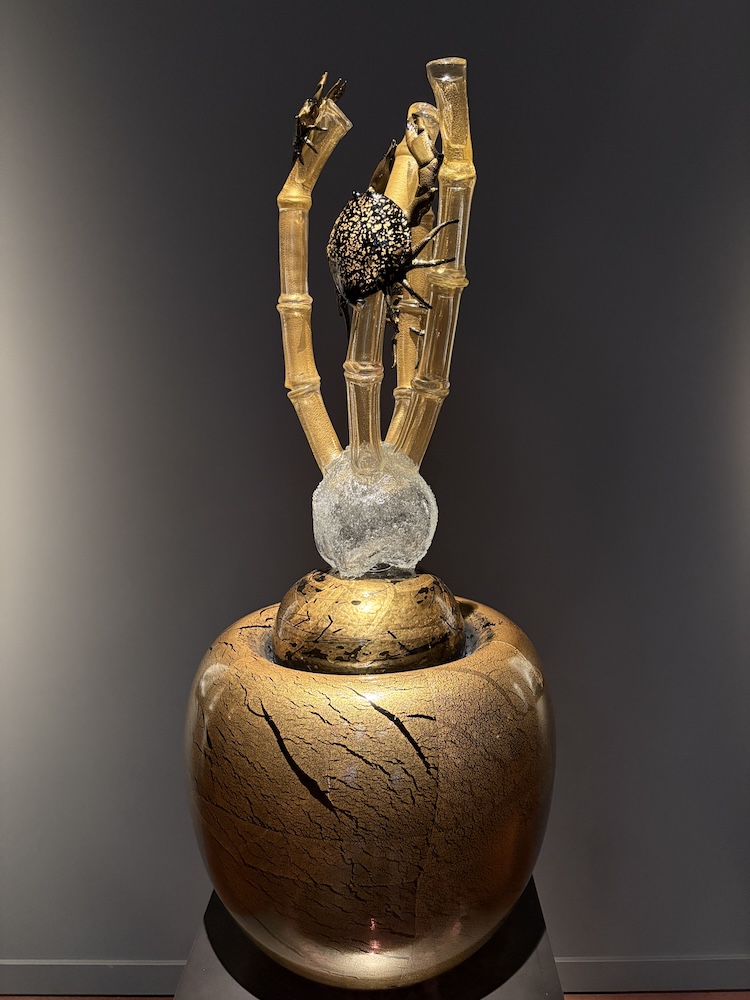
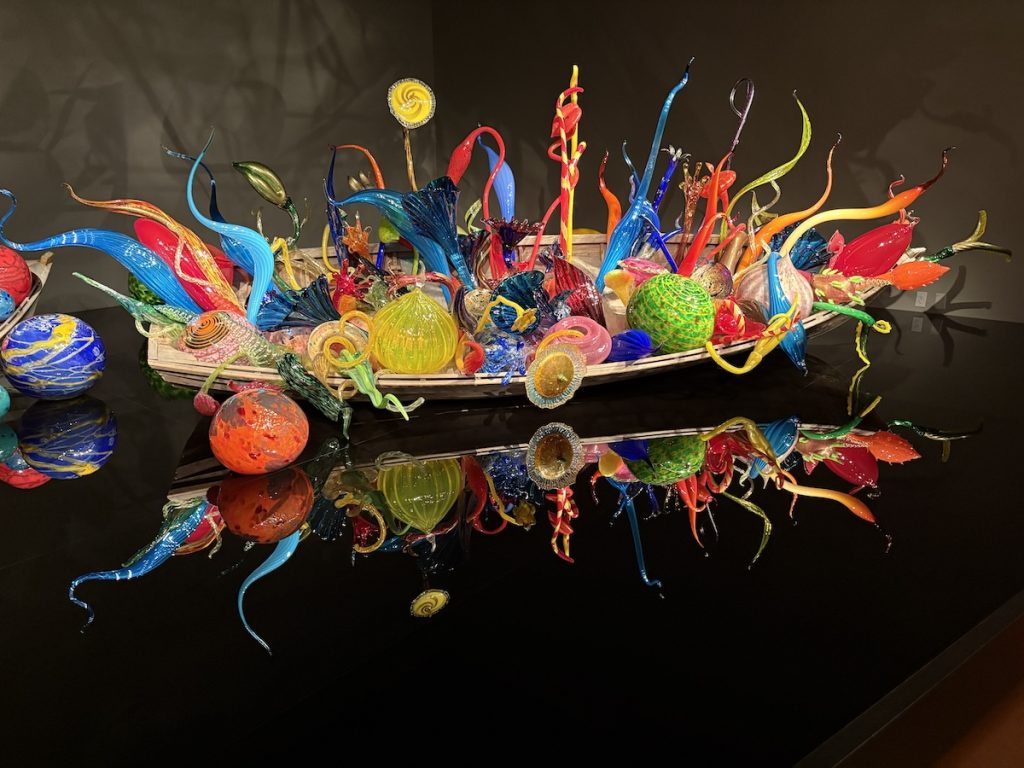
I had a similar, almost mystical sense looking at the work of renowned studio glass artist Dale Chihuly. On view at his gallery and garden in Seattle were colossal pieces luminous with color: gleaming orbs and spires, multi-hued flowers, undersea life, twining tendrils massed into towers so high they seemed architecturally impossible.
In one room, blown-glass flowers hung suspended overhead and were lit from above. Kaleidoscopic colors – red, yellow, and blue – filtered down, immersing me in pure radiance.
In my imagination it wasn’t a stretch to see these same forms as a school of jellyfish in glowing neon hues. “Putting the pieces overhead makes me think of the sea,” confirms Chihuly. “I get the feeling of water. Someone else might think they are looking up into the sky or having a dream.”
As the artist sums it up: “Glass is the most magical of all materials.”
Now 84, Dale Chihuly revolutionized the medium of studio glass. His organic, free-flowing creations constantly push the boundaries of this fragile material – in imagination and technique, in shape and scale. Virtually by himself, he elevated glass in the U.S. from craft to fine art.
Raised in Tacoma, Washington, he enrolled after college in the nation’s first glass program at the University of Wisconsin. He went on to study at the Rhode Island School of Design, later founding its glass program and teaching there for more than a decade. On receiving a Fulbright Fellowship, he went to Venice and apprenticed in a glass factory. There he first encountered the team approach to blowing glass, which shaped the way he has worked ever since. (Creating his coiled “Rotolo” sculptures, for example, can require 140 pounds of glass and 17 artisans working in fluid choreography.)
Today his pieces are included in more than 200 museum collections around the world. At Chihuly Garden and Glass the focal point is a huge glasshouse, inspired by the artist’s collection of postcards of 19th-century conservatories. It houses an aerial sculpture 100 feet long, constructed of 1,340 individual glass forms in oranges, reds, and yellows.
In the nearby gardens, art meets the outdoors. Fanciful glass forms weave through real plants and flowers. Fragile reeds and translucent eelgrass sparkle in the sunshine. Indigo spires reach up into green trees. An eleven-foot-high tower of trumpet vines is made of ruby red glass.
The gardens engulfed me in a spectacle that left my eyes dazzled and tingling. “I want people to be overwhelmed with light and color,” Dale Chihuly explains, “in some way they’ve never experienced.”
The Butchart Gardens: Brentwood Bay, British Columbia
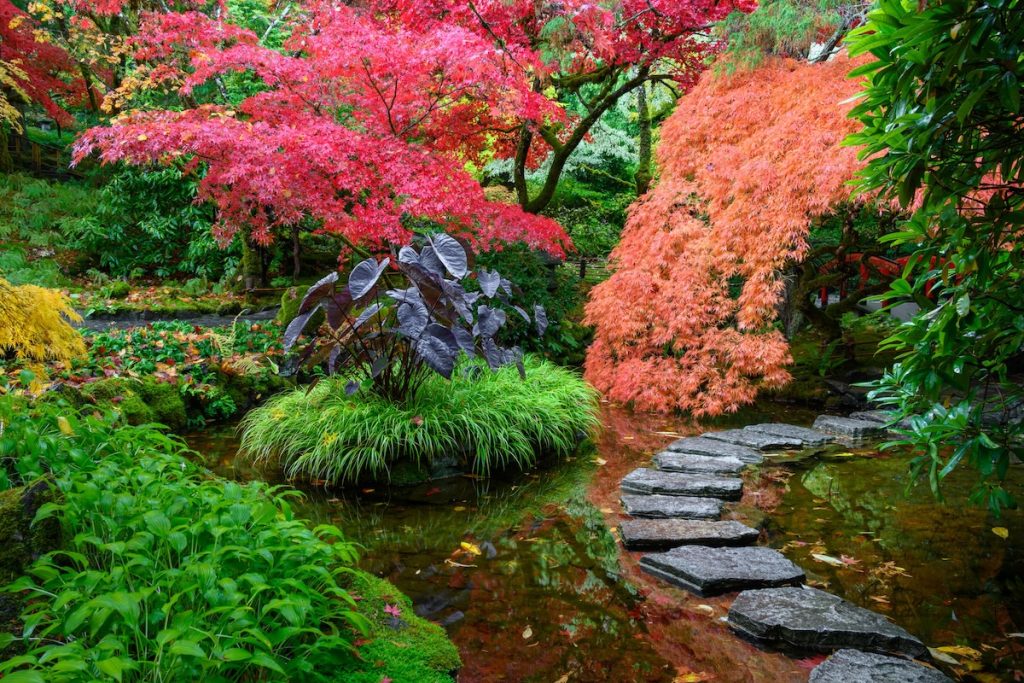
As I strolled into these famous heritage gardens on Vancouver Island, a young woman who seemed to be a regular visitor offered me a word of guidance. “There aren’t many exotic plants here,” she pointed out. “It’s not a botanical garden – it’s a garden. For me it’s the colors, it’s about art.”
How right she was. As I wandered among the flower beds, trees, and ponds in the 55-acre gardens, it seemed that everything could have been painted by an artist’s brush and placed there to open our eyes and simply enjoy.
More than a million people visit The Butchart Gardens each year, largely in spring and summer when blossoming flowers run riot. (Tending the gardens takes 50 full-time gardeners.) Spring showcases a wild variety of bulb plants: countless varieties of irises, hyacinths, and crocuses, plus 160,00 tulips. The summer Rose Garden bursts with color from thousands of ramblers, climbers, tea roses, and floribundas. Along the garden pathways there are swaths of dahlias, geraniums, and begonias.
I visited the gardens in late autumn, a season scant on flowers but still fascinating. I got to see teams of gardeners chuck handfuls of bulbs onto bare dirt beds, where squads of other gardeners planted them. In all, they set 350,000 bulbs (!) that will bloom in spring.
The garden’s centerpiece goes back to its beginnings. In the early 1900s Robert Pim Butchart manufactured cement using limestone from a nearby quarry. He and his wife Jennie lived in a house nearby. When the limestone played out, she envisioned transforming the quarry into a sunken garden, overflowing with lush greenery and blooms.
She allowed the deepest part of the quarry to fill with water from a natural spring, forming a lake 40 feet deep. Mr. Butchart stocked it with trout, which would rise to the surface to be fed when he clapped his hands. The quarry’s barren rock face, however, presented Jennie Butchart with a challenge. It was ugly. So she suspended herself in a bosun’s chair and planted ivy in the crevices in the rock walls. Today the garden walls remain clad in green. The family still owns and operates the entire property.
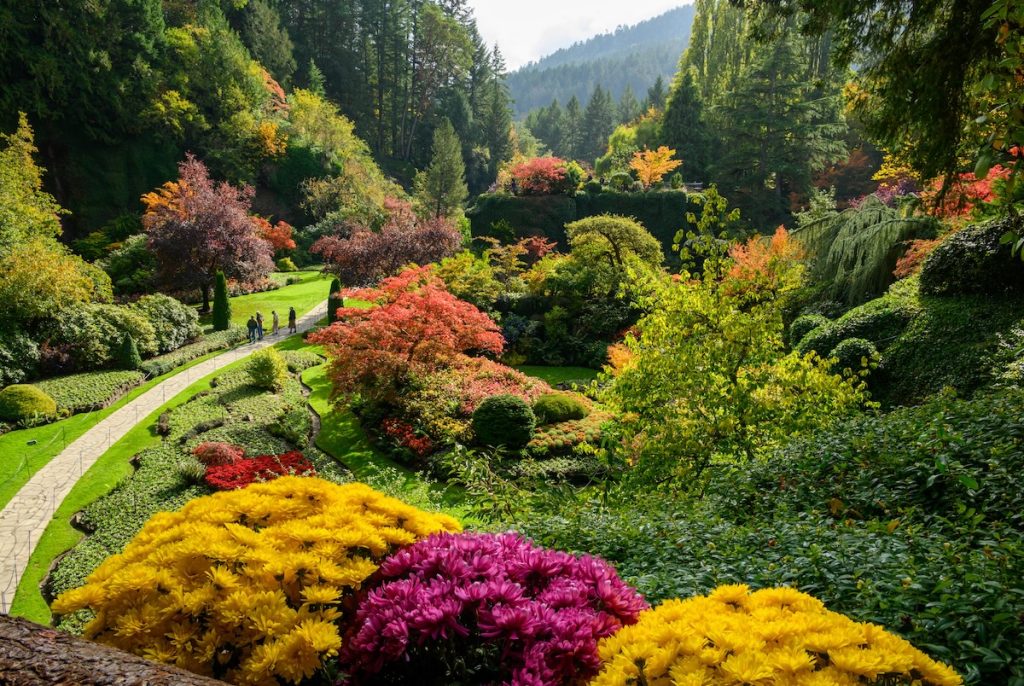
The Sunken Garden is popular for its vast plantings of tulips in spring, vibrant chrysanthemums in fall, and a rich mix of trees, shrubs, and perennials set in dramatic tiered beds. Flowering cherry trees add splashes of color.
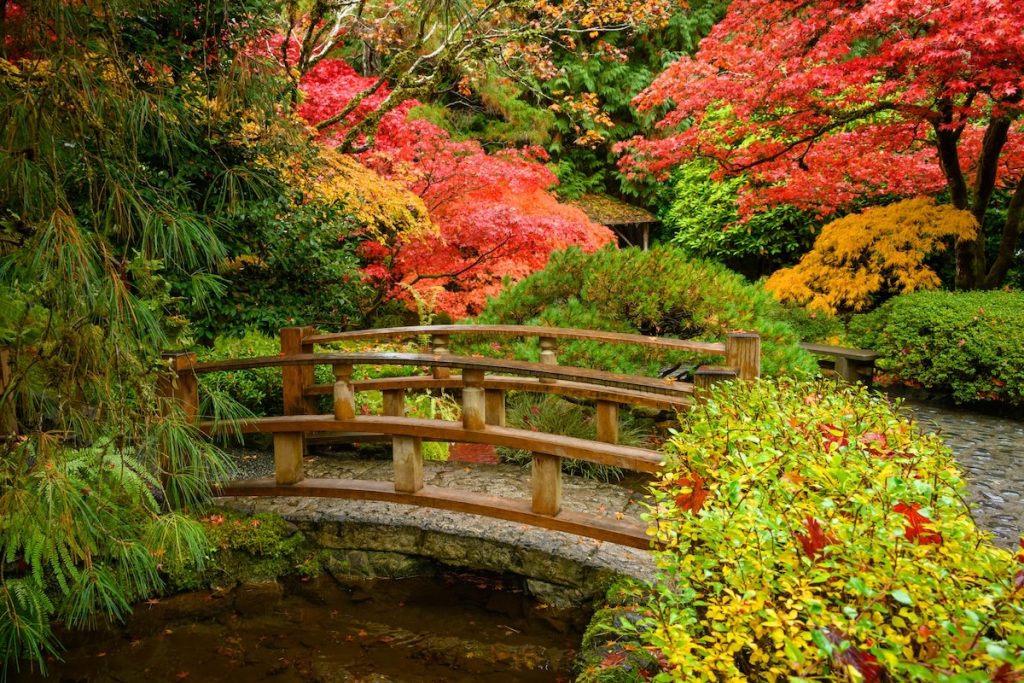
My favorite part of the visit, though, was the Japanese Garden. Visitors enter through a Torii gate, just two red poles and crosspieces, that traditionally signifies the transition from the mundane world to the sacred. (They’re often seen at the entrance to temples.) Two huge purple beech trees stood guard. In the shady garden, a flowing stream cooled the air. Paths twisted and turned and crossed graceful bridges. Lacy maple trees of vibrant orange and red rustled in the breeze.
Faced with so much beauty, many a romantic heart has taken wing, and wedding proposals often take place in the Japanese Garden.
All of The Butchart Gardens reveal this kind of heavenly artistry. Its graceful flow and palette of colors are like something you experience in a dream, and yet it has somehow been painted across the landscape, beautifying the world.
Compass Points
Chihuly Garden and Glass: Located next to Seattle’s iconic Space Needle, accessible by monorail and car. Open daily, year-round. Self-paced visits, downloadable audio tour, glass-blowing demonstrations. www.chihulygardenandglass.com
The Butchart Gardens: Located 14 miles north of Victoria on Vancouver Island, British Columbia. Open daily, year-round. Dogs permitted on leash; various companies offer guided tours. https://butchartgardens.com
You might also be interested in...




You must be logged in to post a comment.