
Roman Times in Mariposa

Joshua Roman was just 18 when he first set foot on the Miraflores campus as a cello fellow at the Music Academy of the West’s summer festival in 2002, a summer he says he’ll never forget, partly because it was where he got a sense of what it was like to be a professional musician.
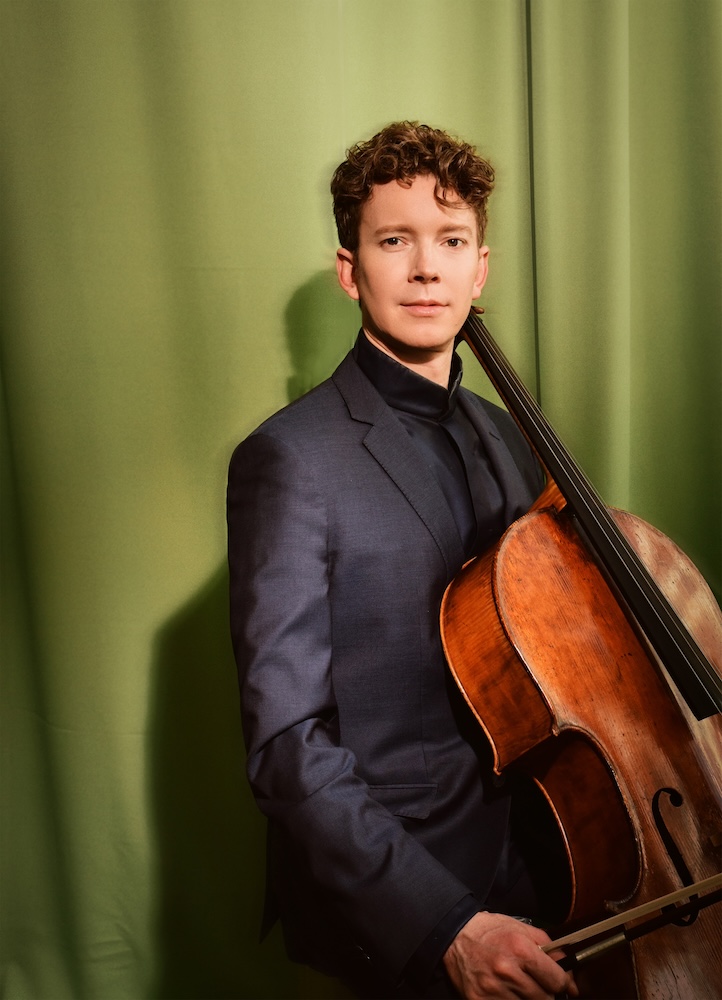
“It felt like the first time I was really doing ‘the thing,’ which I really didn’t expect,” he recalled over the phone from his home in New York in mid-December. “I performed something like 30 times over the eight weeks, the most in my life. I performed on stages, in the museum, in people’s homes and at all kinds of events, solo and in the orchestra and in chamber groups. I loved all of it, especially being in such an arts-supportive community. But I had only brought one suit. By the end of the summer, it was only half a joke that it could stand up by itself.”
But 2002 was a long time ago, more than half his life. A lot has happened along the way. It was only four years later at 22 years old that Roman landed a prestigious post as Principal Cello with the Seattle Symphony. Just four years later – his college loans paid off – he gave up that esteemed seat many musicians strive for all their lives, in order to pursue his first love; a solo career.
“I was a hard charging cellist from the age of six when I decided that’s what I was going to do,” he said. “Everything was built around that. But nobody knew in my family how to do that. So the rest of the trajectory of my life has been a series of learning periods and reactionary periods, but all kind of aimed toward that basic goal of being a cello soloist. I just wanted to be out there impacting people’s lives with the cello.”
The move paid off. Roman moved to New York and earned many prestigious appearances, collaborated with some terrific elders and contemporaries, and received great reviews. His path went where his heart and desire led.
“It’s been about all of the different ways that I feel the cello,” he explained. “Doing my best to integrate that into projects that can tell more of the story. I want what I do to be cohesive.”
But then he caught Covid in January of 2021. He’s never really recovered.
As one of those afflicted with the mysterious diagnosis of Long Covid, which causes symptoms that vary widely, Roman has had to reconfigure his career to accommodate the chronic illness. Mostly, it meant scaling back from his ever-ambitious schedule, cutting back rehearsal time, and re-examining what he agrees to do with a more judicious eye – focusing largely on producing projects and performances that will resonate beyond the moment.
This resonance manifests through an array of ventures. Immunity is his years-long project which integrates his experience of Long COVID into his musical life and yielded an album of the same name. Roman has presented TED Talks about his experience and has undertaken a series of performances – split between the sufferers of the disease, their friends and family, and the general public. This series literally just ended a few days before our conversation.
Having Long COVID meant taking a long look at his life and reframing how best to live it under changed circumstances. He constantly needs to manage his energy, and thus choose carefully where to put his efforts and how to pursue his dreams. But while he’d gladly exchange his condition for perfect health, Long Covid has also brought blessings, he said.
“I’d always had the idea that I would play so perfectly that it would change people’s lives, just because they heard music that pure,” Roman said. “I think I’ve let go of that through therapy, but I also know that there is something about music that transcends what we can explain. The skills and the ability that I’d been working so hard on are very important, but so is the part that is very scary; to let down my guard and be vulnerable. Centering that element of performance has made me feel so much more connected and confident and open on stage, which leads to people really being moved. I’d been thinking that sense of connection was accessible through the mind, when it’s really letting go that makes it happen.
“Now, everything that I do is explicitly geared toward exploring that question and the power of music in a way that challenges pre-formed conceptions. Being able to break down walls and then build new ideas with people is what it’s all about.”
Roman’s collaborators at the moment are Grammy Award-winning double bassist Edgar Meyer and the similarly genre-busting bluegrass-loving violinist Tessa Lark, the trioperforming a concert back at Hahn Hall on January 8 as part of MAW’s off-season Mariposa Series. All three musicians are familiar with the venue: Roman via repeat appearances for the Academy over the years, including the 2024 gala; Meyer as a 2019 Mosher Guest Artist during the festival; and Lark in a solo performance for UCSB A&L last season.
The program features Bach’s “Sonata for Viola da Gamba in G Major, BWV 1027,” and Meyer’s own triplet of trios from 1986 and 1988, including a new one he composed in 2024 specifically for this group.
“It’s this group, these people, the way that it sounds to have these three instruments, and the level of performance, which is surprisingly rare,” Roman said. “We all have a reverence for Bach, and Edgar’s music is just incredible. What we play has a simplicity. Even when it’s complicated, there’s a directness to it. It’s very honest.”
You might also be interested in...




You must be logged in to post a comment.