
Lookout: Laurel Canyon Comes to Lobero
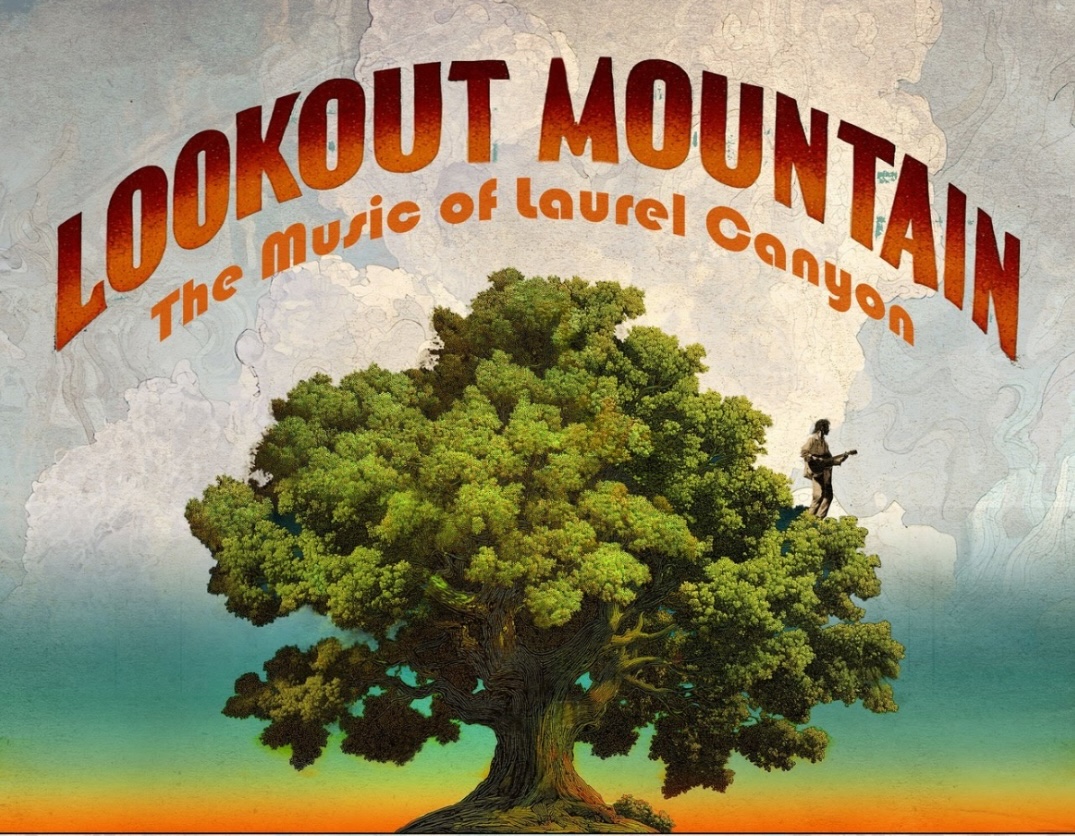
Veteran musicians James Raymond (keyboards/vocals) and Steve Postell (guitar/vocals) were mainstays of both the David Crosby tribute concert at the Lobero months after the legend passed away in 2023, and the “Our House: Music of CSNY” tour that played the theater a year later. Now, the two have come together again to both further expand the repertoire and narrow the focus for the inaugural “Lookout Mountain – The Music of Laurel Canyon” concert at the Lobero on November 13.
Raymond, Crosby’s son and bandmate in CPR, and Postell, his last music director, spearheaded a hand-selected group to revisit songs from the golden age of the hilltop neighborhood not far from L.A.’s Sunset Strip, concentrating on the fertile period between 1968-72 where future icons Crosby, Stills & Nash, Joni Mitchell, The Mamas & the Papas, James Taylor, Carole King, Jackson Browne, Linda Ronstadt, and members of The Byrds once congregated, giving rise to the singer-songwriter era that still resonates today.
“Obviously, I had a familial connection to it through [my dad], who introduced me to his friends who were part of that scene,” said Raymond, who didn’t meet his father until the 1990s. “But it’s also that there was an incredible outpouring of really great songs that came out just in those four years in Laurel Canyon. There’s a renewed interest in that music if it ever really faded at all.”
For Postell, the show is a chance to revisit songs that not only influenced his long career since his formative years, but also formed a portion of set lists along the way.
“I’ve played all these songs at one point or the other, but it’s a real pleasure to actually learn how this stuff really went down, and play the songs the way they’re supposed to be.”
With several dozens of records and many hundreds of songs to choose from, Postell and Raymond made a conscious choice to narrow their 23-song, 17-artist set by eschewing the deep cuts and instead focusing on the most popular songs of the era, the ones that received a lot of radio play, with a clear understanding that baby boomers make up a big part of their target audience.
“People have a really strong, almost cellular reaction to songs that they first heard as kids,” Raymond said. “We want to tickle that part of their brain and get that dopamine or whatever chemical released, which makes things work on a lot of different levels for them and for us.”
Calling the concert “a collaborative thing between us and the audience,” Postell noted how many of the artists in the area at the time were at once friends, collaborators, and competitors.
“There’s so many great stories about how the vibe was everybody just going over to everyone else’s house,” he said. “Just hanging out and making music all the time. When James and I went to Joni’s house after her recovery – where guitars and pianos were all around the living room – you could actually feel what that room must’ve been like.”
Capturing the vibe as well as the songs themselves is one of the goals, forming the impetus for putting together the rest of the band that includes onetime CPR member Jeff Pevar (guitar/vocals), Kipp Lennon (vocals), Kiki Ebsen (keyboards/vocals), Gary Novak (drums), and Andrew Ford (bass).
“We wanted to cast the group with people who were not only superbly talented musicians who would fit certain chairs and the positions based on the songs, but also ones we knew were a great hang, people with no drama,” Raymond said. “Also, people for whom this music meant a lot to them as well, who were deeply affected by the music and would play it differently because it means something to us all. The singers all have some kind of connection to one or more of the artists whose songs we’re playing.”
Adding in photographer Henry Diltz, whose slideshows of iconic shots he took around Laurel Canyon back in the era will open each set, is meant to enhance the sensory experience.
As does sharing their own insights between the songs.
“We connect these songs with personal stories that a lot of us have had,” Postell said. “There’s a lot of talented tribute bands out there, but we have a lot of connections with the era and the artists. It’s that six degrees of separation concept – or actually just one or two at the most.”
You might also be interested in...



