
Southern African Canyonlands
I teetered on the edge of the north rim of Fish River Canyon, a lofty perch overlooking the second largest canyon in the world. The starkly beautiful desertscape is in Namibia, in Southern Africa. The colossal geological wonder appeared every bit like the American Southwest’s Grand Canyon, the largest canyon on the planet.
Scanning with binoculars, the southern Namibian gorge mirrored all the same topographical features as its earthly North American cousin. Striated cliffs swept in pinkish, purple, and orangish hues that followed its serpentine flow before converging with the Orange River, forming the border of Namibia and South Africa. The confluence of the two rivers is just over 60 miles from the teeming Benguela Current and the frigid Atlantic Ocean.
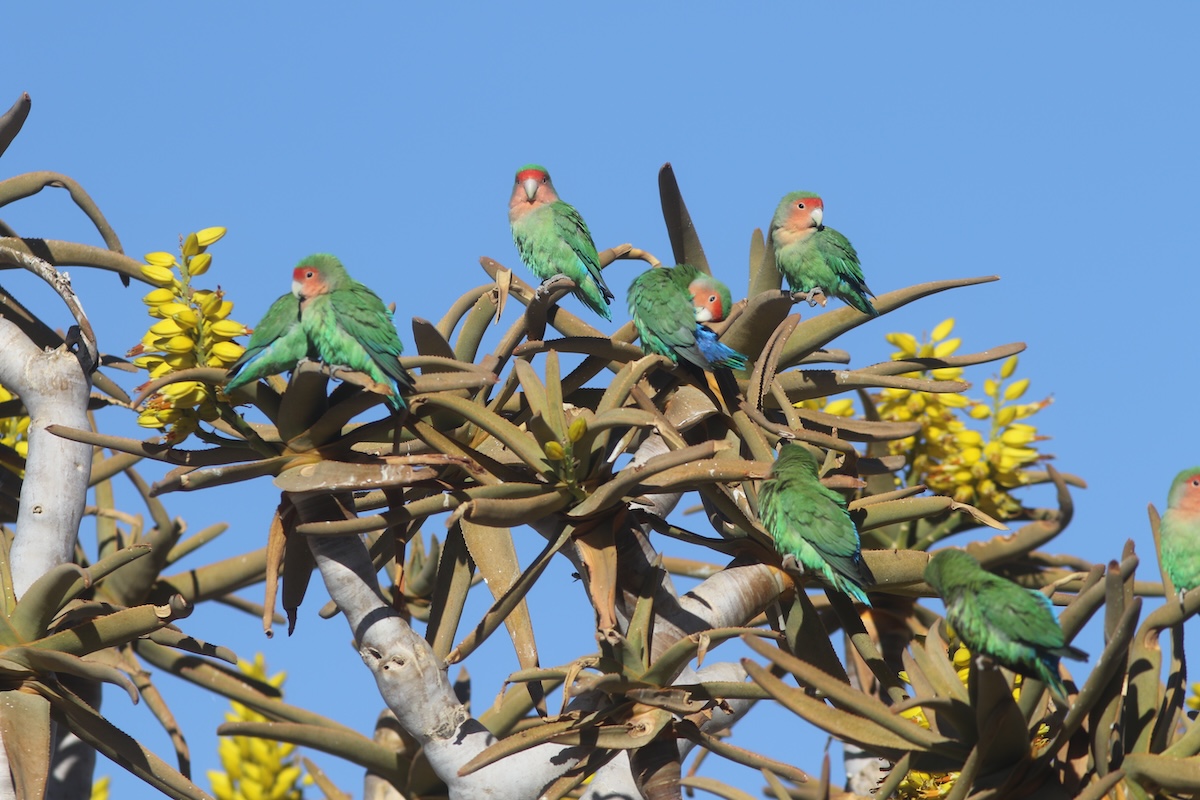
From afar, 1,800-foot-deep Fish River Canyon seemed barren and lifeless, yet within my immediate surroundings canyon flora and fauna thrived. Adorable and vibrant, rosy-faced lovebirds were perched on a lone quiver tree on the edge of the north rim. A flock of the multi-colorful parrots preened on what is really a massive aloe plant that grows 10-to-25 feet tall. The two species are native to Namibia, reveling in the arid, cloudless skies hovering above the Southern African nation.
African Elephant Cousins
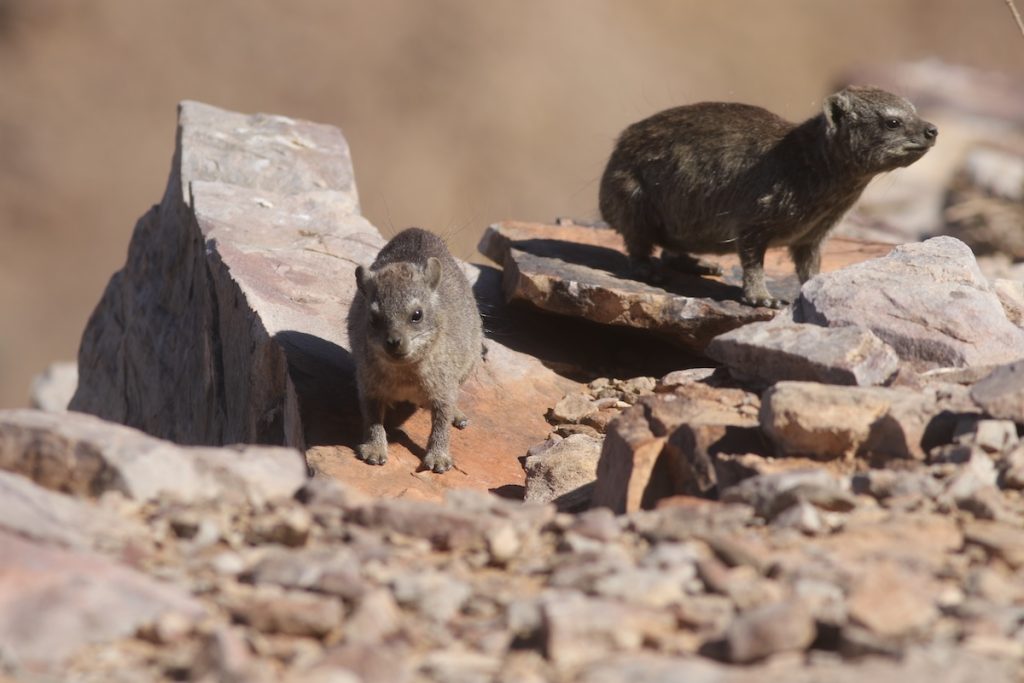
While scrambling along the edge of Fish River Canyon, I came across the closest living relative of the African elephant. After 16 trips to Africa, it’s always boggled my mind that the rock hyrax is a related to the largest land mammal on the planet. It’s almost comical looking at a hyrax. The size discrepancy is obvious. I’ve seen hyraxes on the highest peaks in East Africa all the way down to the Waterberg Plateau in Namibia. They only weigh four to 13 pounds, but genetic studies of bone morphology reveal a close evolutionary bond between the 5,000-to-12,000-pound tuskers and the scruffy, crooked-toothed rock hyraxes.
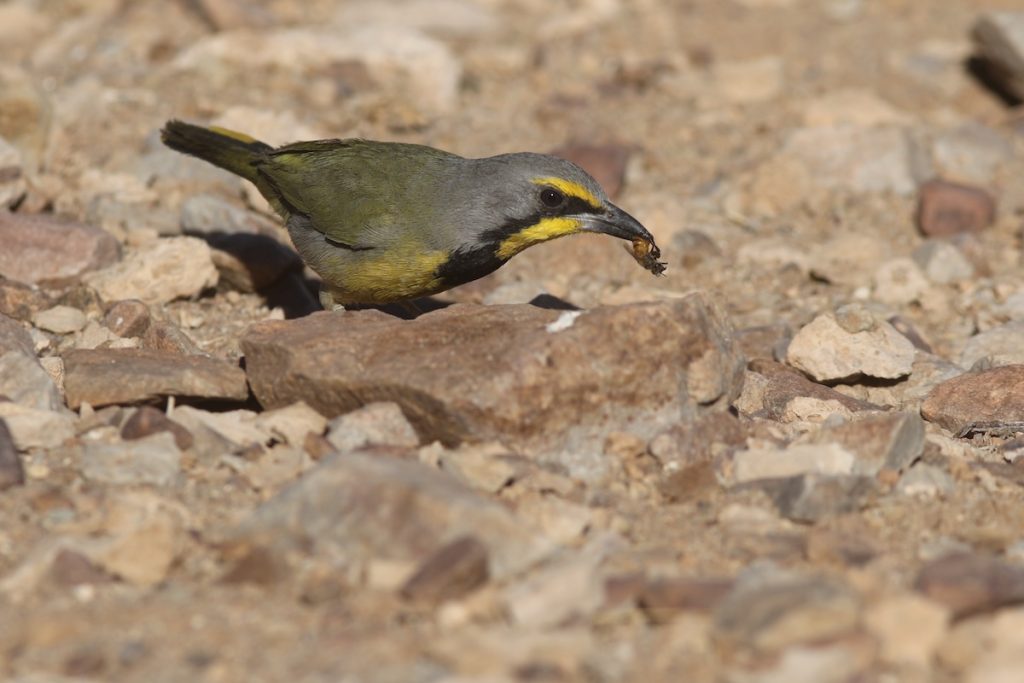
I had baby hyraxes at my feet. Resting in the shade of a quiver tree, they hopped and bounded along the rim of the canyon. There was a small pool of water nearby, a popular pit stop where lovebirds, hyraxes, rock agamas, and a lone bushshrike congregated. By late afternoon long shadows crept across the depths of the canyon and the arid temperatures cooled along the rim.
Quiver trees stood tall, majestically silhouetted against another epic southern African sunset. Well below the rim, my girlfriend Holly and I heard spotted hyenas yelping, even laughing as we soaked up the last of another memorable day in Namibia. Living up to its name in the Khoekhoe language “Namib” means “vast place,” and those sweeping horizons seemed endless.
Into the Abyss
As we approached the rim at dawn, we noticed two species of antelope: several springboks, and a solitary klipspringer traversing the most exposed parts of the rim. We even saw a couple of ostriches dancing across the moonscape. And then, we dropped into the depths of Fish River Canyon.
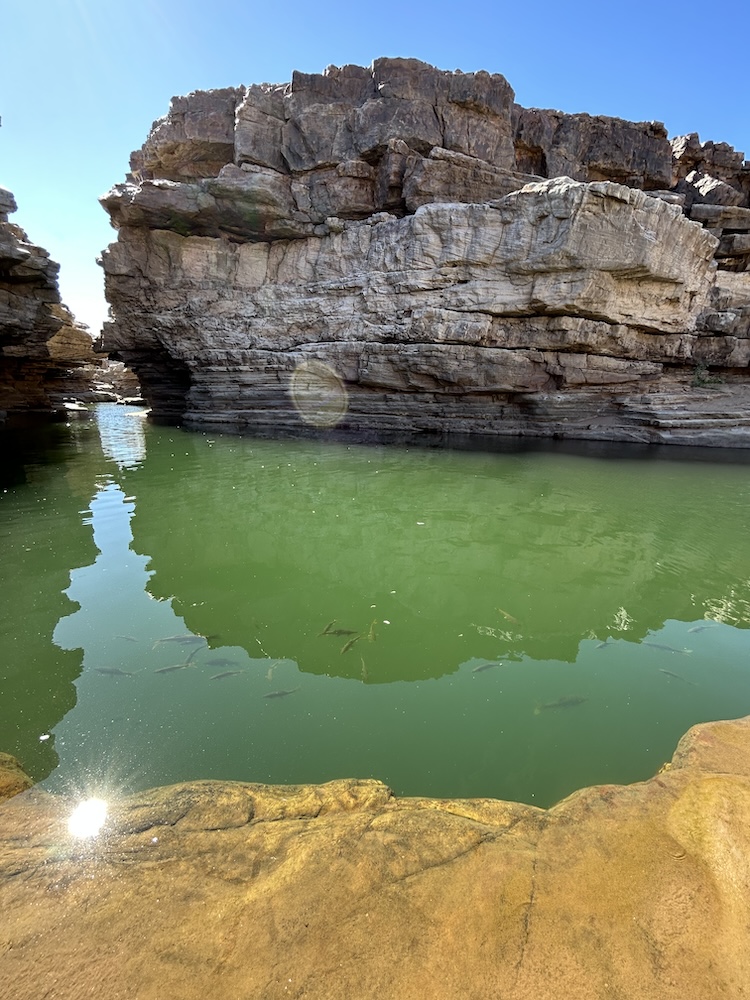
The steepest portions of the route had chains to hold onto before we reached narrow switchbacks that led to an ancient marine terrace. There was a reward for hiking in 110-degree temps. There was a beautiful swimming hole at the bottom of the canyon. Frigid, emerald-green water washed the sweltering heat away, but only at the halfway point of the hike. We had to hike out, back up to the rim, back to the lodge where a lap pool awaited. But that was a long way off.
The moonscape was sizzling. The mid-afternoon sun created a severe glare across the marine terrace. As we hiked across, it seemed as if nothing could be living in this environment. Holly was hiking maybe 20 paces ahead of me when I heard deep breathing just a few feet off the trail. I was familiar with this sound. I’d heard it before. It was a puff adder, one of Africa’s deadliest snakes. It was under a rock, shaded from the sizzling sun. Our impact tremor must have awakened it from its desert slumber. We were close enough for it to deem us a threat, so it began huffing and puffing. They can puff themselves up to appear larger when a threat is nearby.
Seeing the puff adder reminded me to watch our steps as we hiked back up to the top of the canyon. The lap pool awaited at the top, but first there was another reference to an elephant. This time it was an elephant shrew – a nocturnal rodent scampering toward sunset – and then we soaked in the frigid lap pool at the Fish River Canyon Lodge.
Overlooking the canyon revived us after another baking day in this vast place, a little manmade oasis within Namibia’s moonscape.
You might also be interested in...




You must be logged in to post a comment.