
MAW: Something to Sing About
The end is here. Just three more days remain in the Music Academy of the West’s 2025 Summer Music Festival. But there are still nine events to choose from, including master classes in Bassoon, Violin, Trombone & Tuba, Lehrer Vocal Institute songbirds on Thursday, August 7, and Oboe and Solo Piano on Friday, August 8. Thursday night also brings the final Piano Spotlight series concert, this one featuring the nine collaborative pianists who spent the summer pairing up with other instrumentalists for sonatas, concerto excerpts and the like, and just wound up their own part of the duo competition last week.
Winners of the duo competition – which included divisions in strings and winds/brass instruments – will share the stage with the winners of the 2025 edition of the venerable Marilyn Horne Song Competition in a new season-ending Winners’ Recital on Friday at the Lobero Theatre.
(Min Joo Yi, who won the 2025 Solo Piano Concerto Competition in June, gets the performance portion of her prize when she plays Beethoven’s “Piano Concerto No. 3 in C Minor, Op. 37,” as part of the Santa Barbara Symphony Beethoven Piano Concerto Marathon on Saturday, January 17. That event will be the first in a pair of weekend concerts showcasing all five of Beethoven’s piano concertos, each performed by a winner of an international piano competition.)
The summer comes to a close Saturday night with a final Academy Festival Orchestra concert, when the fellows take on Mahler’s most monumental work, his epic Third Symphony, joined by the Sing! children’s chorus, Music Academy Women’s Chorus, and mezzo-soprano fellow Julia Holoman. They’ll be under the expert guidance of Emmy Award-winning and Grammy-nominated conductor Miguel Harth-Bedoya, a true master of color – most appropriate for Mahler’s hymn to nature and reflection on the stages of being. Come fall, Harth-Bedoya adds a new chapter to his acclaimed career when he joins Rice University’s Shepherd School of Music, assuming the post of Distinguished Resident Director of Orchestras and Professor of Conducting.
Also heading to Rice in the fall is Jack Burrows, the young baritone who surprised many, including himself, by claiming the vocal competition earlier this week. Burrows grew up in Seattle – singing in the choir, warbling onstage in musicals and, naturally, belting out Nirvana covers. He only took up opera singing four years ago in a summer workshop at Pacific Lutheran University. He ended up transferring to the liberal arts college, and only applied to MAW in 2024 on the advice of his teacher, Holly Boaz, a PLU alum.
Burrows was a cover in Carmen and played the Cat in the children’s chamber opera, then stepped up to a major role as Masetto in Don Giovanni at the Granada this July.
“Music Academy changed my life,” he said. “The professional standards, the faculty, the fellows are all really stellar here. It’s much higher than I was used to.”
For his winning turn in the vocal competition, with Anson Ng on piano, Burrows settled on a set that moved from Rachmaninoff’s “In the silence of the secret night” from “Six Romances, Op. 4,” to Lori Laitman’s “The Apple Orchard” and closed with Brahms’ “Wenn ich mit menschen und mit Engelzungen” from Vier ernste Gesänge.
“The set reinforces itself,” Burrows explained, “by starting in this very romantic dramatic landscape. And then there’s a moment of solace, nostalgia, and reflection followed by this idea: if you don’t have love for everything you do, why are you doing it? I always want to end on an up.”
Paired for Friday’s concert with vocal pianist Tony Stauffer, who was also a 2024 fellow and was named winner of the 2025 competition, Burrows will sing the Laitman and Brahms in the middle of their set, bookended by Ravel’s Don Quichotte à Dulcinée song cycle – which Burrows and Stauffer worked on together last summer – and closing with Strauss’ “Zueignung” from 8 Gedichte aus ‘Letzte Blätter’, Op. 10, No. 1.
“Tony is an incredible musician who is an absolute joy to work with,” he said.
By August 20, Burrows will be on his way to Houston to start at Rice, where his next role is Papageno in The Magic Flute, which hopefully serves as springboard to a lifetime of singing choice roles and songs.
“My ultimate goal is to lead a freelance nomadic lifestyle in opera,” he said. “I want to jump from city to city and contract to contract. I wish to be an A-list performer like Sasha Cooke, getting eight months of work out of the year and teaching in the summer.”
Now, after a second summer at Miraflores, Burrows believes he is very prepared for whatever comes next on his path.
“The Music Academy is one of the best places for amateur singers to become professional,” he said. “It’s been amazing.”
It Takes Two to Piano
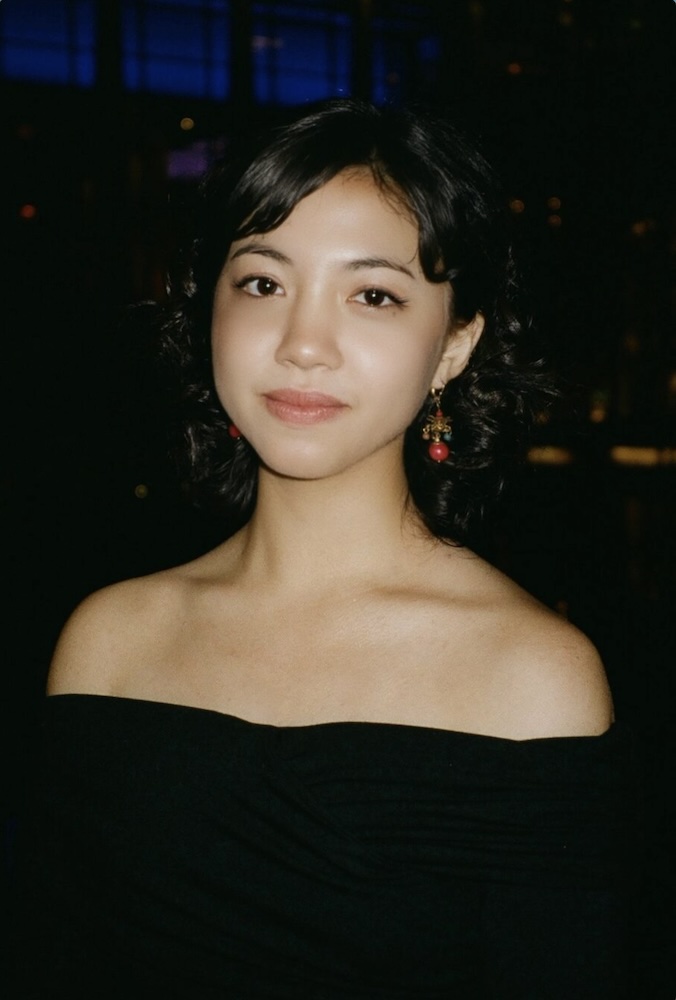
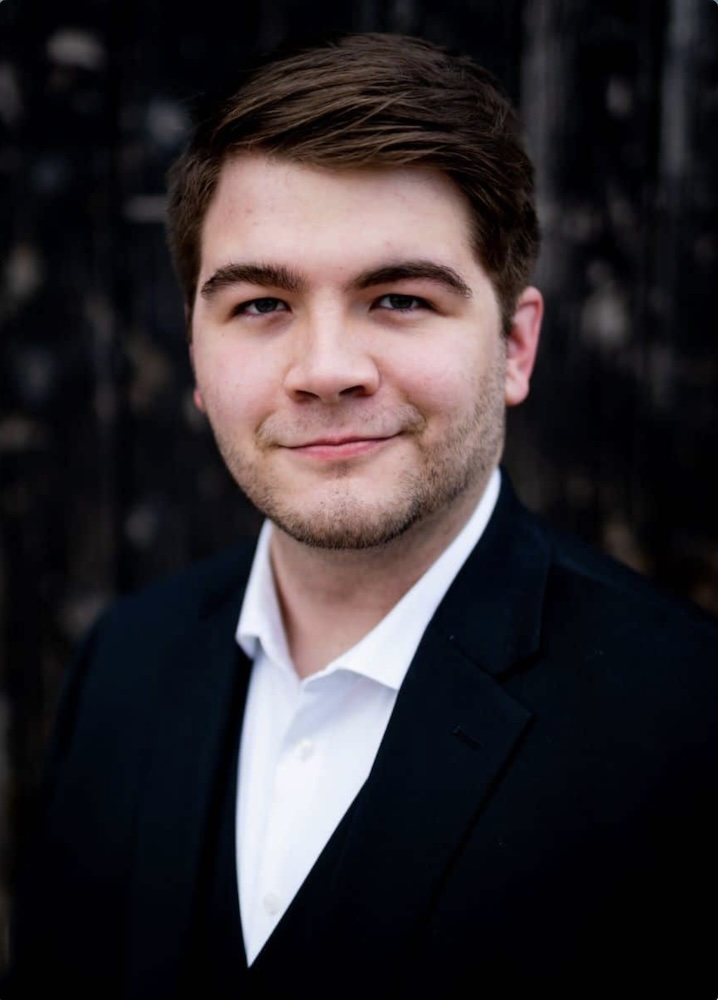

As in the professional world, collaborative pianists get something of the short shrift in the keyboard work, generally working in the shadow of instrumental soloists, singers, and of course spotlight-grabbing solo pianists. Until quite recently at MAW, the collaborative pianists played for master classes and competitions but didn’t really have a concert of their own. Now this weekend there are two. In addition to the full night of piano and other instrumental pairings at Hahn Hall on Thursday as mentioned above, the two piano winners of the Duo Competition also get to shine at the Lobero on Friday, in sets surrounding the Horne winners.
\Oboist Jamie Yoojin Lee and pianist Lydia Ai-ling Yu kick things off performing Marina Dranishnikova’s “Poem for Oboe and Piano” and Antal Doráti’s “Duo Concertante for Oboe and Piano,” while the evening closes with cellist Mia Kim Bernard and pianist Amber Ginmi Scherer playing their winning set of Bloch’s “Prayer” from From Jewish Life and Brahms’ “Sonata No. 2 for Cello and Piano in F Major, Op. 99.”
Ginmi Scherer was both a solo pianist and psychology student at Oberlin – perhaps a perfect combo for a collaborative pianist – before the pandemic hit and she considered quitting music.
“I had an existential crisis and decided to apply for an AmeriCorps program in New York City, almost on a whim,” she recalled. “I ended up having an amazing year at the school I was assigned to in Queens, where I taught music and piano. It was eye-opening seeing how artistically gifted these kids were who’d had very different upbringings than me. I realized I missed performing, particularly in small group settings or duos. It’s what feels most natural for me as a person and as a musician.”
Winning the Duo Competition was something of a surprise for Ginmi Scherer, too; mostly because she came down with COVID not long before the finals.
“I had to pull it together for my partner’s sake. I didn’t want her to have to forfeit because I got sick,” she said. “I just wanted to muster the physical strength to survive and get through it beginning to end. There was no thought of winning.”
Now, the pianist is happy to have another chance to perform the pieces for a larger audience at the Lobero.
“The Bloch is just beautiful, and the Brahms is a very profound and multilayered piece, one of his great masterpieces,” she said. “Both Mia and I felt it very passionately and personally.”
You might also be interested in...




You must be logged in to post a comment.