
It’s in the Stars: Going ‘Beyond Aquarius’: Fiction to Live and Learn By

Astrologer Jennifer Freed was the clinical director at my psychology graduate program when we first met 34 years ago, but soon we became the best of friends, sharing our lives, loves, and soul healing along the way. Recently we sat down for lunch at the Coral Casino to talk about her new Montecito-based astrological romance novel, Beyond Aquarius, and how it may contribute to a more optimistic view of life and love.
Stacy Pulice [SP]. Hi Jennifer! This book is such a fun, juicy, and intense ride with so many twists and turns, but I also learned a lot. I can’t wait to talk about it.
Jennifer Freed [JF]. Well, I’m thrilled we’re doing this together. I’m so happy that you are a reader of this book because you’ve been my best witness for my adult life.
SP. Let’s get right to it – Beyond Aquarius is the title, what does that mean to you, personally and astrologically?
JF. Well, when that title came to me, it was because I was struggling deeply in a world of categories and labels, and even the labels of astrology, like “you’re this” and “we’re that.” The sign of Aquarius is a fixed sign that represents visionary humanitarianism. I wanted this novel to go beyond categories and labels and even fixed ideas, and that’s why Beyond Aquarius is what the title became.
SP. Well, that makes a lot of sense, because you too are beyond Aquarius in many ways. If you had to give the book its own horoscope, what would it be?
JF. That’s a great idea. If it had a chart, it would be strongly connected to Uranus and Neptune in terms of the archetypes of change and mysticism and dream, because the whole thing came to me like a dream, and I wrote it as if in a dream state.
SP. Well, that helps me to know that it wasn’t effortful, because you give us so much in this book.
JF. Oh, it was an enormous effort, but not the writing of it. The hard part was that I didn’t know what I was doing, having never written fiction. I had to hire a story editor who then went through every single page and gave me at least four notes on every page about how it wasn’t making sense, or this didn’t connect with this or why this person is here. So I ended up doing something I’ve never had to do in my life, which is painstaking detailed work. We had to go over every single page and do rewrites.
SP. You’ve written, what, 11 books?
JF. Yeah, something like that.
SP. Your characters have wild experiences and do deep soul work that many of us can only dream of. But you also made it educational, beginning each chapter with an astrology transit, which made it a great teaching for me.
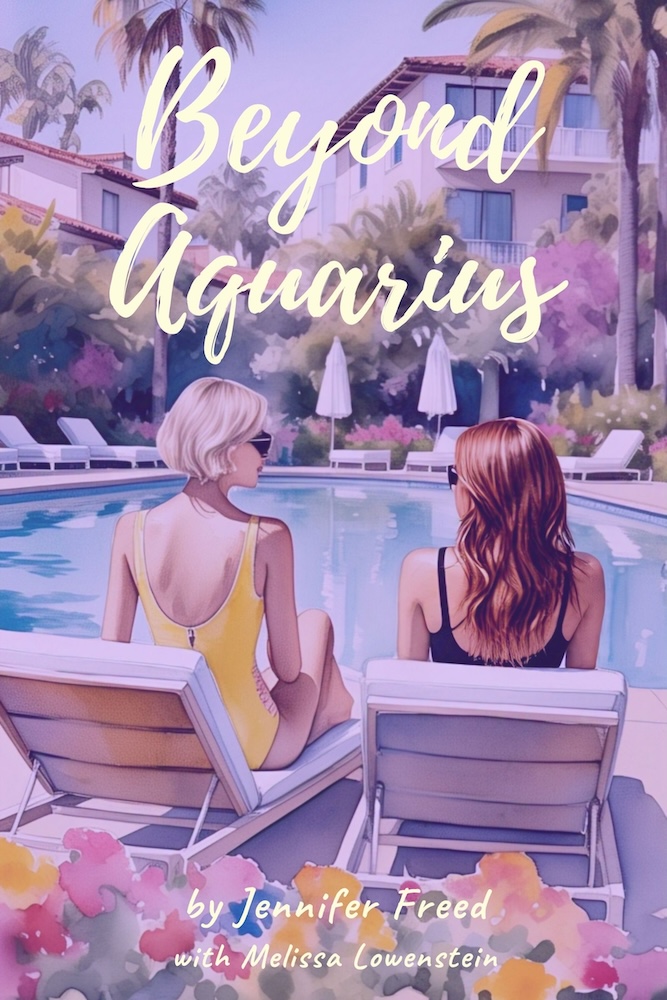
JF. Well, I did mean it to be educational, and the reason I even wrote this book is my agent called me and asked if I would write another nonfiction astrology book. I really felt like that part of my life was over, and I had something new to offer. I love astrology, as you can see, with my whole heart. I wanted to try a new genre, but I wanted to keep teaching astrology. So that was the compromise or the addition I chose, to start every chapter teaching a little astrology.
SP. Why did you center this adventurous, romantic drama in Montecito and Santa Barbara?
JF. I’m glad this is in the Montecito Journal because I’m a huge fan of this publication, and the book highlights the incredible blessings of this community. And I wanted this novel to be an honoring of my extraordinary love, luck, and fortune that has been my life here. Showing the glorious grandeur of the place but focusing on the spiritual pursuit that’s always been the most important to me.
SP. You were a psychologist when I met you, but you’d been an astrologer since you were quite young. I remember when you decided to merge the two as a psychological astrologer. To me this book feels like the ultimate merging of astrology and psychology, because you show readers how planetary energies can manifest through romantic human drama rather than just “tell.”
JF. Very good perception that I hadn’t really thought of, but have been there all along, as my true loves in life are personal growth, and psychology, and then the mysticism and the spirituality of astrology. The whole book is a tribute to both disciplines, and I really did try to bring all of that together in an entertaining way.
SP. I noticed some familiar sounding people, places, and situations and I’m wondering: How much of this story was catharsis and how much was creation?
JF. Well, I can’t separate it out because this all took place under what I’d call the dark days of our country changing paradigms, let’s say. And I was writing this to keep my heart happy and to offer something more positive to the world. So just the act of creating something beautiful was my rebellion against the doom and despair that I was feeling. It was also such a good effort and discipline for the part of me that needs to keep learning and expanding my perspectives.
SP. Many authors have fictionalized their community and relationships. Has there been any blowback from writing about people in your life?
JF. Oh, that’s a great question, because this is a funny story. So as I’m writing the novel, every now and then I would share with my partner, Rendy, what I was thinking, and I would say to her, “I’m going to include people that have really taught me or influenced me, but I’m going to use their real names.” And she shouted at me, “You cannot do that!” And I said, “Why?” And she said, “That’s just a thing. You don’t do that.” So I said, “Well, I’m going to do it, and I’m going to ask the people for permission.” There was no blowback from anyone about being included as themselves. The only blowback was from my partner who tends to think that I do things unconventionally and sometimes that scares her.
SP. But that difference is exactly what balances you two so well.
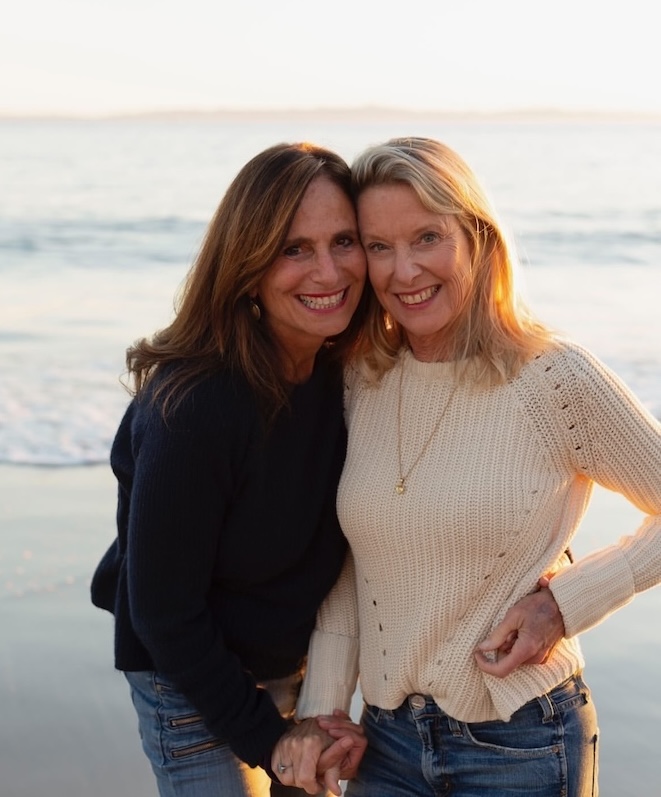
JF. Exactly. And one thing I want to say, because it’s been hilarious, that people keep coming to me saying, “Did you really go with that guy in Bali and did you really have this happen?” And I want to remind everyone, it is a love letter to Rendy, my partner, so that part is a true feeling in the book. Nothing is true, except that the teachers mentioned are the real teachers. But the actual story, well none of it’s true.
SP. The book made me appreciate the two of you and your relationship even more, although the way you got together in the book was much more drawn out than real life.
JF. That’s called a romance. You were part of our love story, which is a very private story. And this is a very fictionalized story that has the same amount of love in it. But I do include my favorite places we have traveled in the book.
SP. Throughout the book, your partner Rendy is describing your character, which reminded me of feminist author Gertrude Stein, whose Autobiography of Alice B. Toklas, was truly innovative. Did that occur to you?
JF. No. But you’re a raving intuitive! You may or may not know that Gertrude Stein and I were born on the same day. I have always been fascinated by her and that relationship. Of course I read that book, but I didn’t at all think of that as I just was so in it, I never really was objectively thinking about it. I didn’t let Rendy read it till the very end, but she felt very pleased with how her character viewed my character. She thought that was spotless.
SP. In the book you say that people often misunderstand and misuse astrology. What would you say to those of us who are still learning?
JF. Well, you are a perfect example of using it wisely, so you don’t need this advice. But now having done 40 years of reading people’s charts, many people are damaged very deeply by people reading the map of their soul by putting negative spells and limitations on them or predicting awful things. For me, astrology should only be used as a tool for understanding, compassion, acknowledgement, inspiration, and education. Astrology is at best a reminder of people’s divine possibilities instead of compressing people down into finite ideas.
SP. Right now I am thinking of an example of a horrible thing someone said to a person I care about.
JF. Because you’re in a vulnerable state when you see an astrologer and you petition somebody to see something about the map of your soul. That’s a very trusting thing. One of the worst things that was said to me when I was in my 20s was, “You’ll never have a committed relationship, and you won’t be able to go into higher education.” And that person was very serious and scholarly. But they were basing this on a very rudimentary and very inflexible interpretation of a chart. That is a misuse of astrology. The chart should be a portal to your strengths and even transcending the map of the chart, not remaining in any fixed state.
SP. How much do you think about your own life astrologically on a day-to-day basis?
JF. I honestly think about the moon every day because the moon moves very quickly, so every two and a half days, the moon sign changes, and I think it’s a beautiful practice to just feel what the feeling of the moon is every day. I will always have my own chart in the back of my brain, and know the big transits I’m in. But I hardly ever think about it, unless something fabulous or terrible happens, then I’ll recheck the transits and say, what is this moment? But otherwise, I don’t actually dwell on this at all.
SP. Tell me about this quote from the book, “Love can make you brave.”
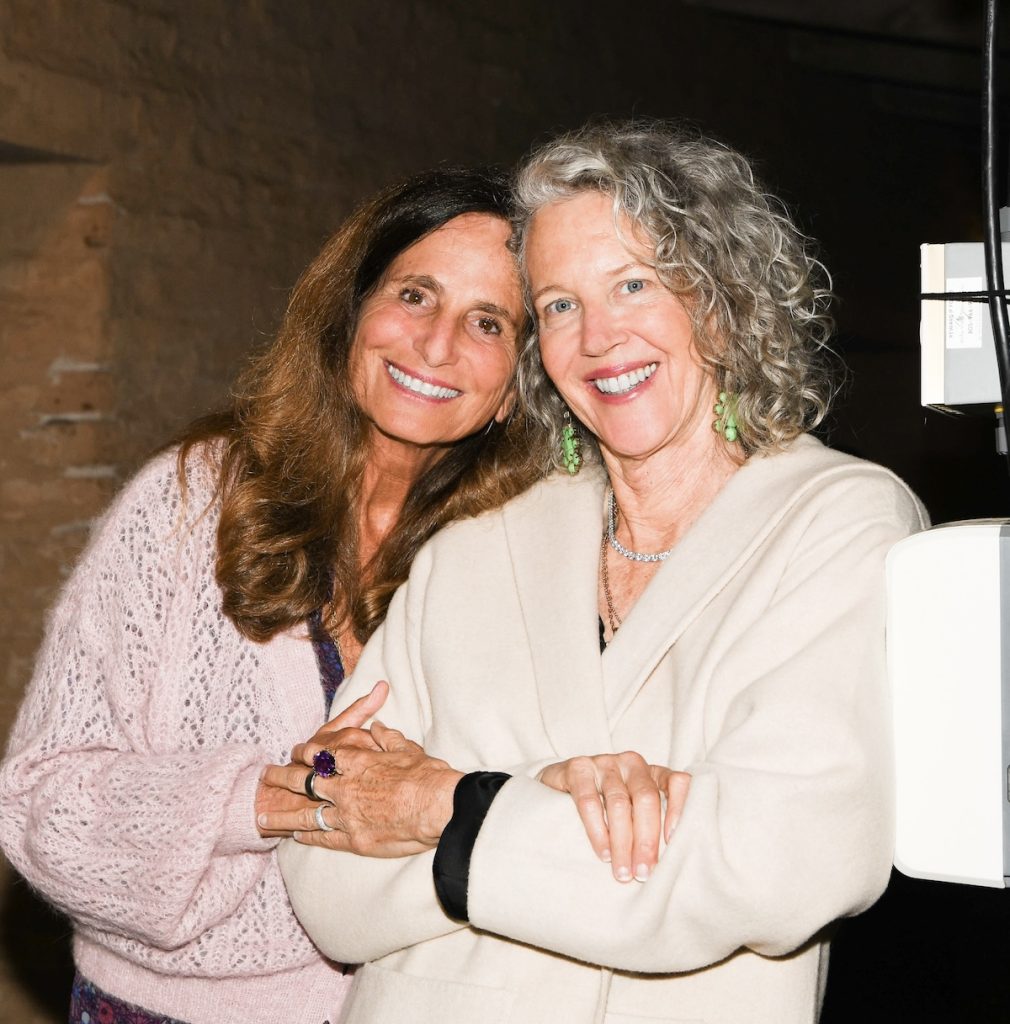
JF. I have done things for love that if somebody had asked me objectively, if I would ever be able to do, I would say no. So there’s something that can happen when love brings us beyond ourselves, when you care deeply for another. Real love in the heart can create extraordinary courage, from the French “coeur” which means heart. So I think it’s very important to remember to let love lead you, and let love take you beyond fear.
SP. Spoiler alert: I love how the blended family ends up melding together, yet everyone remains themselves. It’s sort of a unified melange of unique individuals.
JF. One can dream. That was definitely catharsis. So what you and the readers will see is what can happen when everyone does the work, and I’m passionate about anything that can be healed if people show up to be healed instead of to be right. That’s a big one to me. It’s like, we’ve all screwed up. And the Bible talks about this, too. Find me anyone that hasn’t done something that they regret. But in terms of divorces and blended families, everyone can do better. Everyone. So in this book, people do the work. And therefore, the resolution isn’t perfect, but people do feel close and connected. That has been one of the key hallmarks that I have appreciated about you for 30 plus years, is that you do the work. And that’s why you’re in my closest orb of besties because you do the work. I really want to be pretty much intentional about being around people, whatever their gender, who are committed to their own growth more than they’re committed to an ideology or a justification for bad behavior.
SP. Amen. If this was a movie, do you have any actors or directors in mind?
JF. Yes actually, I would want Maya Hawke to play Jules, Cam would be a young Reese Witherspoon, and Montecito native Jason Reitman would direct.
SP. You have had such an illustrious career, written so many books, and helped a lot of people. What’s next for you?
JF. Well I’m shifting from nonfiction to fiction as a salve for my soul. Because reality for me right now is too hard. It just is. And so I need to create imaginative things that bring more love into the world. So literally what’s next is I’ve already started my next novel, and it’s called The Heartmender. It’s about a superhero who mends hearts instead of killing villains, but he starts off as a very wounded soul, a psychotherapist that can’t help a person. And I’m four chapters in, and it’s filling me with so much joy because it’s going to be another story about personal growth and evolution. It’s all about redemption, healing, and empathy, which are themes that I’ve always been committed to, but I feel are more necessary now than ever.
SP. What is powerful about that is you are imagining a world where love and healing are possible.
JF. I think it’s true, though I’m not at all grandiose in terms of my impact. What I’m really clear on is I need to keep my own energy positive, loving, and hopeful. I need to do things that contribute to a more optimistic picture of the world and that’s what romance novels are. My friend Jane Lynch gave me a great compliment when she said she liked my book because it’s so uncynical.
I want a world in which people can love each other and work through things, and it can be true, and I’ve experienced it as true. I have seen relationships in my life transform, worked through things, and in my former life as a therapist, I did meet heroes and heroines along the way who had the courage to do the deep work, and enhance their lives in doing so.
SP. What do you want people to know about the book before reading it?
JF. My biggest point is that we are not our body suits. We are spiritual beings having a physical experience, and that if we focus much more on essence instead of image, we would all be a lot happier. Like, as an aging woman, I’m way more interested in my essence than my image, because the image isn’t always the one I like in the mirror.
I also want to thank Melissa Lowenstein, my copy editor, because I needed feedback to help me do something that I’ve never tried before. Writing a novel, I will now say, is a beast of a thing to do. And it was great for my mental acuity to try something new. I think that everyone has a story to tell, and it doesn’t matter if you have 10 readers or 200,000… Tell your story.
Please check out Jennifer’s workshop this Sunday, July 20, from 2-4 pm at Godmothers Books about living a fully expressed life through the astrological elements.
You might also be interested in...


You must be logged in to post a comment.