
Pingel’s Purview: Miles, Mozart, Metallica and the Music Academy

It’s a good bet that, unlike Scott Pingel, none of the other Music Academy of the West teaching artists on campus this summer have played a concert with the mega-selling rock band Metallica – or for that matter, any concert in front of some 20,000 people.
It was back in September 2019 that double bassist Pingel took the spotlight alongside the heavy metal icons and the San Francisco Symphony Orchestra to solo on Metallica’s “(Anesthesia) – Pulling Teeth” in tribute to the band’s late, lamented early bass player Cliff Burton. This performance occurred at the newly opened Chase Center as part of a concert called S&M2 to mark the 20th anniversary of the two musical acts’ groundbreaking 1999 concert together.
It was something of a full circle moment for Pingel, whose earliest musical gig was playing in a neighborhood garage band that covered heavy metal favorites like Led Zeppelin and Metallica.
“I remember learning Burton’s bass lines in the 1980s,” Pingel said. “I specifically remember listening to that bass solo. I never could have imagined I’d play it one day with Metallica.”
Of course, that show had nothing to do with why Pingel is one of three double bassists taking over this year’s role on the faculty, held for decades by Nico Abondolo. Pingel’s bonafides include serving as principal bass at the SFS since 2004 and a decade of teaching at the San Francisco Conservatory of Music, where some of his students have gone on to win major competitions and appointments with other world class orchestras.
MAW had to lure Pingel away from a couple of his usual summer gigs at the esteemed chamber festival Music@Menlo and half of Music in the Vineyards, but it didn’t take much convincing.
“MAW is such a compelling program, and one of the most prestigious festivals in the United States, one that brings in many of the best artists from all over the place and best students,” he said. “We had more than 90 applicants for the seven fellows positions, and it was quite a difficult process to figure out who to select because the level was so high. I’m honored to have been asked to be a part of it.”
Pingel’s commitment to the bass came after stints on piano, cello and trumpet, and he remembers the moment clearly.
“I just fell in love with the sound and I’ve always loved the role that it plays in every style of music,” he said. “There’s this pentatonic lick that Weather Report bassist Jaco Pastorius played on ‘Birdland’ that I heard as a kid that was incredible. I decided then that this is what I had to do… What sealed the deal was studying the last movement of Mozart’s 41st symphony, the ‘Jupiter.’ There’s this amazing fugue in the last movement. I was blown away and decided I wanted to put that sound into the atmosphere.”
He transitioned from electric bass to stand-up just before his senior year in high school in order to be able to study the instrument in college. But the school didn’t have a string program at the time.
“They did have an old white fiberglass base up in a storage room,” he said. “I was so determined that I grabbed that thing and saw that the fingerboard had fallen off, so I got some Elmer’s and some clamps and glued it back on. I tuned up the strings that were probably the same ones from the 1950s. But I just made it work. My parents were so impressed with my commitment that they offered to buy me my first upright bass, a plywood model made by American Standard, the same people who make toilets.”
Just two years ago, a new student showed up in his studio with a bass that reminded him of that instrument, and it turned out to be the same one he’d sold decades earlier.
“That was wild,” Pingel recalled.
True to his muse, Pingel has also played jazz alongside his classical commitments, sitting in with some big names along the way.
“Nowadays, it’s only a handful of jazz gigs every year and it’s so much fun,” he said. “I really miss it.”
His versatility may have some value for the fellows, even though they’re all focused on winning an orchestral audition.
“Besides the technical aspects, I’ve found a background in jazz very useful in having a sense of pulse and keeping time, along with knowledge of harmony in various scales,” he said, “There are aspects of left-hand technique that are strengthened by playing pizzicato so much to get that resonant sound out of the instrument.”
The fact that Pingel is still as enamored with the double bass as he ever was – well, that can’t help but also be inspiring.
“I love and relish the supportive role the bass plays to the whole orchestra. Everything kind of sits on top,” he said. “There’s an element of the bass being the truth, the bottom line, the foundational instrument that allows for the rich seniority of the ensemble.”
In his first-ever MAW performance at the Lobero on July 26 – between his time coaching the fellows in master classes on July 18 and August 1 – Pingel will join faculty violinist Martin Beaver, pianist Jeremy Denk, with violist fellow James Antoni Renk and cellist fellow Karim Maggio to play Schubert’s ever-popular “Trout” Quintet at the Lobero on July 26. It’s a staple that’s certainly much better known in the classical world than Metallica’s “(Anesthesia),” one that’s “listener friendly,” as Pingel put it.
“There are very singable melodies, but it’s also a very witty piece of music with a range of textures and colors that are delightful,” he said. “It’s such an exciting and uplifting piece.”
Thursday, July 10: On Tuesday evening, we heard both Benjamin Kamins and Dennis Michel, two of this summer’s teaching artist bassoonists, performing in the tribute to Michel in his final season at MAW. Kamins – who is also departing the Academy following this summer’s stint, and after some 26 years on the MAW faculty –leads the masterclass this afternoon. (1 pm; Weinman Hall). Also on the MC tap: Violinist Martin Beaver (1 pm; Lehmann Hall), Vocal Institute co-director and mezzo-soprano Sasha Cooke, who charmed at the Lobero with her take on a trio of Ravel poems (Hahn Hall), and Trombone & Tuba teaching artist, have masterclasses (Weinman Hall) at 3:30 pm ($10).
Speaking of tributes, the great Glenn Dicterow, who straight out of serving as concertmaster of the New York Philharmonic for an astounding 34 years, joined both MAW and the faculty of USC Thornton School of Music in 2014. Dicterow receives the new Academy honor in a special x2 concert this evening. “Examined Heritage” features the violinist performing two times with his wife, fellow faculty member and violist Karen Dreyfus, plus cellist Alan Stepansky, playing Gideon Klein’s “String Trio” and Brahms’ “Piano Quartet No. 3 in C Minor, Op. 60” (which adds pianist Jonathan Feldman). In between, it’s a combination of fellows and faculty performing Roberto Sierra’s Songs from the Diaspora. BTW, no need to worry, he’s not going anywhere, we’re told. (7:30 pm; Hahn Hall; $45-$60).
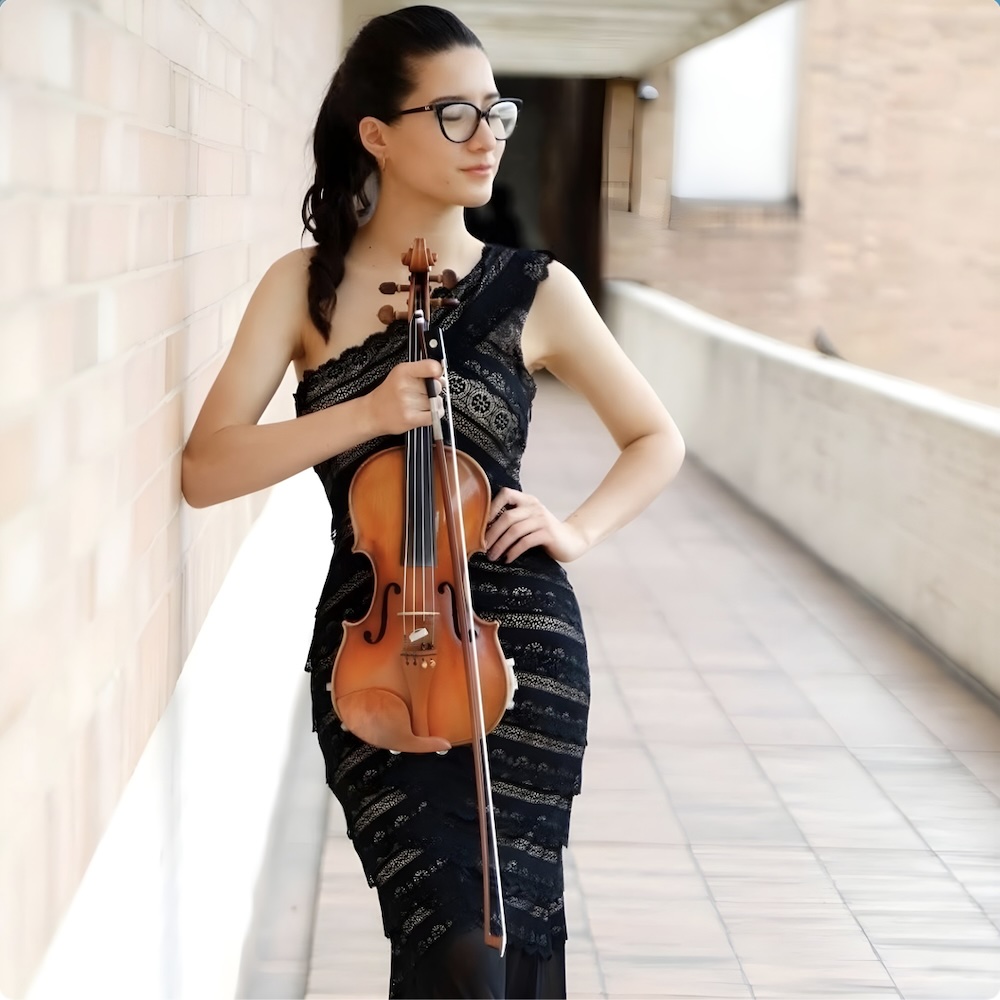
Friday, July 11: Sorry to tease you, but it seems there aren’t any regular tickets left for the Academy’s annual Music Note Gala, which supports music education, and this year features the Grammy-winning mandolinist/composer Chris Thile starring in collaboration with the Academy Gala Orchestra and members of the Sing! children’s choir conducted by Daniela Candillari. Thile, who has appeared in his many guises multiple time in Santa Barbara, will play the Allegro movement from Bach’s “Concerto for Two Violins in D Minor” with violin fellow Angeles Hoyos, Caroline Shaw’s “And So”and his band The Punch Brothers “Julep” and “My Oh My”with the Sing! Choir. Maybe consider a late round of golf if the wind is blowing in the right direction?
Saturday, July 12: Daniela Candillari, who conducted MAW’s opera productions at the Granada the last two summers, instead wields the baton for the Academy Chamber Orchestra (mostly those fellows not playing the gala) in the cozy confines of Hahn Hall. The program includes both Piazzolla’s “Oblivion”with violin fellow Hoyos again soloing and his “Le Grand Tango” with faculty violist Richard O’Neil, plus “warp & weft” by 2009 Music Academy alum Sarah Gibson and Poulenc’s “Sinfonietta.” The pre-concert at 6:30 pm features Candillari, O’Neill, and MAW Chief Artistic Officer Nate Bachhuber. (7:30 pm; Hahn Hall; $55-$60.)
Tuesday, July 15-Thursday, July 17: Faculty pianist (and McArthur ‘Genius’ Award winner) Jeremy Denk begins his three-day immersion in Beethoven’s revolutionary piano sonatas with three evenings of performance and insightful commentary. Each 75-minute lecture-recital highlights a masterwork or two by the composer, complemented by pieces that range from Nina Simone to Ligeti and Wagner to explore new dimensions of Beethoven’s genius. Tonight’s centerpiece is “Sonata No. 17 in D Minor, Op. 31, No. 2, ‘Tempest.’” Tomorrow pairs the “Piano Sonata No. 32 in C Minor, Op. 111,” with Frederic Rzewski’s “De Profundis,” while July 17’s event has Beethoven’s “Sonata No. 16 in G Major, Op. 31, No. 1” and “Sonata No. 31 in A-flat Major, Op. 110” as bookending Simone’s “Just in Time”and two works by Wagner. (7:30 pm; Hahn Hall; $75-$80.)
Wednesday, July 16: Today’s masterclasses include the MAW debut by new teaching artist Billy R. Hunter, Jr., the principal trumpet of the Metropolitan Opera Orchestra since 2004 whose versatile career also encompasses orchestral, chamber and solo performances nationwide (3:30 pm; Weinman Hall; $10).
Thursday, July 17: The eight fellows who serve as understudies for the principal roles of this summer’s grand opera production of Mozart’s Don Giovanni get the chance to run through the entire masterwork in front of an audience, taking center stage to offer a preview at Hahn Hall. The far more intimate setting also means no stage set, and music from vocal piano fellows (or recorded), but there is a pre-concert talk with Robert W. Weinman on stage at 1 pm. (2 pm; $10).
You might also be interested in...




You must be logged in to post a comment.