
Havin’ a Ball with Bassoon
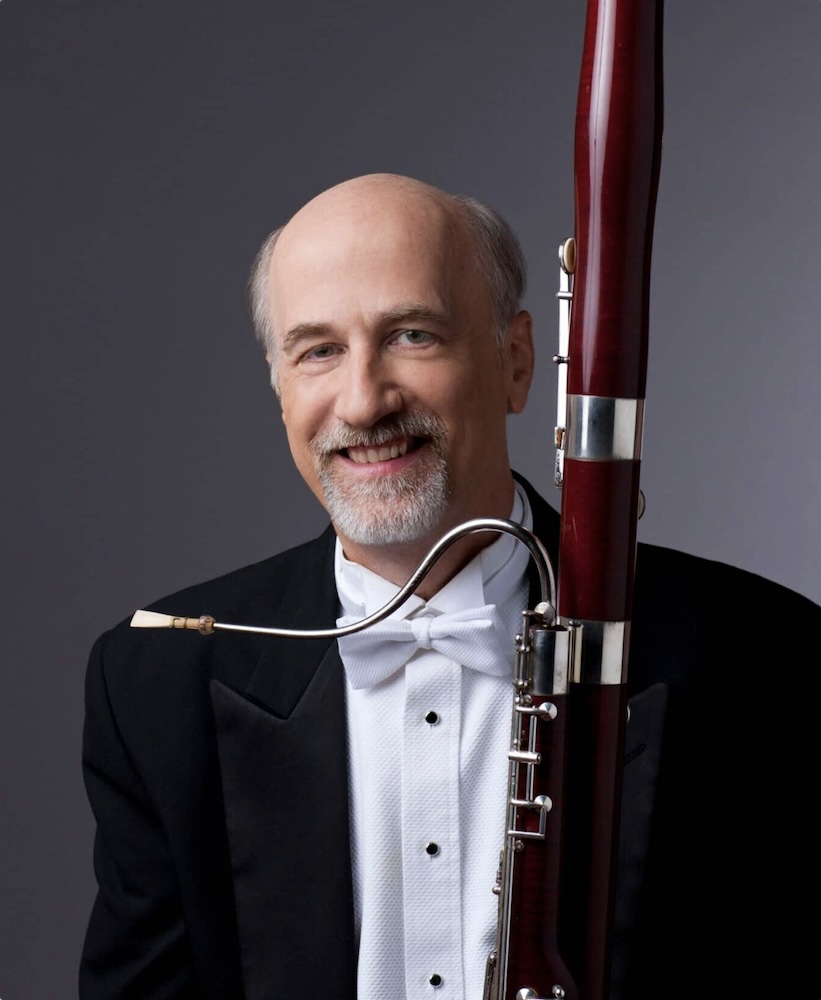
Dennis Michel still vividly remembers the first time he ever heard the bassoon as a seven-year-old boy growing up on a 480-acre farm in northern Idaho.
“Through the magic of television I saw a Leonard Bernstein Young Person’s Concert with the New York Philharmonic, and they had a teenage bassoon soloist for Haydn’s ‘Sinfonia Concertante,’” he said. “I just loved the sound of the instrument. I remember telling my dad I want to play the bassoon someday.”
Someday came pretty soon, after the family moved to a less rural locale where he found a decent music program at school.
“In the sixth grade, I talked my junior high school band director into buying a bassoon for me to play,” he recalled, sitting at the patio table in the backyard of a lushly landscaped home on Santa Barbara’s Eastside, the current “bassoon house” for Music Academy teaching artists in the summer. It’s halfway through his last residency at MAW, his 38th season at the summer festival, virtually half of the institute’s history.
Michel’s journey as an orchestral bassoonist took him from Wichita to San Diego to Chicago, where he served as second bassoon of the prestigious Chicago Symphony Orchestra for a quarter-century. He retired from the position three years ago, but stuck around with MAW for another three years.
“I think I didn’t want to go cold turkey,” he explained. “I still love music, and playing and teaching the bassoon. The Academy is such a rich environment with the faculty and such smart, motivated students (now known as fellows). I’ve amassed a lot of knowledge and tricks of the trade over the years, and I enjoy passing that on. But the part about being in the network, having a hand in the game and an ear to the ground about auditions – that’s not my world anymore.”
Michel indulged an inquisitive reporter in sharing a few highlights of his MAW tenure that dates back to 1988, mentioning the old Tuesday@8 concerts featuring only the faculty collaborating on chamber music, and one of his loves dating back to his days as a co-founder of the Arioso Quartet back in San Diego – which toured regularly and recorded for Koch Classics.
“They were very gratifying,” he said. “The idea was to set an example for the students, but they’ve kind of caught up to us. There have been times I would hear one of them playing for the first time in a master class and just think, ‘Wow!’”
One of those moments came a dozen years ago when Keith Buncke, who had just finished his freshman year at Curtis Institute, played the first movement of the Hummel “Bassoon Concerto,” a notoriously difficult piece for the soloist, in the summer’s first master class.
“It’s very long and complicated and it takes tons of concentration and a big brain to absorb it all and execute it,” Michel recalled. “This guy just played the spots off of it. It was extraordinary.”
Buncke won MAW’s concerto competition that summer, and two years later was appointed Principal Bassoon at the CSO, aka the leader of Michel’s section.
“I was so happy to have him first as a student, then as a colleague,” Michel said. “He’s a perfect example of how the level of the students has just climbed over the years.”
Michel himself will be the focus of attention at the July 8 concert at Hahn Hall, a x2 performance dubbed a “Salute to Dennis Michel.” The honor is almost embarrassing, he said.
“It’s a bit weird to be picked out. I spent much of my career as a second bassoon player, and we don’t get a lot of time in the limelight. It feels good, and odd, to be recognized just for doing another concert that’s like so many that I’ve done here before.”
Except this one will have bassoon on all three works, starting with Debussy’s “Prélude à l’après-midi d’un faune,” with Benjamin Kamins, Michel’s longtime colleague at MAW, who is also departing after this summer. Current bassoon fellow Kenny Ford will be part of the wind quintet performing Paquito D’Rivera’s Aires Tropicales before a second bassoon fellow, Cian Bryson, joins Michel as part of the quartet playing Mozart’s “Serenade No. 11 in E-flat Major, K. 375.”
The Serenade is a cherished chamber music piece for Michel, who recalled listening to a podcast about having a good attitude in life when the host suggested people think about something that makes you feel gratitude.
“What came up for me was Mozart – that he lived, and that he wrote this gorgeous, perfect piece of music,” he said. “Every time I’ve been in a group that’s rehearsed one of his serenades, somebody will say, ‘God, we’re so lucky to have this music.’”
Michel is also thrilled that playing the serenade as his final MAW performance comes with collaborating with not only faculty members but also fellows, as per the x2 format.
“Mozart is famously transparent, so you hear everything that’s going on,” he said. “It’s great to listen to your students play and help make suggestions, but it’s quite another to sit next to and perform with them. You understand so much more about what your student’s doing and can offer ideas that they need to explore or things they could do a little bit differently to balance an ensemble playing.”
When the final notes ring out at Hahn Hall, full retirement will have arrived for Michel, who said he’s already been enjoying having no other musical commitments in the last three years.
“My son and grandchildren live close to us in Illinois, and we also want to travel more while we still can. We’ve renewed our membership in the Art Institute, and I’ve got a little woodworking shop in the basement.”
As for the instrument he’s had a love affair with for six decades?
“There’s more to do in life than just play the bassoon,” he said. “After we get home, I’m going to put it in the case and let it rest for a while. Then I’ll see if I want to come back and play for fun, but it’s not much of a solitary pursuit. It’s really more of a social activity without a group to play in. Maybe later I’ll find other like-minded retirees who would like to still play chamber music at a high level.”
Meanwhile there will still be some orchestral performances on his itinerary, but from the audience, not the stage.
“I’m looking forward to going to a concert and just letting it wash over me,” he said.
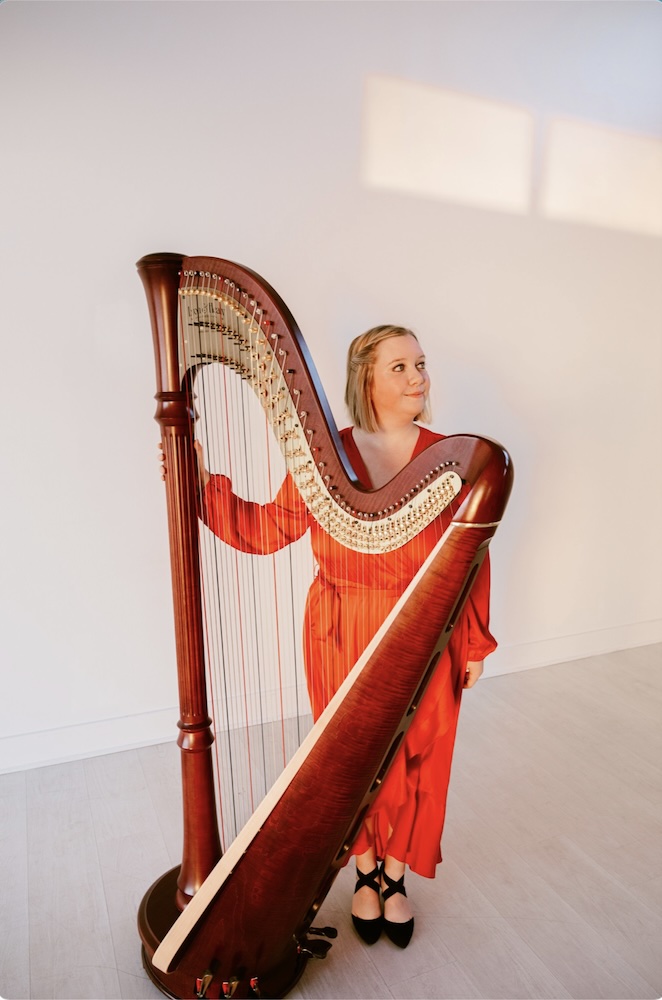
Thursday, July 3: Want to see more of harpist fellow Zoe Lyn O’Shaughnessy plucking the heavenly instrument’s strings, among the many fellows that spectacularly stood out at last Saturday’s Academy Festival Orchestra concert, particularly on Valerie Coleman’s “Seven O’Clock Shout” and Mussorgsky’s “Pictures at an Exhibition?” Maybe even without all those pesky other instruments? Check out today’s first harp Masterclass of the summer, with veteran MAW teaching artist JoAnn Turovsky coaching the single harp fellow (1 pm; Weinman Hall; $10)… Also on tap: two more new faculty members making their MAW Masterclass debuts: Violinist Erin Keefe, Concertmaster of the Minnesota Orchestra and winner of an Avery Fisher Career Grant (1 pm; Lehrer Hall; $10), and Harold Hall Robinson, former Principal Bass of the Philadelphia Orchestra, who is among those stepping in for now for beloved bassist Nico Abondolo, whose 35-year tenure at MAW came to a close last summer (1 pm; Weinman Hall; $10).
Tonight, it’s the annual PercussionFest, amped up and relocated to the Granada for an especially spicy program that includes a chance to get a head (literally) start with two of the percussion-only movements from Mosher Guest Artist Andy Akiho’s Sculptures symphony played on Untitled, Head, the monumental sculpture created by renowned artist Jun Kaneko. See last week’s column for my interview with composer-steel pan player Akiho, and come early for a pre-concert talk with teaching artist Michael Werner and composer Stewart Copeland (of The Police) whose work “The Bells”will have its West Coast premiere. (7:30 pm; $10-$125).
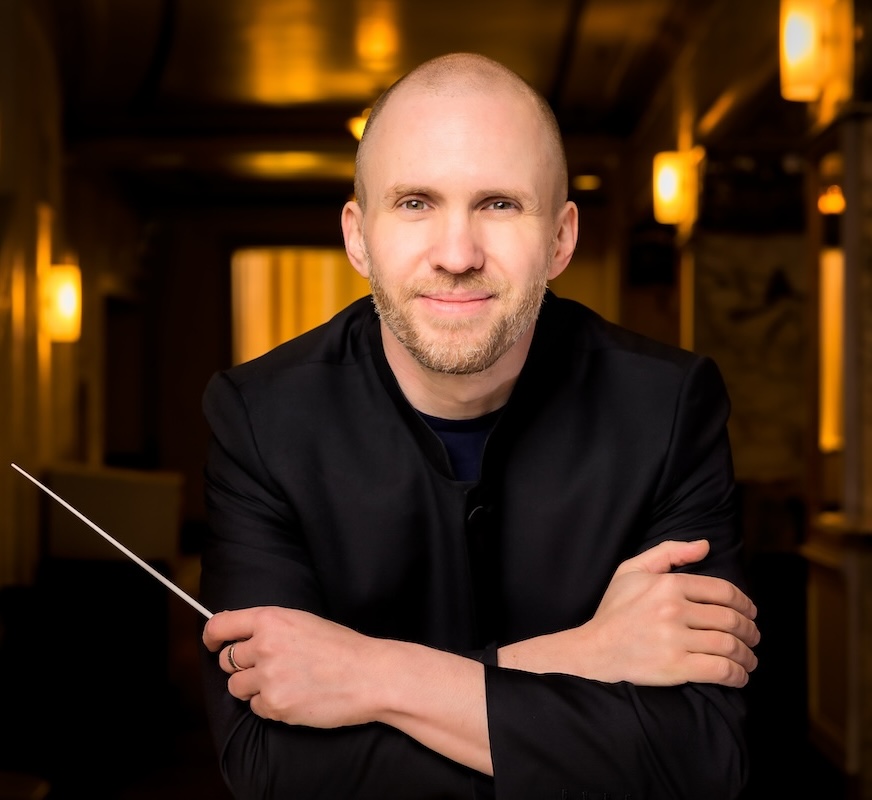
Saturday, July 5: The full Academy Festival Orchestra gives it a go on Sculptures with movements that show off the remarkable array of tones emanating from the sculpture itself, transforming the visual marvel into an instrument, while Akiho joins the fellows for the orchestral movements. The concert continues with Strauss’“Also sprach Zarathustra,” the cosmic opus made famous by the film 2001: A Space Odyssey. David Danzmayr, the Music Director of the Oregon Symphony, who conducted only the second of only two previous performances of Sculptures, wields the baton for the fellows. The pre-concert talk features Akiho and artists Jun and Ree Kaneko. (7:30 pm; Granada; $10-$125).
Tuesday, July 8: Can you handle more banging, scraping, tingling, etc., after the weekend’s percussion performances? Werner’s Masterclass with the five fellows post-Akiho hits Hahn Hall at 3:30 pm ($10).
Wednesday, July 9: The several-year-old Salon Series originally featured solely the fellows in chamber music performances that took the place of the Picnic Concerts, moved to the more intimate setting of Weinman Hall and preceded by sipping glasses of wine. Now they’ve relocated to Lehmann Hall and some of the four performances include teaching artists, just as fellows, with today’s program actually alternating between the two. Eight fellow violinists team up for Andrew Norman’s “Gran Turismo;”faculty pair up for Hindemith’s “Sonata for Violin and Piano, Op. 11, No. 1;” three fellows feature on Dvořák’s “‘Dumky’ Piano Trio;” and two more faculty take on Schumann’s “Märchenbilder for Viola and Piano, Op. 113.” (7:30 pm; $25-55).
You might also be interested in...




You must be logged in to post a comment.