
AIA Symposium: The Earthquake That Built a City
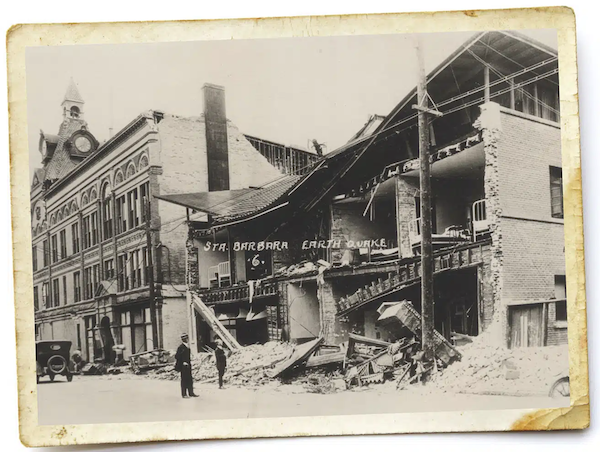
On Sunday, June 29, 2025, Santa Barbara’s historic Lobero Theatre will host an event that promises not only to commemorate the past but to challenge the present and inspire the future. Titled “The Earthquake That Built a City: Santa Barbara 1925 Earthquake, Then and Now,” this 90-minute symposium – organized by the American Institute of Architects (AIA) Santa Barbara Chapter – invites the community to reflect on the defining moments that followed one of the city’s greatest disasters – and the architectural vision it sparked.
A Century Later, Looking Back to Move Forward
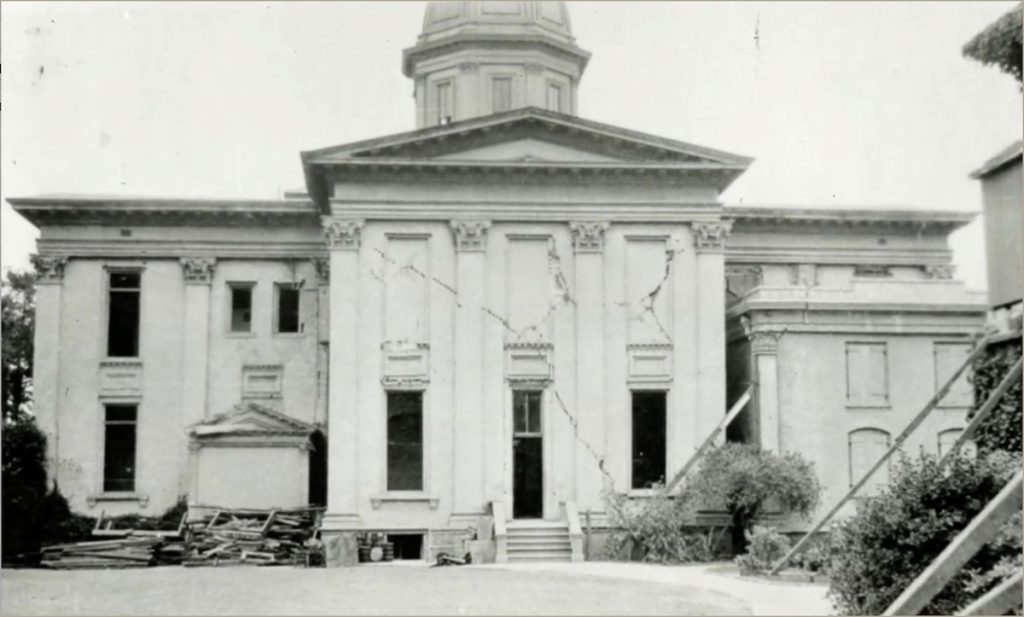
The morning of June 29, 1925, dawned with devastation. A powerful earthquake rattled Santa Barbara, leveling buildings and forever reshaping the city’s skyline and spirit. Yet, from the rubble rose not only structural renewal but a shared vision – a city determined to rebuild with both strength and beauty.
This symposium is only one part of EQ25: A City Transformed – a collaborative effort of organizations and community members hosting an entire summer of events commemorating the centennial of this defining disaster. From architectural walks to exhibits and talks, there are dozens of happenings around town for this momentous memorial with the main event taking place on Saturday, June 28, from 12-4 pm on the 1100 block of State Street and the surrounding paseos.
The AIA symposium taking place the following day will reflect on that transformational historical moment with a dynamic panel moderated by the renowned Robert L. Ooley, FAIA – retired Santa Barbara County Architect and architectural historian. Ooley described the event as an opportunity for a “well-rounded discussion” covering four key elements that shape cities: historical context, architectural evolution, engineering resilience, and global planning perspectives.
A Panel of Voices Bridging Past and Present

The symposium will consist of different presentations from the panelists before being opened up for an audience Q&A. The first speaker, historian Neal Graffy, will recount the events of that fateful day – sharing vivid stories of chaos, loss, and the rapid mobilization that followed. Known for his animated storytelling, Graffy will breathe life into the historical backdrop against which the city was forever changed.
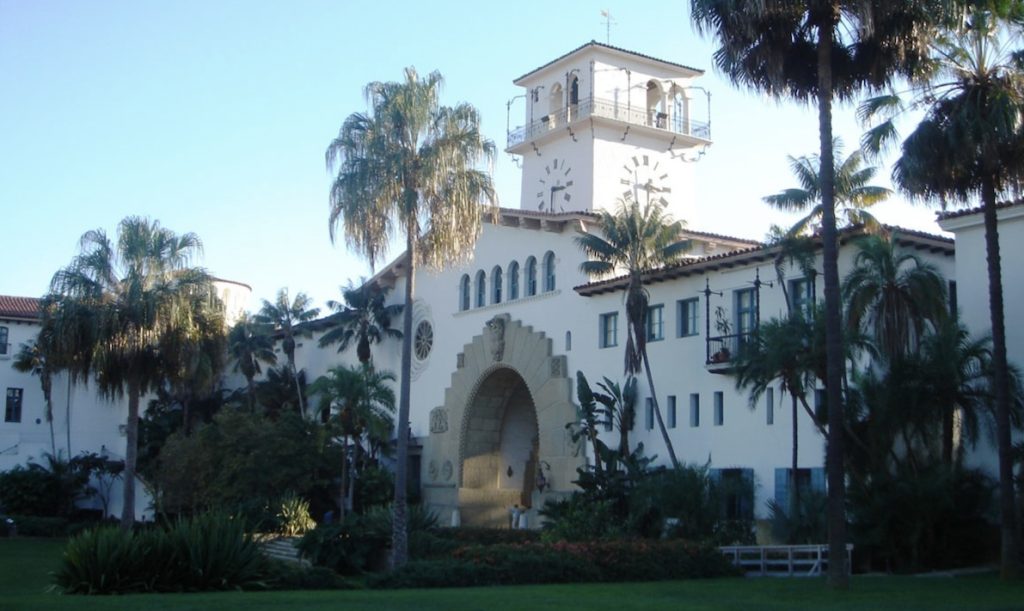
Next, architect Anthony Grumbine, AIA, will explore how the earthquake accelerated Santa Barbara’s transition to the Spanish Colonial Revival style. This aesthetic shift, which had already gained some traction before the quake, became the defining architectural language of the city post-disaster. According to Ooley, Grumbine will delve into how this stylistic transformation wasn’t just about aesthetics, but about cultivating a unique and cohesive identity in the aftermath of destruction.
Engineering perspectives will be provided by Sage M. Shingle, SE, and Garrett W. Mills, PE. Their presentation will discuss the evolution of seismic design and how cities can better prepare for future natural disasters. Their insights will trace the technological and regulatory advancements that have emerged over the last century – advancements rooted in the lessons of 1925.
Finally, urban planner Drew Wensley will offer a global perspective, sharing how cities worldwide have responded to disaster – either by restoring the status quo or by boldly reimagining themselves. Wensley, based in Toronto, brings international experience to the table, highlighting the power of intentional planning in times of crisis.
More Than a History Lesson
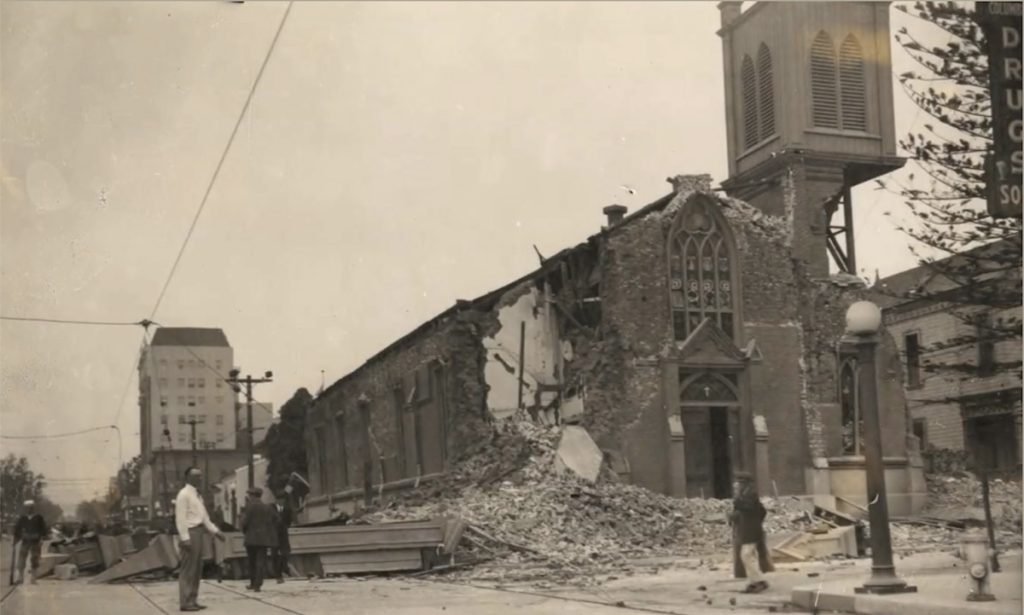
While rooted in history, this symposium is far from a nostalgic exercise. With Santa Barbara facing contemporary struggles – ranging from housing shortages and retail vacancies to urban development stalemates – there is an opportunity for the community to learn from both the solutions and the spirit of our historic counterparts of 1925.
Admittedly, the challenges are different, as well as the social environment, yet a collaborative mindset and creative solutions are still within grasp. Ooley pointed to State Street as a modern symbol of this dilemma – a street whose pandemic-era transformation revealed both the potential for rapid change and the paralysis of indecision. “Everyone seems to be polarized. Decisions don’t get made. No real progress happens,” he said. He contrasted this with the post-earthquake period, when civic leaders and citizens unified around a clear architectural and planning vision.
That unity, Ooley believes, is a lesson we desperately need to relearn. “A lesson that we should have already been using is just consensus building… learning to cooperate with one another,” he explained. “If we don’t make any decisions, then no progress will be made”.
Ooley also emphasized that preserving Santa Barbara’s historic identity does not preclude modern creativity. “Preservation is about maintaining or reusing an old building – not forcing a modern city to be old,” he said. Within the city’s historic districts, he believes there remains “plenty of room for architects to express themselves” while respecting heritage.
This nuanced balance between honoring tradition and fostering innovation is central to the city’s identity and will likely be a recurring theme at the symposium.
A Community Conversation
Beyond the panel presentations, attendees will have the chance to engage directly with the speakers during an open Q&A session. For those with VIP tickets, a post-event reception will follow, offering opportunities for informal discussion and connection over light refreshments.
Ticket options are inclusive, ranging from $19 for students, $25 for General Seating, and $100 for VIP access with reception. The event is open to the public and especially relevant for architects, planners, students, historians, and all who care deeply about Santa Barbara’s past and future.
At its heart, “The Earthquake That Built a City” is more than a symposium – it’s a call to remember, reflect, and reinvest in the community. Ooley hopes attendees leave with one core message: “That we are stronger together”.
As Santa Barbara continues to navigate the challenges of a changing world – whether it’s the decline of brick-and-mortar retail, the pressures of housing demand, or the complexities of preserving a beloved aesthetic – the lessons of 1925 are more than historical footnotes. They are blueprints for resilience, vision, and unity.
By looking back at how the city rose from the rubble a century ago, this event asks a vital question: What kind of future do we want to build now?
Visit www.lobero.org/whats-on for tickets to The Earthquake That Built a City, or https://eq25.org to see more events taking place.
You might also be interested in...




You must be logged in to post a comment.