
Teen in the Meatgrinder: WmWesleyGist and the Battle of Franklin
(courtesy photo)
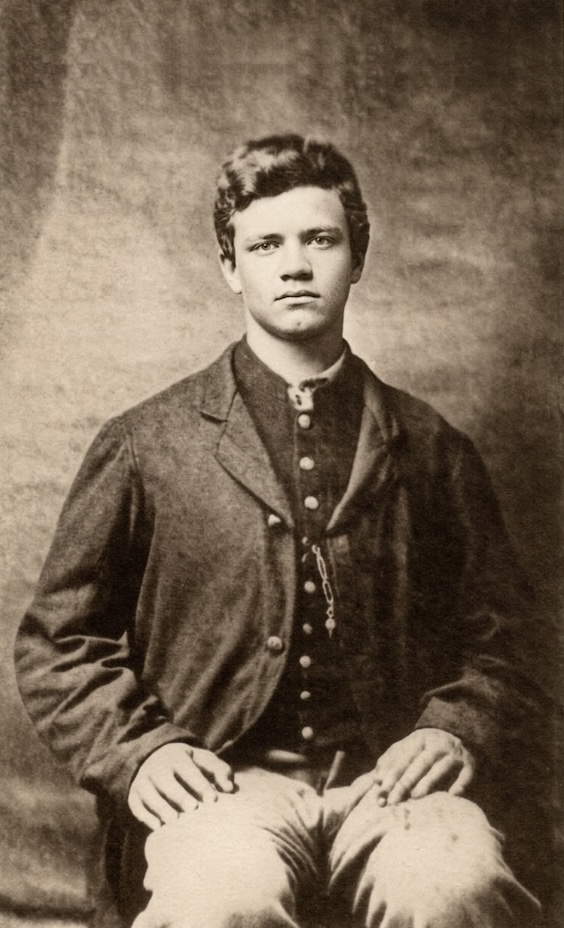
“Our rest that night was not very refreshing.” As sardonic understatements go, this one may take the prize. The reminiscence is that of a 67-year-old retired English teacher named William Wesley Gist, and the restless night he describes is the starlit eve of the Civil War’s Battle of Franklin some 52 years before. Gist had been there – a freaked-out 15-year-old child soldier with the Union Army, carrying an unwieldy muzzle-loading musket just about as tall as he was. The Battle of Franklin (Tennessee) would be one of the most desperately vicious episodes of a long war rife with unspeakably vicious episodes, and 15-year-old Gist fought and scrambled and wept and defended a free country with his heart in his throat. Imagine this kid in the theater of war, not as a cinematic conceit but as an actual teenager in the center of a blood storm, firing his gun in real-time terror. The conflict between north and south was nearing its desperate final chapter.
From his comparatively placid later life, W. W. Gist, my great-grandfather, would vividly recall both the battlefield horror and horror’s handmaiden; the mad courage of starved, broken soldiery trapped in a nightmare and moving forward with no recourse. The frantic attack of these desolate Confederates nearly paralyzed the teen with a terrible awe and would haunt him to his autumn years. “Those officers,” the elder Gist would tremulously write in 1916, “inspired their men to risk everything, and their valor has never been surpassed.” He was describing the enemy, the Confederate soldiers at Franklin who swarmed his regiment’s exposed position in frenzied waves.
Atlanta Burns
On February 28,1864, William Wesley Gist turned 15. A little over three weeks later, a bone-weary 26th Ohio Infantry trudged into Starr, Ohio, for a much-needed furlough and young Gist saw his chance. Smoothing his hair and straightening his posture for the extra ¼ inch it might add to his stature, the determined kid strode into camp, lied about his age and enlisted as a private in Company D of the 26th Ohio Volunteer Infantry. Ahead lay such abyssal atrocities as the 15-year-old hadn’t the inner darkness to imagine.
Anyone who’s seen the classic Civil War epic Gone with the Wind (and anymore that is surely a dwindling number) may remember Scarlett O’Hara vowing to G*d she would never go hungry again, Rhett Butler not giving a damn, and the elaborately rendered burning of Atlanta, Georgia; a 1939 cinematic special effect that had the day’s movie audiences absolutely agog. (It’s worth briefly noting here that an actual sofa from that iconic film now resides in the lobby of Santa Barbara’s Arlington Theatre.)
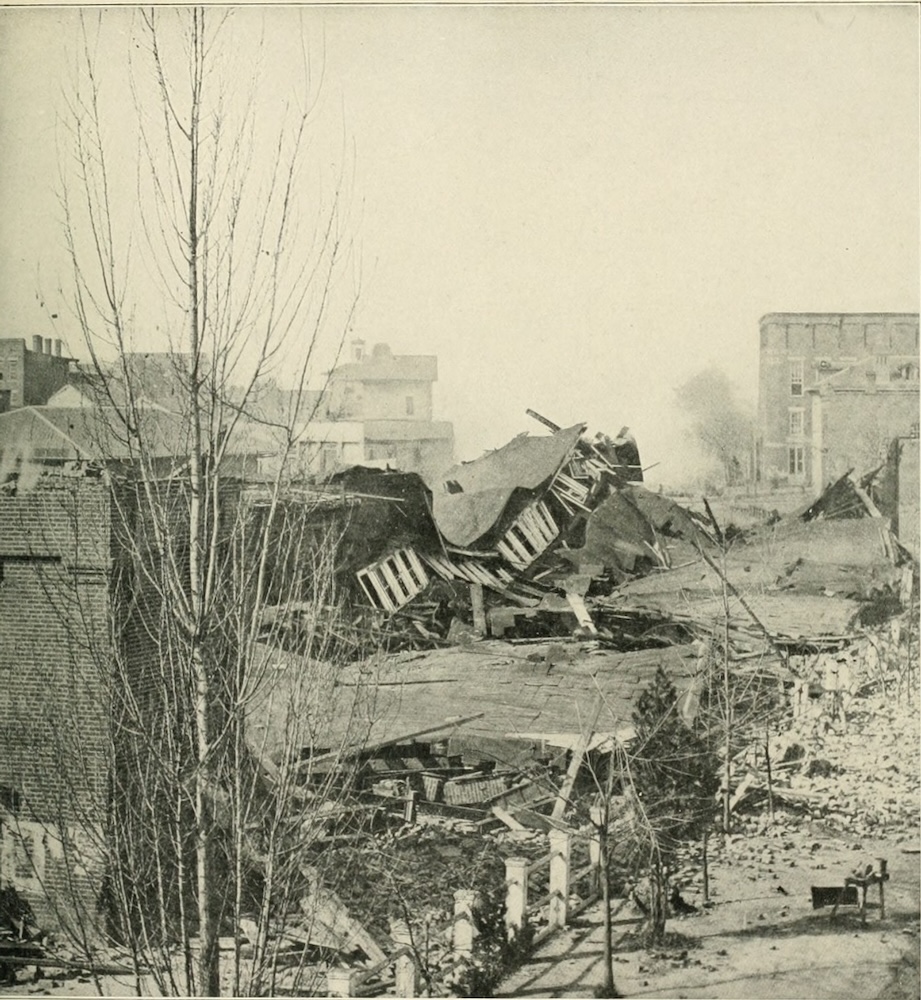
By the time the real city of Atlanta burned, teenager William Gist had been there for a hellish month with his 26th Ohio colleagues, as their Union Army under General Tecumseh Sherman lay siege to the southern city of 10,000 – a key supply and railway nexus of the Confederate Army. Every time the Union army tightened its grip on Atlanta’s perimeter, it fell to Gist & Co. to frenetically dig new offensive positions; to raise new earthen parapets of soil and fenceposts and rocks and whatever else was at hand, and to build from fallen trees a defensive, assault-slowing thicket called an abatis, from which protruded wooden stakes perpendicular to the line of attack. Many gruesome civil war battles ended with the dead and maimed hung up in the abatis like thorn birds. All this hurried construction by the 26th Ohio took place under relentless sniper fire and bombardment. When not so occupied, Gist’s Company D would rotate out to the forward earthworks to exchange constant fire with Confederate marksmen.
When General Sherman destroyed the last of the Confederate supply lines to Atlanta, his confederate counterpart, General Hood, rallied his remaining army of some 30,000 men and slipped out of Atlanta one September evening.
In a small Ohio town called Franklin, the worst lay ahead for the teenaged William Gist who, 15 days after the burning of Atlanta, would say goodbye to whatever vestige of youth he still possessed. Ahead lay an explosive set piece of unforgettable carnage.
The Spring Hill Screw Up, Frothing General Hood, WW Gist’s Bloody Initiation
Confederate GeneralHood’s humiliation in Atlanta had cost him 20,000 men. Hood drew up a plan he called the Franklin-Nashville campaign. His army would ride north and threaten Sherman’s supply lines, draw him into battle up there and annihilate Sherman’s Union Army. It was a quixotic plan; a grim debacle so implosive Gist would come through the refiner’s fire a changed young man.
Sherman grasped Hood’s northern feint and ignored the bait. Hood went north anyway. After nearly two months’ marching, the Ohio 26th reached Spring Hill, Tennessee, with orders to disrupt Hood’s Tennessee invasion. In a daylight battle, Gist’s Union forces held off intense Confederate attacks. That evening a confused and exhausted Confederate army allowed the 26th Ohio and the rest of the Union soldiery to literally sneak away in the darkness. The elder Gist would later describe the debacle in orderly and forgiving language. “Soon after dark the advance of the main army reached the village on the way to Franklin. As they saw the campfires south of town, they began to cheer, thinking they were about to go into camp. Word was quickly passed along the line that those were Confederate campfires. Silence was maintained as we passed along…”
The escape of the Union army comprised a tactical faceplant so egregious it is brought to bear on explaining the Confederate calamity that followed at Franklin. The Confederates pursued the Union soldiery to Franklin, the Ohio 26th forming part of the rear guard, so that when the Confederates caught up with the Union army, Gist’s regiment was nearest the advancing enemy and was all but isolated.
“We hastily built little fires and began to make coffee, but we had to fall in and change our position nearer town as I recall,” he later wrote. “Soon the Confederate army appeared in battle array on the hill in front of us, and it would have been a grand sight had it not indicated a bloody conflict.”
Historians have wondered aloud: Did Hood’s apoplectic fit over the Union army’s nighttime escape compel him to cruelly send his men across two miles of open field with meager artillery cover?
“We stood or kneeled with loaded guns in hand,” Gist wrote. A great rebel yell was heard and the Confederates charged. Parts of the Union line began to collapse. Gist’s regiment squeezed off a few shots and sprinted for the main Union works behind them. The Confederates followed in a frenzy and ran pell-mell through the Union works, where savage hand-to-hand combat commenced, in Gist’s memory a nightmarish blur of blood and fisticuffs. Guns were fired at close range and swung like clubs. “The guns of the combatants almost flashed into one another’s faces. A ball pierced a man and he fell a few feet to my left,” Gist later wrote.
By the end of the horrific melee, the Union line held, their casualties about 2,326 total. Confederate Casualties were at about 6,200 to 6,252 total – but included six irreplaceable Confederate generals killed or mortally wounded. General Hood’s bravado would see his army all but done in at the later Battle of Nashville, where they would be effectively neutralized as a fighting force. “It was about noon when I reached our line drawn up south of Nashville,” Gist would later write. “I threw myself upon the ground without a blanket and slept till the next day.”
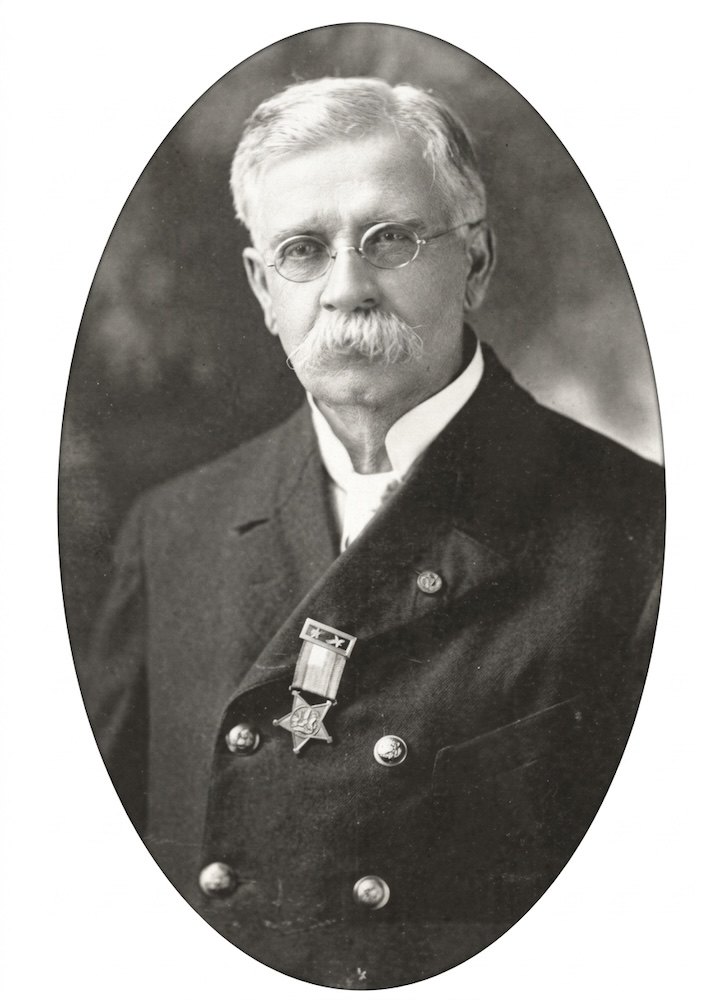
My great-grandfather, William Wesley Gist, would go on to his adult life, becoming a pastor and, later still, a beloved professor of English. In 1920, W.W. Gist – as one of the few living members of the Grand Army of the Republic (G.A.R. – an organization of retired Union soldiers of the Civil War) would read out the invocation at the Arlington National Cemetery’s opening of the Memorial Amphitheater that now abuts the Tomb of the Unknown Soldier there.
In 1890, at about 40 years old, Gist would record these words read out by a Lt. Luther Timberlake at a reunion of the 26th.
“Rather than see your flag trailed in the dust, and your constitution, the Magna Carta of your civil and religious liberties, abolished; rather than have the struggling desire for constitutional liberty among the restless and dissatisfied governments of the old world perish forever in the downfall of this, the most hopeful experiment of popular government the world ever witnessed – you, many of you were then beardless boys and only acquainted with the pursuits of civil life, rushed to arms and fought with a will that astonished the nations of Europe.”
“Freedom” and “liberty” and “prosperity” get a lot of play these days, the talking heads volleying back and forth with blah blah blah. It’s not clear the heart of this place is really understood and embraced as it once was. Veterans Day Abides.
You might also be interested in...




You must be logged in to post a comment.