
If a Tree Falls in an Urban Forest
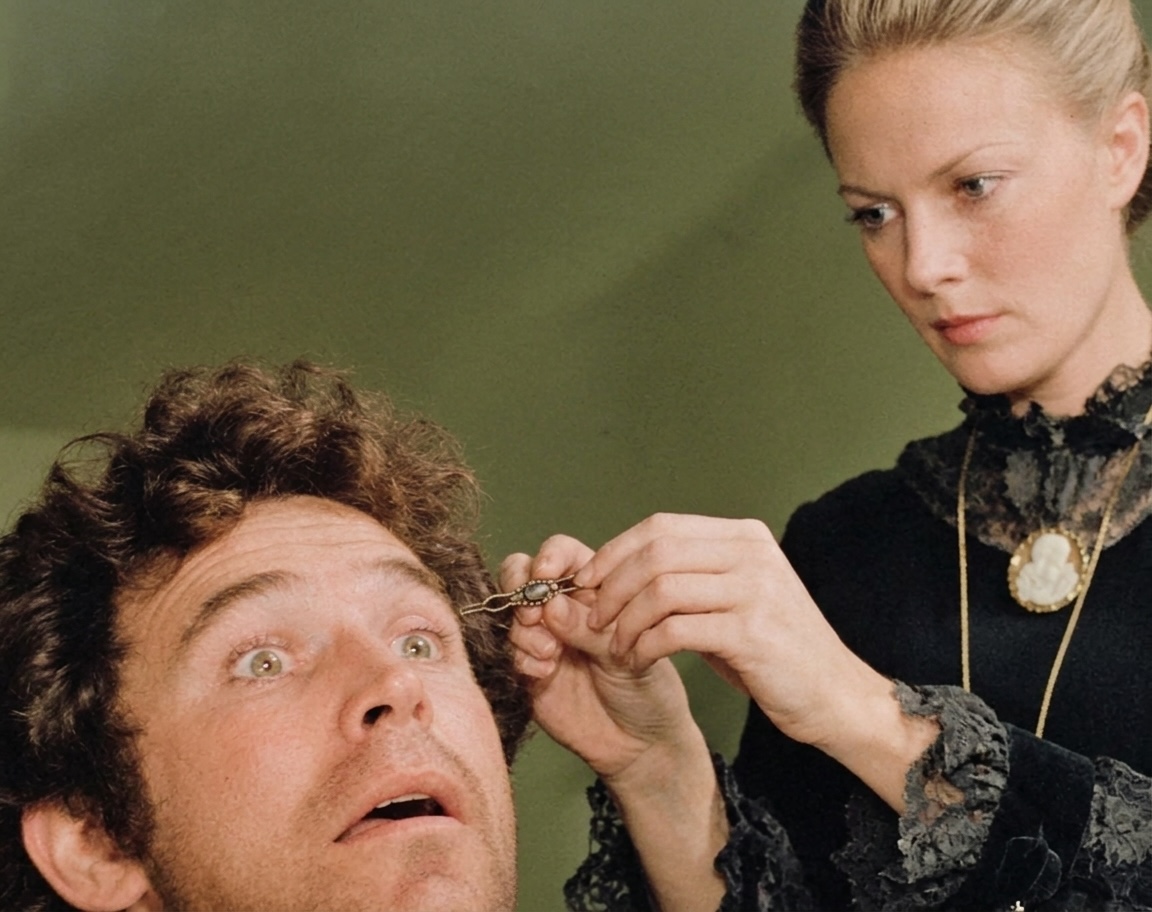
“The city should be reducing these trees greatly,” Gene Tyburn is saying. “Because they’re getting too big and they’re going to fall over. Why? Because the trees in the city are not pruned to stay standing in a wind!”
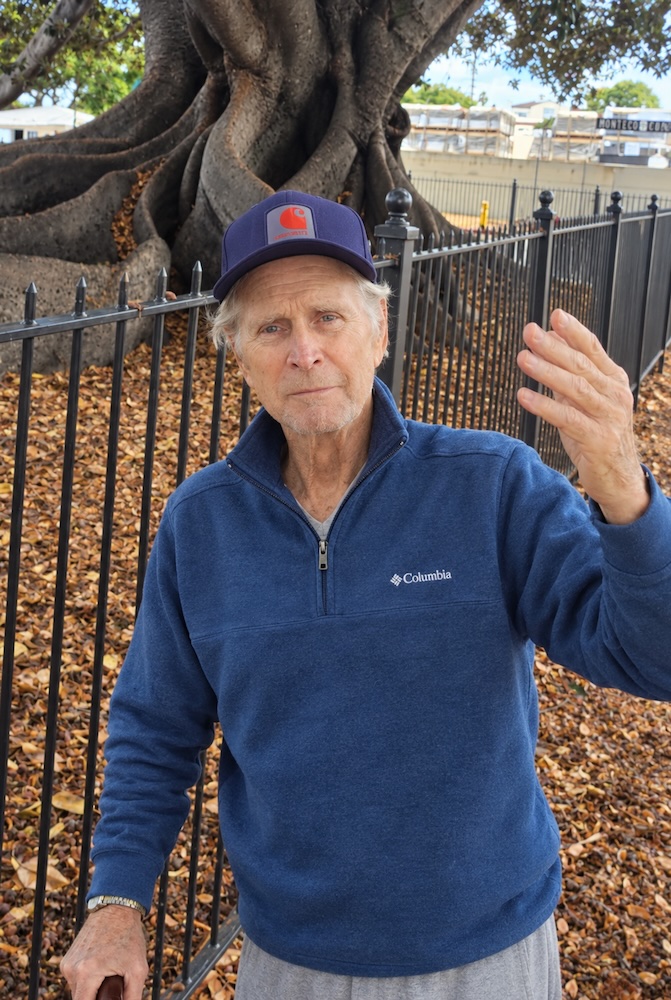
Gene is holding forth with such impassioned urgency (and a healthy sampling of salty language) because a storm is coming, and the man knows from trees. He owned and ran the day-to-day operations of TLC Tree Care for some 40 years, tending to clients in SB and Montecito, rejuvenating sickly specimens, and diagnosing a tree’s hidden travails by inspecting its cambium; the thin, truth-telling layer of living, dividing cells just beneath the tree’s bark. Okay?
“See the oak here to your left? It simply needs to be fed and sprayed because it has a fungus, a leaf fungus. You can see that by looking at it.”
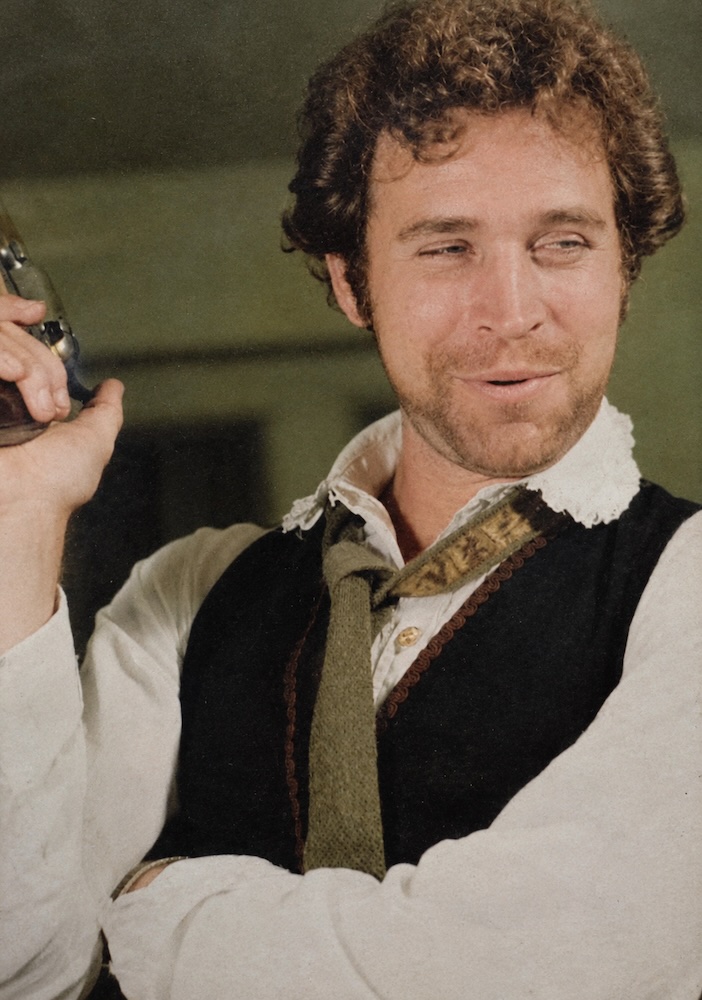
His early, fascinated forays into arboriculture found Gene traveling to England, Spain, Greece, France, Italy, Egypt, Russia, and the Middle East; an arboreal pilgrim soaking up internationally diverse approaches to civic horticulture. Perhaps most significantly, in Season 18, episode 1 of Gunsmoke, Gene and his gang of unkempt badasses can be seen lurking in a stand of trees and taking wild potshots at U.S. Marshal Matt Dillon. So Gene’s affinity for trees goes back quite a ways.
“Hollywood is just… I didn’t understand it then, but at that time in Hollywood your next door neighbor was an actor. Everyone was an actor! You go out for a job and there are hundreds of you!”
Baby Blue
The story of Gene stumbling into his sylvan new life as a tree savior is pure Frank Capra. We’ll get to that. Today Gene and I are driving around Santa Barbara in my swinging baby blue Toyota Camry (gift from a beloved departing poet), my passenger a variously cantankerous and laugh-wracked 89-year-old retired arborist.
He is jabbing at trees through the windshield and hurriedly gesturing when he wants me to pull over. Alarm bells are ringing as a major weather event approaches, and everywhere he looks Gene envisions trees toppling into power lines. The man has a footnoted history of remonstrating against City of SB pruning rules, and his 2010 treatment of a tree at the corner of State and Calle Crespis landed him in court. The case was dismissed.
“The city tree department are a bunch of well-meaning people who love trees, love trees,” Gene says in forgiving tones, then opines sotto voce. “But they don’t know anything about them.” His voice starts rising. “That’s why these cities where we’ve had these storms are a disaster zone. Yeah. The trees fall into the houses. I’m not even talking about private trees. I’m talking about just city trees. Now if you want to get to private trees, that’s another situation.”
As we toddle about this town of precariously situated trees, I gently query Gene’s acting past, his replies initially hesitant and grudging. Gene is a known quantity in the central coast arbor and is aflame with tree talk. But he tells a story about sitting next to Gunsmoke’s willowy, flea-bitten deputy, Festus – that familiar character actor completely unrecognizable in plain clothes on a studio bus. “Wow, Ken Curtis,” I murmur. Gene turns his head. “How the [he]ck did you know his name?!” He softens at this, my minutiae-crammed cranial shopping bag momentarily impressive.
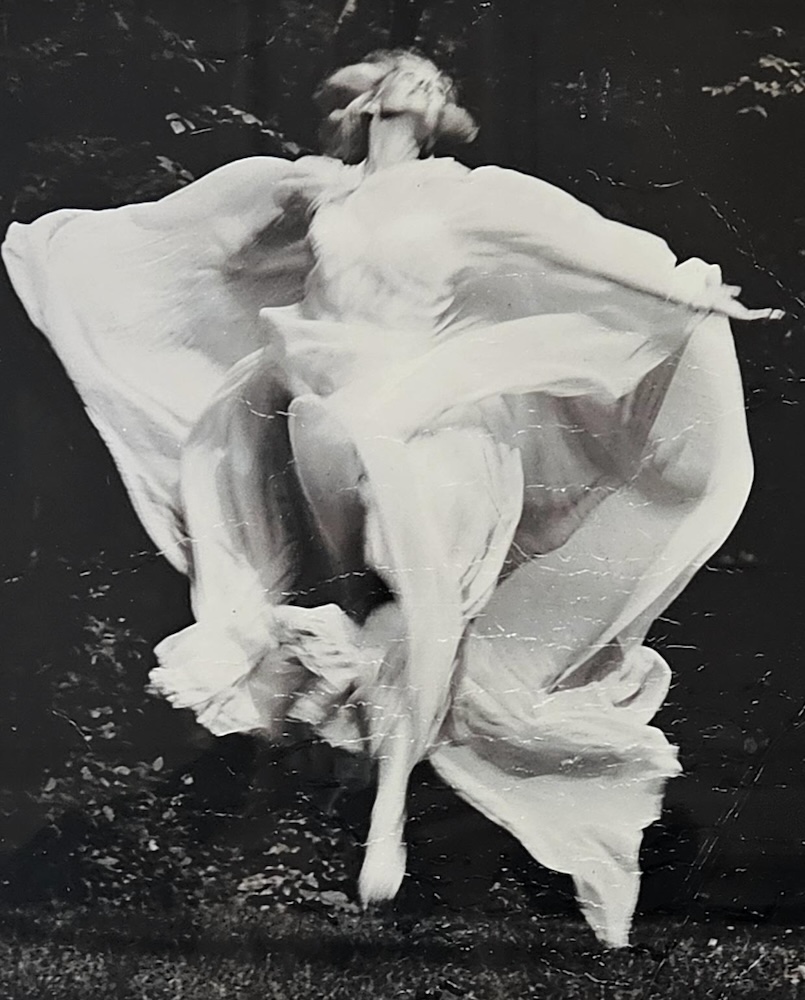
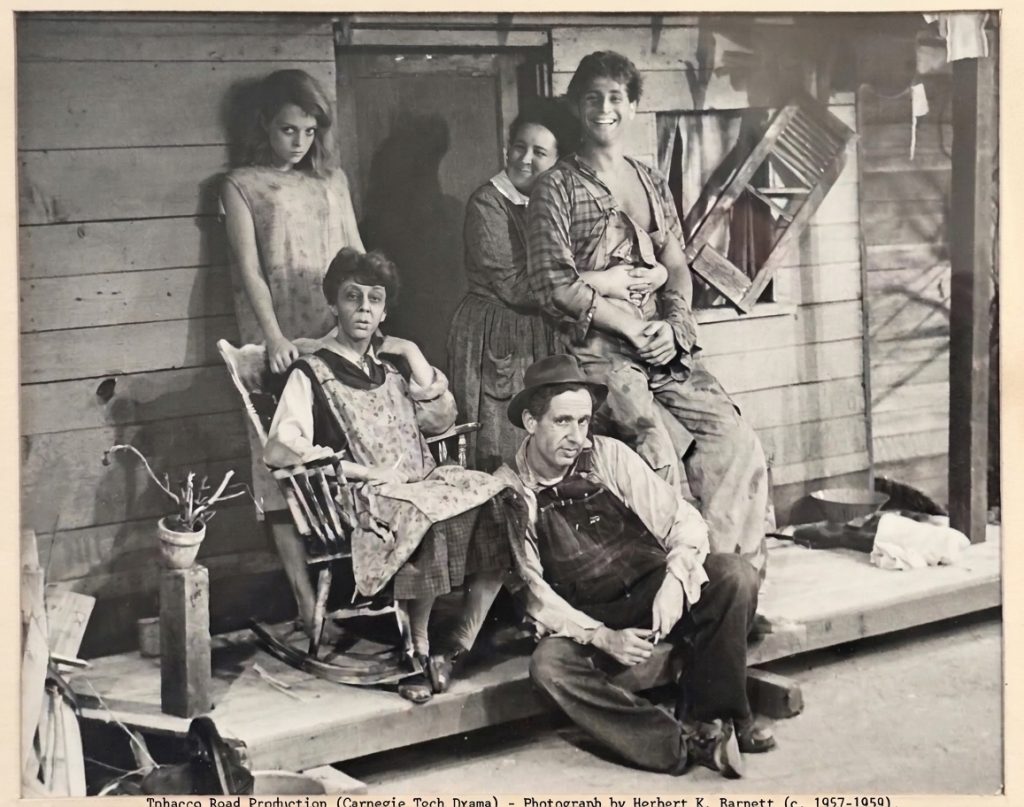
Gene Tyrburn’s acting oeuvre ranged from The Outer Limits to That Girl to The Rifleman to Dallas (a sampling). Picture this young handsome guy headed to Hollywood with his Carnegie Tech BFA in hand and his head held high. In the 60s and 70s Gene is American TV’s prototypical “working guest star” – the versatile guy who can pivot from dusty Westerns and rubberized monster sci-fi anthologies to prime-time soaps. In Toronto for a movie job (1971’s The Reincarnate), he meets and later weds that city’s terpsichore crown jewel, a beautiful choreographer named Sally. His son is filmmaker and Vanity Fair writer Matt Tyrnauer.
But by the time trees wander into Gene’s life (if you will) in the early 1980s he’s been at it for 20 years and he’s burnt.
“I’m thinking to myself, ‘What am I going to do with my life? This acting career of mine, to which I was dedicated, is not working. It’s not working.’” Disconsolately driving in North Hollywood one day in the early ‘80s, he sees some workers, pulls over, and yells through the car window. “Some guys are pruning trees and I actually say to the guy on the ground, ‘How do you do this?’ I mean, I knew nothing. I’d never been in a tree in my [darned] life!”
Gene Therapy
The approaching wind and water event which has Gene so wound up is this season’s possibly record-setting El Niño, which the overheated Pacific is presently stirring like a witch’s brew. The National Oceanic and Atmospheric Administration (NOAA) and partner agencies put the chance of this El Niño reaching historic strength at around 83%. Gene knows things, and everywhere he looks now he sees what the unenlightened do not: top-heavy urban trees with proscribed root systems and gust-catching heads of dense foliage.
“These trees, because they’re city trees sitting in a very little ground, can just tip over. They have root systems that are rather confined because they’re rooted in the sidewalk.” He points out the telltale signs of the subterranean root pruning and augmenting root barriers that stop these overanxious trees from buckling our expensive sidewalks and streets. He goes on at length about how proper pruning of a tree means making its canopy tastefully diaphanous, so that the living thing’s actual structure is visible, its branches reaching skyward like an open, leaf-dappled hand, a sculpture a strong wind can pass through unabated.
“Now you see these trees. These are Canary Island Pines. Look at the height. Look at the weight at the top!” and “…Here of course is a tree that’s dying back. This is going to have to be removed if it dies back any further…” and (with measured disgust) “They thin the bottom of the tree, which makes it look like they’ve been pruned, but they put the tree in more danger by having it grow heavier at the top! All those nutrients go into making the tree bigger!” Better targets for wind and rain, he means. Bigger isn’t always better, apparently, as has been noted in a range of other contexts.
Peripatetic Thespian Leaps Into Trees
Which makes for a handy segue into Gene’s acting epoch. What it may have lacked in statuette-attracting largesse, his career more than made up for in sheer variety and method-testing extremes. Gene has worked with the best. Tyburn went head-to-head with the great Hal Holbrook in the lauded ‘76 mini-series Lincoln, appeared with Sidney Poitier in Brother John (‘71), worked with George Segal, Richard Widmark, Henry Fonda, and Santa Barbara kingpin Timothy Bottoms in Rollercoaster (‘77), paid his dues alongside Larry Hagman and Jane Wyman on Dallas and Falcon Crest resp., and sweated alongside Henry Silva and Dabney Coleman on a nerve-wracking episode of The Outer Limits (“The Mice,” ‘64) whose featured star beast could have been sponsored by Rubbermaid. Throw in James Arness and Lorne Greene to rep the six-shooter contingent (Gunsmoke and Bonanza), and we see in Gene Tyburn (né Eugene J. Tyrnauer) the very definition of a working actor.
Yes, I’ve regaled Gene with my ill-received admiration. “You was on the TV, Mister!” This species of praise doesn’t hold a lot of water for the guy. He is humble and a little dismissive about his acting past, and grandiloquent about trees. Gene is also a librettist of original opera, as evidenced on tyburnoperas.com. From Bard to Bark, Tyburn is the complete artist.
So how, exactly, did Gene morph from “unbathed frontier bad guy shooting at Matt Dillon” to “card-carrying dendrophile?” You may recall a gloomy Gene pulling his car over on a North Hollywood street and hollering at the tree guys working there.
“I didn’t have an intelligent question to ask him, just… how do you learn this stuff?” Gene says. “The guy leans into my car, where I had a brand-new headset, brand new! He reaches in and takes the headset in the box and walks away, walks across the street!”
Gene is nothing if not exclamatory, but if anything deserves a shouted soliloquy, it’s Gene Tyburn’s triple somersault off the stage apron and into botany; a landing he absolutely sticks, to his everlasting happiness. “And he’s over there across the street in his truck. I mean, what the hell? What the hell is he doing?”
Wild-eyed and gesticulating, Gene the actor is awakening from a long hibernation, hurriedly squeezing into his tights and entering stage left to gesture grandly at a packed house. It is a terrific thing to see. Gene Tyburn is, and clearly always has been, a contained shower of sparks. And here comes the play’s climax.
“He walks back across the street and he leans into my car, and he throws something into my backseat. I turn around and he’s put a rope from the city, a city saddle, and a hand saw in my back seat, all brand new. I said, ‘What’s that? I-I-I don’t know anything about trees!’” Gene’s wide grin is that of a young novice who just got the part. “He says, ‘You’re in the tree business now.’”
You might also be interested in...




You must be logged in to post a comment.