
The Circus is Coming!
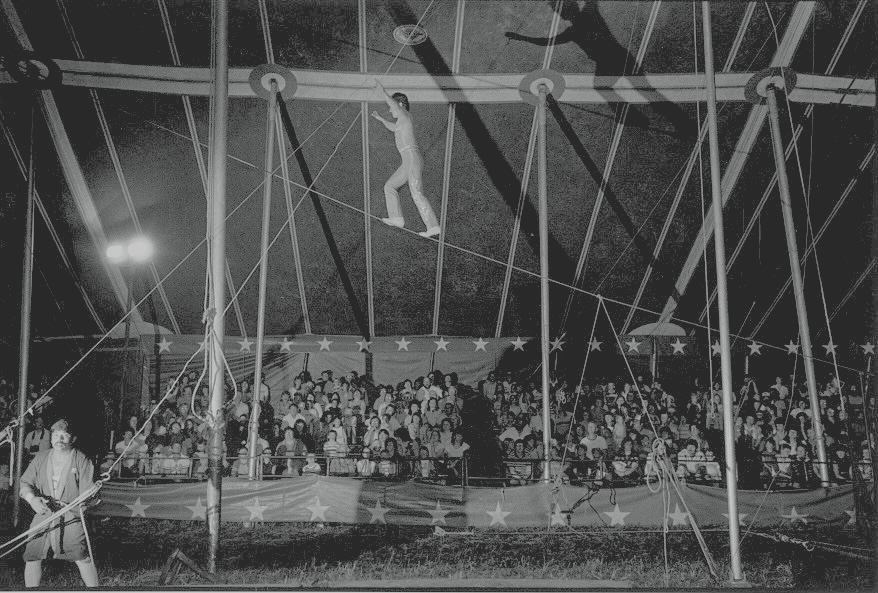
In the early 1850s, the dusty, crooked streets of Santa Barbara came alive with the cries “Vienen los maromeros! Vienen los maromeros!” Excited citizens lined the streets as a colorful satin-clad troupe of spangled jugglers, acrobats, and tightrope walkers paraded to the tent ground. The Circus from Mexico had come to town, and the night was suddenly filled with promise.
Writing years later, Katherine Den Bell, who was six or seven at the time, remembered that the circus tent was lit by tallow candles, and the show opened with the manic stumbles, bumbles, and somersaults of the clown as he kept up a steady stream of chuscades (jokes). Then came El Relampago, who ascended the pole like a bolt of lightning to dance and swing on the tightrope. Finally, two horses raced in, and the brightly sparking stars of El Lucero and La Centella danced and tumbled on the horses in acrobatic wonder.
Katherine was most taken with the boy in white satin, Chapulín, of whom she wrote, “He danced timidly and daintily on the rope, slipping down just in time to jump on a horse that rushed into the ring. A dash or two and then softly as a zephyr falls [and quickly as a grasshopper], he alighted in front of the audience…” A memorable event for a little girl, Mexican circuses continued to be a favored entertainment with Santa Barbarans well into the 1870s.
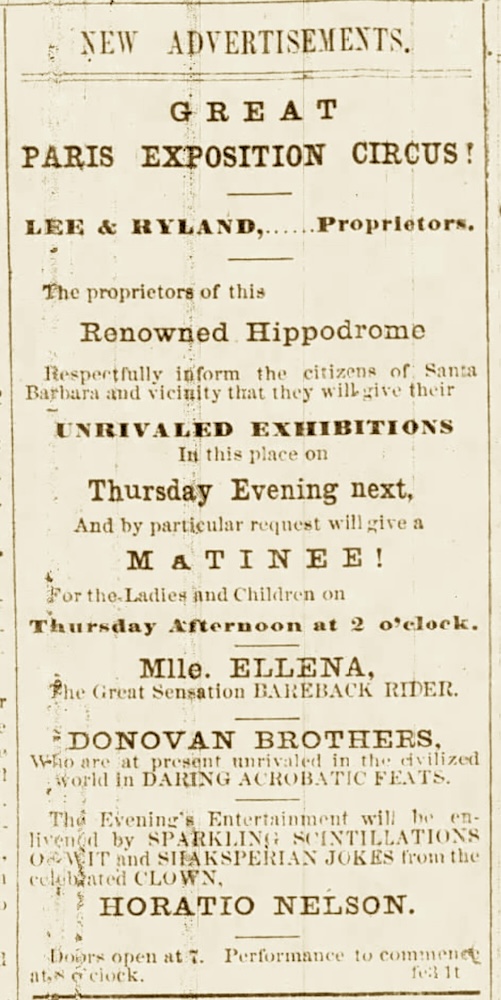
Santa Barbara didn’t have a newspaper during most of the 1860s, so the first published report of an American circus coming to town was in 1869 when Lee and Ryland’s Paris Exposition Circus planned to perform for three days and stayed for three weeks. Their equestrian acts were met with such enthusiasm that their seats were filled night after night. They even gave a benefit performance for all the churches in town.
In 1871, the New York Mammoth Circus of Kingsley and Thompson arrived and, in true Circus form, proclaimed the superlative nature of their show. They had the most brilliant array of talent ever assembled. Three incredible clowns, the largest troupe of artists in the nation, and the greatest stud of trained and educated horses in the world. It promised to be a really big show.
Circus Days
In 1873, Conklin’s Circus enlivened the streets with their procession and band, and the town’s children clamored to go. That night, two parents who had forbidden their child to attend the circus found him missing. Not sure whether to be angry or panicked they set out on an unsuccessful search throughout the town. They met back at home, disheartened and frightened. Before setting out again, they happened to go into his bedroom, where they found their son fast asleep in bed. The newspaper report the following day said, “Neither one had thought of looking for a boy in bed when there was a circus in town!”
The following year, the San Francisco Circus strained all superlative verbiage in describing the attractions of their circus. One of these magnificent attractions was the most wonderful performing elephant in the world. On the day of the circus, the keeper of the baby elephant took him to the local livery stable to get a drink, and along the way he attracted the attention of a lot of small boys who teased him.
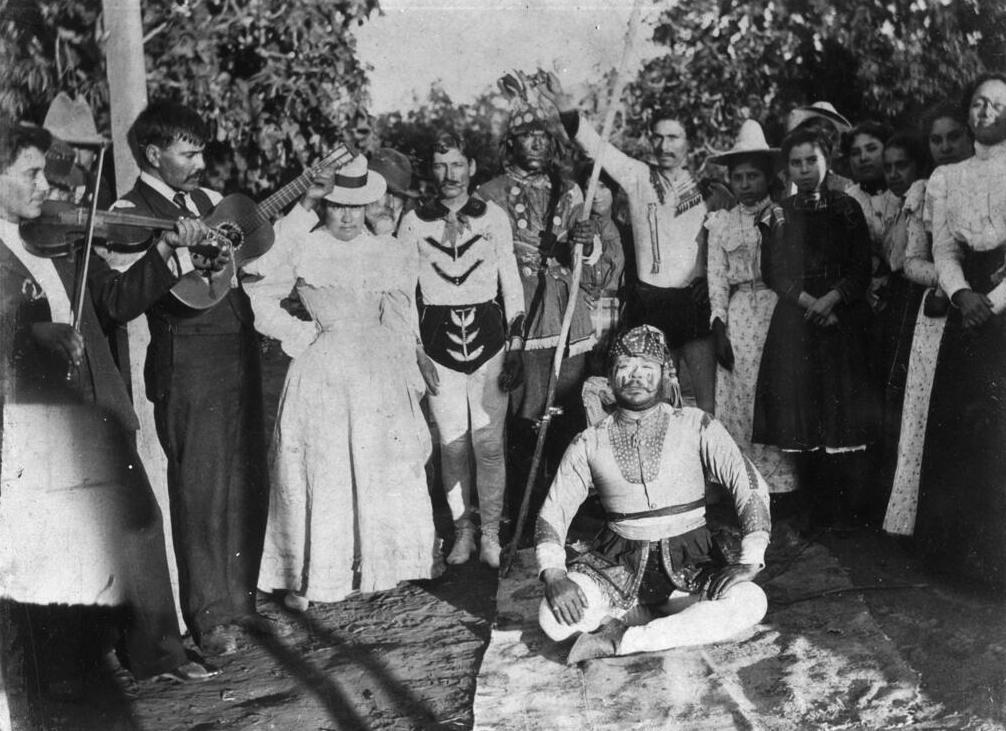
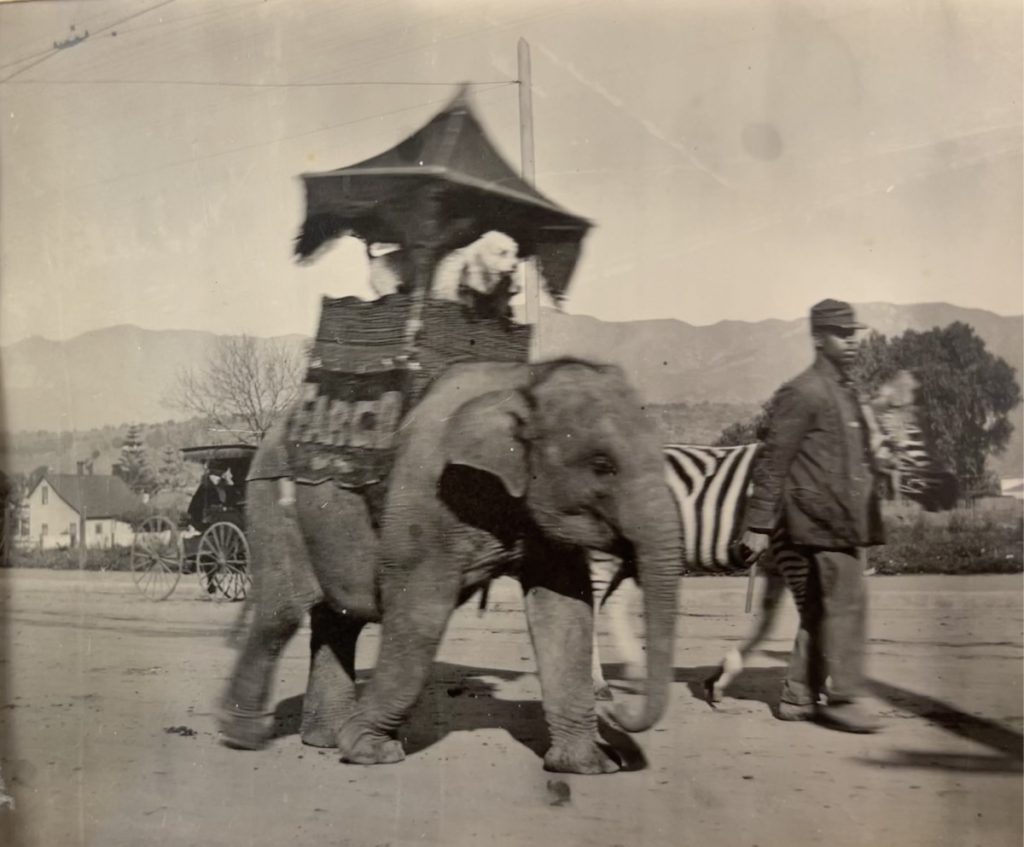
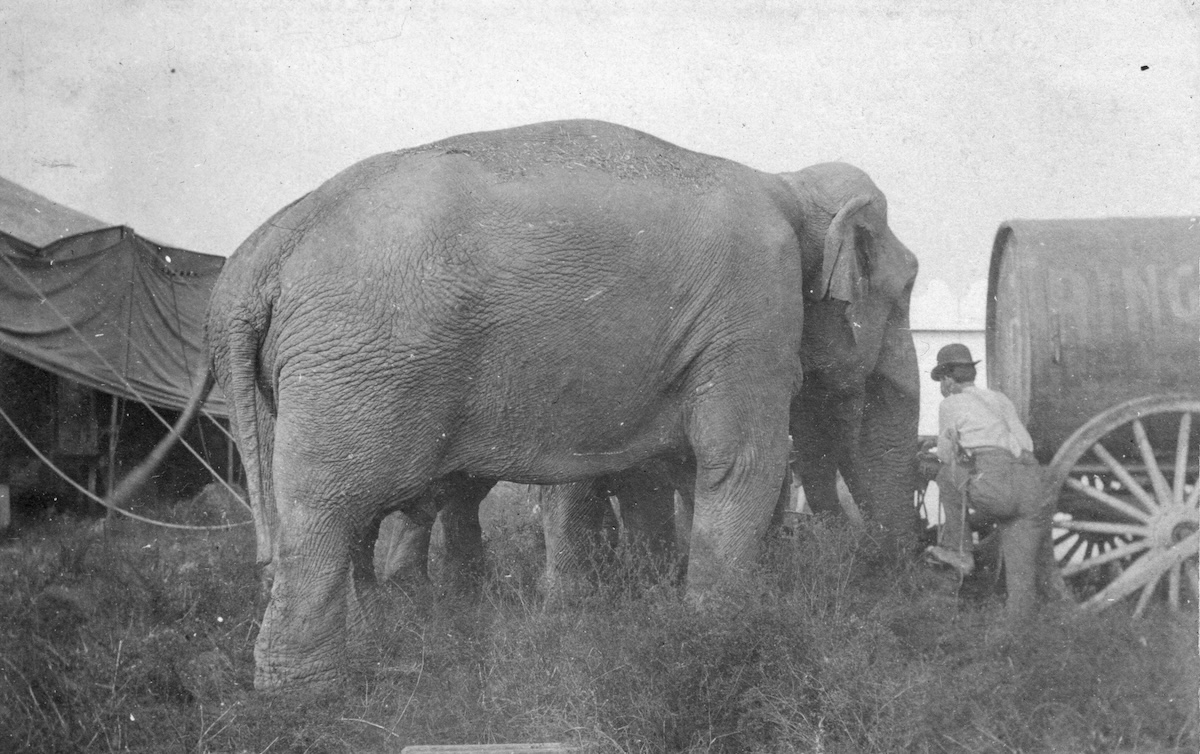
The boys followed the elephant to the stable yard where they kept up a barrage of harassment and ridicule while he drank his fill. With the keeper attending to other business, the elephant slowly turned to his tormentors and sauntered in their direction, swinging his trunk slowly back and forth. The boys were emboldened by the elephant’s seemingly peaceful demeanor and kept up their taunts and laughter. Suddenly the elephant let out a tremendous, terrifying roar and charged the boys.
Their laughter turned to screams of terror as they ran down State Street, the elephant in pursuit. Luckily, the keeper caught up with the elephant and managed to stop the chase.
Lock Your Doors
In October 1874, Montgomery Queen’s Circus came to Santa Barbara. It was a three-ring circus and featured Miss Mollie Brown, champion equestrian of the world, throwing somersaults upon her steed while riding at lightning speed.
The show disbanded for the year in Santa Barbara, and several members of the company, having nowhere else to go, stayed in Santa Barbara, much to the annoyance of the local population. The day the Circus left for winter quarters, three “circus remnants” were arrested and fined for being drunk and disorderly on the streets.

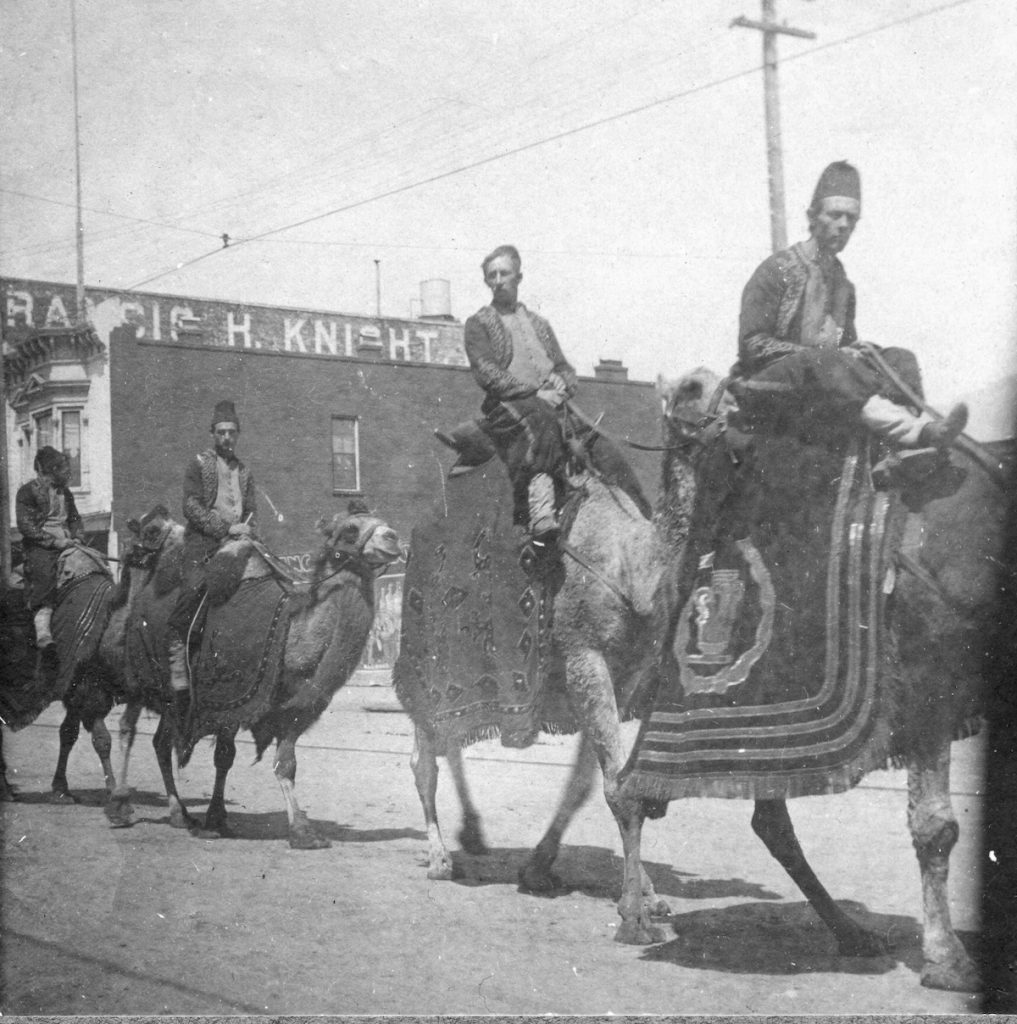
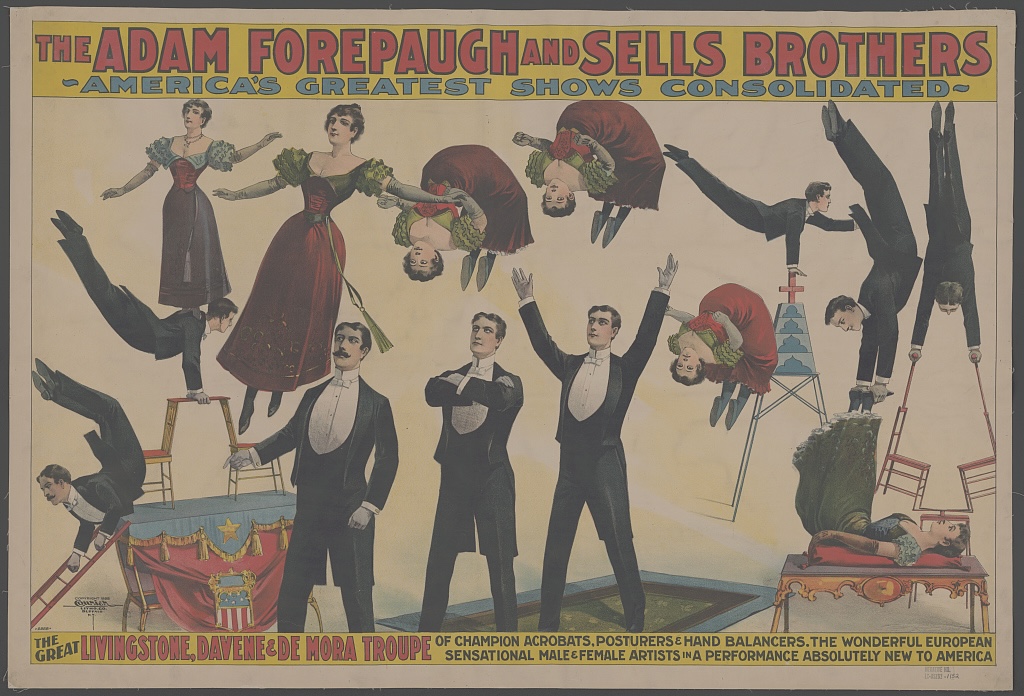
One man wrote to the editor, “Santa Barbara’s exceedingly respectable reputation is jeopardized by a number of loose roughs and bummers who were left here when the circus disbanded and have drifted in from various quarters. It is actually becoming necessary to fasten our doors and windows at night and go abroad prepared for pickpockets!”
The circus left behind another member, who would become a favorite son of Santa Barbara’s. His name was Jerry Forney, and his comic act for the circus involved riding and falling off of a mule. Forney was a former slave who had liberated himself when forced to work in the California gold fields for his Eastern owner in the 1850s. He settled in Santa Barbara, opened a bootblack business, and became a famous and beloved member of the community. (For Forney’s incredible story, go to https://tinyurl.com/MJIncredibleJF)
In July 1875, Wilson’s Palace Amphitheatre and Jackley’s Vienna Circus came to town. Word went out that a 17-year-old girl from Los Angeles had been missing from her home since the Vienna Circus had left their town. It was thought that she eloped with the “young man who does the graceful somersaults” in the ring. Her parents were trying to get her back (and eventually succeeded).
One would-be wit wrote to the newspaper and asked, “What product of our farmers would properly designate the fate of the Los Angeles girl who tried to get off with the circus?” The answer was “cant-elope.”
Circus Train Days
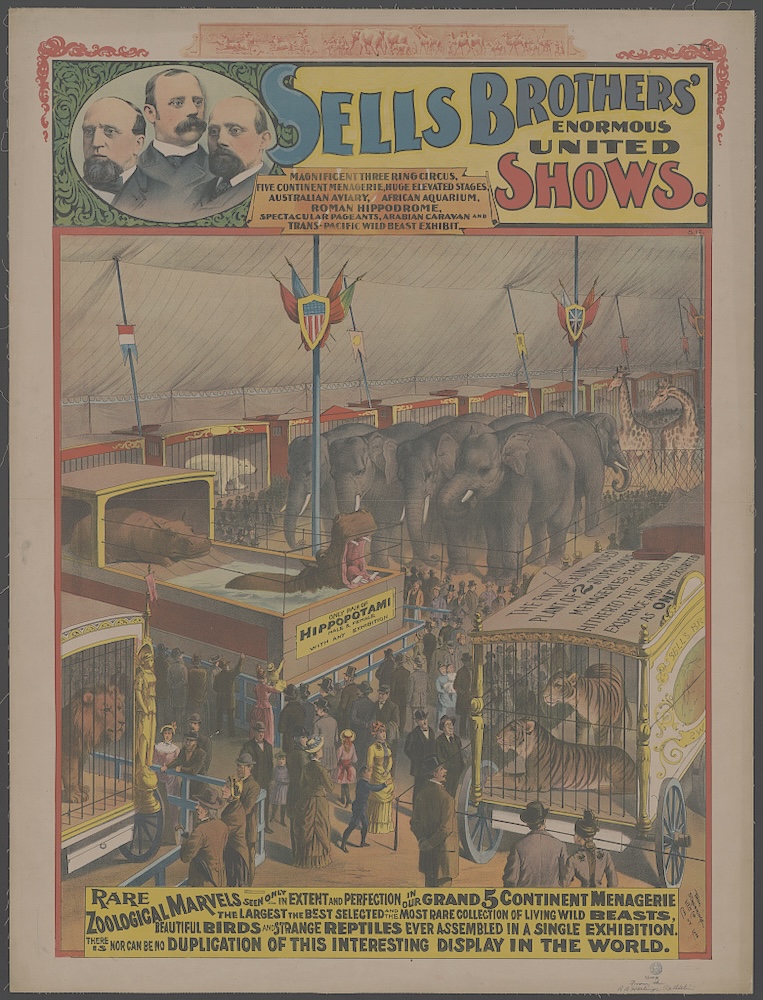
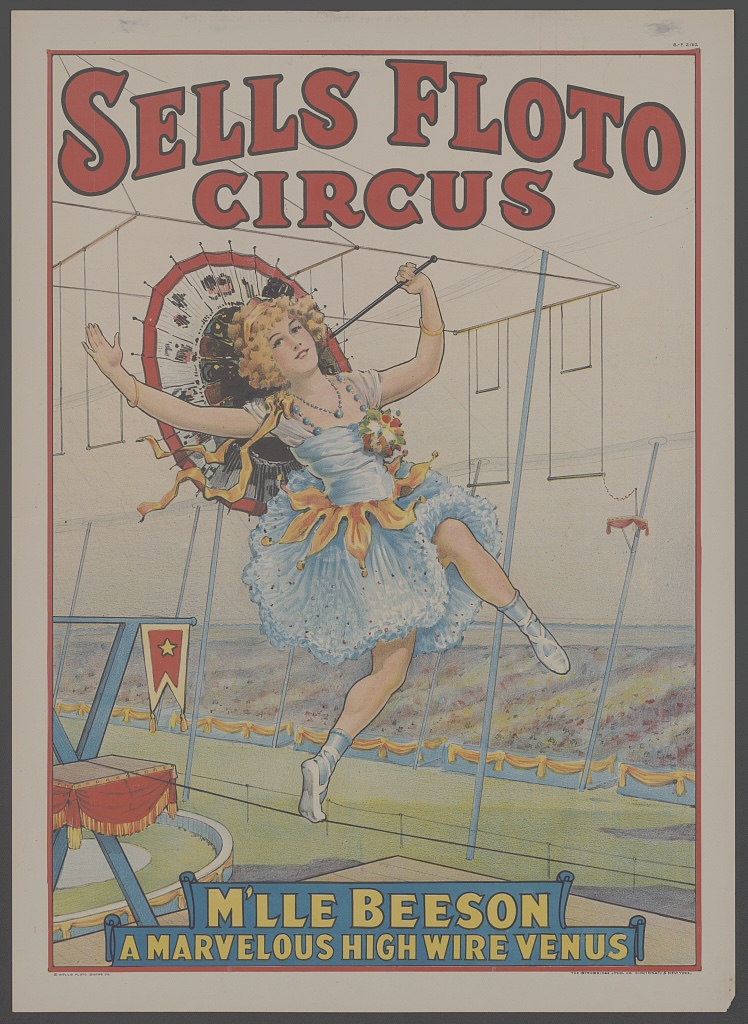
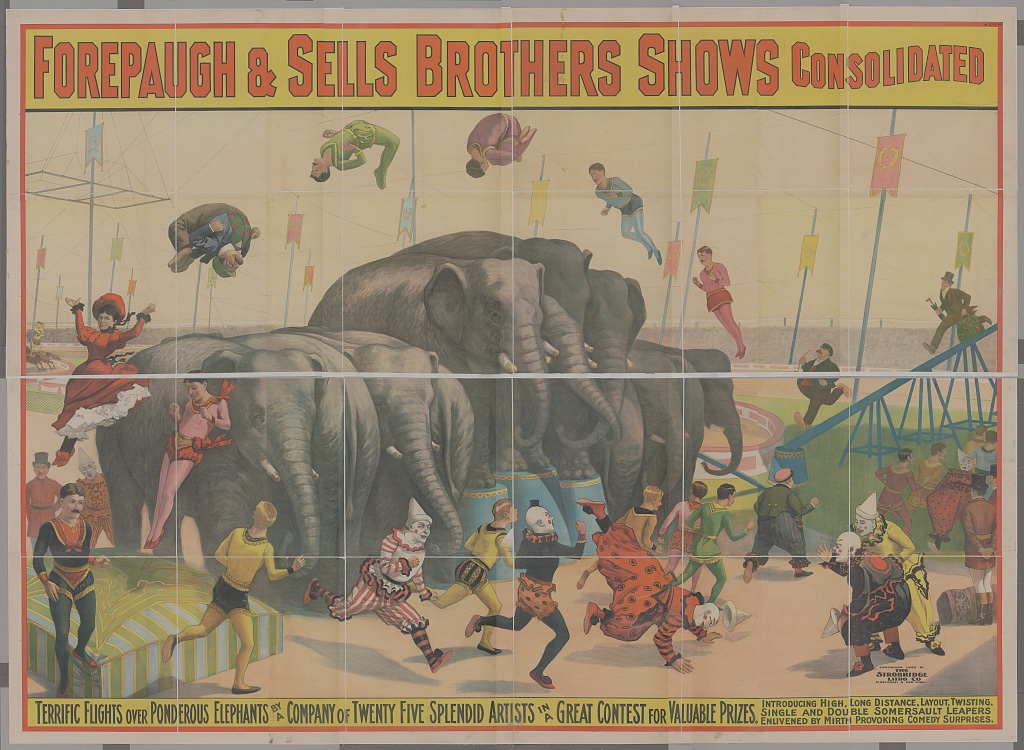
In 1887, the rail line from Los Angeles reached Santa Barbara, and greatly expanded circuses arriving by train. Most included a menagerie, a sort of traveling zoo. In 1896, Sells Brothers and Forepaugh came to town and boasted that their sea lions and seals were the most brilliantly talented in the world. Interestingly, by coming to Santa Barbara, these seals were returning home. For many years, the great majority of seals and sea lions in the nation’s zoos and circuses came from the Channel Islands.
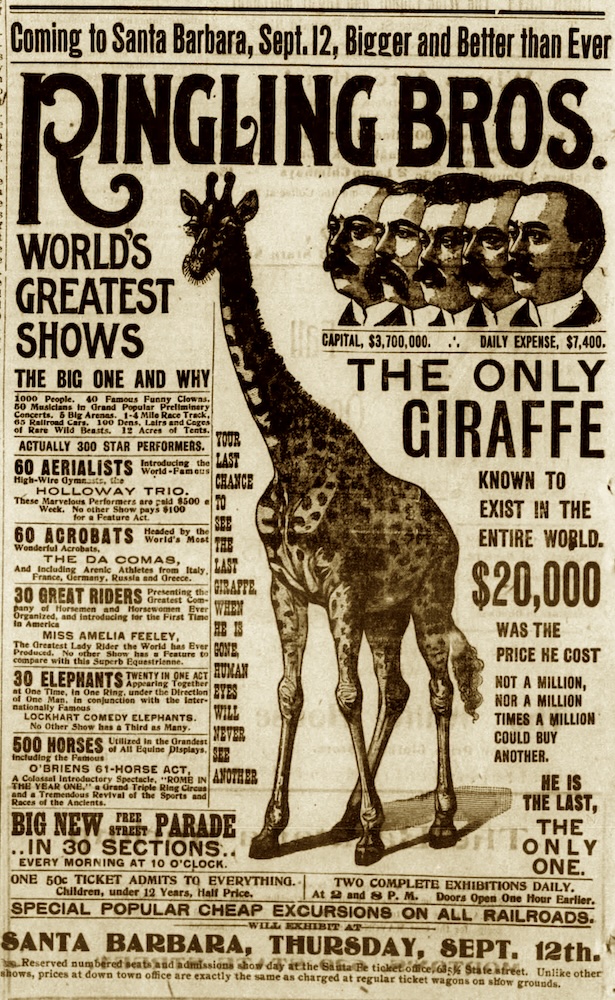
In 1900 and again in 1901, Ringling Brothers came to Santa Barbara and left all other circuses in the dust. The newspaper reported that the kids in town were saving their money for a circus ticket, so the candy stalls and peanut men were going broke. “One young Paderewski,” the paper reported, “has earned his ticket by learning gospel hymns for his grandmother at 10 cents a tune. He has learned so many to cover his ticket, so many for pink lemonade, so many for car fare, and one or two on the side for peanuts….”
When the circus arrived, it set up in the Agricultural Park and Racetrack (today’s Railroad Square). Four large trains carried the circus to town where the roustabouts set up a Big Top Tent with a seating capacity of 15,000. Schools closed so the kids could go to the circus. In 1901, the street parade was alliteratively reported as “The most superb display of processional pageantry and imperial splendor ever seen upon the streets of any city in the United States.”
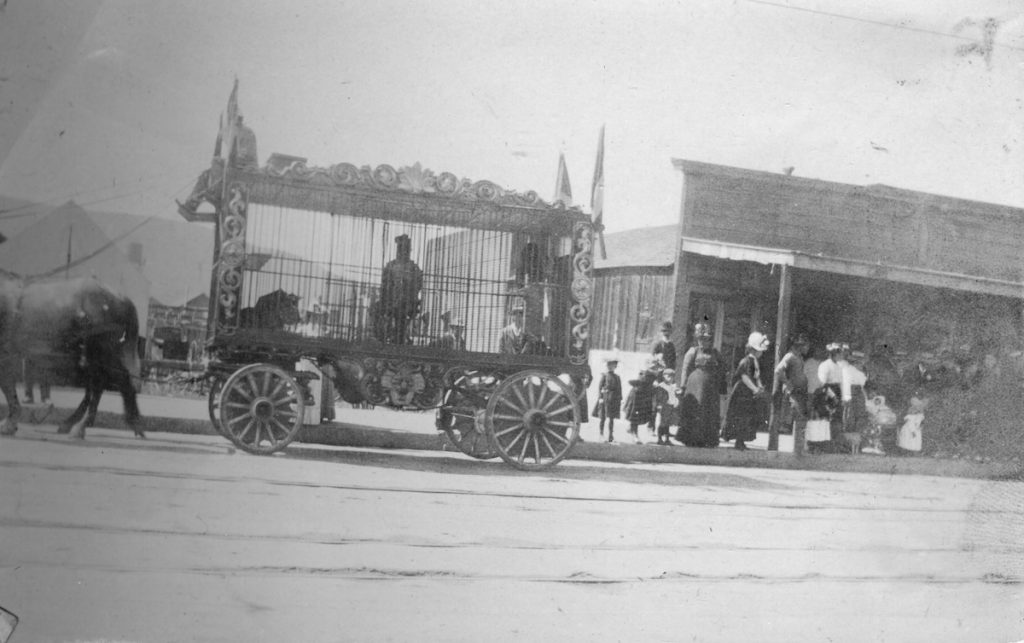
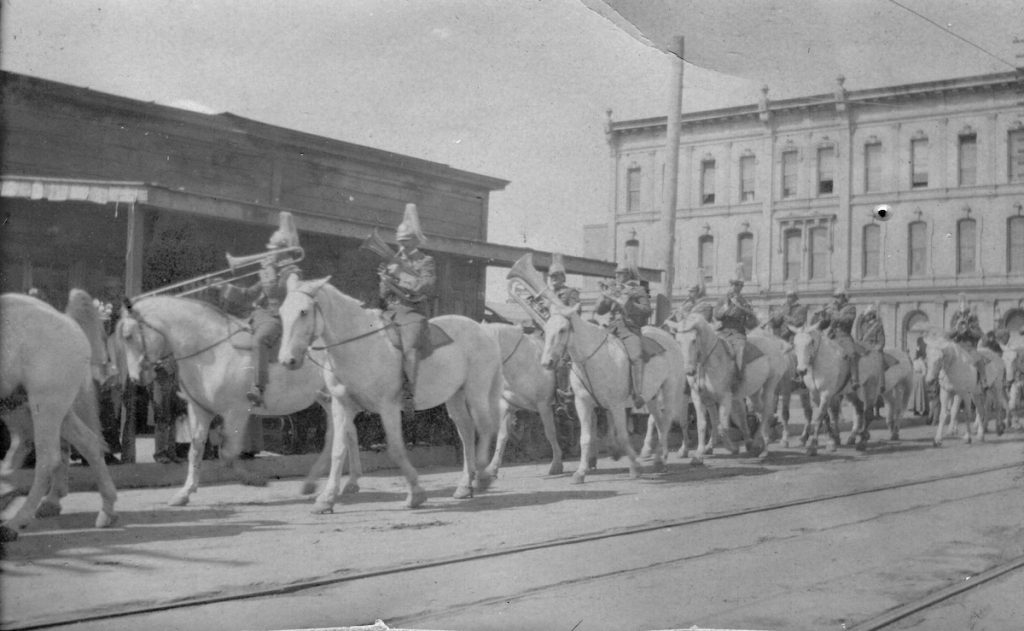
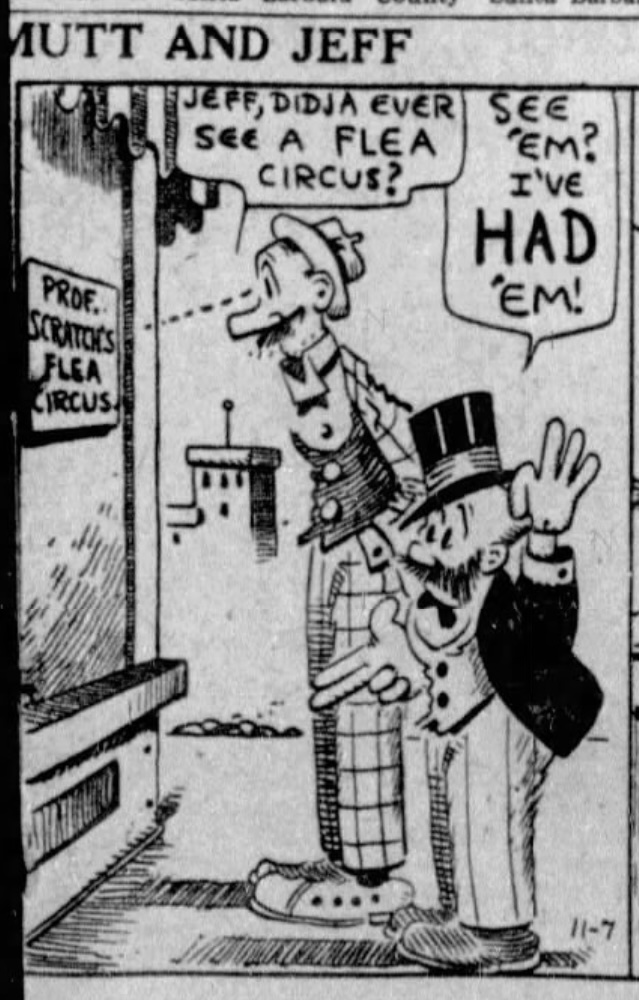
The popularity of the circus remained unabated in the early part of the 1900s, and in 1922 a new type of circus came to town. Professor John Ruhl brought his flea circus to Santa Barbara, but no one wanted to offer him a site for the performance. His star flea, Bucyrus escaped, however, and remained in town while the rest of the circus jumped to Santa Cruz. Bucyrus’s specialty had been diving from a springboard 10 inches high into a thimbleful of water. A reward was offered for his capture.
The Depression years of the 1930s and rationing during WWII were hard on the circus business. So was competition from alternative entertainment sources such as motion pictures. There was also a growing concern over animal welfare which placed a different spotlight on the circus menagerie.
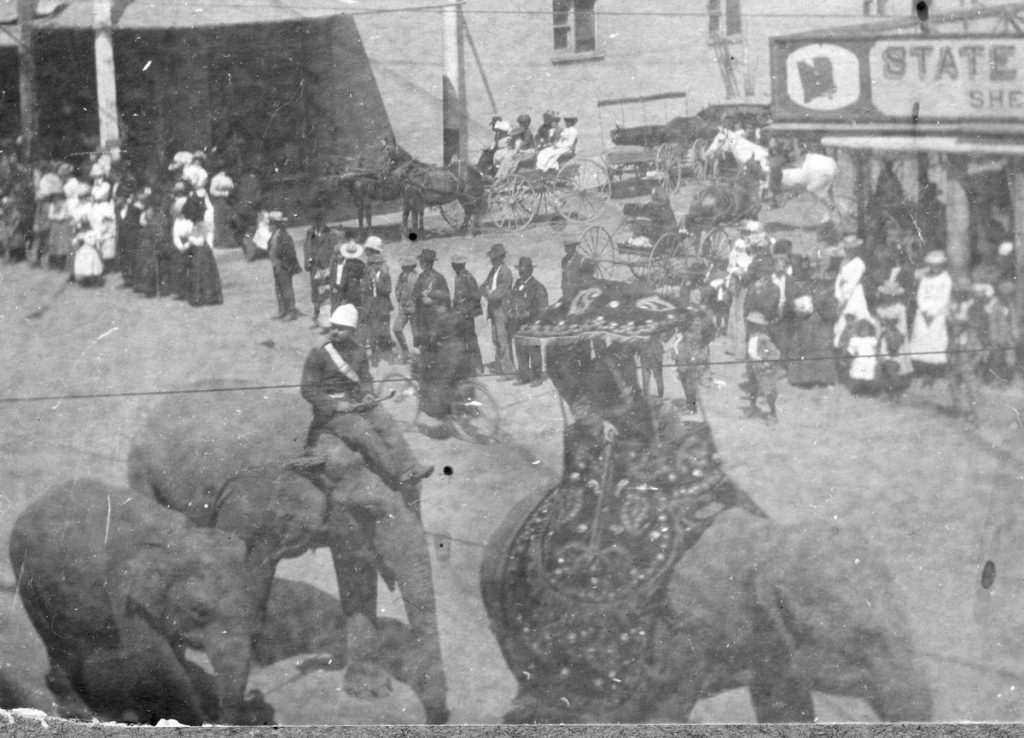
By 1956, one writer predicted that kids would soon only hear about the big top from pictures and books. “Before WWII started, there were 26 railroad-car circuses operating in the United States,” he said. “By 1956, 25 had gone bankrupt. Ringling Brothers and Barnum and Bailey [which had merged in 1919] was the only survivor among the traveling circuses.”
Much altered and after several hiatus years, Ringling Brothers and Barnum and Bailey are still in business today. And in 1969, Circus Vargas, a California-based circus, was established. Though still in business, it last came to Santa Barbara in 2025.
(Sources: Swinging the Censer by Katherine Den Bell, Wikipedia, contemporary newspapers, Doulton and Parrott family albums, Library of Congress, “To flea or not to Flea: The Curious History of Flea Circuses” by Gaia Mortier)
You might also be interested in...




You must be logged in to post a comment.