
Devil or Angel: The History of Eucalypts
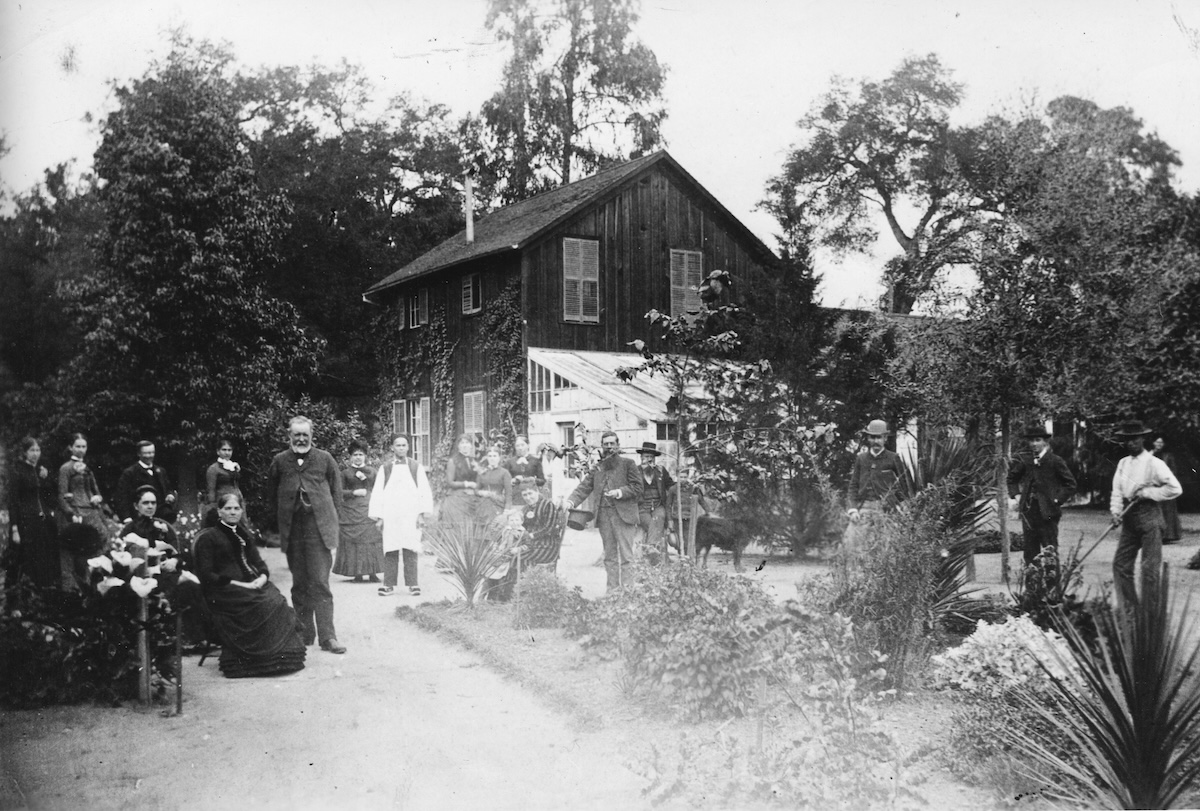
In the past 35 years, the eucalyptus tree has become one of the most controversial species in California. Some writers sing its praises, both for its beneficial properties and its beauty. Its image has been celebrated in California landscape painting for over one hundred years. California writer Lawrence Clark Powell wrote, “… no tree is more beautiful in the wind or against the sky, and none provides better nesting for the soft-voiced mourning dove.”
On the other hand, the tree is reviled for its tendency to drop leaves, bark, pods and twigs and feared for its flammability. It has been called the “Australian weed” and the “trash tree.” Some critics believe it poisons the ground, and others object to the tree for aesthetic reasons or because it is not a native. One writer from 1904 wrote, “There is a craze all over the state about the Australian blue gum tree… One cannot get out of its sight… it crops up everywhere in independent ugliness.”
Nevertheless, the species has a long and venerable history in the State of California. Eucalyptus made its first appearance in California in the 1850s after the Gold Rush fostered a population boom. Many Easterners, who were accustomed to clearing woods for farmland, not searching for timber for building, wanted to plant forests on the sparsely treed rolling hills west of the Sierras. Australia’s miracle tree, the eucalyptus, seemed the right tree for the job.
In the 1870s, Ellwood Cooper purchased 2,000 acres of land north of Goleta and became one of Santa Barbara County’s most vocal advocates of eucalyptus culture. He wrote, “The preservation of forests is one of the first interests of society.” In his opinion, Santa Barbara was barren of trees and needed forestation to support its increasing population.
By 1876 he had planted thousands of trees on his land, and he reported the results of his research and experimentation in Forest Culture and Eucalyptus Trees. He noted that eucalyptus trees resist summer dryness, making them a perfect tree for Santa Barbara’s drought prone environment. Though he had planted several varieties, he touted the virtues of the blue gum, which was fast growing and could reach tremendous heights and widths.
Although attempts were made to use eucalyptus wood for posts, ties, and building material, people soon found that unseasoned eucalyptus wood twisted and cracked, and once it was cured it became too tough. In addition, the eucalyptus pier pilings at Stearns Wharf were susceptible to marine worms, and the wood proved worthless for this purpose as well. Eventually, horticulturalists abandoned the tree for timber purposes.
The Miracle Tree
Though failing miserably as a timber tree, the eucalyptus was touted as having medicinal value. A poultice made of its leaves sterilized wounds. Its oil led to general improved health and was used as a stimulant, aphrodisiac, anti-spasmodic, and breath-fresher. Proponents claimed it cured a long list of ailments, including bleeding gums and bronchitis. As an extra bonus, planting blue gums eradicated malaria in a region.
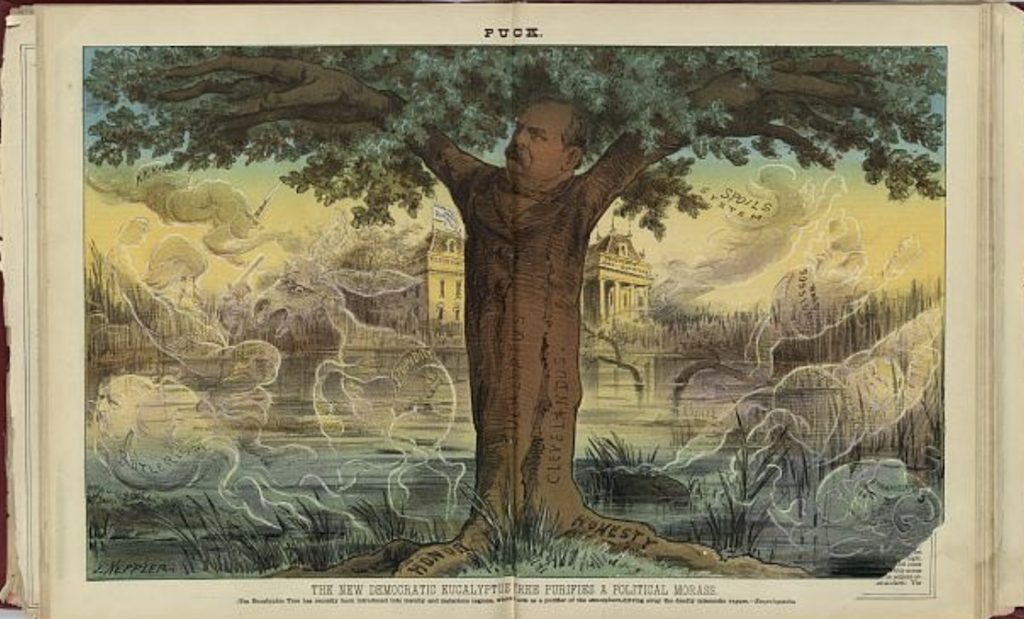
In Italy, so strong was the belief in the eucalyptus’ medicinal value that laws had to be passed and armed guards posted to prevent the stripping of leaves from newly planted trees. Special permits were required to control harvesting.
Another use for the tree was for fuel, the sources of which were rapidly disappearing from the native landscape. In 1895, Dr. Francesco Franceschi, world-renowned horticulturalist who co-founded the Southern California Acclimatizing Association in Montecito, published his inventory of exotic plants already introduced into Santa Barbara and noted the disappearance of the native woodlands. He wrote…
One hundred years ago, both our valleys and our hillsides appear to have been covered with magnificent evergreen oaks (Quercus agrifolia), a memory of this being retained in the names El Montecito (the small woods), and Carpinteria (the lumberyard). Unfortunately, most of these natural groves fell under the axe and the fires of early settlers, and it is only of later years that people have become aware of what treasures had been recklessly destroyed, so that it is with jealous care that what remains of the oaks is preserved at present, mostly in Montecito, where they certainly form one of the principal attractions.
Francheschi noted that for the past 30 years or so, the Australian blue gum had been planted all over the state and had become a prominent feature in the landscape and provided a stable supply of fuel. He clearly saw the useful role of the eucalyptus tree in reforestation. When the Italian government recruited him to establish a modern agricultural program in Libya in 1914, he planted thousands of eucalyptus trees there.
Sun, Wind, and Rain
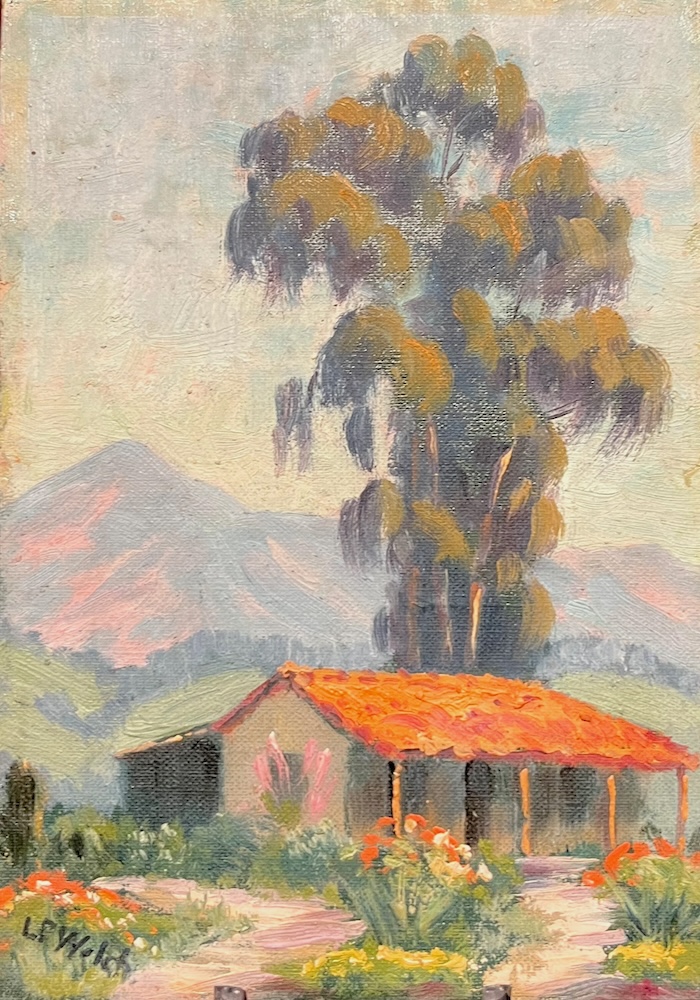
The tree became widely used for shade and for windbreaks. Ellwood Cooper wrote, “Owners of orchards, especially citrus orchards, have found them particularly beneficial as a break to the strong winds and a protection during cold weather.” Cooper noted that fruit orchards protected by eucalyptus windbreaks had larger growth and cleaner leaves and stems and that less fruit blew off.
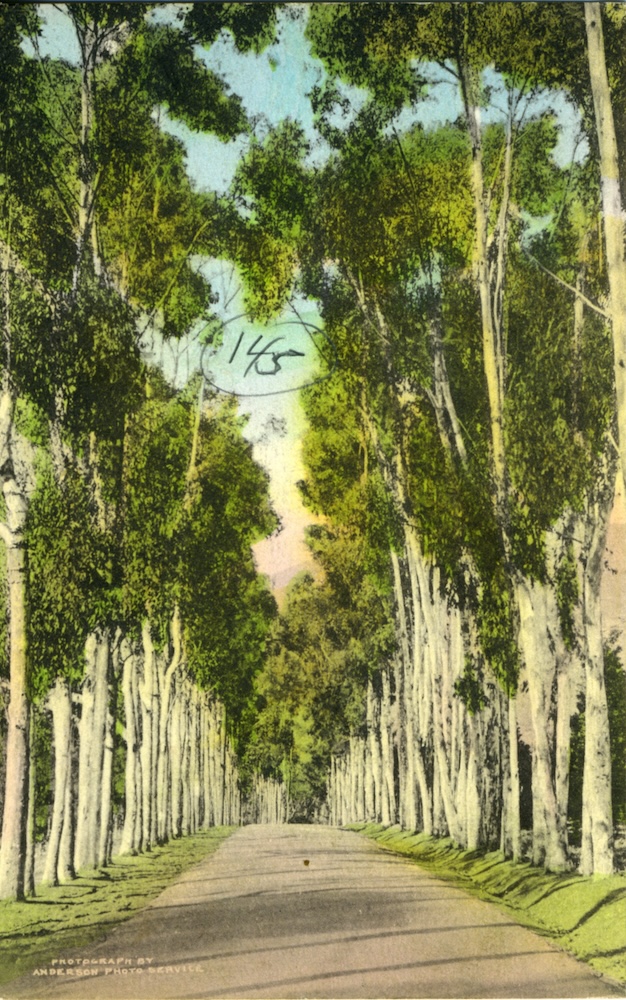
Eucalyptus trees were also promoted as avenue trees. Responding to the “Good Roads” Movement, the author of New and Little-Known Trees for Southern California Avenues wrote, “If we need perfect roads, we also need them to be beautiful.” Eucalyptus trees, he claimed, exhibited the qualities of good avenue trees: uniform growth and individuality of character and feature.
Elwood Cooper also saw eucalyptus trees as useful for roads. “The public highway through my ranch,” he wrote, “… has a double row of trees on either side.” Under these allées there was less mud in winter and less dust in summer. The trees mitigated the wind and shaded roads and provided shade in pastureland.
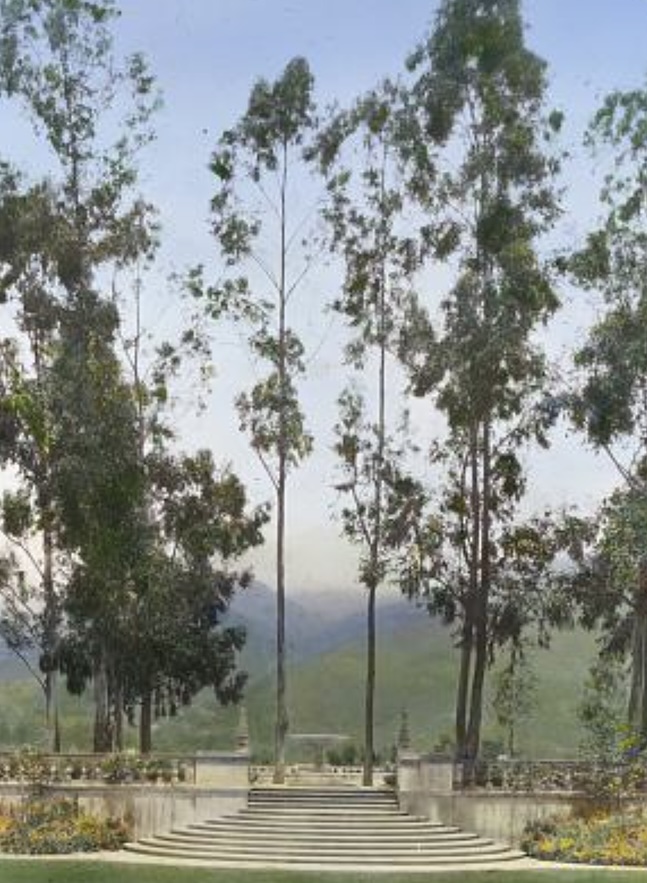
In addition, eucalyptus trees were grown for esthetic and ornamental reasons. In 1904, Gustav Stickley, prominent promoter of the Arts and Crafts Movement, visited the Montecito estate of landscape architect, Charles Frederick Eaton. He noticed that a rare lemon-scented, 60-foot-high eucalyptus growing among palms was a fitting contrast and companion to them. Stickley said, “…it transformed the monotony of unbroken sky views into a pleasing diversity.”
“There must not,” said Eaton, “be too much sky, or too much ocean – too much, for that matter, of any one element… The eucalyptus, stately and singularly tufted, breaks up the sky view.”
Blessing or Curse
According to Robert Leroy Santos, author of The Eucalyptus of California: Seeds of Good or Seeds of Evil, the 1980s brought a renewed interest in large scale growing of eucalyptus trees for biomass fuel, fiberboard, and paper pulp. The list of its useful properties, he says, continues to grow. It can drain waste and eliminate soil salinity. It is a natural replacement for mothballs.
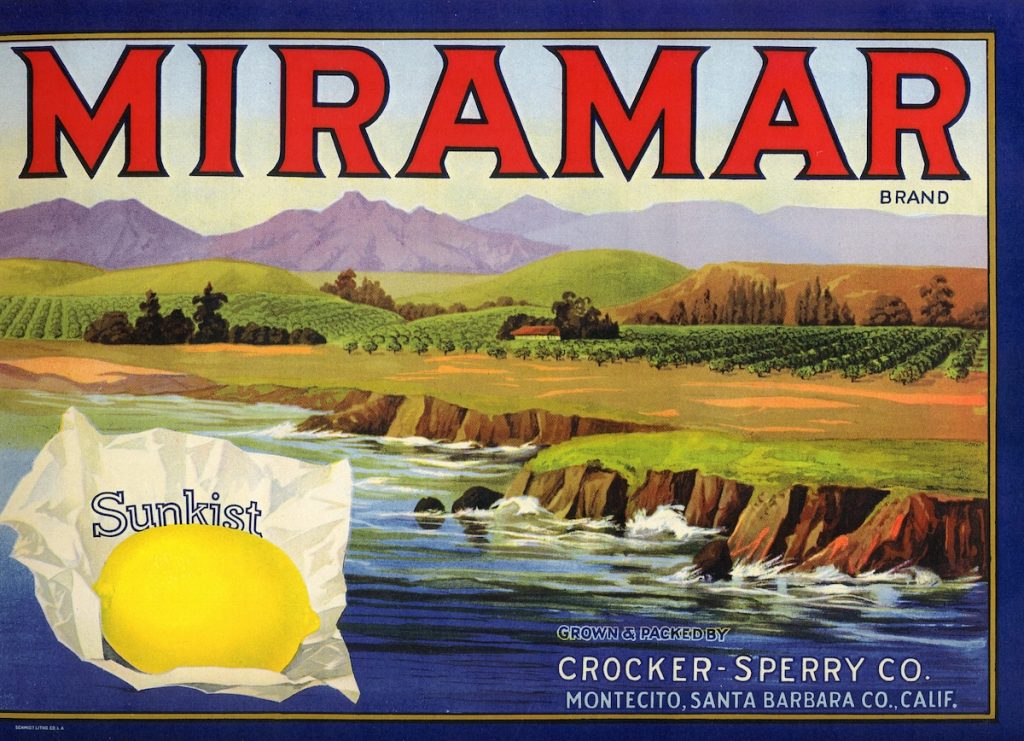


As a windbreak, it reduces soil erosion and limits dust. Besides protecting stock and crops and shading homes (thereby reducing cooling costs), eucalyptus windbreaks protect towns and seaports from damage.
Caltrans continued to plant various species of eucalyptus along highways. In 1980, over 30 thousand were planted. In 1997, Caltrans planted eucalyptus for the following reasons: 1. As part of the urban landscape. 2. A part of the rural aesthetic. 3. To define highway borders. 4. As windbreaks for safety and to prevent soil erosion. 5. As a source of chips for mulching to be used in planted areas.
For the past 35 years many large and devastating fires have been blamed on eucalyptus trees. Many experts assert, however, that well-maintained eucalyptus trees and groves are no more flammable than any other tree. Alexander Kerr, an El Centro writer who spent seven years in Australia working in wildfire control, said that to log off all the trees, as was suggested after the Oakland fire of 1991, would invite terrible soil erosion and destruction of wildlife.
The debate about the tree rages on. Some say that 35 years of anti-eucalyptus propaganda has demonized the tree. Poor maintenance practices in groves have created dangerous fire hazards that arouse legitimate fear in California’s citizens. Others say there’s no room for eucalyptus trees in urban and suburban environments for they are just too dangerous.
Despite the debate, Alfred McClatchie was correct when he observed in 1904 that California would be a very different state without eucalypts.
What the Experts Say
The Diablo Firesafe Council of Alameda and Contra Costa counties created a synthesis of multiple studies that agree that allthe following trees are highly flammable: fir, palm, larch, cypress, spruce, blue gum eucalyptus, bay, pine, juniper and cedar.
They also said that all trees are flammable if debris is allowed to accumulate, and neighboring vegetation creates ladders that bring fire to the higher branches.
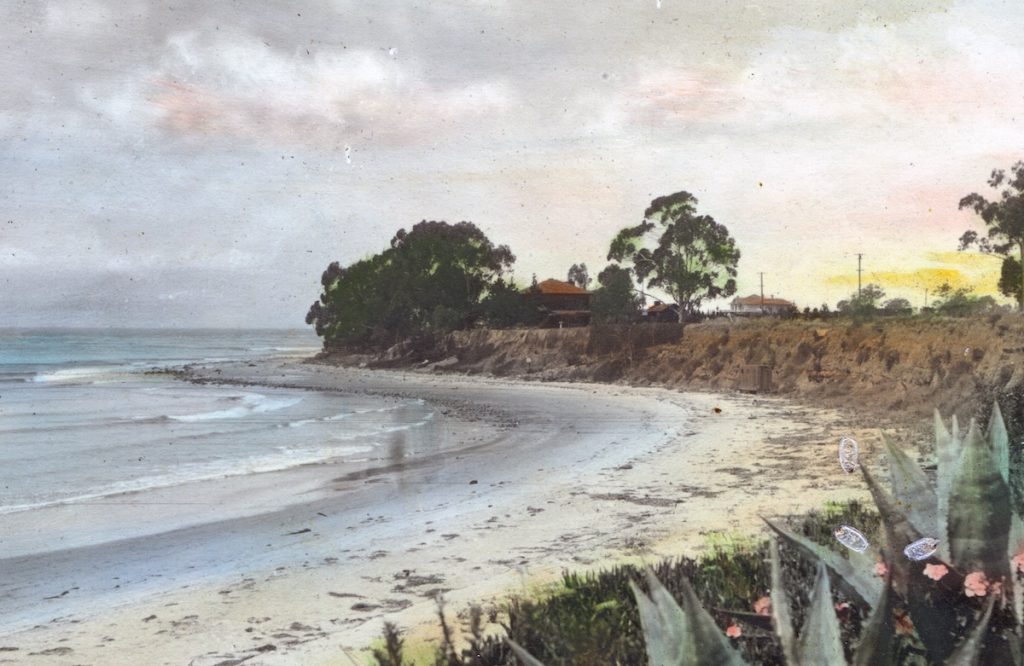
Fire Safe Marin of Marin County gives guidelines for making eucalyptus trees much more resistant to ignition. They advocate the following: removing vegetation around the base of trees; removing small-diameter lower limbs up to at least one-third of the tree’s height; removing limbs within 10 feet of the ground; removing all dead wood, peeling bark, and twiggy growth regularly; providing canopy separation; and removing all “ladder fuels.”
Fire resistant coastal live oaks (quercus agrifolia) are being considered as replacements for the row of eucalyptus trees planted along East Valley Road bordering the former Las Fuentes (the springs) Ranch, now Birnam Wood. Coast oaks grow up to 80-100 feet tall and have a spread of 80 to 120 feet according to a multitude of websites. The verge of East Valley Road on which they might be planted is limited in size.
NOTE: This story was first published on June 24, 2010, and has been updated. For an image of burned houses and eucalyptus untouched go to https://milliontrees.me/2010/11/14/trees-withstand-the-firestorm/
Sources: Besides those mentioned in the text, Groenendaal, History of Eucalypts in California, 1985; McClatchie, Eucalyptus Culture in the United States, 1902. Many thanks to Marla Daily of the Santa Cruz Island Foundation for the use of her private library and rare books.
You might also be interested in...




You must be logged in to post a comment.