
The Hazards of Mission Canyon
The Narragansett Planters of 17th and 18th century Rhode Island more closely resembled their Virginia cousins than they did the hardscrabble, independent New England farmers for which the area is known. Well educated, erudite even, they owned vast acreages on which they raised cattle and sheep and developed the first American breed of horses, the elegant Narragansett Pacers, which are now extinct. For a time they raised tobacco, but their dairy enterprises, especially the making of cheese, brought them the greatest profit. The few families of this elite group yielded great economic and political power in the area.
The Quaker Hazards were the largest and most powerful of this planter aristocracy. In 1804, however, with the Industrial Revolution upon them, Rowland Hazard I (1763-1835) established a woolen mill in Peace Dale, the town he named for his South Carolina wife, Mary Peace. The business continued to expand and other manufacturing interests were acquired under his son, Rowland Gibson Hazard I (1801-1888) and his grandson Rowland Hazard II (1829-1898).
Winters in Santa Barbara
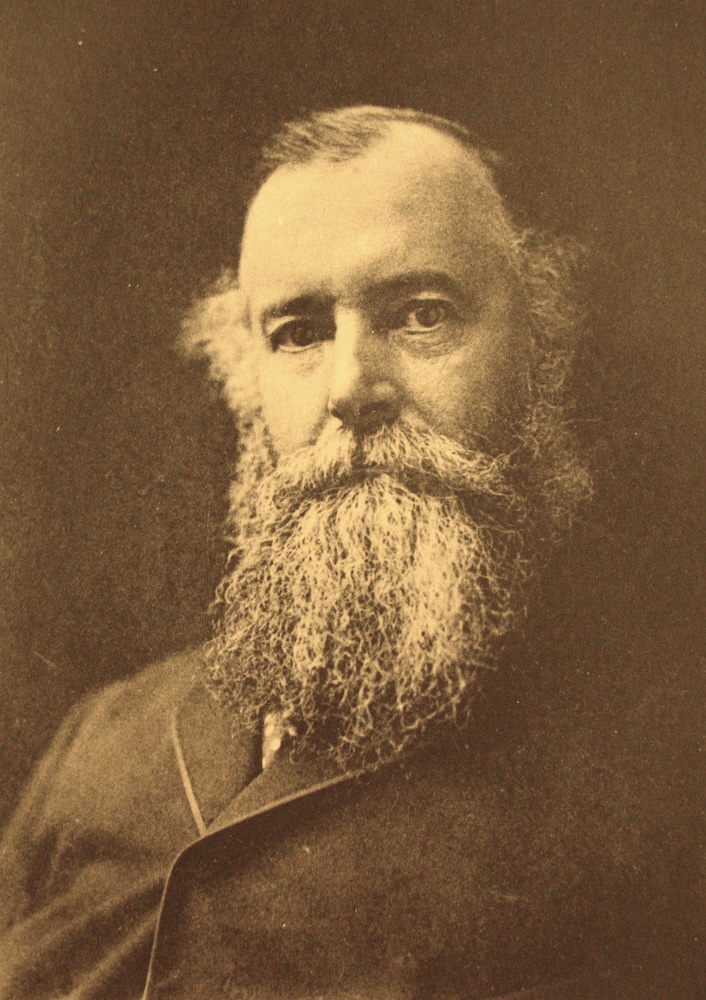
Rowland Hazard II and his family had visited Santa Barbara in the early 1880s and returned in January 1885 so his wife, Anna, could recuperate from a year’s illness. Santa Barbara at the time had been touted for its salubrious climate and as a health resort. The Hazards found Montecito’s Hot Springs to be superior to others in the neighboring area.
Not doing anything by halves, Rowland immediately purchased a parcel of land known as Mission Hill for its proximity to the old mission. The former owner’s home had burned to the ground and all that remained were a little stable and a few orange trees. They fitted the stable up as a sitting room and laid plans for the building of a home, which was completed in December.
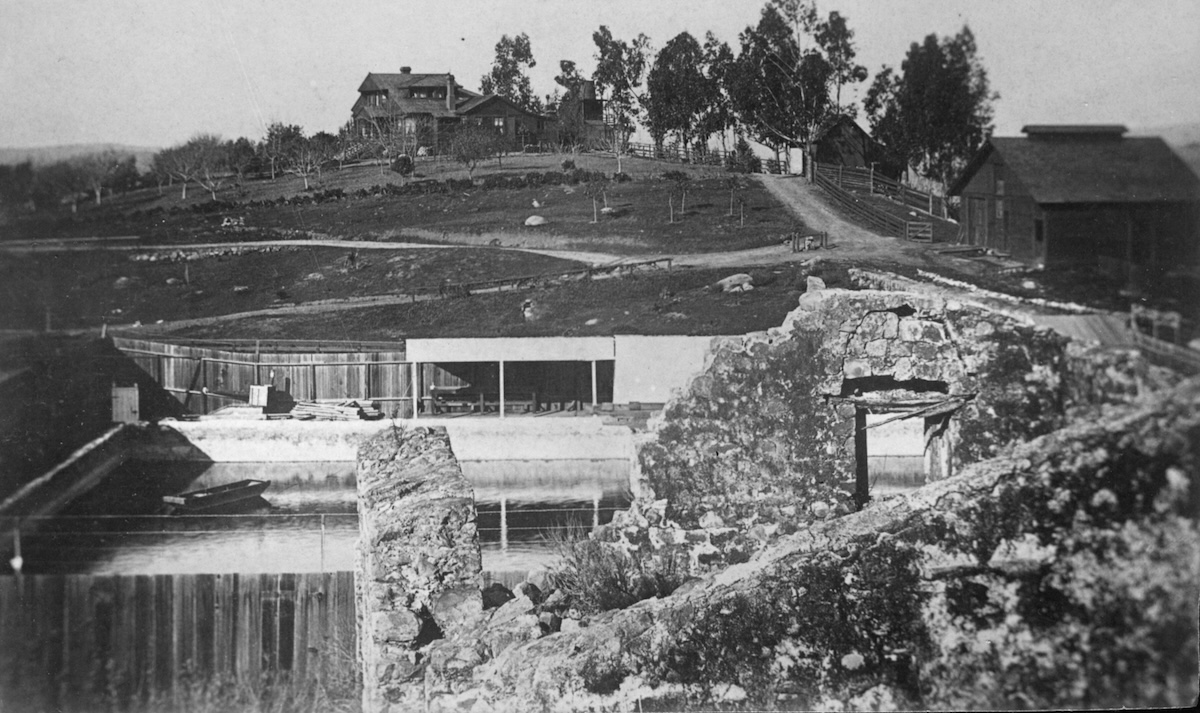
From then on, the Hazards and extended family and friends spent the winter months in Santa Barbara and kept adding land to their estate. In 1890, Rowland indulged in his favorite pastime; he began to plan and design, and to contract masons to build walls. He wrote in his journal, “Am trying to get a dial made. Bought land, two acres, across the [Mission Creek] with a spring on it. I’m planning a new room and… have finished the workbench in the little shop. I’ve laid out the wall where Eucalyptus have been cut down along the brow of the hill.”
Hazard had designed and built seven stone bridges in Peace Dale, and while in Santa Barbara he consulted with mason Joe Dover and surveyor Alfred Poett on plans for a stone bridge over Pedregosa (Mission) Creek. The masons were paid $1.50 a day and the total cost for the project was $350. By late April 1892, his walls were finished except for the Scotch pickets on top. Being a man of letters as well as an industrialist, Rowland celebrated by writing for Anna an anniversary sonnet whose first stanza read:
On Mission Hill, built long ago
Old Mission walls their shadows throw;
and though with newly quarried stone,
To wider sweep new walls have grown.
Behind the old, the violets grow. …..
Besides entertaining their extended family at Mission Hill, the Hazards enjoyed the festivities of the community. In 1892, a Hazard daughter and Inez Dibblee (a member of the De la Guerra family) worked to create the first “Dance of the Flowers” for the first annual Floral Festival, and the Hazard girls rode in the parade and danced as daffodils.
Caroline Hazard
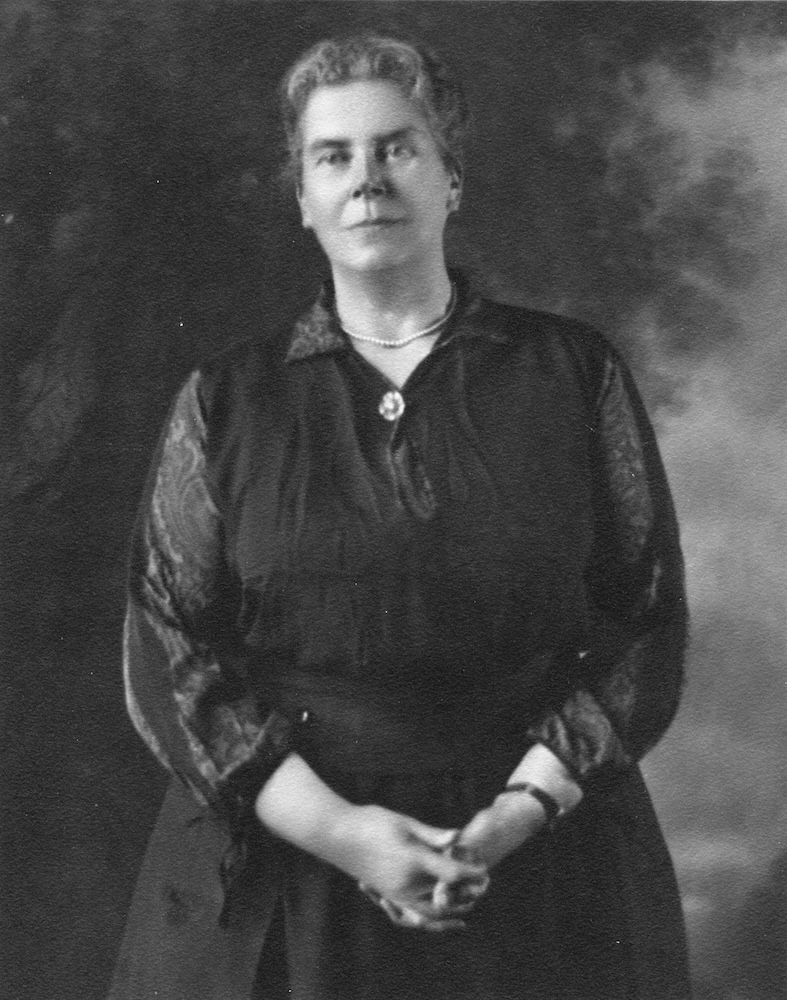
Caroline Hazard (1856-1945), Rowland’s daughter, loved taking horse and buggy jaunts to render in paint the nearby missions. Her watercolors have come down as important historical documents that show the missions as they were in the 1890s. For years, the Santa Barbara Public Library exhibited her work during Easter time.
Caroline received a top-notch private education. After a season abroad, she returned to Peace Dale to conduct welfare programs for the children of the employees of the family’s Peace Dale Manufacturing Company. She wrote poetry and worthy works of history and biography. In 1899, she became president of Wellesley College and for the next eleven years helped save the institution from financial ruin.
The family’s efforts on behalf of African Americans was rooted in their Quaker heritage. In 1841, while on a business trip to New Orleans, Rowland Gibson Hazard (Caroline’s grandfather) heard that an African American man from Newport, Rhode Island, was being held as a slave in Louisiana. While investigating this claim, he found that many other free men had been enslaved. Hazard could not let this go, and, despite threats to his life, spent months negotiating the court systems securing the freedom of nearly one hundred people being held as slaves.
In the late 1890s, her father had assisted Joseph Winthrop Holley, the son of former slaves, to obtain a higher education. Encouraged by W.E.B. Du Bois, Joseph went on to found the Georgia Normal School in Albany, Georgia, an institution that today is known as Albany State University. Caroline was among several Hazards who contributed to the cause of establishing schools of higher education for African Americans. At the turn of the century various Hazards served on several college boards and funded programs and construction at Tuskegee University, Palmer Memorial Institute, and Lincoln University in Pennsylvania.
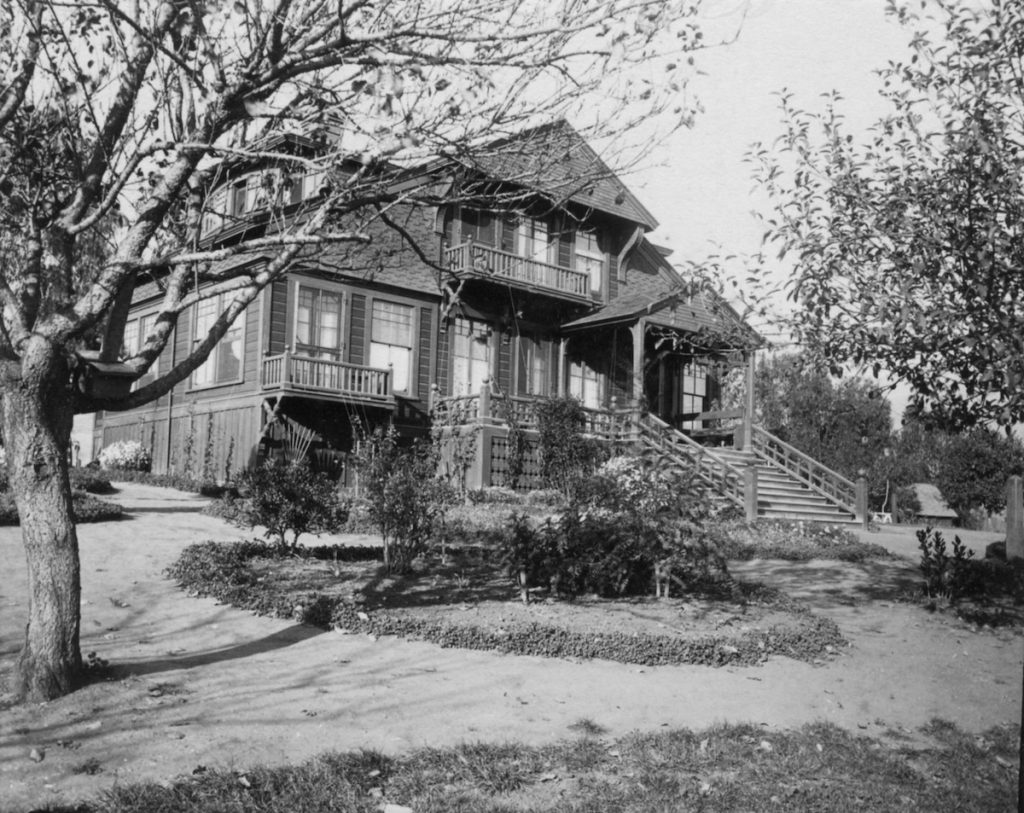
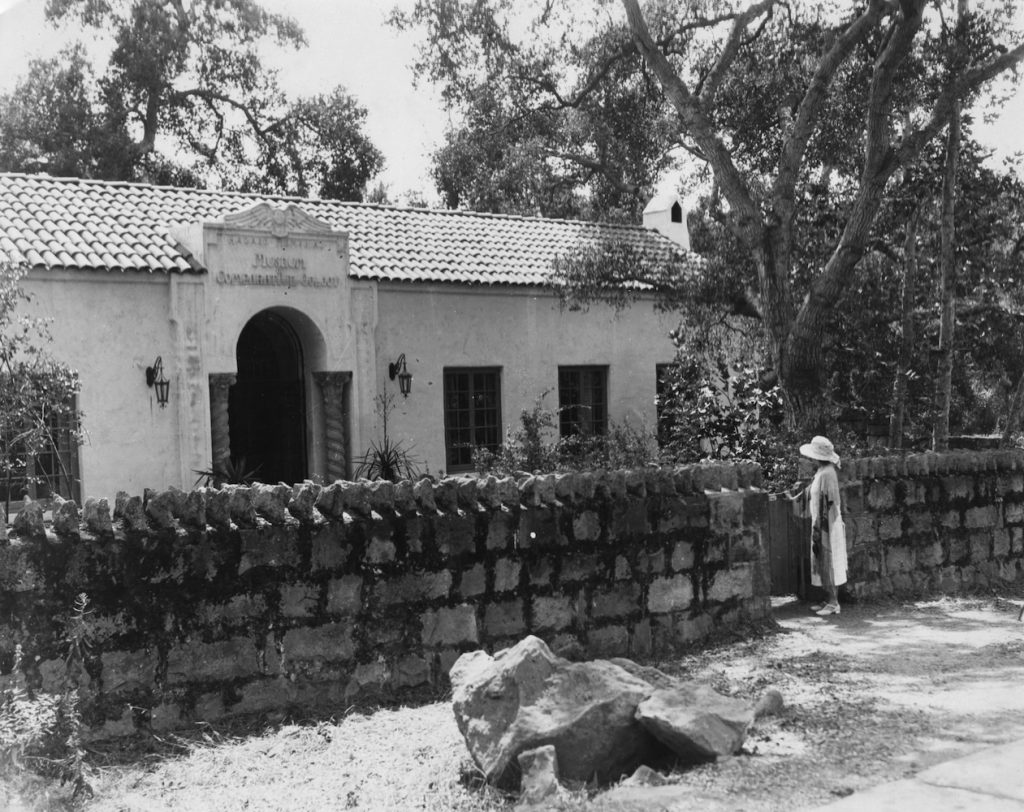
Caroline’s brother, Rowland Gibson Hazard II, built a Tudor style home next to Mission Hill in 1916. He named it Dial House for its proximity to his father’s famous sundial. Having suffered a series of heart attacks, he retired to Santa Barbara to enjoy his twin passions of photography and ornithology. Rowland had an extensive collection of birds’ eggs, so he joined the board of the Museum of Comparative Oology founded by William Leon Dawson in two small buildings on his Mission Canyon property.
After Rowland died of a heart attack in 1918, Caroline replaced him on the board and was instrumental in broadening the museum’s purview. She donated part of her family’s land, and Rowland’s widow, Mary P. Bushnell Hazard, paid for the construction of a new museum dedicated to his memory. Although it was initially called the Hazard Memorial Museum of Comparative Oology, the museum soon came to embrace all facets of natural history and was renamed the Santa Barbara Museum of Natural History. Rowland Hazard’s Scotch-picketed stone wall still borders the Spanish-style entrance.
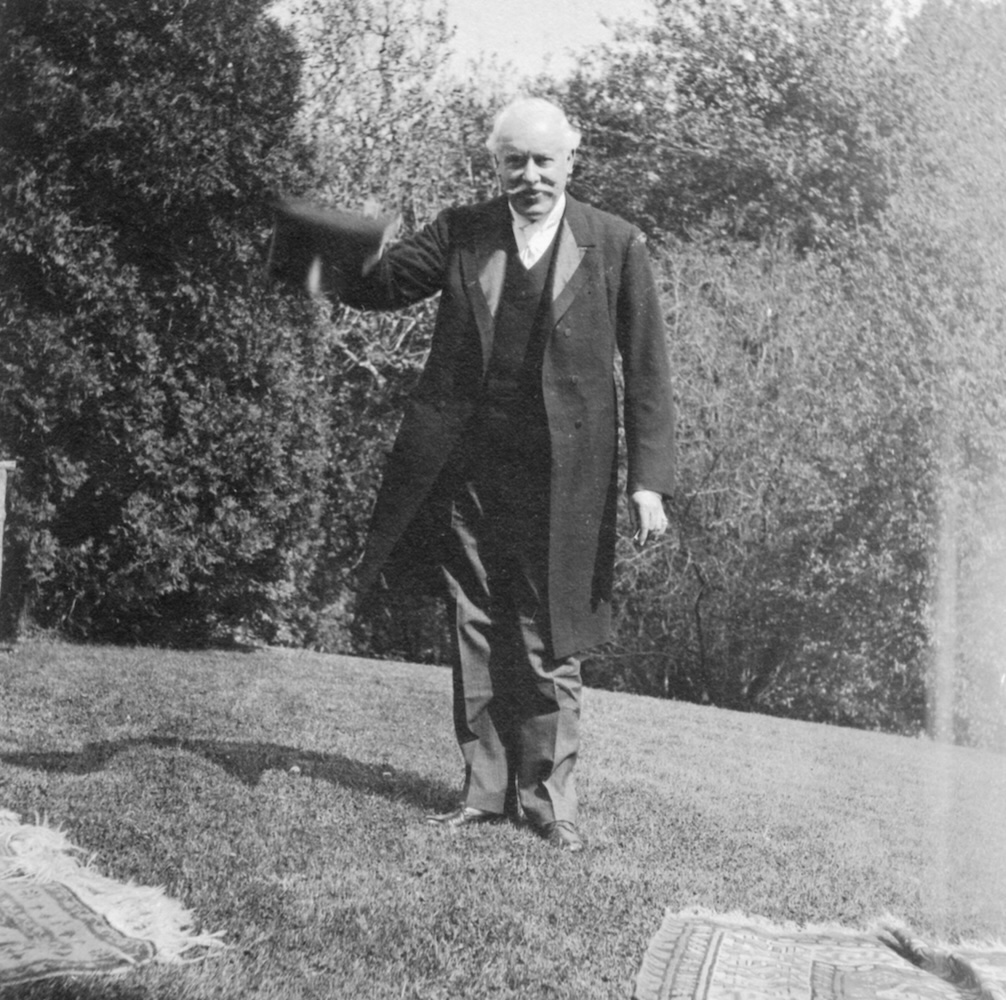
When Caroline granted the land to the Museum, she followed an old English custom of granting a deed by turf and twig. She dug a spade of earth and broke a twig from a native lemon berry bush and gave them along with the legal deed to the first president of the museum, James Marwick.
Caroline was also an early supporter of the Loughead (Lockheed) Airplane Company, and she joined other women in town to raise funds to purchase the property in front of the Mission as a city park, thereby preventing housing tracts from obscuring the view of Santa Barbara’s greatest historical treasure, its mission.
Caroline’s mother and father had died in 1895 and 1898 respectively. She continued to live in Peace Dale and Santa Barbara until 1943 when she moved permanently to Santa Barbara where she died two years later.
In 1953, the Hazard homes, after serving for a few years as Delta Gamma and Alpha Delta Pi sororities, were sold to a different kind of sisterhood, the Sisterhood of the Holy Nativity, which created St. Mary’s Retreat House.
Biography and selected letters of Rowland Hazard by Carolyn Hazard; obituary; News-Press April 1952; Hastings File at Gledhill Library, clipping from March 25, 1945, and http://www.uri.edu/library/special_collections/exhibits/hazard/Rowland%20G%20Hazard.html
Update
The above article was published in 2012. Much has happened to this historic site since then. After the Tea Fire of 2008 destroyed Mount Calvary Monastery, the monks of the Order of the Holy Cross, a Benedictine community of men, moved onto the property of St. Mary’s Retreat House. They eventually purchased the property and ran retreats as well as services of Lauds and the Eucharist in the old Hazard homes.
By 2019, with the population of the monastery dwindling and aging, they announced the impending closure of the site and put the property up for sale. The Mission LLC purchased the property for half the listed price of 15 million dollars in 2021. Much to the shock of the Santa Barbara populace they unleashed a plan to build an eight-story residential building with three-stories of underground parking on the site. Ben Eilenberg represents The Mission LLC as their applicant and chief operating officer.
You might also be interested in...




You must be logged in to post a comment.