
The First Picture Show (Jeff to Jeff)
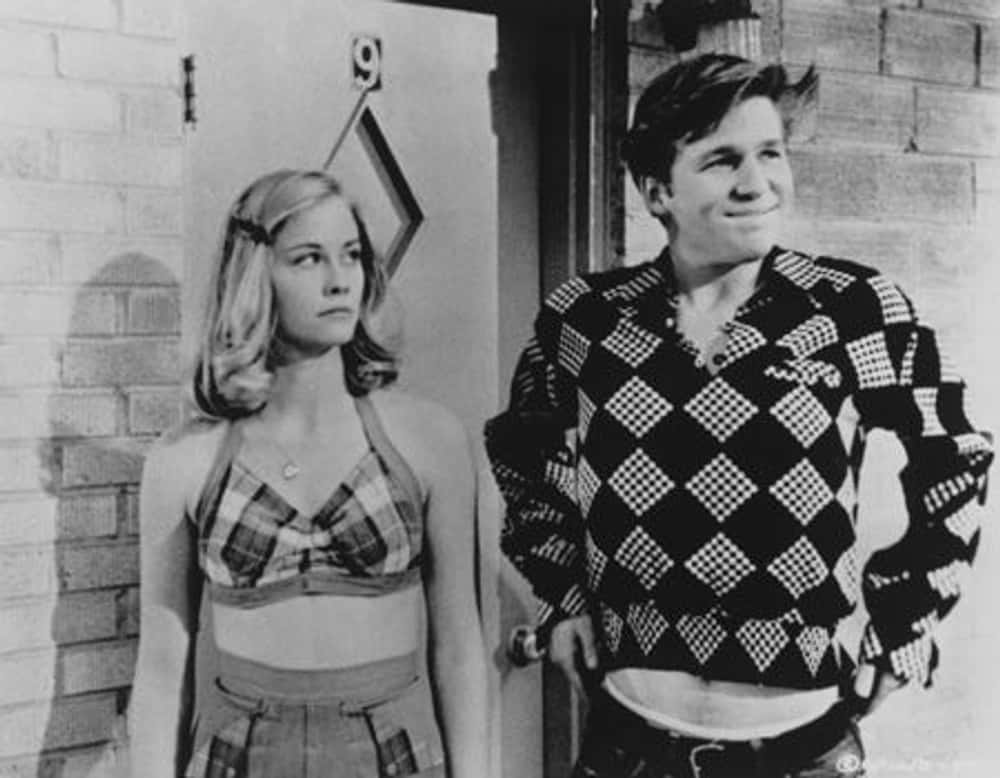
When I was 12 years old the classic Hollywood star machine was in the throes of extinction (not to suggest I had anything to do with that). Tinseltown was being overthrown by UnmediatedGritTown as a new generation of auteurs stormed the Dream Factory ramparts, broke into the place and tore down the velvet curtains.
David Lean’s expansive and heart-seizing Lawrence of Arabia (which, make no mistake, remains an almost supernaturally hypnotic classic) was being nudged aside by un-ironed sweat-stained outings like Coppola’s The Conversation, Rafelson’s Five Easy Pieces, Scorsese’s Taxi Driver (“…you talkin’ ta me?…), Schlesinger’s Midnight Cowboy – and a raft of other fist-throwing films determined to repurpose the cinematic experience and repulse the moviegoer into a new social enlightenment. Authenticity at almost any cost was the coin of this new realm, jagged truth-telling often the brutal directive.
To put it another way, these are not films you would go see with your mom. It was during this fraught cinematic epoch I was introduced to both adult moviemaking and Jeff Bridges.
One Must Feel a Certain Wonder and Pity

One must feel a certain wonder and pity for parents of that time, mid-century movie fans themselves who’d been raised on Fred MacMurray, Jimmy Stewart, and Donna Reed. In the early seventies a parent trying to navigate the new movie landscape on behalf of their wide-eyed jughead kids (speaking personally now) was attempting to delicately traverse a minefield on a pogo stick. The new films were marinating in social verité; nudity, blisteringly foul language, unvarnished violence, and questionable pinko politics were the new cinema’s lingua franca.
So when my mom, a desperate movie fan, found something she thought we could see together she was almost ecstatic. This one was about a small Texas village and its quirky and lovable characters as they charmingly contemplate the closure of the town’s only movie theater.
“Oh, this sounds wonderful! We have to see this, Jeff.”
“Okay. What’s it called?” My mom peered at the movie page of the Boulder Daily Camera.
“The Last Picture Show”.
How boring! The Last Picture Show?! Is that what they used to call movies? She explained the plot to me, such as it was. No Herbie the Love Bug, this dull outing would not feature Buddy Hackett in a crash helmet. My dad squinted down at the movie ad with a half-grin. “Looks like a good one,” he said, looking at us sideways.
“You wanna go?” my mom said to me with childlike enthusiasm. A bunch of people talking about a movie theater in some dumb little town?
“Sure.”
‘The Last Picture Show’ Starred Two of Our Coolest Locals
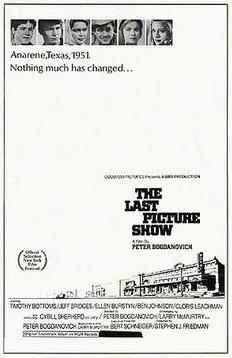
The Last Picture Show starred two of our coolest locals; Jeff Bridges and Tim Bottoms. Picture Show was Bridges’ breakout movie, though he’d been in the business for quite a little while. As a kid he’d appeared on his dad’s prime time late-50s adventurist scuba series Sea Hunt (’58-’61), in which his father – Lloyd Bridges – played Mike Nelson; a crime-solving, sunken object-salvaging, sea cave-exploring ex-Navy frogman. Jeff had appeared on his dad’s anthology series (’62-’63), and in an episode of Lloyd’s single season western The Loner (’65-’66), in which Jeff plays the kid of another character. Lloyd’s career saw him win plaudits for a score of highly regarded stage, film, and TV projects involving some of the leading lights of that day’s acting and directing – but Lloyd may be better known to modern audiences for his straight-faced comic turn in the disaster-comedy Airplane!, in which he plays the relapsing control tower supervisor Steve McCroskey.
Jeff Bridges appeared in his first feature in 1970, a TV pilot with the cards-on-the-table title In Search of America. A college dropout (Jeff) convinces his establishment family to travel with him cross country on a tricked-out bus where together they discover hippies, gurus, acidheads, rock music – and the little-known Venn overlap that put the counterculture and establishment on the same page. There is a wise and freewheeling grandma who says, “right on,” and everybody learns from everybody else. “Do these children know something we don’t know?” one adult asks another, the wild sixties implosion already a polished, intergenerational object lesson in the rearview mirror. In that early work, Bridges’ acting is already so relaxed and puzzlingly natural it’s magnetic. He hit the ground running. By 1976, Bridges would be starring in a Dino De Laurentiis blockbuster (and Jessica Lange’s film debut).
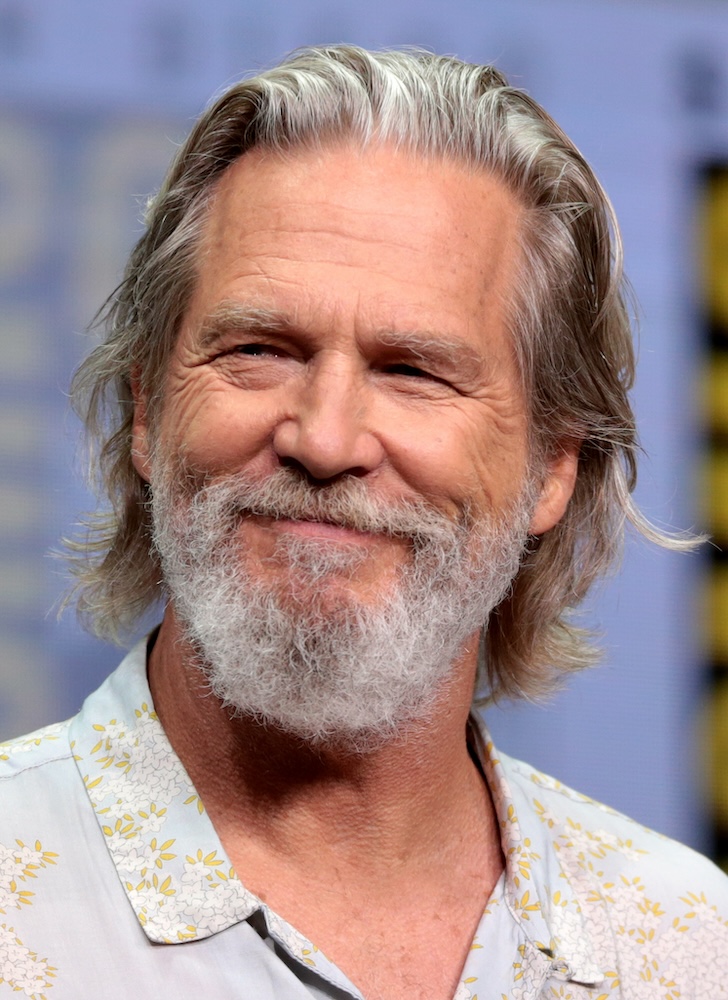
Jeff’s breakout role, though, was in Peter Bogdanovich’s The Last Picture Show, where he played Duane to Timothy Bottoms’ Sonny; two senior high school pals trapped in a flyblown Texas town. If it sounds bleak, know that I am putting a high gloss on it. Filmed in stark black and white, The Last Picture Show is an emotionally wrenching downward spiral now considered one of the great American films. It is one of those movies that exalts in a way you feel later and can never shake.
I saw my second Jeff Bridges film at a drive-in. Two older women (17 and 18) smuggled me into a showing of Thunderbolt and Lightfoot, a sort of road/heist/buddy movie whose casual violence, bouts of nakedness, and melancholy denouement were sufficient to put me in a sidewalk-staring fugue state for a month. Again, Jeff B’s weirdly natural way with a scripted character completely subsumed me.
Jeff’s later turns in Starman, Tron, The Big Lebowski (maybe you’ve heard of it?) and the indescribable Fearless (directed by the great Aussie director Peter Weir and please see it) would establish him as the non-celestial film actor who could be mowing his lawn one minute and tearing your heart out the next.
I think of Last Picture Show and Thunderbolt as my twinned introductions to darkling, thrilling, artistic adulthood. I discovered Jeff as I was discovering melancholy as a creative force. Jeff Bridges’ art is embodied in those two movies that completely absorbed and shook me. Taken together they seemed to beam at me a single tailored message with a penetrating if indeterminate theme I still can’t articulate. Something about the power of fragility.
An Hour Or So Into Picture Show
An hour or so into Picture Show, Cybill Shepherd’s character Jacy disrobed at a pool party, desperate to fit in with a cohort of new friends she hopes to join. As Jacy was struggling to fit in, my stricken mom was increasingly desperate to get out. Of the theater, I mean. By about 10 minutes into the film my poor mom had realized, through a series of scripted shocks, that this was not a family film. I was a canny enough kid to understand what my mother was going through. The shame was coming off her like visible light.
At Jacy’s capitulation then, my mom grabbed my hand and yanked me out of my seat so suddenly I yelped and gangled. I remember looking up at her as she sprinted us up the dark aisle. Her head was aimed at the floor, and I knew she was terrified of being recognized. We drove home in silence, my mom grasping the steering wheel and staring ahead like a penitent. We got home and she tossed her purse on the dining room table and bolted for another part of the house. My dad was all smiles as he watched her hustle past and slam a door somewhere. He turned to me and seemed to be struggling not to laugh.
“How was the movie?”
You might also be interested in...




You must be logged in to post a comment.