
California State University Channel Islands Marine Debris Exhibit
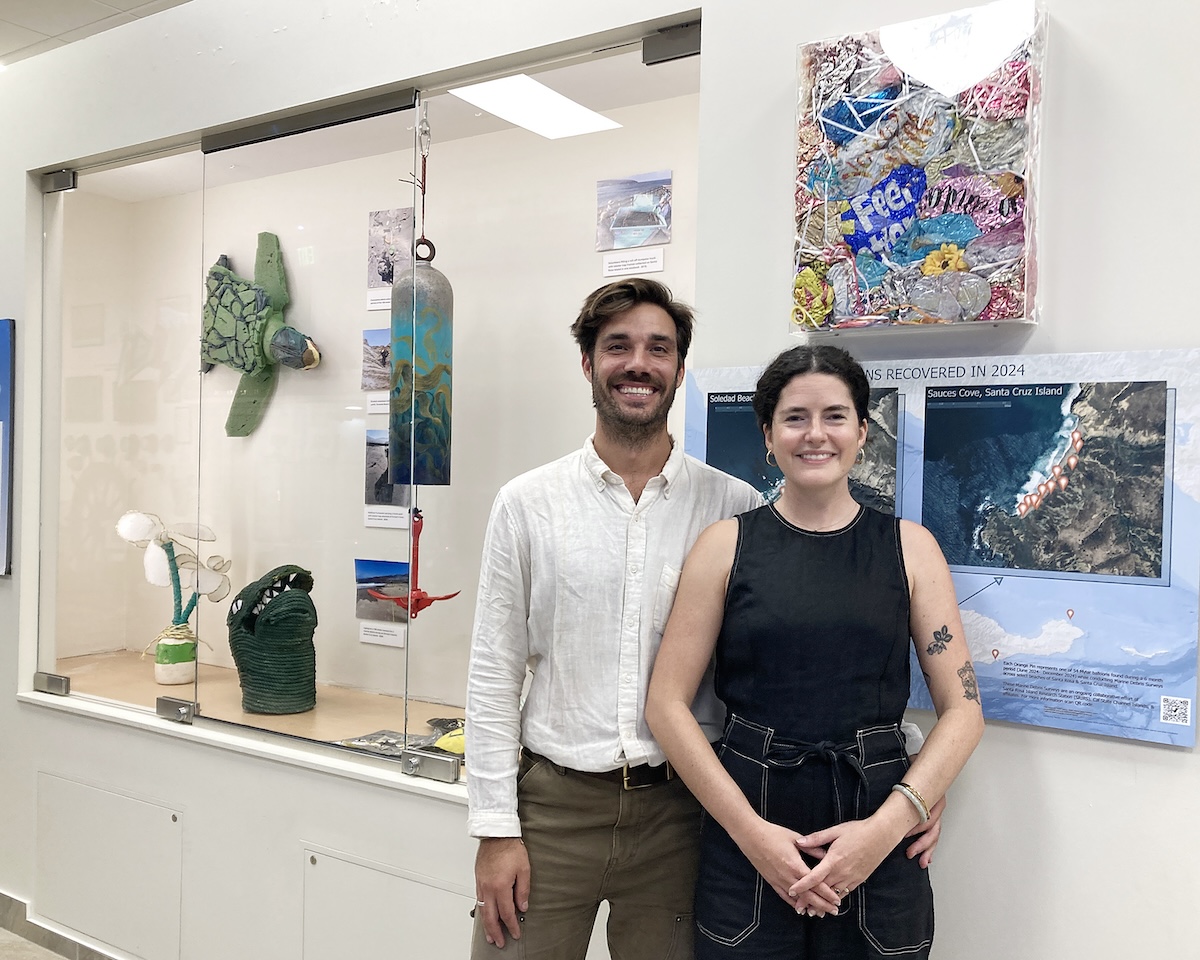
Ten students at the California State University at Channel Islands (CSUCI) are exhibiting their “marine debris turned art” exhibit titled Current Findings at the Chrisman California Islands Center, Carpinteria. The exhibit is curated by Matt Furmanski, CSUCI professor of art.
The exhibit opening was held on Friday, October 9, and attended by over 50 people, including the exhibiting students, Furmanski, Executive Director of the Santa Cruz Island Foundation (SCIF) Taylor Viens, representatives from the National Oceanic and Atmospheric Administration (NOAA), the National Marine Sanctuary Foundation, and the National Park Service.
I asked Furmanski for his statement on the timeliness of this exhibit and he replied, “This exhibition feels especially vital right now because climate change, plastic pollution, and the health of our oceans are not distant or abstract concerns, they are unfolding along our own coastline. Through support from NOAA’s Marine Debris Program and the National Marine Sanctuary Foundation, this project brings together scientific research, environmental stewardship, education, and art. The debris collected on the Channel Islands becomes data that helps us understand the problem, but when artists transform those same materials into artwork, the research becomes tangible and emotionally accessible to a much broader public. Art can communicate what numbers alone sometimes cannot. These works ask us to consider the full life of the objects we use, where they travel after we discard them, and how our everyday choices affect even remote and protected places. The exhibition turns evidence of pollution into a catalyst for awareness, conversation, and, hopefully, meaningful change.”
Since 2016, the Santa Rosa Island Research Station (SRIRS) managed by CSUCI, has removed and cataloged over 21,000 pounds of marine debris from Santa Cruz and Santa Rosa islands. The exhibit biggie is the massive amount of mylar balloons in the ocean, you know the ones purchased for birthdays and celebrations. The hope is that these mylar balloons will be no longer be sold. Other items used for the art were scuba tanks, rope materials, fishing lines, foam, and Styrofoam.
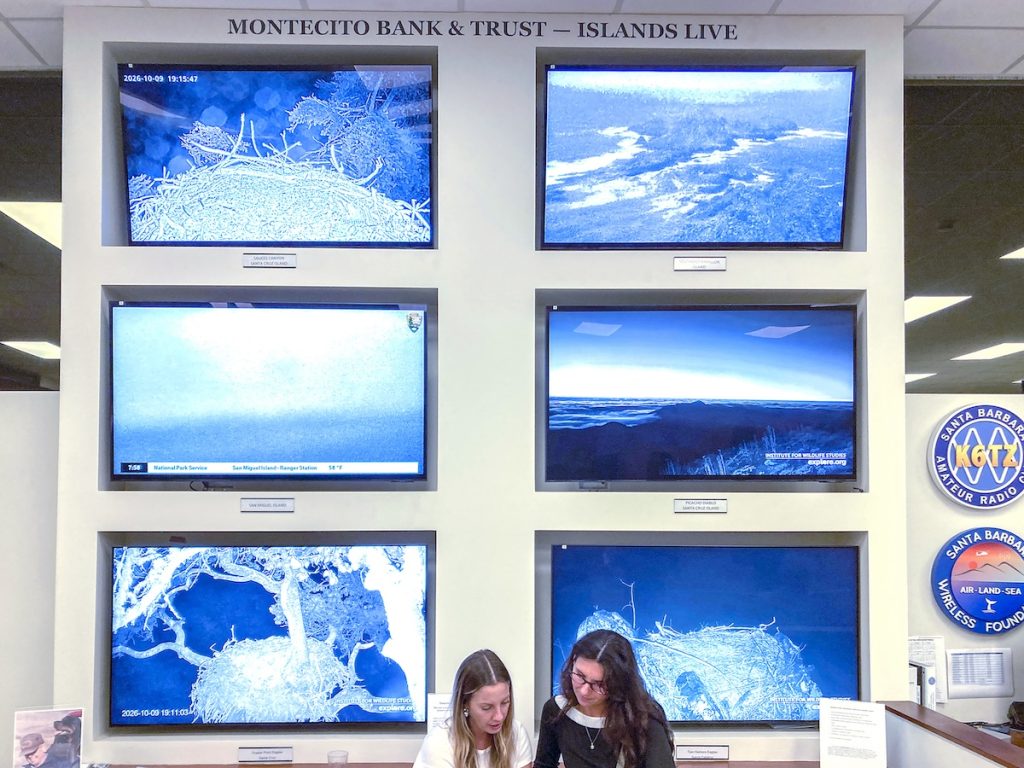
I met with Viens at the opening. In our conversation, he emphasized the importance of the debris collection and of this exhibit to raise awareness of the debris that is affecting the natural ecosystems on and offshore: “The multi-media artworks on display communicate the importance of keeping the beaches of the Northern Channel Islands free of debris to restore the critical intertidal and near shore ecosystems of the islands that include nesting grounds for snowy plovers, richly diverse tidepools, kelp forests, and sea lion rookeries.” He shared that the exhibit is funded by a federal grant, and is a collaboration between the National Park Service, the NOAA, The Nature Conservancy, the National Marine Sanctuary Foundation, and the Chrisman California Islands Center.
Viens, a summa cum laude grad of NYU, was appointed as executive director of the SCIF this year, following the retirement of its founder of 40 years of service, Marla Daily. Viens’ work includes being a SCUBA diver for the National Park Service’s “Channel Islands Live,” and as a volunteer with the National Park Service, U.S. Fish & Wildlife Service (Farallon Islands), United States Navy (San Clemente Island), Channel Islands Restoration (Board Member), Sunflower Star Laboratory (Communications Committee), California Institute of Environmental Studies, Channel Islands Marine & Wildlife Institute, The Nature Conservancy, and California State University Channel Islands.
Nod to Val-MAR Records DJ for spinning tunes to keep the exhibit dancing.
You might also be interested in...




You must be logged in to post a comment.