
Sunflower Stars: Hope Shines at the Sea Center
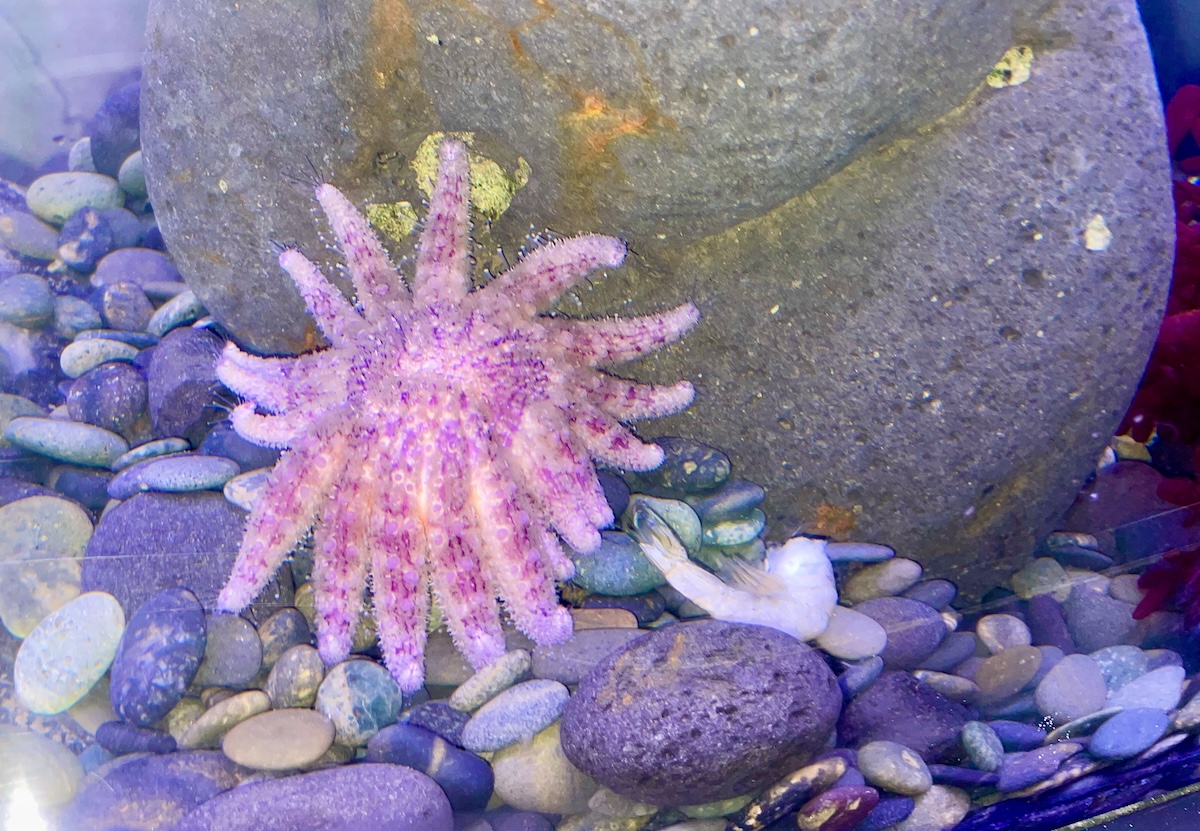
Imagine looking down into a tide pool and discovering a creature that seems to have come from another universe with dozens of arms and hundreds of “feet” – a creature that moves with surprising speed across the sea floor. This resident of the diverse world beneath the waves, known as the sunflower star, is one of the ocean’s most extraordinary animals. Once blanketing the sea floor in glorious shades of pink, purple, orange and gold, the sunflower star is presently fighting for survival! What happened to these spectacular creatures? And what efforts are underway to return them to their natural habitat?
What could be a better place to discover the answers than the Sea Center on Stearns Wharf and the new home of two thriving and active sunflower stars! Invited to a personal tour by Maxwell Rudelic, senior aquarist and collections manager, and Dylan Otte, naturalist and volunteer manager – how’s that for service? – I quickly learned why these colorful out-of-this-world animals have been functionally extinct: A 2013 outbreak of a sea star wasting disease killed five billion in the wild – plus those in aquariums in unsterilized seawater. This tragic ecological event altered the entire marine environment up and down the western coastline of North America.
Sunflower stars, known to grow as large as almost four feet, dined on a menu of sea urchins, a species of voracious kelp grazers. With the sunflower stars’ disappearance, the urchins devastated much of the kelp forests, home to a host of diverse marine life. With the dwindling of kelp, so essential to a healthy underwater environment – biological, cultural, and economic ecosystems were thrown out of balance. “When the sea urchins stopped smelling sunflower stars nearby,” explains Sunflower Star Laboratory Executive Director Reuven Bank, “they switched from passively grazing on drift kelp to decimating vast swaths of kelp forest.” Unfortunately, the bacteria that caused the star-killing outbreak is still present today.
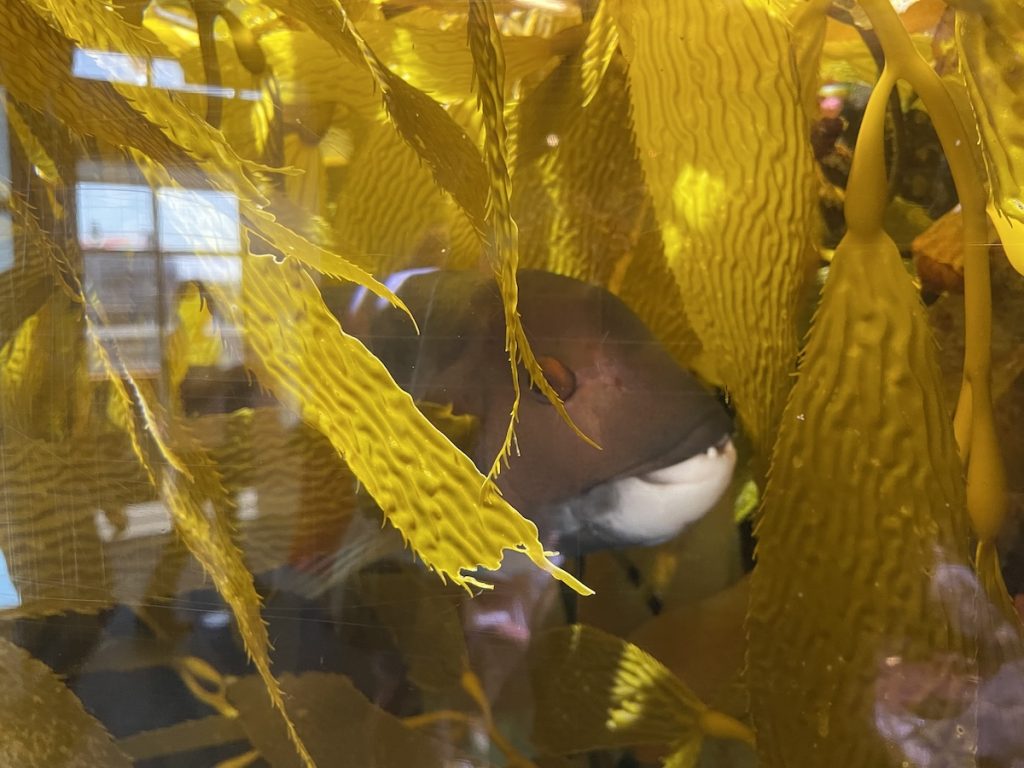
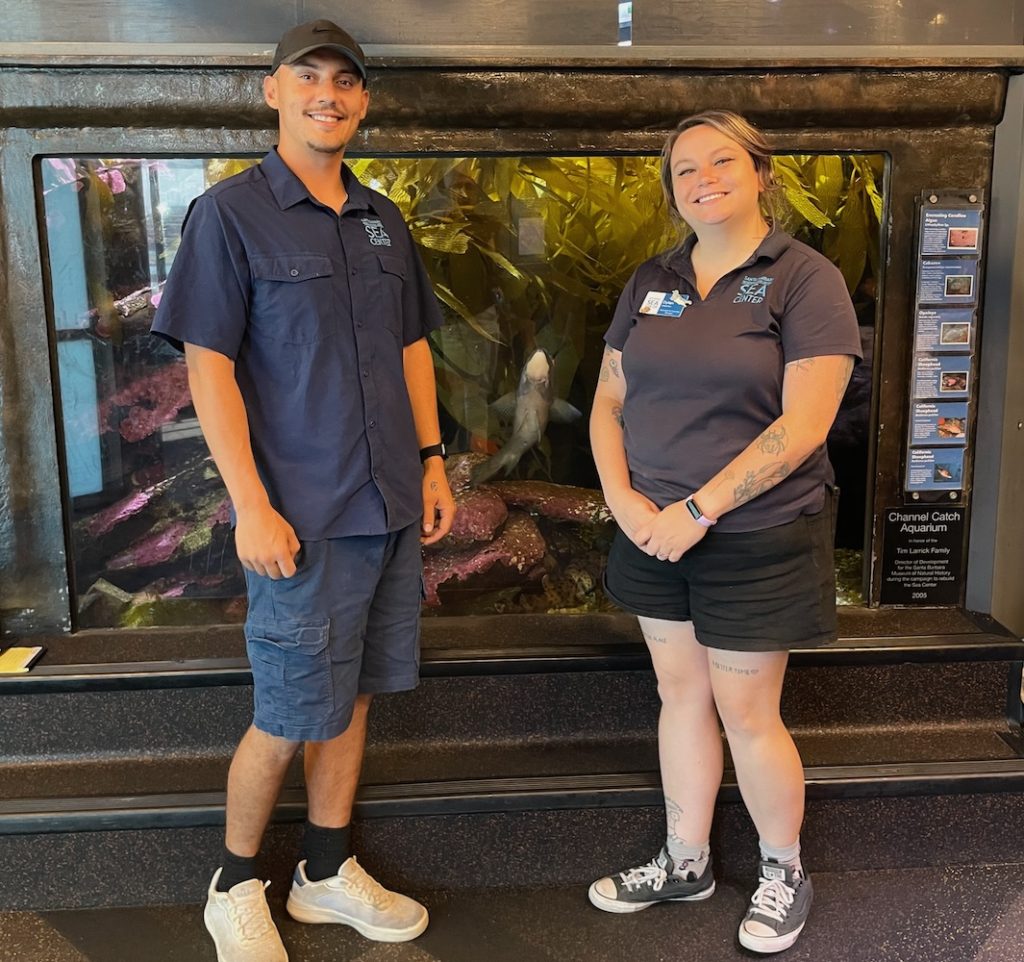
The Sunflower Star Laboratory (SSL), located in Moss Landing, California, at the edge of Monterey Bay, raises these colorful animals in their laboratory in collaboration with nationwide partnerships. The mission of SSL, a nonprofit organization, is to bring the stars back from the brink of extinction for eventual reintegration into the ecosystem. In an effort that parallels the successful White Abalone Restoration Consortium, the Sea Center – a member of the Consortium since 2006 – hopes to play a similar role in educating the public about sunflower stars here in Santa Barbara. In collaboration with the Birch Aquarium in La Jolla, California, where the new residents were raised from fertilized eggs and later transported, to the Sea Center where I, along with a host of fascinated viewers, were able to see them.
My guides directed me to the stars in the darkened environment of the mezzanine floor of the museum. How beautiful they were, looking much like their botanical namesake. I stood awestruck for a time, just watching. Anxious as I was to get a picture, it soon became obvious that the sunflower star considered me (and my cell phone) an invasion of privacy and slid to the side. My guide, Dylan Otte, laughingly noted, “They have their own personalities, as all creatures do, and these guys have only been here since June 15th so they’re just getting used to all the attention!” I still got pictures of the sibling stars (even as they dined) thanks to my guides.
What a wonderful visit that was! And I encourage you to visit these spectacular animals and support the ongoing efforts to return them to their natural habitat.
You might also be interested in...




You must be logged in to post a comment.